

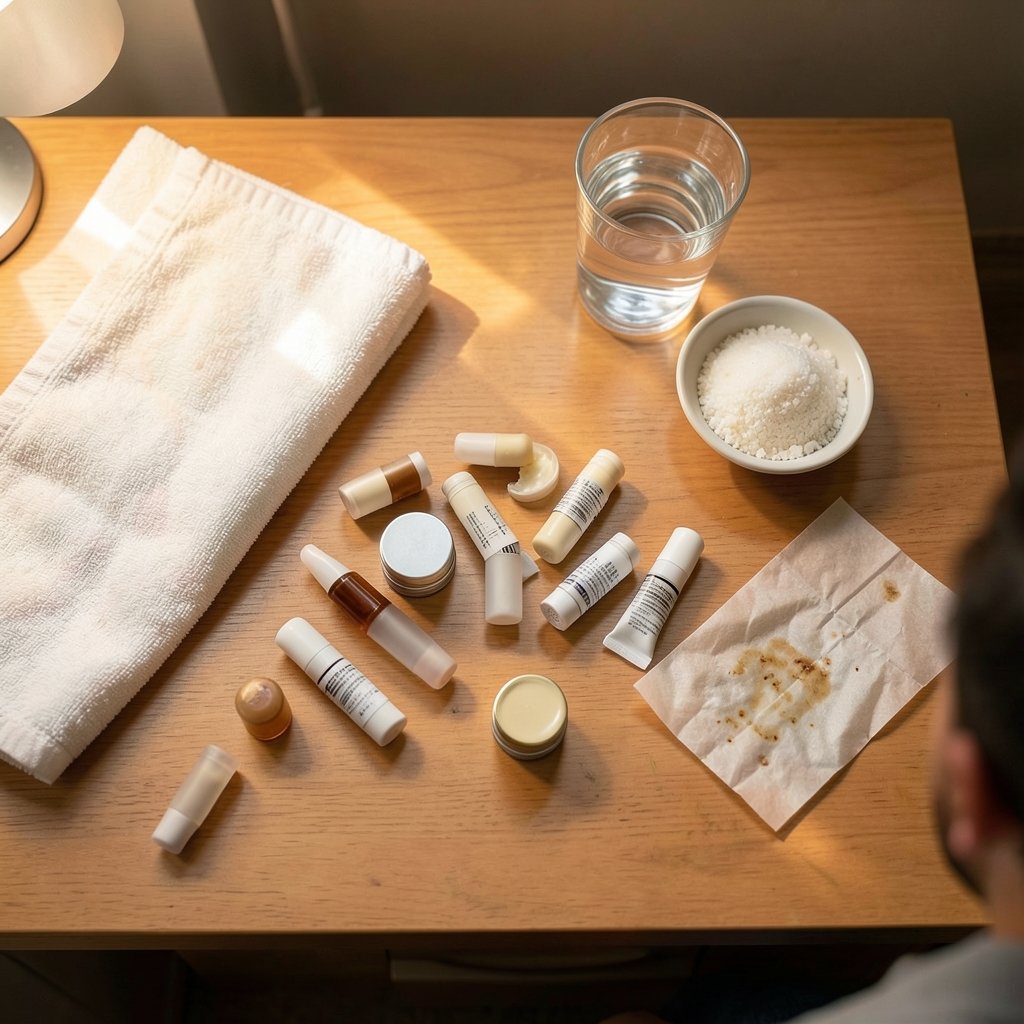
What if the balm you keep reaching for is the reason your lips never stop peeling? That question sits at the center of the lip balm aisle, where dozens of tubes promise repair, shine, and protection, and most of them deliver only one of the three. The best lip balm is not the one with the prettiest packaging or the strongest minty kick. It is the one whose ingredient list matches your actual problem, whether that is winter wind, a nervous licking habit, or a reaction to something in the product itself.
This guide breaks down what separates a working balm from a decorative one, which ingredients earn their place, which ones quietly cause trouble, and how to choose by situation rather than by hype.
How the best lip balm actually works
Lip skin is thin. It has no oil glands, no sweat glands, and very little melanin compared with the rest of the face. That means it cannot moisturize itself, and it burns and dries faster than the skin on your cheek. A good balm compensates in two ways.
The first job is occlusion, which means sealing the surface so water cannot escape. Ingredients like petrolatum, beeswax, candelilla wax, shea butter, and lanolin sit on top of the lip and form a barrier. They do not add water; they hold in what is already there.
The second job is humectancy, which means pulling water toward the skin. Glycerin and hyaluronic acid do this. Here is the catch that trips people up: a humectant alone, in dry air, can pull moisture out of the lip instead of into it. That is why the strongest formulas pair a humectant with an occlusive layer on top.
A balm that only feels slick but contains neither type of ingredient is essentially a lubricant. It reduces friction and looks glossy, and it evaporates or gets licked away within minutes. That is the first thing to check on any label.
Ingredients that earn their place

| Ingredient | What it does | Best for |
|---|---|---|
| Petrolatum | Strong occlusive seal | Severe cracking, overnight repair |
| Lanolin | Occlusive, close to skin lipids | Very dry, stubborn lips |
| Beeswax | Firm barrier, holds shape | Daily wear, daytime protection |
| Shea butter | Occlusive plus soothing | Sensitive, irritated lips |
| Glycerin | Humectant, draws water | Lips that feel tight as well as dry |
| Dimethicone | Light barrier, smooth feel | People who dislike heavy wax |
| Ceramides | Support the skin barrier | Chronic peeling, barrier damage |
Cosmetic-grade petrolatum is refined to remove contaminants, which is why it has stayed a dermatology staple for decades. If a balm’s first ingredient is petrolatum and the second is a wax, you are looking at a barrier product. If the first ingredient is a flavor oil or a plant extract, you are looking at a fragrance delivery system with a little wax attached.
Ingredients that cause more harm than good
Not every tingle is therapeutic. Several common lip balm ingredients are recognized irritants or sensitizers, meaning they can trigger a reaction or make one worse over time.
- Menthol and camphor: cooling and tingling, but both are known to irritate. The sensation feels like treatment; it is closer to a mild insult.
- Phenol: an old-school exfoliant that can leave lips drier than before.
- Added flavorings and fragrances: a leading cause of contact reactions on the lips. Cinnamon, citrus oils, and peppermint are frequent offenders.
- Salicylic acid: fine on acne-prone skin, harsh on lips.
There is a widely repeated claim that lip balm is “addictive” because it thins the lips or trains them to depend on product. That is not supported. The cycle people experience is usually irritation from an ingredient, followed by licking, followed by more dryness, followed by more balm. Remove the irritant and the cycle often breaks.
If your lips sting, swell, or peel in a pattern that never resolves, the balm may be the cause rather than the cure. Products built around a single soothing active, like Dr dans cortibalm makes this hydrocortisone lip balm, exist for exactly that short-term situation, but a medicated balm is a tool for a flare, not a daily habit.
Matching the balm to the problem
Most people buy one balm and expect it to cover every situation. A better approach is to think in categories.
For windburn and winter cracking, go heavy and simple. Petrolatum or lanolin at the top of the list, minimal flavoring, applied thickly before bed. This is the classic slugging approach, and it works because it prevents water loss overnight when you are not licking or drinking.
For lips that feel tight but not cracked, you likely need a humectant under a seal. A glycerin-forward balm topped with a wax layer handles this better than pure petrolatum, which can feel like it is sitting on top of dry skin without addressing the tightness.
For daily wear under makeup or on its own, texture matters as much as function. A tinted balm with a wax base and a modest occlusive load gives color and protection without the greasy film. If that is your priority, it helps to compare formulas side by side rather than buying blind, and a roundup of the best tinted lip balms pick one that actually works covers which ones hold color and which slide off in an hour.
For budget daily use, the drugstore shelf is genuinely competitive. The trap is buying the cheapest stick with a strong mint flavor and wondering why lips feel worse by day three. A practical guide to the best drugstore chapstick pick balm that actually works helps separate the workhorse formulas from the flavored filler.
For a polished look with real care behind it, luxury formulas are not automatically better, but some are genuinely well built. A close look at the Chanel les beiges lip balm you get it wears who it suits is a useful case study in when a premium balm justifies its price and when you are paying for the compact.
Sun protection is not optional
Lips have almost no melanin, which makes them one of the most sun-vulnerable spots on the face. Sun damage on the lip shows up as persistent dryness, loss of definition, and in the long run, a higher risk of skin cancer on a site that is easy to overlook.
In the United States, a lip balm that claims sun protection is regulated as an over-the-counter drug and must carry an SPF number and, for higher SPF products, a broad-spectrum claim. That labeling exists for a reason: an SPF lip balm is doing real work, not cosmetic work.
Two practical notes. First, SPF lip balm needs reapplying far more often than facial sunscreen, because eating, drinking, and talking wear it off. Every two hours is a reasonable target outdoors. Second, avoid SPF balms with heavy fragrance if your lips are already irritated, since the combination of sunscreen filters and fragrance can be too much for compromised skin.
Mistakes that keep lips chapped
The most common errors are habits, not products.
- Licking lips to moisten them. Saliva contains enzymes that break down the lip barrier. It feels better for ten seconds and worse for an hour.
- Peeling or biting flakes. This removes the protective layer and can open small cracks that sting and take days to heal.
- Applying balm once in the morning. Barrier products wear off. Reapplication is the whole point.
- Using a medicated or exfoliating balm daily. Tingling products are for occasional use, not a routine.
- Ignoring dehydration and dry indoor air. A balm seals moisture in; if there is none to seal, it cannot help much. Water intake and a humidifier in winter do more than people expect.
- Assuming a reaction is just dryness. If one balm consistently makes lips worse, stop using it rather than layering more product on top.
What to look for on the label
A short checklist covers most of it. Look for an occlusive near the top of the ingredient list, ideally petrolatum, lanolin, beeswax, or shea butter. Look for a humectant if lips feel tight. Look for the absence of menthol, camphor, phenol, and heavy fragrance if lips are irritated. Look for SPF if you will be outdoors. And look for a balm you will actually reapply, because the best formula in the world does nothing sitting in a drawer.
Texture preferences are legitimate too. Some people cannot stand the feel of petrolatum and will simply not use it, which makes a lighter dimethicone-based balm the better choice even if it is technically a weaker seal. Consistency beats theoretical superiority.
Conclusion
The best lip balm is the one that matches your lips’ actual problem: a heavy occlusive for cracking, a humectant-plus-seal for tightness, a tinted wax formula for daily polish, and an SPF version for time outdoors. Ingredient order tells you more than marketing copy ever will, and the irritants to avoid are short and well known. Skip the tingle, reapply often, stop licking, and treat a persistent reaction as a signal to switch products rather than add more. Lips do not need a ten-step routine. They need a barrier, a little water underneath it, and enough consistency to let the skin recover.
Frequently asked questions
Is petrolatum safe to use on lips every day?
Yes. Cosmetic-grade petrolatum is refined to remove contaminants and has a long record as a skin protectant. It is one of the most reliable occlusives available and is well suited to daily and overnight use, especially for cracked lips.
Why do my lips feel drier when I stop using lip balm?
This usually reflects an underlying irritant or a licking habit rather than dependency. If a balm contains menthol, camphor, phenol, or strong flavoring, it can keep lips mildly irritated, so stopping it briefly feels worse before it gets better. Switching to a plain occlusive typically resolves the cycle.
Does drinking more water fix chapped lips?
It helps, but it is rarely enough on its own. Lips lack oil glands, so they cannot hold moisture without a barrier. Hydration plus an occlusive balm addresses both sides of the problem; hydration alone often does not.
How often should I reapply lip balm?
As often as it wears off, which for most people is several times a day and at least every two hours outdoors if the balm has SPF. Eating, drinking, and talking remove product quickly, so reapplying after meals is a sensible habit.
Are expensive lip balms better than drugstore ones?
Not automatically. Price tends to buy texture, packaging, tint quality, and scent rather than superior barrier function. A cheap petrolatum-based stick can outperform a luxury balm with a fragrance-heavy formula, so the ingredient list matters more than the price tag.
When should I see a doctor about chapped lips?
If lips stay cracked, swollen, bleeding, or painful for more than two or three weeks despite plain balm and no irritating ingredients, get it checked. Persistent cheilitis can have causes beyond dryness, including infection, nutritional issues, or a contact allergy that needs proper identification.
A dermatologist can help distinguish ordinary dryness from something that needs targeted treatment. ## The bottom line A good lip balm is unglamorous: a short ingredient list, an occlusive that seals, a humectant if needed, and SPF for daylight. Everything else—the tingle, the flavor, the luxury compact—is optional at best. Buy for function, reapply without guilt, and let your lips do the recovering.














