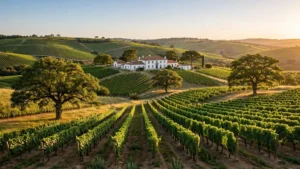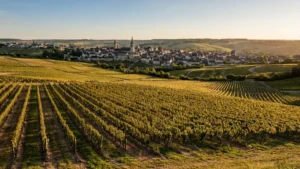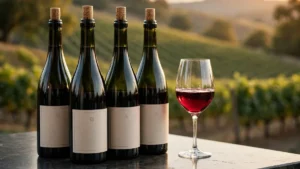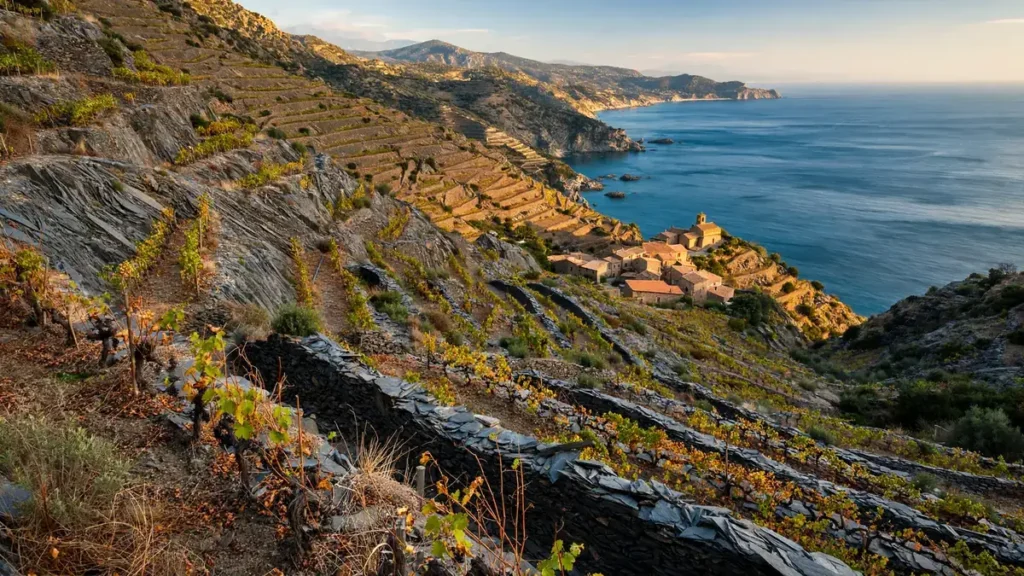
Best Luxury Banyuls Brands are the names that turn a small, sun-baked corner of southern France into one of the most rewarding corners of the wine world. Banyuls comes from four villages on the Côte Vermeille, where the Pyrenees meet the Mediterranean and Grenache vines cling to steep schist terraces that can only be worked by hand. The result is a fortified sweet wine of unusual depth, with dark cherry, fig, cocoa and spice over a backbone of mineral freshness.
What sets the best producers apart is patience. Banyuls is a vin doux naturel, made by adding grape spirit to fermenting must so natural sweetness and fruit are preserved, and the finest bottles then spend years maturing in oak, glass demijohns or both. Some rest in barrel for a decade or more, developing rancio notes of walnut, dried orange and coffee, while others are bottled young to keep their vivid fruit. Either way, the top estates share the same discipline: old vines, tiny yields, and a refusal to rush.
This guide gathers the ten producers whose Banyuls bottles consistently justify their price, from historic domaines in Banyuls-sur-Mer to small family estates in Collioure and Port-Vendres. Each earns its place through vineyard quality, cellar character, and pleasure in the glass, so whether you are buying your first bottle or adding to a serious collection, you can choose with confidence.
Key takeaways
- Banyuls is a fortified sweet wine from four villages on the Côte Vermeille, made mainly from old-vine Grenache grown on steep schist terraces.
- The finest producers work tiny yields by hand and age their wines for years, which is why the best bottles cost more and taste deeper.
- Banyuls Rimage is youthful and fruit-driven, while Ambré, Tuilé and Hors d’Age styles develop nutty, oxidative rancio character with age.
- Banyuls Grand Cru must age for at least thirty months in wood, and the best examples cellar gracefully for twenty years or more.
- Serve Banyuls slightly cool, in a small wine glass, with chocolate desserts, blue cheese, or on its own after dinner.
How We Chose These Brands
Every producer in this guide was judged on the same four measures: vineyard quality and age, consistency across vintages, clarity of house style, and value at its price. We favoured estates with old vines on the steepest schist slopes, since those parcels produce the most concentrated fruit, and producers whose wines are widely available enough to buy without a waiting list.
Price ranges below reflect typical retail for a standard 75cl bottle of each producer’s signature Banyuls, with older and Grand Cru bottlings above the range. The oldest vintages are often sold only at the cellar door or through specialist merchants, so check with a trusted retailer before assuming a bottle is in stock.
The 10 Best Luxury Banyuls Brands Compared
| Brand | Signature style | Typical price | Best for |
|---|---|---|---|
| Domaine de la Rectorie | Rimage and Grand Cru | $45–$90 | Collectors and first-time buyers |
| Domaine du Mas Blanc | Hors d’Age and Rancio | $40–$120 | Aged, oxidative styles |
| Domaine de la Tour Vieille | Grand Cru and Réserve | $35–$85 | Classic cellar character |
| Domaine Vial-Magnères | Rimage and Ambré | $30–$70 | Everyday luxury and gifting |
| Domaine du Traginer | Rimage and Grand Cru | $35–$80 | Terrace-grown intensity |
| Domaine Coume del Mas | Grand Cru and Folio | $40–$95 | Modern, polished Banyuls |
| Domaine Madeloc | Rimage and Grand Cru | $45–$100 | Collioure elegance |
| Domaine du Clos des Paulilles | Rimage and Ambré | $30–$65 | Approachable, fruit-forward bottles |
| Domaine de la Casa Blanca | Ambré and Rancio | $35–$90 | Oxidative depth and value |
| Domaine de l’Étoile | Rimage and Grand Cru | $40–$85 | Small-estate discovery |
Domaine de la Rectorie
Domaine de la Rectorie is the estate many collectors name first when Banyuls comes up, and its reputation is well earned. Based in Banyuls-sur-Mer, it farms old Grenache on the steepest schist terraces, and its wines show the full force of that terroir: deep black cherry, plum, liquorice and a saline, mineral edge that keeps the sweetness in balance. The Rimage is vivid and youthful, while the Grand Cru cuvées add spice, cocoa and dried fig after long ageing in wood.
La Rectorie is remarkably consistent, and its Grand Cru bottlings age for two decades without losing freshness, making it the safest choice to represent Banyuls at its best.
Domaine du Mas Blanc
Domaine du Mas Blanc is the reference point for aged Banyuls, and its Hors d’Age bottlings are among the most admired sweet wines in France. Run by the Parcé family for generations, the estate specialises in long oxidative ageing, with wines resting in oak and glass for many years before release. The result is rich in walnut, dried apricot, coffee, orange peel and rancio spice, with a silky rather than heavy texture.
Mas Blanc rewards patience more than any other name here, and its Hors d’Age is one of the finest after-dinner wines money can buy.
Domaine de la Tour Vieille
Domaine de la Tour Vieille is a family estate with deep roots in Collioure, and its Banyuls wines carry a distinctive warmth and generosity. Its vineyards sit on schist slopes above the sea, where old Grenache vines produce small, concentrated berries that give the wines their dark colour and intense fruit. The Réserve and Grand Cru bottlings balance ripe cherry and plum against cocoa, spice and a touch of iodine from the maritime air.
Tour Vieille also offers strong value, with entry bottlings carrying genuine luxury character at a fair price, and its older wines develop beautifully in the cellar.
Domaine Vial-Magnères
Domaine Vial-Magnères has been making Banyuls since the nineteenth century, and its wines combine tradition with a polished, modern feel. Its Rimage is bright and fruit-forward, with fresh cherry, raspberry and a hint of violet, while its Ambré bottlings show the softer, nutty side of oxidative ageing. Both are made with the same care, from hand-harvested Grenache on terraced slopes.
Vial-Magnères is an ideal introduction to luxury Banyuls: expressive, easy to pair with desserts, and, given its long history, a thoughtful gift for a wine lover.
Domaine du Traginer
Domaine du Traginer is a small estate whose wines punch well above their size, with a style that is intense, structured and unmistakably tied to its terraces. Its Banyuls Rimage shows dark, brooding fruit, with blackberry, cherry, liquorice and spice, while its Grand Cru adds depth and a long, mineral finish. Everything is made in small quantities and released only when the domaine is satisfied it is ready.
Production is limited, so Traginer bottles reward the buyer who seeks them out; if you enjoy Banyuls with grip and concentration, follow this producer closely.
Domaine Coume del Mas
Domaine Coume del Mas brings a modern sensibility to Banyuls, with clean, precise wines that showcase the appellation’s fruit at its most polished. Its vineyards lie on high schist terraces above Collioure, where altitude and sea breeze preserve freshness, and its Grand Cru bottlings balance ripe dark fruit with fine tannins and a long, elegant finish. The house style is less oxidative than some neighbours, which appeals to drinkers coming from fine red wine.
Coume del Mas suits the modern luxury buyer, and its attention to detail, from vineyard work to careful ageing, shows in every glass.
Domaine Madeloc
Domaine Madeloc is a Collioure estate known for the finesse of its wines, and its Banyuls bottlings are among the most elegant in the appellation. It works old vines on steep slopes, and its Rimage shows lifted aromas of cherry, raspberry and rose, with a palate that is supple and precise rather than weighty. The Grand Cru cuvées add spice, cocoa and dried fruit while keeping that lightness of touch.
Madeloc is the producer to choose for refined, graceful Banyuls, a natural match for delicate desserts and soft cheeses, and a standout for collectors who value elegance over power.
Domaine du Clos des Paulilles
Domaine du Clos des Paulilles sits in a sheltered valley near Port-Vendres, where its vineyards benefit from sun, sea air and the protection of the surrounding hills. Its Banyuls wines are fruit-forward and approachable, with generous cherry and plum flavours, a touch of spice, and a smooth, welcoming texture. The Rimage is an excellent everyday luxury bottle, while the Ambré offers a gentle introduction to oxidative styles.
For buyers seeking a reliable, delicious Banyuls without the highest price tag, this domaine delivers every time.
Domaine de la Casa Blanca
Domaine de la Casa Blanca is a small, traditional estate whose Ambré and Rancio bottlings are prized by those who love the oxidative side of Banyuls. It ages its wines patiently in oak, allowing them to develop the walnut, dried fruit, coffee and spice notes that define the great aged styles. The wines are full-flavoured yet balanced, with a freshness from the schist soils and the sea air.
Casa Blanca offers excellent value among producers of aged Banyuls, and its older bottlings are a quiet bargain for the quality in the bottle.
Domaine de l’Étoile
Domaine de l’Étoile is a small family estate that produces Banyuls of real charm and individuality, a discovery for anyone who has only tried the biggest names. The Rimage is bright and generous, with cherry, plum and spice, while the Grand Cru shows greater depth and a long, mineral finish. Everything is made on a human scale, with hand-harvested fruit and careful, unhurried ageing.
For the curious buyer, l’Étoile proves that small estates can stand beside the greats, and its bottles are a pleasure to share with friends who think they know sweet wine.
Banyuls Styles Explained
Understanding the styles on the label makes choosing a bottle much easier, because each one offers a different kind of pleasure. The differences come down to grape colour, ageing time, and whether the wine matures in a reductive or oxidative environment.
Rimage
Rimage is the youngest, most fruit-driven style of red Banyuls, aged briefly in tank or barrel to preserve its vivid colour and primary aromas. Expect fresh black cherry, raspberry, plum and a hint of spice, with a generous, lively palate. It pairs beautifully with chocolate desserts and berry tarts.
Ambré and Tuilé
Ambré and Tuilé are oxidative styles, aged in wood or glass for at least thirty months, giving them their amber or brick-red colour and nutty, complex character. Ambré, from white grapes, shows dried apricot, honey, walnut and spice, while Tuilé, from red grapes, leans towards dried cherry, fig, coffee and cocoa. Both are superb with blue cheese, nuts and caramel desserts.
Grand Cru
Banyuls Grand Cru is the appellation’s top tier, requiring at least thirty months of ageing in wood and coming only from the best parcels. These wines combine the depth of aged Banyuls with remarkable freshness, cellar longest, and often improve for twenty years or more.
Blanc and Rosé
Banyuls Blanc and Banyuls Rosé are made in smaller quantities, but they deserve attention for their delicacy and charm. The Blanc, from Grenache Blanc and other white varieties, offers honey, citrus, white flowers and spice, while the Rosé is light, floral and gently fruity. Both are best young and slightly chilled, as an elegant aperitif or a partner for fruit desserts.
How to Taste and Serve Banyuls
Banyuls deserves the same care as any fine wine, and a few simple habits make a real difference. Serve it slightly cool, at around 14 to 16 degrees Celsius, in a small white-wine glass rather than a tiny liqueur glass, so the aromas have room to open. Pour around 75 millilitres and let the wine breathe for a few minutes before the first sip.
When tasting, look for balance between sweetness, acidity and flavour: the best Banyuls never feels cloying, because Grenache acidity and schist minerality keep the sweetness in check. Notice the finish, since great bottles leave cherry, spice and cocoa lingering long after the wine is gone. Taste the youngest Rimage first and the oldest oxidative styles last, so delicate fruit is not overwhelmed.
Keep unopened bottles lying down in a cool, dark place; once open, a bottle keeps for two to three weeks in the fridge, so Banyuls is easy to enjoy slowly, a glass at a time. For a wider sense of how red wines are chosen and enjoyed, the guide to the best red wines is a useful companion to this list.
Food Pairings Worth the Bottle
Banyuls earns its place at the table through pairings few other wines can match. Dark chocolate is the classic partner: a square of 70 percent chocolate, a flourless chocolate cake, or a chocolate fondant all echo the wine’s cherry and cocoa notes. Blue cheeses such as Roquefort and Stilton are equally celebrated, because the salt and tang of the cheese balance the wine’s sweetness and make both taste better.
Beyond the classics, Banyuls works with foie gras, roasted nuts, tarte Tatin, and fruit desserts such as cherry clafoutis or fig tart. Oxidative styles suit caramel desserts and aged hard cheeses, while lighter Blanc and Rosé styles suit fruit salads and almond cakes. Avoid anything very sweet and creamy without acidity, which can make the wine feel heavy.
Banyuls also travels well beyond the dessert course, and a great bottle can anchor an entire evening. Many buyers pair a special Banyuls with one of the luxury yachts for food and wine trips for a memorable occasion.
Visiting Banyuls Country
A visit to the Côte Vermeille adds a dimension no tasting note can capture, because the landscape explains the wine: steep terraces, hand-built stone walls, and vines in sunlit schist within sight of the Mediterranean. Most estates in this guide welcome visitors, and the cellar doors in Banyuls-sur-Mer, Collioure and Port-Vendres are among the most welcoming in France.
Visit in late spring or early autumn, taste at two or three estates a day, and buy the bottles you loved at the cellar door, where older vintages are often available. Staying nearby makes the trip far more enjoyable, as the guide to luxury vineyard hotels shows for travellers who want to sleep among the vines.
Buying Checklist
- Choose the style first: Rimage for fresh fruit, Ambré or Tuilé for nutty complexity, Grand Cru for the finest and longest-lived bottles.
- Check the vintage and the ageing statement, since older Banyuls and Grand Cru bottlings command higher prices for good reason.
- Buy from a specialist wine merchant or the estate itself, where provenance and storage are reliable.
- Inspect the fill level and cork on older bottles before paying a premium.
- Start with one bottle from two or three producers before committing to a case, so you learn which house style suits your palate.
- Store bottles lying down in a cool, dark place, and keep opened bottles refrigerated so they stay fresh for two to three weeks.
Frequently Asked Questions
What is Banyuls wine?
Banyuls is a fortified sweet wine, known as a vin doux naturel, from four villages on the Côte Vermeille in southern France: Banyuls-sur-Mer, Collioure, Port-Vendres and Cerbère. It is made mainly from Grenache, with grape spirit added during fermentation to preserve natural sweetness and fruit, then aged in oak, glass or both.
Is Banyuls a red wine?
Most Banyuls is red, made from Grenache Noir, but the appellation also produces white Banyuls from Grenache Blanc and other white varieties, and a small amount of rosé. The red styles are the best known and most widely available.
How long does Banyuls last once opened?
An opened bottle of Banyuls keeps well for two to three weeks in the refrigerator, thanks to its fortification and natural sweetness. Recork it tightly and keep it in the fridge.
What is the difference between Banyuls and Port?
Both are fortified sweet wines, but Banyuls comes from schist terraces above the Mediterranean in southern France, while Port comes from the Douro Valley in Portugal. Banyuls is typically lighter and more mineral, with cherry, spice and rancio notes, while Port is often richer and more overtly fruity.
How should Banyuls be served?
Serve Banyuls slightly cool, at 14 to 16 degrees Celsius, in a small white-wine glass, in a modest pour of around 75 millilitres. It is best enjoyed after dinner, with chocolate desserts or blue cheese, or simply on its own as a digestif.
Is Banyuls Grand Cru worth the price?
Yes, for drinkers who value depth and longevity. Banyuls Grand Cru must age for at least thirty months in wood, comes only from the best parcels, and the finest examples improve for twenty years or more. The price reflects tiny yields, hand-worked terraces and years of ageing.
The Bottom Line
The best luxury Banyuls brands share the same foundation: old Grenache vines on steep schist terraces, tiny yields worked by hand, and the patience to age wine properly. Domaine de la Rectorie leads for consistency and depth, Domaine du Mas Blanc defines the great aged styles, and Tour Vieille, Vial-Magnères and Traginer offer classic character at fair prices. Around them, Coume del Mas, Madeloc, Clos des Paulilles, Casa Blanca and l’Étoile each bring their own voice, from polished modern fruit to elegant Collioure finesse and small-estate charm. Start with a Rimage to learn the fruit, move to an Ambré or a Grand Cru to discover the depth, and keep one great bottle in the cellar for the evening it deserves.