
The best luxury brandy brands share one quality that no marketing budget can buy: time in oak. A fine brandy is grape wine, distilled twice and then left alone for years, sometimes decades, while wood, air and patience turn sharp spirit into something round, layered and quietly complex. The difference between a decent bottle and a great one is rarely the label. It is the age of the youngest spirit in the blend, the quality of the grapes, and the care taken in the cellar.
That is why choosing a luxury brandy can feel harder than choosing a luxury wine. The words on the bottle, VS, VSOP, XO, Hors d’Age, are real age statements, but they describe minimums, not the whole story. A house’s XO may contain eaux-de-vie that are twenty years old, or forty, and two bottles at the same grade can taste entirely different. Knowing what each house does best is the shortcut.
Below are nine brands worth considering, from the great Cognac houses to smaller producers making some of the most interesting brandy in the world today. Each one is described by what it does well, what to watch for, and who it suits best, so you can choose with your palate in mind, not just a famous name.
Key takeaways
- Luxury brandy is defined by long ageing in oak, and the age grade on the bottle is a minimum, not an average, so a house’s XO can be far older than the label requires.
- Cognac is brandy from a specific region of France, made from Ugni Blanc grapes and double-distilled in copper pot stills, while Armagnac, Spanish brandy and American brandy follow different rules and taste different.
- VS means at least two years in oak, VSOP at least four, and XO at least ten, but the best bottles contain much older spirit than those minimums.
- Drink luxury brandy neat in a tulip-shaped glass or a small snifter, at room temperature, and give it a few minutes to open up before the first sip.
- Price is a poor guide on its own, and a famous name does not guarantee you will love the style, so taste a house’s VSOP before committing to its XO.
What brandy is, and why the region matters
Brandy is a spirit distilled from wine and then aged in wood. Most luxury brandy starts life as white wine made from Ugni Blanc grapes, which are high in acid and low in alcohol, an unremarkable table wine that happens to distil beautifully. The wine is distilled twice in copper pot stills, and the clear spirit that comes off the still, called eau-de-vie, goes into oak barrels to age.
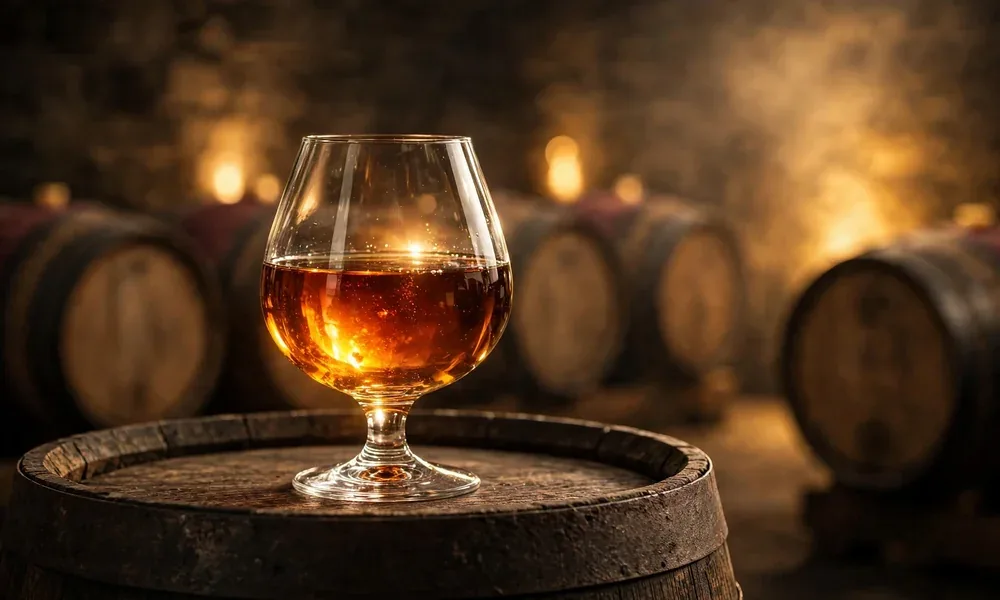
Ageing is where brandy becomes brandy. In the barrel, the spirit picks up colour, vanilla, spice and dried fruit notes from the wood, while a small share evaporates each year, the part cellar masters call the angels’ share. In Cognac, that loss is around two to three percent a year, which is one reason truly old brandy is expensive. Much of what was made simply disappears into the air.
The region matters because the rules, the grapes and the climate all shape the result. Cognac, in southwestern France, is the most famous, and its houses have spent centuries refining a style that is smooth, elegant and consistent. Armagnac, from Gascony, is distilled once rather than twice, and tends to be bolder and more rustic. Spanish brandy, aged in a solera system, is usually rounder and sweeter, while American brandy is often fruit-forward and softer.
How we chose these brands and what to look for
Look first at the age grade. VS, or Very Special, means the youngest spirit in the blend has spent at least two years in oak. VSOP means at least four years, and XO, or Extra Old, means at least ten. Above that sit names like Napoleon, Hors d’Age and vintage-dated bottles, which can be twenty, thirty or fifty years old. A higher grade is a reliable sign of depth, and it is the first thing to check before you look at the price.
Look next at the house style. Some houses are famous for richness and power, with dark fruit, chocolate and spice. Others are known for finesse, with floral notes, citrus and a lighter touch. The house that suits you is the one whose style matches what you enjoy, and the only reliable way to learn that is to taste a VSOP from two or three different houses side by side.
Finally, look at how you plan to drink it. A brandy you will sip neat after dinner deserves a different budget from one you will mix, and a good XO is wasted in a long drink. Our guide to making an Old Fashioned that actually tastes right shows the same logic at work: a spirit with enough structure to stand up to bitters and sugar is the one that makes the best drink.
The 9 best luxury brandy brands
Hennessy
What we like: The largest Cognac house in the world, and the most consistent. The XO is rich and rounded, with dried fruit, cocoa, cinnamon and a long, warm finish, while the Paradis is softer, silkier and more floral. The range is deep, from the accessible VS to rare, decades-old blends.
What to consider: The fame carries a premium, and the entry-level VS is best in mixed drinks rather than neat. Best known for: XO, Paradis, Richard Hennessy. Region: Cognac, France. Style: Rich, round, spicy.
Hennessy is the safe first choice in luxury brandy. The house has blended Cognac since 1765, and if you buy one XO to keep on the shelf, this is the one most people will recognise and enjoy.
Rémy Martin
What we like: Made only from grapes grown in Grande Champagne and Petite Champagne, the two finest crus of Cognac, which gives the range a distinctive floral, fruity character. The XO is opulent and smooth, and Louis XIII, the house’s prestige blend, contains eaux-de-vie up to a century old.
What to consider: Louis XIII is priced for collectors and special occasions, not everyday drinking. Best known for: XO, Louis XIII, 1738 Accord Royal. Region: Cognac, France. Style: Floral, fruity, elegant.
Rémy Martin is the connoisseur’s favourite among the big houses, and the Fine Champagne designation is a real quality signal. The XO is the sweet spot of the range: complex enough to sip slowly, smooth enough to enjoy without thinking about it.
Martell
What we like: The oldest of the great Cognac houses, founded in 1715, with a style that leans smooth and mellow rather than fiery. Cordon Bleu, created in 1912, is a classic XO-style blend with notes of plum, candied orange and spice.
What to consider: The softer style can feel understated next to a bolder house, so give it time in the glass. Best known for: Cordon Bleu, L’Or de Jean Martell, Chanteloup XXO. Region: Cognac, France. Style: Smooth, mellow, fruity.
Martell suits people who find some Cognacs too assertive. There is no harsh edge here, and the Cordon Bleu has been a benchmark of the category for more than a century.
Courvoisier
What we like: A house with a long association with French emperors and Parisian style, and a range that is consistently smooth and approachable. The XO is balanced and honeyed, with dried apricot, vanilla and oak spice.
What to consider: The VSOP is a fine mixer, but the XO is where the house’s real character shows. Best known for: XO, L’Essence de Courvoisier, VSOP. Region: Cognac, France. Style: Balanced, honeyed, smooth.
Courvoisier is often the most approachable of the big four Cognac houses. The XO is generous without being heavy, and for a gift it is a reliable choice that rarely disappoints.
Delamain
What we like: A smaller, family-owned house that only bottles XO and above, and only from Grande Champagne. The Pale and Dry XO is lighter, drier and more floral than the big-house XOs, with citrus, white flowers and a long, clean finish.
What to consider: Harder to find than the big houses, and the drier style surprises people expecting a sweet, heavy Cognac. Best known for: Pale and Dry XO, Vesper, Pléiade collection. Region: Cognac, France. Style: Dry, floral, refined.
Delamain is the bottle for someone who already likes Cognac and wants to see how elegant it can be. If you enjoy a dry martini or a crisp white wine, this is the brandy most likely to win you over.
Frapin
What we like: A single-estate producer in Grande Champagne, making Cognac from its own vineyards and distilling on the property. The VSOP is unusually characterful for its grade, and the XO Chateau de Fontpinot is rich and spicy, with notes of fig, liquorice and toasted oak.
What to consider: Distribution is limited outside France and specialist shops, so you may need to order it. Best known for: VSOP, XO Chateau de Fontpinot, Cigar Blend. Region: Cognac, France. Style: Rich, spicy, estate-grown.
Frapin is proof that small can be better. Because the house controls everything from the vine to the bottle, the style is distinctive, with a depth that larger blends sometimes smooth away.
Hine
What we like: A historic house with a reputation for lightness and precision. The H by Hine VSOP is fresh and approachable, while the Antique XO is a classic of the category, with dried fruit, nutmeg and a silky texture.
What to consider: The lighter style can be mistaken for simplicity, so taste it slowly and let it warm in the glass. Best known for: Antique XO, H by Hine VSOP, vintage Cognacs. Region: Cognac, France. Style: Light, precise, silky.
Hine is the quiet achiever of Cognac. The Antique XO shows what patience does for brandy: decades in oak, and still bright, lifted and alive in the glass.
Pierre Ferrand
What we like: A house that revived older, pre-phylloxera styles of Cognac, with single-vineyard and vintage bottlings that show how varied the region can be. The 1840 Original Formula is a faithful recreation of a 19th-century Cognac, drier and more spirited than modern blends.
What to consider: The 1840 is intentionally old-fashioned and will taste drier than a typical XO, which is the point. Best known for: 1840 Original Formula, Selection des Anges, Ambre. Region: Cognac, France. Style: Historic, dry, complex.
Pierre Ferrand is for the curious drinker. Its range is the best way to taste what Cognac was like before the style became standardised, and the Selection des Anges is one of the finest XOs at its price.
Germain-Robin
What we like: California’s most respected brandy maker, founded by Hubert Germain-Robin, a Cognac native who brought French technique to the state’s wine country. The XO is fruit-forward and warm, with apple, pear, vanilla and baking spice.
What to consider: It tastes different from Cognac, softer and more fruit-driven, so judge it on its own terms. Best known for: XO, Single Barrel, Craft Method. Region: California, USA. Style: Fruit-forward, warm, soft.
Germain-Robin proves that great brandy is not a French monopoly. The house distils Californian wine grapes in small copper pot stills and ages them in Limousin oak, and it is often the bottle that converts wine lovers to brandy.
Brandy at a glance
| Detail | What is known |
|---|---|
| VS (Very Special) | Youngest spirit aged at least 2 years in oak; best for cocktails |
| VSOP (Very Superior Old Pale) | Youngest spirit aged at least 4 years; the best value for sipping and mixing |
| XO (Extra Old) | Youngest spirit aged at least 10 years; the standard for luxury sipping |
| Napoleon and Hors d’Age | Older blends, often 20 years or more; no legal minimum, so check the house |
| Cognac | From the Cognac region of France; double-distilled in copper pot stills |
| Armagnac | From Gascony; distilled once in a column still; bolder and more rustic |
| How to serve it | Neat, at room temperature, in a tulip glass or small snifter |
| How to store it | Upright, cool and dark; brandy stops ageing once bottled, so it keeps for years |
How to serve, pair and buy luxury brandy
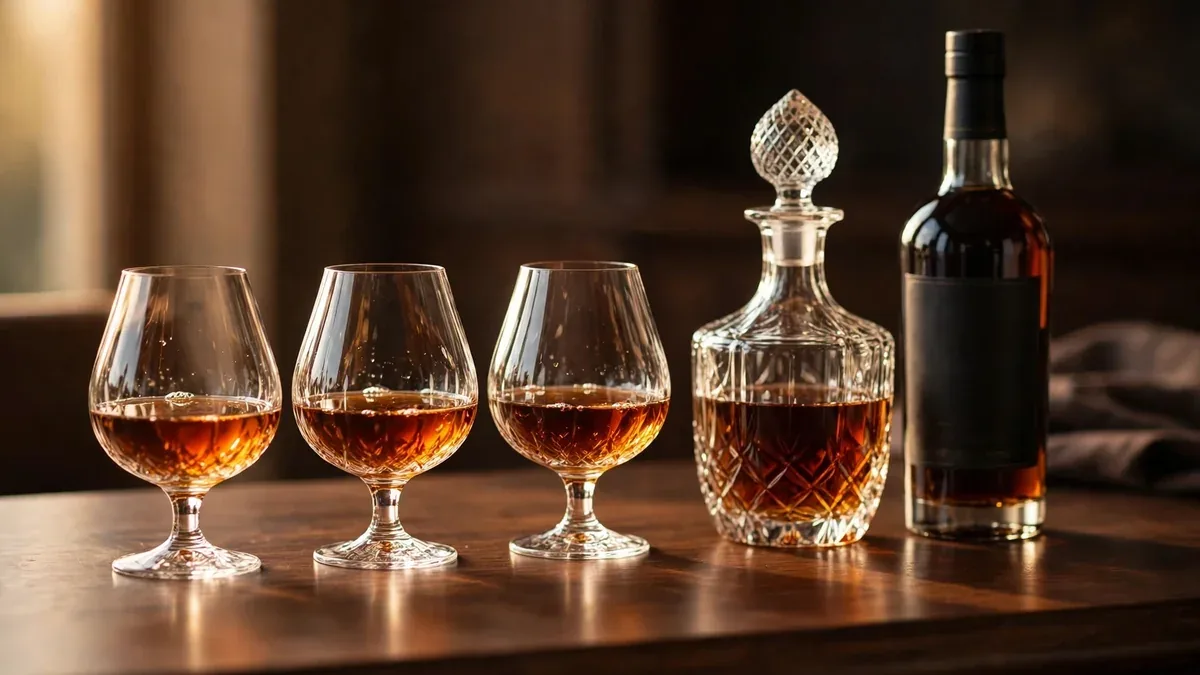
Serve brandy neat, at room temperature, in a tulip-shaped glass or a small snifter. The tulip shape concentrates the aromas at the rim. Warm the glass gently in your hand, swirl once, and smell before you sip. Let it sit for a few minutes. A brandy that seems closed on the first sip often opens up beautifully after five minutes in the glass.
Pairing is simpler than it looks. Dark chocolate, dried figs, walnuts and aged hard cheese all work well with an XO, because their flavours echo what the oak has already put into the spirit. A cigar is the classic companion, and a strong, unsweetened espresso alongside a small measure of brandy works well too. Avoid anything too sweet or too strongly flavoured, which will bury the brandy rather than complement it.
Brandy also earns its place in cocktails, and a good VSOP is the right bottle for that job. It brings depth and warmth to drinks that would otherwise taste thin, and it pairs well with bitters, citrus and sweet vermouth. If you enjoy the way oak changes a spirit, our guide to reposado tequila shows how a few months in barrel transform a very different spirit.
When buying, start with a VSOP from a house whose style you like, and only move up to XO when you know what you are paying for. Check that the bottle is sealed and the fill level is high, and buy from a reputable retailer. Luxury brandy is faked more often than most spirits, and a bottle with no provenance is a gamble. A bottle of amaretto is a useful comparison when you are shopping for after-dinner spirits, because it shows how a sweet, almond-led liqueur differs from a dry, oak-aged brandy.
Checklist: choosing a luxury brandy honestly
Use these checks before you buy, and again after your first glass.
- Check the grade: VS for mixing, VSOP for everyday sipping and cocktails, XO for slow, neat drinking.
- Check the region: Cognac for elegance and consistency, Armagnac for boldness, Spanish brandy for roundness, American brandy for fruit.
- Check the house style: taste a VSOP from two or three houses before buying an XO from any of them.
- Check the glass: use a tulip glass or a small snifter, never a wide balloon that lets the aromas escape.
- Check the price against the age: a house XO with much older spirit inside is worth more than a prestige name with a young blend.
- Check the bottle: buy sealed, from a reputable retailer, and keep it upright in a cool, dark place.
Frequently asked questions
What is the difference between brandy and Cognac?
All Cognac is brandy, but not all brandy is Cognac. Cognac is brandy made in a specific region of France, from specified grapes, double-distilled in copper pot stills and aged under strict rules.
What does VS, VSOP and XO mean on a brandy bottle?
They are minimum age grades for the youngest spirit in the blend. VS means at least two years in oak, VSOP at least four years, and XO at least ten years. The actual blend is usually much older.
Should I drink luxury brandy neat or with ice?
Neat, at room temperature, is the best way to taste a luxury brandy. A single small cube of ice is acceptable if you prefer it cooler, but it will dull the aromas, so try it neat first.
How long does an opened bottle of brandy last?
Brandy stops ageing once it is bottled, but it does not go off quickly. An opened bottle kept upright, cool and dark will stay good for a year or more, though the flavour will slowly fade once the bottle is less than half full.
Is expensive brandy always better?
No. Price reflects age, rarity and brand as much as flavour. A well-made VSOP from a good house can be more enjoyable than a famous XO that does not suit your taste. Buy for style first, and let the grade follow, rather than the other way round.
What is the best luxury brandy for a beginner?
Start with a VSOP from Hennessy, Rémy Martin, Martell or Courvoisier. All four are widely available, reasonably priced for the quality, and show a different side of Cognac.
The bottom line
The best luxury brandy brands are the ones that respect time. Hennessy, Rémy Martin, Martell and Courvoisier have spent centuries perfecting a consistent, elegant style, and their XOs remain the benchmark. Smaller houses like Delamain, Frapin, Hine and Pierre Ferrand show what happens when a producer chooses finesse over volume, and Germain-Robin proves the same care outside France can produce something genuinely distinctive.
Start with a VSOP, learn which house style you prefer, and only then spend on an XO or a prestige blend. Taste slowly, serve it neat in a proper glass, and judge the bottle by what is in it, not by the name on the label. That is the honest way to find a brandy you will come back to, rather than one you buy once for the shelf.
Please enjoy brandy responsibly, and only if you are of legal drinking age where you live.