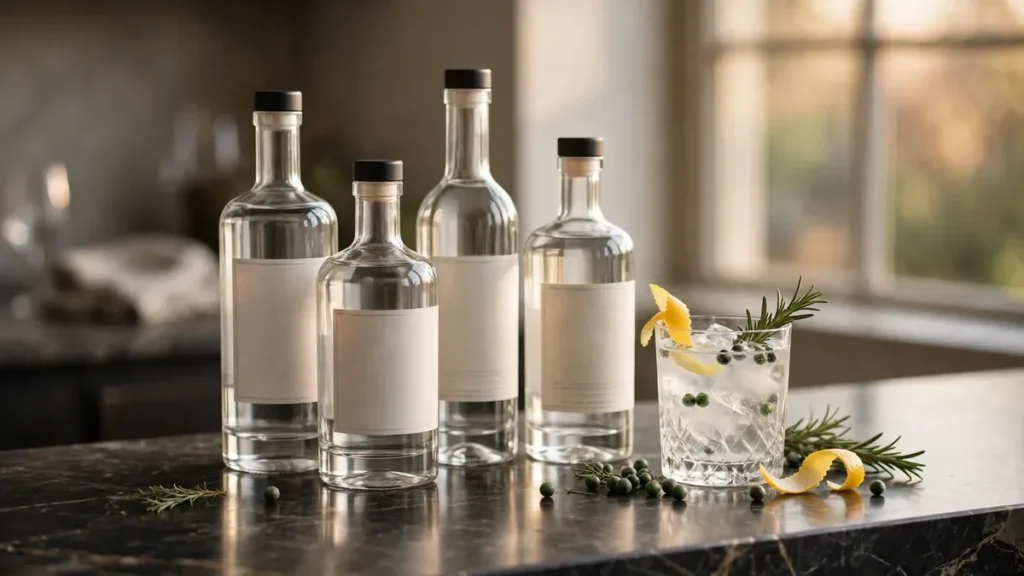
The best luxury gin brands earn their place on the top shelf through a clear point of view, careful distillation, and a flavour that cannot be mistaken for anything else. A luxury gin is not simply a more expensive bottle. It is a gin where the botanicals are chosen for a reason, the base spirit is clean enough to let them speak,.
The trouble is that price alone tells you very little. A tall, heavy bottle with a wax seal and a story about a remote island can hide a perfectly ordinary gin, while a quieter bottle from a small distillery can deliver far more character for less money. The brands that deserve the luxury label distil in small batches, name their botanicals and their process, and taste as good neat as they do in a cocktail.
Below are nine luxury gin brands worth considering in 2027, from a classic London dry to a Mediterranean gin built around olives and herbs, and from a Japanese gin shaped by sakura to a German gin made with 47 botanicals. Each one is described by what it tastes like, what it is good at, and who it suits best.
Key takeaways
- A luxury gin means a clean base spirit, a deliberate botanical recipe, small-batch distillation, and a flavour that holds up neat as well as in a cocktail.
- Juniper should still be present in a good gin, even in floral or citrus-led styles; if you cannot taste it at all, the gin is a flavoured spirit in all but name.
- Match the gin to the drink: a bold, juniper-forward gin suits a martini, a softer floral gin suits a light tonic, and a citrus-led gin suits a spritz or a gimlet.
- Price is a poor guide on its own. Some of the most rewarding bottles sit in the middle of the luxury range, and a high price can reflect packaging and rarity more than flavour.
- Botanical claims and limited editions are often marketing, and no gin improves with age once bottled, so buy a bottle to drink, not to keep.

What makes a gin a luxury gin
Every gin starts with a neutral spirit and juniper, which the law in most markets requires to be the predominant flavour. What separates a luxury gin is what happens after that. The distiller chooses a botanical recipe, often ten to forty ingredients, and balances them so that no single note shouts over the rest. Coriander adds warmth and spice, angelica root gives an earthy backbone, and citrus peel lifts the aroma.
Small-batch distillation matters because it gives the distiller control. In a small copper pot still, the distiller can make precise cuts, keeping the clean, fragrant heart of the run and discarding the harsh heads and the flat tails. That is why so many luxury gins name their stills and batch sizes on the label.
The base spirit matters just as much. A gin distilled from a clean grain or grape spirit tastes smooth and lets the botanicals lead, while a gin built on a rough base tastes hot and sharp. Taste a gin neat, at room temperature, before you judge it.
What to look for in a luxury gin
Look first at the juniper. It should be clear, piney, and fresh, not dull or medicinal. A gin that hides its juniper behind heavy floral or sweet notes may be pleasant, but it is not a great gin, and it will not behave like one in a martini. Look next at the balance. A good gin changes as you taste it: juniper first, then citrus or spice, then a long finish. Our guide to what makes the best gin explains how those botanical choices shape the flavour in the glass.
Look at the strength as well. Most luxury gins sit between 41 and 47 percent alcohol by volume, and that range is no accident. Below 40 percent, the botanicals can taste thin and the gin can disappear in a cocktail. Above 47 percent, the alcohol can overpower the aromatics unless the recipe is built for it. Finally, look at the bottle as a whole. A good luxury gin tells you where it was made, what went into it, and how it was distilled. Vague claims about handcrafted quality and secret recipes are a warning sign.
Hendrick’s Gin
What we like: A Scottish gin distilled in small batches with cucumber and rose petals alongside juniper, coriander and citrus, giving it a soft, floral character that is immediately recognisable and unmistakably different from a London dry.
What to consider: At 41.4 percent alcohol it is gentle, and its cucumber character can be lost in a heavily flavoured tonic. Key botanicals: Juniper, coriander, citrus peel, cucumber, rose petals. Strength: 41.4% ABV. Best serve: Gin and tonic with cucumber.
Hendrick’s made floral gin respectable, and it is the easiest luxury gin to recommend to someone who thinks they do not like gin.
Monkey 47 Schwarzwald Dry Gin
What we like: A German gin made with 47 botanicals from the Black Forest, including lingonberries, spruce shoots and local herbs, distilled in small batches and bottled at 47 percent. It is complex, piney and deeply aromatic, with a long, spicy finish.
What to consider: It is bold and intense, priced at the top of the range, and it can overwhelm a delicate tonic, so use a neutral tonic and grapefruit. Key botanicals: Juniper, spruce, lingonberry, 44 further botanicals. Strength: 47% ABV. Best serve: Martini or gin and tonic with grapefruit.
Monkey 47 is the connoisseur’s choice: distinctive, a little wild, and unlike anything else on the shelf.
The Botanist Islay Dry Gin
What we like: A Scottish gin from the Isle of Islay, made with 22 hand-foraged island botanicals alongside nine classic gin botanicals. It is fresh, herbal and gently salty, with a clean, coastal character.
What to consider: The herbal, almost savoury profile is unusual and not the best choice for a sweet cocktail. It shines in a martini or a gin and tonic with a bay leaf. Key botanicals: Juniper, coriander, cassia, 22 foraged Islay botanicals. Strength: 46% ABV. Best serve: Martini or gin and tonic with a bay leaf.
The Botanist tastes like the place it comes from, which is rare in gin.
Tanqueray No. Ten
What we like: A premium London dry gin distilled with fresh whole citrus fruits, including grapefruit, lime and orange, alongside juniper and chamomile. It is bright, clean and citrus-led, with a smooth, rounded finish.
What to consider: It is the most cocktail-friendly gin in this list, which also means it rarely surprises. Buy it for versatility. Key botanicals: Juniper, coriander, grapefruit, lime, orange, chamomile. Strength: 47.3% ABV. Best serve: Martini, gimlet, or gin and tonic with lime.
No. Ten is the professional’s gin, the bottle bartenders reach for when they want a gin that will never let a drink down.
Plymouth Gin
What we like: A historic English gin distilled in Plymouth since 1793, with a soft, earthy juniper character, a hint of cardamom and coriander, and a slightly oily, full texture. It is the original gin for a classic dry martini.
What to consider: Its gentle, earthy style can taste quiet next to a bold modern gin, and it suits a classic serve. Key botanicals: Juniper, coriander, cardamom, orange peel, orris root. Strength: 41.2% ABV. Best serve: Classic dry martini with a lemon twist.
Plymouth is the oldest name in this list, a reminder that luxury can mean history and restraint, not novelty.
Sipsmith London Dry Gin
What we like: A modern London dry gin from the first copper-pot distillery to open in London in nearly two centuries, made with ten botanicals in a small copper still. It is clean, juniper-led and well balanced, with lemon, orange and a warm, dry finish.
What to consider: It is a classic in style rather than a showpiece, so it will not surprise a seasoned gin drinker, but it is one of the most reliable bottles at its price. Key botanicals: Juniper, coriander, lemon peel, orange peel, cinnamon, liquorice. Strength: 41.6% ABV. Best serve: Gin and tonic with lemon, or a negroni.
Sipsmith is the gin to buy when you want a proper London dry done properly: honest and consistent.
Roku Japanese Craft Gin
What we like: A Japanese gin from the Suntory distillery, made with six Japanese botanicals, including sakura, sencha green tea, gyokuro, sansho pepper and yuzu, alongside eight traditional botanicals. It is delicate, floral and gently spiced, with a clean, silky texture.
What to consider: The flavours are subtle, and a strongly flavoured tonic or a heavy garnish can bury them. Serve it with a light tonic and yuzu or ginger. Key botanicals: Juniper, sakura, sencha, gyokuro, sansho pepper, yuzu. Strength: 43% ABV. Best serve: Gin and tonic with yuzu or ginger.
Roku is the most elegant gin in this list, and proof that a gin can be quiet and still be memorable.
Nolet’s Silver Dry Gin
What we like: A Dutch gin from the Nolet family distillery, made with Turkish rose, peach and raspberry alongside juniper, giving it a soft, floral, faintly fruity character that is unlike any other gin in this list. It is smooth, aromatic and easy to drink neat.
What to consider: The floral sweetness is distinctive and not to every taste, and it can read as too soft in a juniper-forward cocktail. It is best in a light, floral serve. Key botanicals: Juniper, Turkish rose, peach, raspberry. Strength: 47.6% ABV. Best serve: Gin and tonic with rose petals or a raspberry.
Nolet’s Silver is the romantic of the group, for people who love perfume and flowers as much as juniper.
Gin Mare Mediterranean Gin
What we like: A Spanish gin from the Mediterranean coast, distilled with arbequina olives, thyme, rosemary, basil and citrus, alongside juniper and coriander. It is savoury, herbal and warm, with a distinct olive note that makes it a natural partner for food.
What to consider: The savoury, olive-led character is unusual and does not suit sweet mixers. Serve it with a light tonic, rosemary, and an olive. Key botanicals: Juniper, arbequina olive, thyme, rosemary, basil, citrus. Strength: 42.7% ABV. Best serve: Gin and tonic with rosemary and an olive.
Gin Mare is the gin to pour with dinner, especially with Mediterranean food, cured meats and olives.
How to serve luxury gin well
A luxury gin deserves a good serve, and the serve is simpler than most people think. Use a large glass, plenty of solid ice, and a tonic that does not fight the gin. A neutral, lightly carbonated tonic is the right partner for most of these bottles. A strongly flavoured tonic, whether spiced, elderflower or heavily sweetened, can hide the botanicals you paid for, so save the flavoured tonics for a simpler gin. The same care applies across spirits, as our guide to what actually makes the best vodka explains about base spirit quality, and it holds for gin too.
Chill the glass first, add the gin, then the ice, then the tonic, poured gently down the side of the glass so the bubbles survive. The usual ratio is one part gin to three or four parts tonic, but a stronger gin such as Monkey 47 or Tanqueray No. Ten can take a little more tonic without disappearing. Stir once, gently, and garnish with restraint. One garnish is better than three competing ones: cucumber for Hendrick’s, grapefruit for Monkey 47, rosemary for Gin Mare, and a lemon twist for Plymouth.
For a martini, keep the vermouth and the gin cold, and stir with ice rather than shaking, so the drink stays clear and silky. A dry martini is five or six parts gin to one part dry vermouth, stirred for about thirty seconds, then strained into a chilled glass.
The caveats that matter
Gin is a spirit, and a luxury label does not change that. It should be enjoyed in moderation, and it is not a health product, whatever the botanicals on the label suggest. A gin made with rose petals and cucumber is still a spirit at more than 40 percent alcohol, and a botanical list is a flavour recipe, not a wellness claim.
Storage is straightforward. Gin does not improve in the bottle, so there is no reason to cellar it. Keep it upright, away from sunlight and heat, and it will hold its character for years. Once opened, a bottle keeps well for a year or more, although the aromatics will slowly fade. That is a practical difference from whisky, where a bottle’s age statement is part of its value: a bourbon like Maker’s Mark is shaped by its years in oak, while a gin is shaped entirely by the day it was distilled.
| Detail | What is known |
|---|---|
| What makes a gin luxury | Clean base spirit, deliberate botanical recipe, small-batch distillation, consistent flavour |
| Typical strength | 41 to 47 percent alcohol by volume for most luxury gins |
| Key flavour to check | Juniper should be clear and piney, even in floral or citrus-led styles |
| Best first taste | Neat, at room temperature, before adding tonic or ice |
| Best gin and tonic ratio | One part gin to three or four parts neutral tonic, over plenty of solid ice |
| Best martini ratio | Five or six parts gin to one part dry vermouth, stirred, not shaken |
| Storage | Upright, cool, away from sunlight; gin does not improve with age in the bottle |
| What luxury does not mean | A higher price does not guarantee better flavour; packaging and rarity can inflate cost |
Be wary of limited editions and celebrity bottles. A limited release can be a genuine experiment, but it can also be an ordinary gin in a special bottle at twice the price. Before paying a premium, check whether the distillery names the botanicals, the batch size and the method.
Checklist: choosing a luxury gin honestly
Use these checks before you buy, and again after your first taste.
- Taste it neat first, at room temperature, and check that the juniper is clear and the finish is long and pleasant.
- Check the strength on the label: most luxury gins sit between 41 and 47 percent, and a gin outside that range needs a reason.
- Read the botanical list and the method: named botanicals, small batches and a named still are good signs.
- Match the gin to the drink you actually make most: bold gin for a martini, soft floral gin for a light tonic, citrus gin for a gimlet.
- Buy the bottle to drink, not to keep: gin does not improve with age once bottled, so open it and enjoy it.
- Compare before you commit: taste two gins side by side, neat and in the same serve, and trust your palate over the price tag.
Frequently asked questions
What is the best luxury gin for a beginner?
Hendrick’s or Sipsmith are the safest first bottles. Hendrick’s is soft and floral in a gin and tonic, while Sipsmith is a clean, classic London dry that works in almost every cocktail.
What is the best luxury gin for a martini?
Tanqueray No. Ten or Plymouth are the classic choices. No. Ten is bright and citrus-led for a modern dry martini, while Plymouth is soft and earthy for a traditional martini with a lemon twist.
Is a more expensive gin always better?
No. Price can reflect packaging, rarity, import costs and marketing as much as flavour. The honest test is a side-by-side tasting rather than the number on the shelf.
Should I keep gin in the freezer?
You can, because a cold gin makes a colder martini. Freezing does not harm the spirit, but it does dull the aroma, so taste a new bottle at room temperature first, and only then decide whether you prefer it ice-cold.
What tonic should I use with a luxury gin?
A neutral, lightly carbonated tonic with a clean quinine bitterness. Avoid strongly flavoured or very sweet tonics, because they hide the botanicals. Match the garnish to the gin: cucumber for Hendrick’s, grapefruit for Monkey 47, rosemary for Gin Mare, and lemon for Plymouth.
Does gin go off once the bottle is opened?
Not quickly. An opened bottle kept upright, cool and out of sunlight will hold its character for a year or more, although the aromatics fade slowly, so finish an opened bottle within a year if you can.
The bottom line
The best luxury gin brands taste deliberate: a clean base spirit, a botanical recipe with a clear point of view, and a flavour that holds up neat, over ice, and in a cocktail. Hendrick’s and Roku are the gentle, floral choices. Tanqueray No. Ten and Sipsmith are the reliable cocktail workhorses. Monkey 47 and The Botanist are the distinctive bottles for people who want to taste something new. Plymouth is the classic, Gin Mare is the food-lover’s gin, and Nolet’s Silver is the floral outlier.
Buy one bottle, taste it neat, serve it simply, and judge it on the flavour in your glass, not the story on the label. The right luxury gin is the one you reach for again.
Please drink responsibly: enjoy gin in moderation, never drink and drive, and keep spirits out of reach of children.