The best luxury saffron brands sell more than a spice. They sell certainty: long, deep-red threads, a clean harvest, a named origin, and a colour that blooms gold in warm water instead of fading to a dull yellow. Saffron is the most expensive spice in the world by weight, and that price is exactly what makes it easy to get wrong. A small jar can cost as much as a good bottle of perfume, yet look almost identical to a jar of dyed corn silk to an untrained eye.
That gap between price and appearance is why the brand matters more here than with almost any other pantry ingredient. A serious saffron house grades its threads, tests for purity, names the harvest region, and packs in small, airtight quantities. A careless seller hides behind vague words like premium and pure, sells powder instead of whole threads, and leaves you guessing whether the colour in your rice came from saffron or from a dye.
Below are the brands worth your money in 2027, from Afghan and Iranian houses known for deep colour and long threads to Spanish and Kashmiri names with protected origins. Each one is described by what it does well, what to watch for, and who it suits best, so you can buy a jar you will actually use.
Key takeaways
- Buy whole threads, never powder, from a brand that names the origin, the grade, and the harvest year.
- Grade I, sargol, super negin, and coupe are the top grades to look for; they mean long, deep-red threads with little or no yellow style.
- A little saffron goes a long way: ten to twenty threads, bloomed in warm water, are enough for a dish that serves four.
- Real saffron smells warm, honeyed, and slightly hay-like, and turns water a clear golden yellow, never orange or cloudy red.
- No brand can guarantee a single origin or grade from a jar that lists no origin, no grade, and no harvest date.
What saffron actually is, and why it costs so much
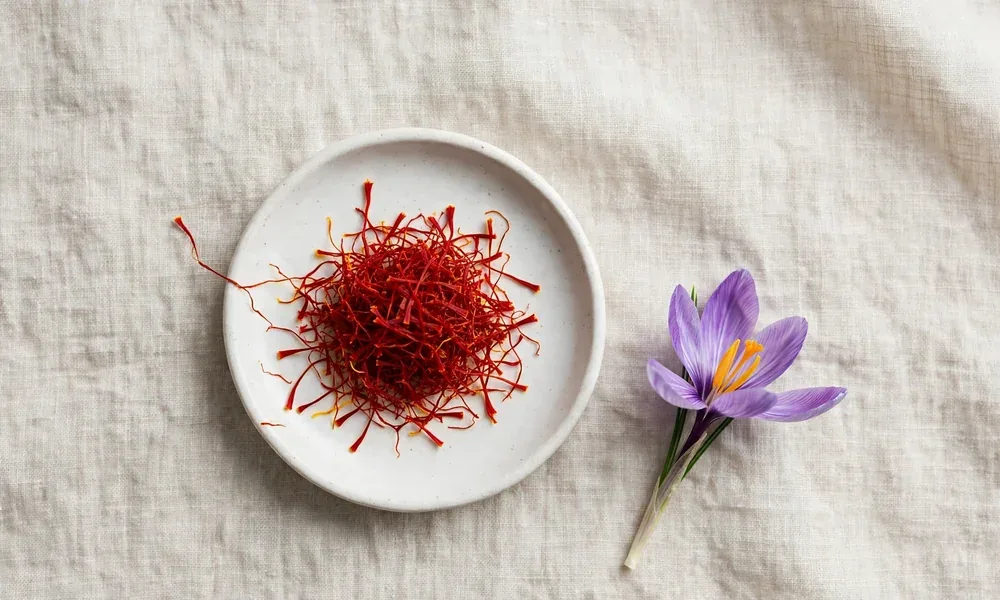
Saffron comes from the stigmas of the saffron crocus, Crocus sativus. Each flower produces only three stigmas, and each one must be picked by hand over a short flowering season in autumn. It takes roughly 150,000 flowers to produce a single kilogram of dried saffron. That labour is the main reason for the price, and it is also the reason saffron has been faked for centuries.
The colour comes from crocin, the flavour from picrocrocin, and the aroma from safranal. Together they give saffron its unmistakable character: a warm, honeyed scent, a gently bitter and floral taste, and a golden colour that is clear rather than murky. When those three compounds are weak, the saffron is weak, however red it looks in the jar.
Origin matters because soil, altitude, and drying method change the result. Iranian saffron, especially from Khorasan, is known for deep colour and strong aroma. Afghan saffron from Herat has a similar profile and has won international taste awards. Spanish saffron from La Mancha carries a protected designation of origin and a softer, more floral character. Kashmiri saffron from Pampore is darker, with long threads and a rich, almost smoky warmth. None of these is automatically better than the others.
Saffron also crosses into beauty and fragrance, which is part of its luxury appeal. It appears as a warm spice note in many luxury perfumes that use saffron as a warm spice note, and it has a long history in skin care, where it is valued for its colour and antioxidant compounds. A food-grade jar is not automatically a skincare ingredient, but the shared language of rarity, warmth, and craft is why the same buyers often care about both.
How we chose these brands and what to look for
Look first at the threads themselves. Good saffron threads are long, deep red, and slightly trumpet-shaped at one end, with little or no pale yellow style attached. Short, broken, or mixed-colour threads are a sign of a lower grade. Powder is harder to judge and easier to adulterate, which is why every brand in this guide sells whole threads as its main product.
Look next at what the label actually says. A trustworthy brand names the country and region of origin, the grade, the net weight, and ideally the harvest year. It packs in glass, not plastic, with a tight seal, and it gives a batch or lot number. Vague claims and missing weights are reasons to put the jar back.
Finally, look at how the brand treats its growers. Saffron is hand-harvested, and the best houses work directly with farming families and pay above the commodity price. Direct trade does not guarantee quality on its own, but it is a good sign that the brand is invested in the harvest rather than simply buying the cheapest bulk saffron and repackaging it.
Rumi Spice
What we like: Afghan saffron sourced directly from farming families in Herat, with a strong colour, a warm honeyed aroma, and a clear commitment to paying growers above the commodity price.
What to consider: A smaller range than larger spice houses, and the price reflects direct trade, so it is not the cheapest gram for gram. Origin: Herat, Afghanistan. Grade: Grade I, whole threads. Size: Small jars, typically 1 to 2 grams. Best for: Cooking, especially rice, stews, and desserts, where colour and aroma both matter.
Rumi Spice is the brand most often recommended by chefs who want Afghan saffron with a traceable story. The threads are long and deep red, and the flavour is warm and slightly floral rather than sharp.
Zaran Saffron
What we like: Iranian sargol and super negin saffron, with long, unbroken threads, a very deep red colour, and a strong, clean aroma that holds up in cooking.
What to consider: Super negin is the top grade and priced accordingly, and the strength means you should use fewer threads than you think. Origin: Khorasan, Iran. Grade: Sargol and super negin, whole threads. Size: Small tins and jars, typically 1 to 5 grams. Best for: Cooks who want maximum colour and aroma from a small amount.
Zaran makes the grade system easy to see. Sargol means only the red stigma tips, with the yellow style removed. Super negin means the longest, thickest, most carefully sorted threads.
Baby Brand Saffron
What we like: A long-established Indian brand for Kashmiri saffron, with whole threads, a dark red colour, and a rich warmth that suits milk-based desserts, biryani, and kehwa.
What to consider: Kashmiri saffron is often sold in very small quantities, and the brand is widely copied, so buy from a reputable retailer and check the seal. Origin: Kashmir, India. Grade: Whole threads, Kashmiri mongra. Size: Small boxes, typically 1 gram. Best for: Indian cooking, desserts, and gifting within South Asian households.
Baby Brand Saffron has been sold in India for decades. The threads are dark and long, the aroma is deep and slightly smoky, and a pinch goes a long way in warm milk.
Slofoodgroup
What we like: Spanish saffron with laboratory testing, clear grade labelling, and a focus on traceability from farm to jar.
What to consider: The range is broad, so read the grade on the jar carefully rather than assuming every product is the same. Origin: Spain, including La Mancha. Grade: Coupe and Grade I, whole threads. Size: Jars from 1 gram upwards. Best for: Paella, risotto, and bouillabaisse, where a softer, floral saffron suits the dish.
Slofoodgroup is a practical choice for cooks who want Spanish saffron without guessing. The threads are a bright, even red, and the aroma is floral and clean.
Heray Spice
What we like: Afghan saffron from Herat, sold in small, well-sealed jars, with long threads and a warm, honeyed scent that blooms quickly in water.
What to consider: Availability varies by retailer, and the price is firmly in the luxury range. Origin: Herat, Afghanistan. Grade: Grade I, whole threads. Size: Small jars, typically 1 to 2 grams. Best for: Everyday luxury cooking, from rice and chicken to cakes and ice cream.
Heray Spice is a quieter name than some on this list, but its saffron is consistently well graded. The threads are unbroken, and the flavour is warm without bitterness.
Carmencita
What we like: A Spanish spice house with a protected La Mancha saffron, a soft floral aroma, and packaging that protects the threads from light and air.
What to consider: The flavour is gentler than Iranian super negin, so you may need a few more threads for a strongly coloured dish. Origin: La Mancha, Spain. Grade: Coupe, whole threads. Size: Small tins, typically 1 gram. Best for: Paella, seafood, and light desserts, where a delicate saffron note is the point.
Carmencita has been making Spanish saffron for generations, and its La Mancha threads carry the protected designation that guarantees the origin. The taste is floral and clean.
The Spice House
What we like: A trusted American spice retailer that sells whole saffron threads in small jars, with clear origin labelling and fresh, well-sealed stock.
What to consider: It is a retailer rather than a single-origin house, so the origin can vary by batch, and you should read the jar. Origin: Varies by batch, often Spain or Iran. Grade: Whole threads, Grade I. Size: Small jars, typically 1 gram. Best for: Cooks who want a reliable, easy-to-buy jar from a retailer they already trust.
The Spice House is a good entry point if you are buying saffron for the first time. The threads are whole and well graded, and the jars are small enough to use before the aroma fades.
Burlap and Barrel
What we like: Single-origin spices sourced directly from small farms, with saffron that is traceable, freshly packed, and sold in small quantities that stay aromatic.
What to consider: Stock is limited by harvest, so a favourite origin can sell out, and the price reflects small-batch sourcing. Origin: Varies by harvest, including Afghanistan and Iran. Grade: Whole threads, top grade. Size: Small jars, typically 1 gram. Best for: Cooks who already buy single-origin spices and want saffron that fits the same approach.
Burlap and Barrel treats saffron the way it treats its other spices: as a single-origin ingredient with a named farm and harvest. The threads are long and deep red, and the aroma is warm and clear.
How to use saffron so a small jar lasts
The most common mistake with saffron is using it dry. Whole threads need to bloom first. Crush ten to twenty threads lightly, cover them with two or three tablespoons of warm water, milk, or stock, and leave them for twenty to thirty minutes. The liquid will turn a clear golden yellow, and that liquid carries the colour and flavour into the dish far more evenly than dry threads will.
For rice, add the bloomed liquid near the end of cooking, so the colour stays bright and the aroma does not cook away. For milk desserts, bloom the threads in warm milk and leave them to steep while you prepare the rest of the dish. For stews and soups, add the liquid early enough for the flavour to spread, but not so early that a long boil dulls it. More saffron does not mean more flavour. It often means a bitter, medicinal taste and a colour that looks artificial.
Storage matters as much as cooking. Keep saffron in its original airtight jar, away from light, heat, and moisture, in a cool cupboard rather than above the stove. A well-stored jar keeps its aroma for a year or more, but it fades gradually, so buy small and use it. If the water they bloom in turns orange rather than gold, they are past their best and should be replaced.
Saffron also makes a thoughtful gift, because a small, beautiful jar feels generous without being bulky. It sits well alongside other small luxuries, and it is easy to pair with a cookbook or a bottle of good olive oil. Our guide to luxury gifts under $1,000 includes the kind of considered, long-lasting presents that suit the same recipient, from fragrance and leather goods to jewellery and cashmere.
Saffron at a glance
Use this table before you buy, and again when a new jar arrives.
| Detail | What is known |
|---|---|
| Best form to buy | Whole threads, long and deep red, with little or no yellow style |
| Top grades | Grade I, sargol, super negin, and coupe, depending on origin |
| How much to use | Ten to twenty threads, bloomed in warm liquid, for a dish serving four |
| How to bloom it | Crush lightly, cover with warm water or milk, steep for 20 to 30 minutes |
| What real saffron smells like | Warm, honeyed, and slightly hay-like, never sharp, chemical, or flat |
| What the water should look like | Clear golden yellow, never orange, red, or cloudy |
| Storage | Airtight glass jar, cool dark cupboard, away from heat and moisture |
| When to replace it | When the aroma fades, the threads look dull, or the bloom turns orange |
Two quick checks are worth doing with any new jar. First, put a few threads in warm water and watch the colour. Real saffron releases its colour slowly, over several minutes, and the threads stay red. Fake saffron often releases colour at once, turns the water orange or red, and loses its own colour quickly. Second, smell the dry threads. Real saffron has a warm, honeyed scent that is easy to recognise once you have smelled it.
Checklist: buying luxury saffron honestly
Use these checks before you buy, and again when the jar arrives.
- Check the form: whole threads only, long and deep red, never powder from an unknown seller.
- Check the label: origin, grade, net weight, and harvest year should all be printed on the jar.
- Check the threads: look for trumpet-shaped tips and an even red colour, with little or no yellow style.
- Check the seal: glass jar, tight lid, and a seal that is intact when you open it.
- Check the bloom: a few threads in warm water should turn it clear gold in twenty minutes, while the threads stay red.
- Check the size: buy a small jar you will finish within a year, rather than a large one that fades on the shelf.
Frequently asked questions
How much does luxury saffron cost?
Good saffron usually costs several pounds or dollars per gram, and top grades cost more. A one-gram jar is a sensible size for most home cooks, because ten to twenty threads per dish means it lasts for many meals. A very cheap jar is a warning sign, not a bargain.
Is Iranian, Afghan, Spanish, or Kashmiri saffron best?
There is no single best origin. Iranian and Afghan saffron are known for deep colour and a strong, warm aroma. Spanish saffron is softer and more floral. Kashmiri saffron is dark, rich, and slightly smoky. Choose by the dish and the flavour you like.
Should I buy saffron threads or powder?
Buy whole threads. Powder is easier to adulterate, harder to judge by eye, and loses its aroma faster once ground. Whole threads let you see the colour, the length, and the grade.
How do I know if saffron is fake?
Put a few threads in warm water. Real saffron turns the water a clear golden yellow slowly, and the threads stay red. Fake saffron often turns the water orange or red quickly, and the threads lose their colour. A warm, honeyed smell is another good sign.
Can I use saffron in skincare or fragrance?
Saffron has a long history in skin care and appears as a warm spice note in many perfumes, but a food-grade jar is not automatically a skincare ingredient. Use products that are made for the skin, and enjoy the spice itself in cooking. If you like the scent, our guide to winter perfumes built around warm, spiced notes is a good place to explore it as a fragrance note.
How long does saffron last once opened?
Stored in an airtight glass jar in a cool, dark cupboard, saffron keeps its aroma for a year or more, but it fades gradually. Buy small jars, and replace a jar when the scent is faint or the bloom turns orange rather than gold.
The bottom line
The best luxury saffron brands are the ones that make it easy to trust what is in the jar. They name the origin and the grade, sell whole threads in small, airtight jars, and work directly with the growers who harvest them by hand. Rumi Spice and Heray Spice are strong choices for Afghan saffron, Zaran is a clear pick for Iranian super negin, Baby Brand Saffron suits Kashmiri cooking, and Carmencita and Slofoodgroup are reliable for Spanish saffron.
Buy a small jar, bloom the threads in warm water before you cook, and use ten to twenty at a time. Judge it by the colour it gives, the warmth of its scent, and how evenly it flavours a dish, not by how red it looks in the jar.