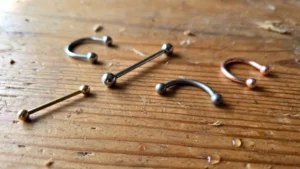

A septum ring looks simple from the front, but its fit depends on two numbers most people never think about until the ring arrives: the gauge and the diameter. Get either wrong and the ring sits too tight, hangs too low, or will not close properly. Get both right and it feels like nothing at all.
Sizing a septum ring differs from sizing a nostril ring, because the septum piercing sits in the thin tissue between the nostrils. The ring must clear the bottom of the nose, sit comfortably against the columella, and open and close without pulling. That makes the inner diameter the most important measurement, and the one people most often guess at.
This guide explains the nine sizing facts that matter for a septum ring in 2027, from gauge and diameter to how clickers, horseshoes and retainers each fit differently. It is general guidance, not a substitute for a piercer, and if you are unsure about any measurement, a professional can check your piercing and jewellery in a few minutes.
Key takeaways
- Septum ring sizing comes down to two numbers: the gauge (thickness) and the inner diameter (the size of the circle).
- Most healed septum piercings take a 16 gauge ring, with 8 mm or 10 mm the most common diameters.
- Clickers, horseshoes and seamless rings measure diameter the same way, yet fit and feel different.
- Never size down while a piercing is still healing, and measure a ring you already own before ordering.
- Septum sizing is personal: a diameter that looks perfect on one nose can sit too low or too tight on another, and a ring that pinches or will not close is the wrong size.
What septum ring sizing actually means
Septum ring sizing means matching two measurements to your piercing and your nose. The gauge is the thickness of the metal that passes through the piercing, measured in gauge numbers, where a smaller number means thicker metal. The diameter is the size of the circle the ring forms, measured across its inside. A ring with the right gauge but the wrong diameter will still feel wrong.
Diameter matters so much because of the shape of the nose. A septum ring hangs from the piercing and curves around the bottom of the nose, so its inner diameter decides how close it sits to the skin and how far it drops below the nostrils. Too small and it pulls tight; too large and it swings and sits lower than expected.
Gauge matters for a different reason. A septum piercing is usually made at 16 gauge, and the tissue heals around that thickness. A thinner ring moves too freely; a thicker ring can stretch a healed piercing if forced through. If you do not know your gauge, a piercer can measure it in seconds.
What you need and what to look for
Before you order a septum ring, you need three things: your gauge, your current diameter, and a clear idea of the style you want. If you already own a ring that fits well, measure its inner diameter with a ruler or calipers and use that as your starting point. If not, a piercer can measure your piercing and recommend a diameter.
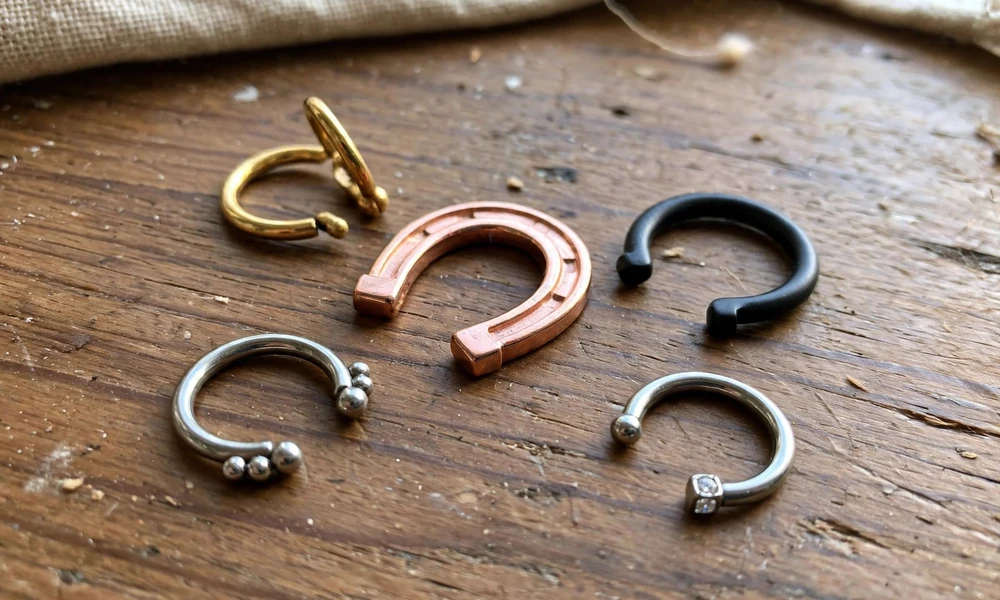
When choosing, look at the diameter first, then the style. A guide to buying a septum ring covers the materials and finishes worth considering, but size comes before all of that. A clicker, a horseshoe and a seamless ring in the same diameter sit at roughly the same height, yet the clicker closes with a hinge and the seamless ring has no visible break.
Also check the material and finish before you buy. Implant-grade titanium and niobium are the most forgiving choices for sensitive skin, while solid gold lasts well. Avoid unknown alloys, and be wary of rings much cheaper than the material they claim to be.
The 9 septum ring sizing facts that matter
The gauge
The gauge is the thickness of the metal, and for most septum piercings it is 16 gauge, about 1.2 mm. Some are made at 14 gauge, about 1.6 mm. Your ring’s gauge must match your piercing, or it will slide too freely or press on the tissue.
What it shows: Whether the ring sits securely and comfortably in your piercing. What to consider: If you do not know your gauge, ask a piercer to measure it. Best for: Anyone ordering a first septum ring. Material: Implant-grade titanium, niobium, or solid gold. Price range: About $15 to $80. Standout feature: The one measurement you cannot afford to get wrong.
The diameter
The diameter is the size of the circle, measured across the inside of the ring, and it decides how the ring sits on your nose. For most people, 8 mm is a close, neat fit and 10 mm drops a little lower. A 6 mm ring suits a very small nose; 12 mm and above gives a looser drape.
What it shows: How close the ring sits, and how far it hangs below the nostrils. What to consider: Measure a ring that already fits well; the same diameter looks different on different noses. Best for: Anyone choosing between a snug and a relaxed fit. Material: Any, though heavier metals feel heavier at larger diameters. Price range: About $12 to $90. Standout feature: The measurement that changes the look most.
The clicker vs horseshoe fit
Clickers and horseshoes are the two most common septum ring styles, and they fit differently even at the same diameter. A clicker is a hinged ring that snaps shut into a complete circle. A horseshoe, or circular barbell, is an open curve with an end on each side, and it can be flipped up inside the nose.
What it shows: Whether you want a closed circle or an open curve with visible ends. What to consider: Check the hinge clicks shut cleanly before you wear it. Best for: Clickers suit everyday wear; horseshoes suit people who want to flip the ring up. Material: Implant-grade titanium or solid gold for clickers; titanium, steel or gold for horseshoes. Price range: About $20 to $120 for clickers; $12 to $60 for horseshoes. Standout feature: The hinge makes a clicker the easiest style to put in and take out.
The fit for your septum thickness
The thickness of your septum affects which diameter feels right. A thicker septum pushes the ring slightly forward, so a diameter that looks snug on someone else can feel tight on you. A thinner septum lets the ring sit closer. Two people with the same gauge can need different diameters.
What it shows: How your own anatomy changes the way a standard diameter sits. What to consider: If a ring presses on the columella, try one size up. Best for: Anyone whose first ring felt tight even though the gauge was right. Material: Lightweight titanium is kindest if you are between sizes. Price range: About $15 to $70. Standout feature: The reason a friend’s perfect ring may not be yours.
Sizing for a new piercing vs a healed one
A new septum piercing is usually fitted with a slightly larger piece to allow for swelling, and the size you wear while healing is not necessarily the size you will want long term. Once fully healed, usually after four to six months, you can move to a snugger diameter. Do not change to a shorter or thinner piece before healing is complete.
What it shows: Why your first ring and your favourite ring may be different sizes. What to consider: Wait until fully healed; see a piercer if unsure. Best for: Anyone buying a second ring after their piercing has settled. Material: Implant-grade titanium for a new piercing; any safe metal once healed. Price range: About $15 to $80. Standout feature: Patience saves you from irritation and a piercing that closes up.
How to measure what you already own
The easiest way to find your size is to measure a septum ring that already fits you well. Lay it flat and measure across the inside of the circle, inner edge to inner edge, in millimetres. If you do not have a ring that fits, a piercer can measure your piercing and recommend a diameter.
What it shows: Your true diameter, without guessing from photos or size charts. What to consider: Measure the inside, not the outside, and measure twice. Best for: Anyone replacing a ring they already love. Material: Any, since this is about measurement, not metal. Price range: Free, with a ruler or calipers. Standout feature: Five minutes with a ruler prevents most wrong orders.
The end and hinge style
The ends of a septum ring change how it fits and looks. A seamless ring has no visible break and sits as a smooth circle. A clicker has a hinged segment that opens and closes. A horseshoe has two ends, balls, cones or gems, which add visual weight.
What it shows: How the closure changes the effective fit of the ring. What to consider: Decorative ends catch on clothing, so choose smaller ends for everyday wear. Best for: Clean look: seamless or clicker; visible ends: a horseshoe. Material: Titanium, gold or steel, with ends to match. Price range: About $15 to $150 depending on the ends. Standout feature: The ends are small, but they change both the look and the feel.
The flip-up and retainer fit
Some people need to hide a septum ring for work or formal occasions, and that is where a retainer or a flippable horseshoe comes in. A retainer is a U-shaped piece that sits inside the nose, barely visible from the front. A horseshoe can be flipped up into the nostrils so it disappears.
What it shows: Whether a ring can be hidden when you need it to be. What to consider: Only flip a ring up once healed, and choose a diameter that tucks away without pinching. Best for: Anyone who needs a discreet option for work. Material: Implant-grade titanium or glass for retainers. Price range: About $10 to $40 for a retainer; $12 to $60 for a flippable horseshoe. Standout feature: The most practical choice when you cannot always show your piercing.
When a size feels wrong and what to change
A septum ring that is the wrong size will tell you. If it pinches the columella, the diameter is too small. If it swings freely or hangs much lower than expected, the diameter is too large. If it slides through too easily, the gauge may be too thin. If it will not go through at all, the gauge is too thick.
What it shows: The signs that tell you which measurement to change. What to consider: Change one measurement at a time; see a piercer if the piercing is sore or swollen. Best for: Anyone whose current ring never felt quite right. Material: Stick with implant-grade titanium while finding your size. Price range: About $15 to $70 for a replacement ring. Standout feature: Discomfort is information, not something to push through.
Which septum ring size is right for you
For most people with a healed septum piercing, the safest starting point is 16 gauge with an 8 mm or 10 mm diameter. Start with 8 mm for a small nose or a close, neat look, and 10 mm for a larger nose, a thick septum, or a looser drape.
Style matters too. A clicker in 8 mm sits close and neat, and is easy to put in and take out. A horseshoe in 10 mm gives a more relaxed look and can be flipped up. A seamless ring gives the cleanest line. The best septum rings for women include all three styles, so you can compare them before deciding.
Sizing is a starting point, not a verdict. Many people try one diameter, wear it for a week, then adjust by 2 mm. A ring that feels right after a few days is the right size; one that still bothers you after a week probably is not.
The caveats that matter
Septum ring sizing is straightforward, but a few things are worth knowing before you order. Size charts vary between makers, so a 10 mm ring from one brand can measure differently from another. Cheap rings are more likely to be mislabelled.
| Detail | What is known |
|---|---|
| Most common gauge | 16 gauge, about 1.2 mm, for most healed septum piercings |
| Most common diameters | 8 mm for a close fit, 10 mm for a slightly looser fit |
| How to measure diameter | Across the inside of the ring, from inner edge to inner edge |
| When to change size | Only once the piercing is fully healed, usually after 4 to 6 months |
| Signs the diameter is too small | Pinching, pressing on the columella, or a mark left on the skin |
| Signs the diameter is too large | Excessive swinging, catching on clothing, or hanging too low |
| Best materials | Implant-grade titanium, niobium, or solid gold for sensitive skin |
| What sizing cannot fix | A sore, swollen or infected piercing needs a piercer, not a different ring |
Material choice matters as much as size. Gold versus silver septum rings is a useful comparison if you are choosing between warm and cool tones, but the metal matters more than the colour. Solid gold and implant-grade titanium are safest for sensitive skin; plated or unknown alloys can irritate a piercing even when the size is perfect.
Checklist: sizing a septum ring honestly
Use these checks before you order, and again when the ring arrives.
- Confirm your gauge with a piercer, or measure a ring that already fits.
- Measure the inner diameter of a ring that fits well.
- Choose 8 mm for a close fit or 10 mm for a looser fit; adjust by 2 mm if needed.
- Check the style: clicker for easy wear, horseshoe if you want to flip it up, seamless for the cleanest line.
- Buy from a reputable maker, and check gauge and diameter with calipers on arrival.
- Wait until fully healed before changing size; see a piercer if it is sore or will not take the new ring.
Frequently asked questions
What is the most common septum ring size?
Most healed septum piercings take a 16 gauge ring, about 1.2 mm thick, with an 8 mm or 10 mm inner diameter. That suits most noses, but measure a ring that fits or ask a piercer to check.
How do I measure my septum ring size?
Measure across the inside of a ring that already fits you, from one inner edge to the other, in millimetres. That is the inner diameter. For the gauge, a piercer can measure it in seconds.
Should I choose 8 mm or 10 mm for a septum ring?
Choose 8 mm if your nose is small or you want a close, neat fit near the skin. Choose 10 mm if your nose is larger, your septum is thick, or you prefer a slightly looser ring. If you are between the two, 8 mm is the safer first try.
Can I wear a smaller septum ring while my piercing is healing?
No. Do not change to a shorter or thinner piece while a piercing is still healing, usually the first four to six months. A smaller ring can press on swollen tissue and slow healing. Wait until fully healed before changing size.
Why does my septum ring keep flipping up?
A ring flips up when the diameter is too large for the space, or when the style is a horseshoe with light ends that move easily. A smaller diameter, a clicker or a seamless ring usually stays in place better.
What should I do if a new septum ring will not go through?
Stop and do not force it. The gauge may be too thick, or the piercing may not be fully healed. Try your old ring to check the piercing is open. Forcing a ring can tear tissue and set healing back by weeks.
The bottom line
Septum ring sizing comes down to two numbers and one honest check. The gauge must match your piercing, usually 16 gauge, and the diameter must suit your nose, usually 8 mm for a close fit or 10 mm for a looser one. Measure a ring that already fits, and buy from a maker you trust.
If a ring pinches, swings too freely, or will not close properly, it is the wrong size, and changing one measurement at a time will find the right one. If you are ever unsure, a piercer can measure your piercing and jewellery in a few minutes.