
The best luxury balsamic vinegar brands share one thing that no supermarket bottle can imitate: time. A true traditional balsamic from Modena spends at least twelve years moving through a row of wooden barrels, losing volume to evaporation each year, growing darker, thicker and more complex as it goes. What comes out is not a sharp salad dressing. It is a syrupy, sweet-sour condiment that is measured in drops, not glugs, and priced accordingly.
The problem is that the shelf is full of bottles that borrow the name without the process. Many are wine vinegar sweetened with caramel colour and a little grape must, aged for weeks rather than years. They are fine for a weekday vinaigrette, but they are not luxury balsamic. The gap between a ten-pound bottle and a hundred-pound bottle is not marketing. It is grape must, wood, years, and certification.
Below are nine producers worth your money, from the oldest acetaia in Modena to small family houses whose bottles rarely leave Italy. Each is described by what it does well, what to watch for, and who it suits best.
Key takeaways
- True traditional balsamic, Aceto Balsamico Tradizionale DOP, is 100 percent cooked grape must, aged at least twelve years in wooden barrels, with no added vinegar or colour.
- Aceto Balsamico di Modena IGP is a different product: grape must blended with wine vinegar, aged a minimum of sixty days, and a good one is still worth buying for everyday cooking.
- Age, density and the DOP or IGP seal matter more than price alone, and a short ingredient list is the fastest way to spot a serious bottle.
- Luxury balsamic is a finishing condiment: use it by the drop on cheese, fruit, ice cream and grilled meat, never as a cooking vinegar.
- No bottle is worth buying if the seal is broken, the label hides its origin, or the liquid runs like water, and a balsamic that tastes sharply of plain vinegar has not been aged long enough.
Why real balsamic costs what it does
A bottle of traditional balsamic begins as cooked must from Trebbiano or Lambrusco grapes grown around Modena and Reggio Emilia. The must is simmered, never fermented into wine, then moved through a batteria, a set of barrels in decreasing sizes made from woods such as oak, chestnut, cherry, juniper and ash. Each year a little evaporates, concentrating what remains. Twelve years is the legal minimum for the DOP, and many of the finest bottles are twenty-five years old or more.
That slow loss is the reason for the price. A producer can start with a hundred litres of must and finish with a fraction of that after a decade or more. The 100-millilitre bottle is the traditional size for a reason: it is an honest measure of how little liquid survives the process. Compared with an industrial balsamic made in weeks from wine vinegar, sugar and caramel colour, the price difference stops looking like a luxury markup and starts looking like arithmetic.
Modena itself is part of the value. The region has guarded its balsamic tradition for centuries, and the same table that holds a bottle of aged balsamic often holds a good red wine. Our guide to the best red wine is a useful companion here, because a bottle of traditional balsamic is best understood as a cellar product, not a supermarket condiment.
What to look for in a luxury balsamic vinegar
Start with the label. Aceto Balsamico Tradizionale di Modena DOP or di Reggio Emilia DOP means 100 percent cooked grape must, aged at least twelve years and certified by the consortium. Aceto Balsamico di Modena IGP means grape must blended with wine vinegar, aged at least sixty days, with up to two percent caramel colour permitted. They are not the same product, and the price should reflect that.
Next, read the ingredients. A traditional balsamic lists one ingredient: cooked grape must. A good IGP lists grape must and wine vinegar, with the must first. If sugar, glucose syrup or caramel colour sit near the top, the bottle is a flavoured vinegar rather than a luxury one. Density is the third check. A well-aged balsamic coats the glass and falls slowly, like a thin syrup. A thin, watery pour is a sign of a young or diluted product.
Finally, look at age statements honestly. For DOP bottles, the red, silver and gold leaf grades used in Modena indicate twelve, eighteen and twenty-five years or more. For IGP bottles, age claims are less tightly regulated, so weigh the producer’s reputation instead. The nine brands below run from the oldest houses to the most widely available.
Giuseppe Giusti
What we like: Founded in 1605, the oldest acetaia in Modena, with a clear range from everyday IGP to 12, 18 and 25-year DOP bottles, all made from estate grape must and aged in historic wooden barrels.
What to consider: The DOP bottles are genuinely expensive, and the wide range can confuse a first-time buyer, so start with the age statement rather than the label design. Key details: Aceto Balsamico Tradizionale DOP, 100 percent cooked grape must, aged 12 to 25 years. Best for: A first serious DOP purchase and gifting. Size: 100 ml for DOP, 250 ml for IGP.
Acetaia Malpighi
What we like: A family house founded in 1850, known for its meticulous DOP production and for bottles that win consistently at the Modena consortium tastings, with a clean, dark, well-balanced profile.
What to consider: Distribution is narrower than the bigger houses, so some bottles need to be ordered rather than found on a shelf. Key details: Aceto Balsamico Tradizionale DOP, 100 percent cooked grape must, aged 12 years and older. Best for: Purists who want a classic, consortium-recognised DOP. Size: 100 ml for DOP.
Villa Manodori
What we like: The balsamic house of the family of chef Massimo Bottura, made in Modena in small batches and aged in juniper and chestnut barrels, with an artisanal profile that chefs reach for again and again.
What to consider: The signature Artigianale is an IGP rather than a DOP, so it is best judged on taste and density, not on a certification grade. Key details: Aceto Balsamico di Modena IGP, high grape must content, barrel-aged. Best for: Cooking and finishing at a professional standard. Size: 250 ml.
Mazzetti l’Originale
What we like: An acetaia founded in 1846, offering both IGP and DOP bottles, with a distinctive leaf-graded range and a consistently dark, sweet, well-rounded character that suits a wide range of dishes.
What to consider: The range is broad, from everyday to premium, so check the grade and the ingredients rather than buying on the name alone. Key details: Aceto Balsamico Tradizionale DOP and di Modena IGP, cooked grape must, leaf grades for DOP. Best for: A household that wants one brand for both everyday and special bottles. Size: 100 ml for DOP, 250 ml for IGP.
Acetaia Leonardi
What we like: A Modena house founded in 1871, known for its DOP bottles and for its balsamic pearls, small spheres of aged balsamic that chefs use as a garnish, as well as classic aged vinegars.
What to consider: The pearls are a garnish rather than a substitute for a bottle, so buy them in addition to, not instead of, a traditional balsamic. Key details: Aceto Balsamico Tradizionale DOP, 100 percent cooked grape must, aged 12 years and older. Best for: Entertaining and presentation. Size: 100 ml for DOP.
Due Vittorie
What we like: A modern Modena producer whose Oro bottle is one of the most widely praised IGP balsamics, made with a high proportion of cooked grape must and aged in oak barrels for a dense, sweet, glossy finish.
What to consider: It is an IGP, not a DOP, so it is not a traditional balsamic in the legal sense, even though it tastes far above most IGP bottles. Key details: Aceto Balsamico di Modena IGP, high grape must content, barrel-aged. Best for: The best value luxury balsamic for everyday finishing. Size: 250 ml.
La Vecchia Dispensa
What we like: A small family acetaia in Castelvetro di Modena, producing both DOP and IGP bottles in limited quantities, with a dark, intense, old-fashioned profile that tastes of long ageing.
What to consider: Small production means limited availability, and some bottles sell out, so it is worth buying when you find it rather than waiting. Key details: Aceto Balsamico Tradizionale DOP and di Modena IGP, cooked grape must, family production. Best for: Collectors and anyone who prefers small producers. Size: 100 ml for DOP, 250 ml for IGP.
De Nigris
What we like: A producer founded in 1889 with a large, reliable range, including its 1889 Riserva line, offering consistent quality and wide availability at a fair price for a premium IGP.
What to consider: The entry-level bottles are everyday vinegars rather than luxury ones, so choose the Riserva or aged lines for the experience described here. Key details: Aceto Balsamico di Modena IGP, grape must and wine vinegar, aged lines available. Best for: A first premium bottle that is easy to find. Size: 250 ml.
Acetaia Pedroni
What we like: A family acetaia founded in 1862, producing traditional DOP balsamic in small batches, with a reputation among Modena locals for a rich, dark, deeply sweet bottle.
What to consider: The DOP bottles are small and not cheap, and the brand is less well known outside Italy, so it may need to be ordered online. Key details: Aceto Balsamico Tradizionale DOP, 100 percent cooked grape must, aged 12 years and older. Best for: A quiet, authentic DOP from a family house. Size: 100 ml for DOP.
How to use luxury balsamic well
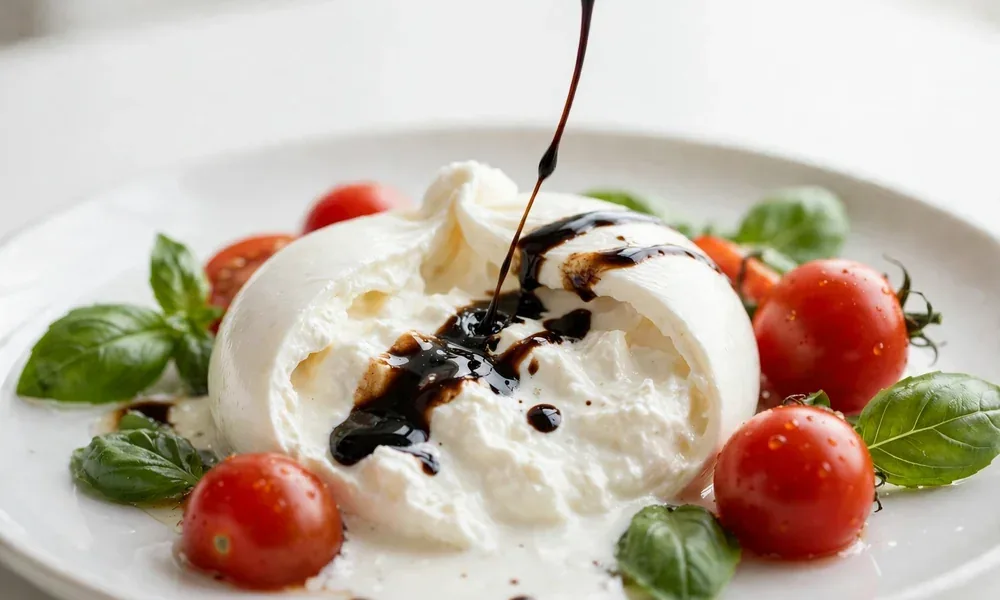
Use less than you think. A few drops are enough. Hold the bottle high and let a thin thread fall, rather than pouring a pool. Luxury balsamic is a finishing condiment, and its sweetness and acidity are concentrated, so a little goes a long way and too much will swamp the food underneath it.
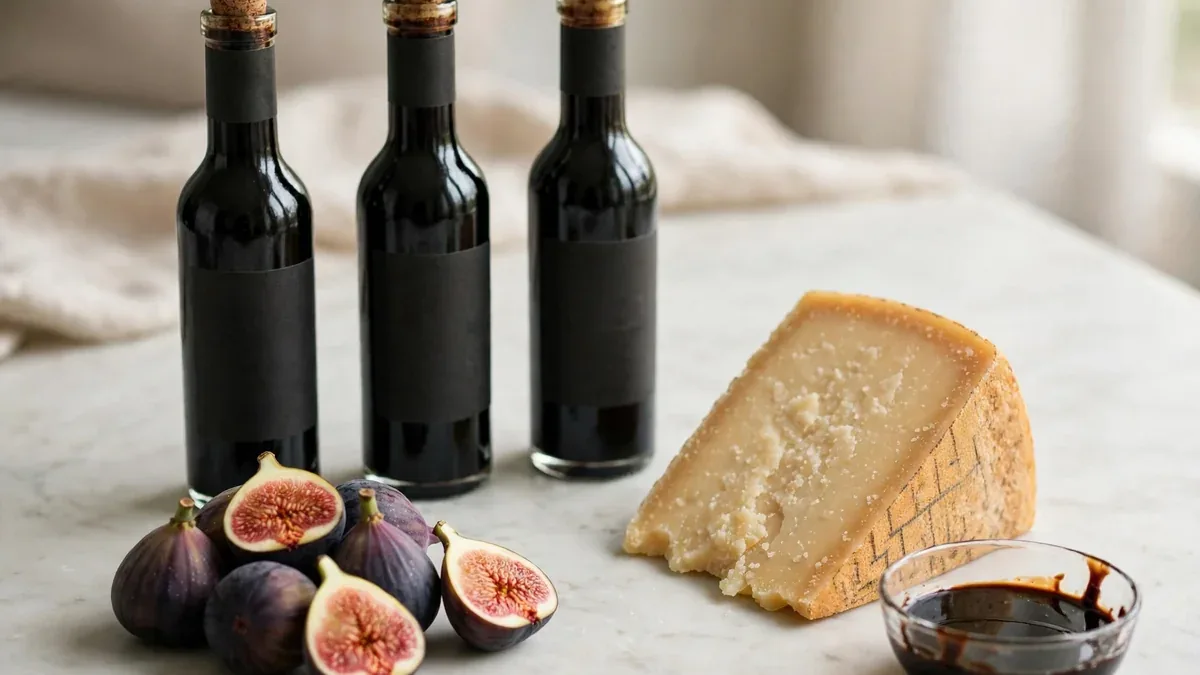
The classic pairings are classic for a reason. Aged Parmesan, pecorino and burrata all love balsamic, because the salt and fat of the cheese balance the sweetness of the vinegar. Our guide to burrata explains how to serve it at its best, and a few drops of aged balsamic over burrata with good tomatoes is one of the simplest luxury dishes there is. Strawberries, figs and cherries are equally good partners, and vanilla ice cream with balsamic is a Modena tradition that surprises everyone the first time they try it.
For cooking, use the IGP bottles and save the DOP for finishing. A good IGP can be reduced into a glaze for roast vegetables, grilled meat or salmon, stirred into a pan sauce, or whisked into a dressing with olive oil. A DOP should never be heated hard, because the heat destroys the balance that twelve years of ageing built. Add it at the table, after the cooking is done.
Storage is simple. Keep the bottle upright in a cool, dark place, away from the stove and out of direct sunlight. There is no need to refrigerate it, and it will keep for a very long time once opened. A little sediment is normal for an aged, unfiltered product, and a fine strainer will take it out.
The caveats that matter
The most common mistake is buying on looks. A tall, elegant bottle with a wax seal and an Italian-sounding name can still contain a young, sweetened vinegar. The label is where the truth lives. DOP and IGP seals, the ingredient list, and production in Modena or Reggio Emilia are the details that matter, and a bottle that hides them is one to leave on the shelf.
Price is a guide, not a guarantee. A very cheap DOP bottle is unlikely to be genuine, because production cost alone sets a floor, but an expensive IGP is not automatically better than a fairly priced one. Judge the producer, the certification and the density of the liquid, and let those three things decide the purchase.
| Detail | What is known |
|---|---|
| Traditional DOP | 100 percent cooked grape must, aged at least 12 years, certified by the consortium |
| Modena IGP | Grape must blended with wine vinegar, aged at least 60 days, up to 2 percent caramel colour allowed |
| Leaf grades (Modena DOP) | Red for 12 years, silver for 18 years, gold for 25 years or more |
| What to check on the label | DOP or IGP seal, ingredient list, and Modena or Reggio Emilia as the place of production |
| How it should pour | Thick and syrupy, coating the glass and falling slowly, never thin like water |
| How to use it | By the drop as a finishing condiment on cheese, fruit, ice cream and grilled meat |
| What to avoid | Long ingredient lists, sugar or caramel near the top, and bottles that hide their origin |
| Storage | Upright, cool and dark, away from heat and sunlight; no refrigeration needed |
One caution is worth stating plainly. Balsamic vinegar is acidic, so it can soften tooth enamel if sipped or used very heavily, and it can irritate a sensitive stomach in large amounts. Used by the drop, as it is meant to be used, the quantities in a finishing drizzle are small, and the bottle will last for months.
Checklist: choosing a luxury balsamic honestly
- Check the certification: DOP for traditional balsamic, IGP for a blended Modena balsamic, and a named consortium seal on the bottle.
- Check the ingredients: one ingredient for a DOP, grape must first for a good IGP, and no long list of sweeteners or colourings.
- Check the origin: Modena or Reggio Emilia on the label, not just an Italian-sounding brand name.
- Check the density: tip the bottle and watch the liquid move slowly and coat the glass like a thin syrup.
- Check the age honestly: leaf grades for a DOP, and a healthy scepticism about age claims on an IGP.
- Check the seal and the size: an intact seal, and a 100-millilitre bottle for a DOP, which reflects how little survives twelve years of ageing.
Frequently asked questions
What is the difference between DOP and IGP balsamic vinegar?
DOP, or Aceto Balsamico Tradizionale, is 100 percent cooked grape must, aged at least twelve years in wooden barrels in Modena or Reggio Emilia, with no added vinegar or colour. IGP, or Aceto Balsamico di Modena, is grape must blended with wine vinegar, aged at least sixty days. The DOP is a far more concentrated product, and it is priced accordingly.
How old should a luxury balsamic be?
For a DOP, twelve years is the minimum, eighteen is a strong middle step, and twenty-five years or more is the top grade. For an IGP, age claims are less strictly regulated, so judge the bottle on its density, its ingredient list and the producer’s reputation rather than on a number on the label.
How much should I spend on a good balsamic?
A good premium IGP costs roughly the price of a decent bottle of wine, while a genuine DOP starts much higher and rises steeply with age. If a DOP bottle is very cheap, it is unlikely to be genuine, because twelve years of evaporation alone makes a low price impossible. Save the DOP for special occasions.
Can I cook with luxury balsamic vinegar?
You can cook with a good IGP, for glazes, reductions, pan sauces and dressings. Do not cook a DOP hard or reduce it, because heat destroys the balance that years of ageing created. Add the DOP at the table, after the cooking is done.
How do I store balsamic vinegar once it is open?
Keep it upright in a cool, dark place, away from the stove and out of direct sunlight. There is no need to refrigerate it. It will keep for a very long time once opened, and a little sediment in an aged, unfiltered bottle is normal and harmless.
What foods go best with aged balsamic?
Aged Parmesan, pecorino and burrata are the classic partners, along with strawberries, figs and cherries, vanilla ice cream, grilled meat and roasted vegetables. Start with a few drops and taste before adding more, because the flavour is concentrated.
The bottom line
The best luxury balsamic vinegar brands are the ones that respect the process: cooked grape must, wooden barrels, years of patience, and a certification that means something. Giuseppe Giusti is the safest first DOP, Villa Manodori and Due Vittorie are the best bottles for everyday cooking and finishing, and small houses such as Malpighi, Leonardi, La Vecchia Dispensa and Pedroni reward the buyer who looks beyond the famous names. Judge any bottle by its label, its ingredients and its density, not by its packaging.
Buy one good bottle, use it by the drop, and let it change how you think about vinegar. A few drops over cheese or fruit will tell you more than any label can, and a bottle that earns its place on your table will last for months. If you ever get the chance, a visit to the acetaie of Modena is worth the trip, and our guide to the best luxury vineyard hotels is a good place to start planning it.