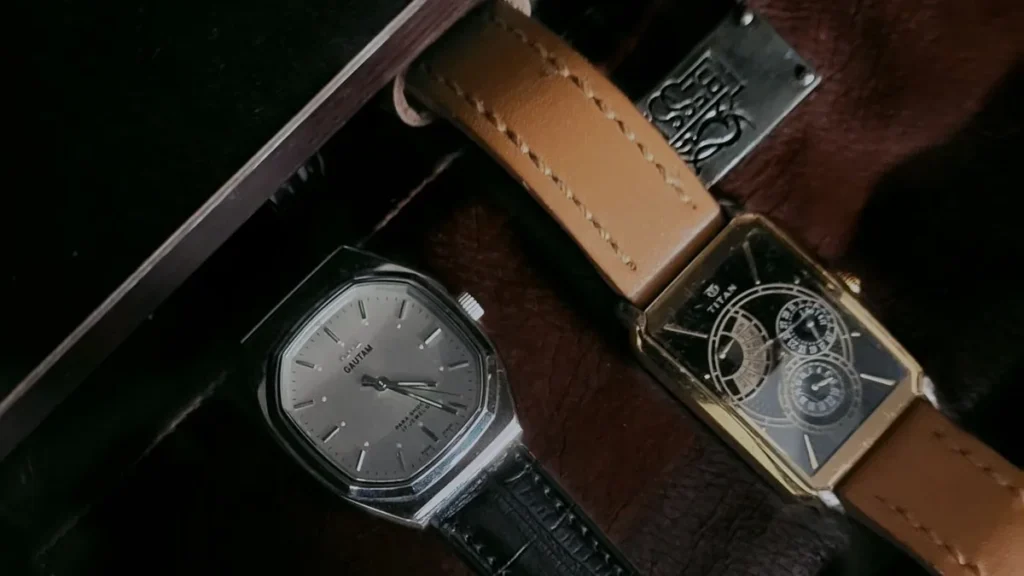
A watch spends most of its life unworn. Even a daily watch sits idle two thirds of every day, and pieces in rotation wait weeks or months between wears. That waiting time matters: a dried-out movement, a dial faded by a sunny windowsill, or a leather strap stiffening in a damp bathroom can do more harm than years of careful wear.
Good storage needs no safe or dedicated room. Keep each watch separated, out of direct light and damp, running or resting the right way for its movement, and let a watchmaker look inside when needed. Get those right and a watch holds its timekeeping, finish and value far longer than one in a drawer.
This guide covers boxes, winders and cases and when each earns its place; the room conditions that quietly damage watches; how to travel with them; how often servicing is really needed; and the small mistakes that wear a movement out. If you are still building the collection, our guide to the best luxury watches of 2027 is a useful companion.
Key takeaways
- Every watch needs its own slot or roll: metal touching metal is the fastest way to scratch cases, crystals and bracelets.
- Store watches cool, dry and dark, away from windows, radiators and bathrooms, with steady humidity, not damp or bone-dry air.
- A winder suits an automatic worn in rotation; a quartz watch never needs one, nor does a daily-worn watch.
- Most automatics need a full service every three to five years, though some makers stretch that to around ten; your manual has the final say.
- Sunlight, magnets, moisture and neglect are the four slow enemies, and none announces itself until the damage is done.
What good watch storage actually does
A watch in storage faces four quiet threats. First, contact: two watches sharing a drawer mark each other within days. Second, light, which fades dials, dries leather and degrades luminous material. Third, moisture, which creeps past tired seals and fogs a crystal from inside. Fourth, stillness: oils settle and thicken when a watch sits unwound for months, and a dead quartz battery can leak and corrode the movement.
Good storage answers all four, and the answer is mostly about place, not equipment. A drawer in a cool bedroom beats a glass display case on a sunny windowsill, and a watch box in a dry room beats a safe in a damp basement. Before spending anything, check where your watches live now: dark, dry, steady in temperature, safe from knocks? Most storage problems are location problems, and a collection worn in rotation stays healthier than one sealed away: regular wear keeps lubricants spread and problems visible.
Watch boxes, winders and cases: choosing your storage
The watch box is the default for a reason: every watch gets its own cushioned slot, so nothing touches anything else, and dust stays off the dials. Judge the interior: compartments deep enough for your largest case, cushions firm enough to hold a watch without stretching its strap, and a firmly fixed lining, since a loose one sheds fibres onto dials. Wood suits a dressing table; leather is lighter and travels better. Buy for the collection you own now, plus one or two slots. Our roundup of the best luxury watch boxes for 2027 compares the boxes that do this job properly.
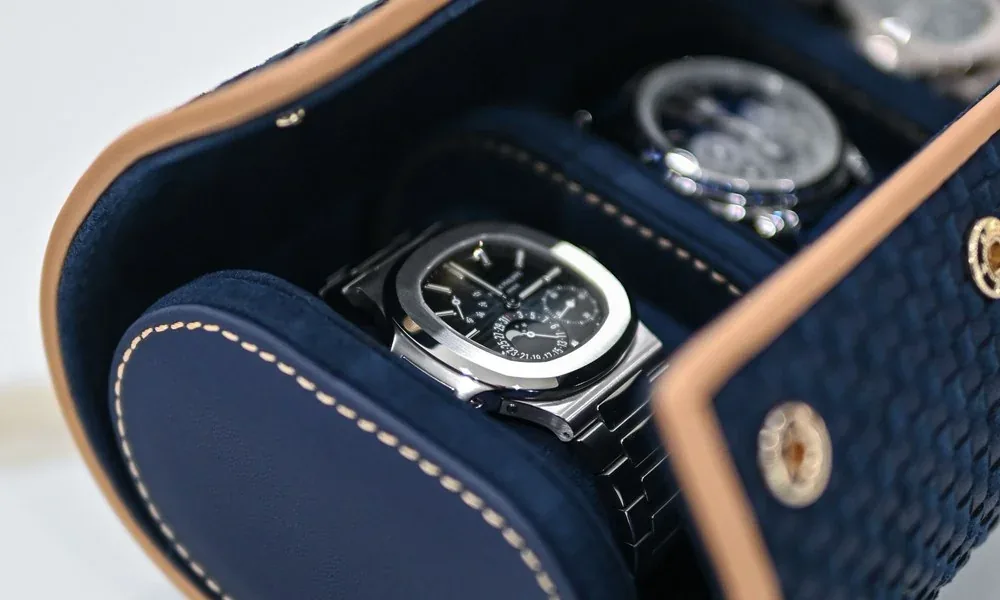
A winder solves a different problem. An automatic runs on wrist motion, and when it sits still its power reserve runs down, usually within a day or three. A winder turns the watch gently so it stays wound and keeps time and date, which matters for calendar watches. Most modern automatics need 650 to 1,000 turns per day; 650 on a bidirectional setting is the safe starting point for almost any Swiss automatic. Wind the watch by hand first: a winder maintains a charge, it is slow at building one from nothing. Winders are unnecessary for quartz watches and daily-worn ones, and they need a socket nearby.
For travel, there is the case and the roll. A watch roll is a strip of soft leather or suede with individual pockets that rolls into a compact bundle, the best way to carry two or three watches in a bag. A hard case suits luggage, a pouch one watch on a short trip. The rule is the same as at home: one watch per slot, strap fastened loosely around its cushion, nothing loose in the same compartment.
Humidity, sunlight and temperature: getting the room right
Watches like the conditions people do: a lived-in room, neither damp nor desert-dry, steady in temperature. Damp is the greater enemy. Bathrooms are the worst common storage spot, because shower steam pushes moisture into the air several times a day, and over months that works on leather straps, steel and seals alike. A bedroom drawer in a dry room is far better; a silica gel sachet in the box helps in a humid home, replaced every few months once saturated.
Sunlight is slower but just as certain. Ultraviolet light fades dials, especially black and coloured ones, and dries leather straps until they crack. A glass-lidded box on a sunny dressing table ages its watches faster than a solid-lidded box in a drawer; keep display boxes out of direct sun. Radiators dry out oils and gaskets faster than a cool shelf; temperature swings matter more than temperature itself, so aim for a steady 15 to 25 degrees.
Travelling with watches
Travel is when most storage damage happens: a watch leaves home and meets bags, hotel rooms and airport trays. Carry watches in hand luggage, never checked luggage, where knocks and temperature swings are worse. A watch roll or hard case goes inside a bag, not loose in a pocket, each watch fastened around its own cushion so it cannot slide.
Take fewer than you think you need: two is enough for most trips, one on the wrist and one in the roll. Every extra watch is another thing to lose in a hotel room. On arrival, give them a drawer, not the bathroom shelf or a sunny bedside table. An automatic will run down in a roll, so expect to reset it; that is normal. A watch loose with keys and coins will scratch a case and crystal in a single flight.
Servicing, winding and what damages a movement
A mechanical watch is a small machine full of oil, and oil ages. Most watchmakers agree an automatic needs a service every three to five years, though some makers suggest around ten for modern movements and others two or three for simpler ones, so your manual has the final say. The watch warns sooner than any calendar: drift over twenty seconds a day, lost power reserve or rough winding means seeing a watchmaker rather than waiting.
Between services, keep the movement exercised: a daily-worn watch often outlasts one that sits in a box, because wear keeps lubricants spread. If a watch has rested for months, wind it by hand first, twenty to forty turns until resistance builds. Never force a crown past resistance, and never set the date between roughly nine in the evening and three in the morning, when the calendar gears are engaged.
Straps fail sooner than movements, so they deserve the same attention. Leather absorbs sweat and moisture, so air it after wear and never store it damp in a closed box, or it stiffens and cracks at the holes. Metal bracelets collect dirt between the links, so rinse them in lukewarm soapy water every few months and dry them thoroughly. Our guide to choosing the perfect watch strap covers the materials: rubber and metal tolerate damp far better than leather and suede. Magnets in bag clasps and phone mounts can magnetise a movement and make it run fast, a hard drop can knock the balance out of true, and water resistance is not permanent: seals age, so a service should include a pressure test if the watch goes near water.
The caveats that matter
| Detail | What is known |
|---|---|
| Quartz watches and winders | A quartz watch runs on a battery; a winder adds only wear and noise. |
| Dead quartz batteries | A dead battery can leak and corrode the movement, so replace it promptly. |
| Bathroom storage | Steam and damp attack straps, steel and seals; the bathroom is the worst place to keep a watch. |
| Glass lids and sunlight | A glass lid shows off a collection but lets in light and dust; keep it out of direct sun. |
| Winder settings | Most automatics need 650 to 1,000 turns per day; start at 650 bidirectional. |
| Service intervals | Three to five years is usual for automatics, some makers stretching to ten; performance, not the calendar, decides. |
| Date setting | Avoid setting the date between about 9pm and 3am, when the calendar gears are engaged. |
| Security | A watch box is storage, not a safe; valuable collections need secure storage as well. |
Checklist: setting up storage that lasts
- Give every watch its own slot, pocket or compartment; nothing loose shares the space.
- Move the collection out of the bathroom, away from windows, radiators and direct sun.
- Check the room: cool, dry and steady, with a silica gel sachet in the box if your home runs humid.
- Match the tool to the movement: a winder for automatics in rotation, nothing for quartz.
- Set the winder to 650 turns per day bidirectional unless your manual says otherwise; wind the watch by hand first.
- Note the last service date on a card in the box; book the next one when the watch starts losing time.
Frequently asked questions
Should I keep my automatic watch on a winder all the time?
Only if you wear it in rotation and want it ready to wear. A daily-worn watch does not need one; a rarely worn one is better rested.
Is it bad to leave an automatic watch unworn for months?
Not in itself, but the oils settle and thicken, so it may run poorly at first. Wind it by hand and wear it a day; if it still drifts badly, it needs a service.
Can I store watches in a safe?
Yes, if the safe is in a dry room and not airtight and damp inside. Some safes trap humidity, so keep silica gel inside and check it. Watches still need their own slots.
How do I store a watch with a leather strap?
Let the strap air after wear, never put it away damp, and keep it out of direct sun and away from radiators, which dry leather until it cracks. Store it loosely fastened around a cushion.
Does sunlight really damage a watch?
Over years, yes. Ultraviolet light fades dials, dries leather and degrades luminous material. Days on a sunny windowsill will not ruin a watch, but years of display in direct sun will show.
How often should a watch be serviced?
Most automatics need a service every three to five years, some modern movements rated for around ten. The test is performance: drift over twenty seconds a day, lost power reserve or rough winding means seeing a watchmaker sooner.
The bottom line
Storing a watch well is mostly giving it a proper home: its own slot, a cool dry room, no direct sun, the right treatment for its movement. A box for the collection, a winder for the automatics in rotation, a roll for travel and a watchmaker every few years will keep almost any watch right. The expensive mistakes are the simple ones: a shared drawer, a sunny windowsill, a damp bathroom, a dead battery left in place.
Start with the location: it costs nothing. Move the watches out of the bathroom, out of the sun and into their own slots, and most storage damage simply stops. Then set the winder, note the last service date, and wear the watches: a worn, checked collection outlasts one merely put away.
Note: Intervals and winder settings vary by brand and calibre, so check your manual first, and ask a watchmaker if a watch runs fast, loses power or shows moisture under the crystal.
Meet Our Experts
BrassSmile’s editors cover fashion, jewellery and accessories.
Why Trust BrassSmile
We judge storage by what protects a watch over years: separation, stable conditions, correct winder settings and honest service intervals.
Sources
Makers’ published service guidance; Holme & Hadfield and Tempus-Luxury winder guides; Wolf, Rapport London and Buben & Zorweg listings.