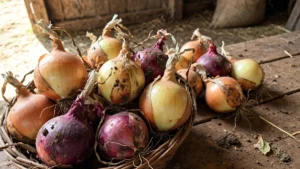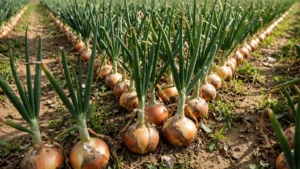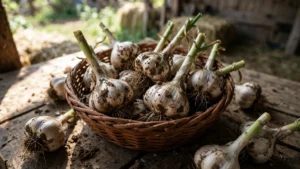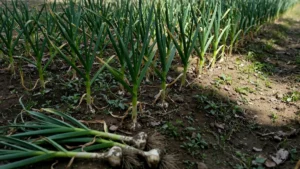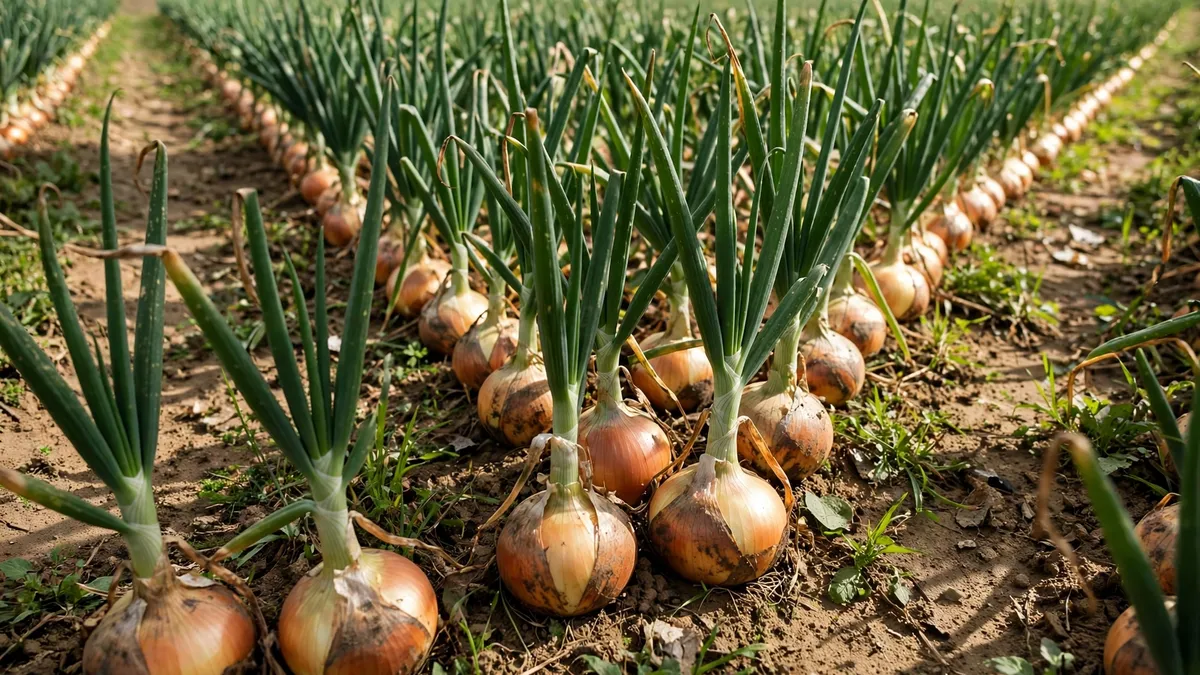

An onion is the most patient vegetable in the garden, and the least forgiving. It grows from a set or a seed into a bulb through a long summer, and the harvest is decided not by a date but by the tops: when the necks soften and the leaves fall over, the bulbs are ready to lift. Lift too soon and the bulb never fills; lift too late and the skins split in the ground. Then comes the curing, days of drying until the necks seal, and only a cured onion will keep through the winter.
An onion farm retreat is a few nights on a working farm in the lifting weeks, when the beds are at their busiest and the kitchen is cooking what the fields gave that morning. You sleep in a farmhouse room, eat onions roasted, grilled and folded into soup, walk the beds, and watch sweet onions pulled from sandy soil and storage bulbs laid out to cure. The farms stretch from the Georgia low country to the fields south of Auckland, and the lifted bulb ties them together.
Here are nine onion farm retreats to weigh for 2027, from the cheapest Vidalia stay to the dearest Pukekohe farm, covering sweet onions, red onions and hard storage bulbs, so the decision turns on the way you travel rather than the place on the map.
Key takeaways
- Onions are biennial: the bulb grows in the first year and the seed in the second, so farms plant sets or seed every spring and lift before the rains.
- Sweet onions are mild and wet and keep for a few weeks, while storage onions cure hard and keep for months.
- Lifting is judged by the tops, not the calendar: when the necks soften and the leaves fall over, the bulbs are ready to come out of the ground.
- Curing decides whether an onion stores or rots, so the necks must dry and seal before the bulbs are bagged or braided.
- Onions carry no gluten, but the bread and pastry served beside them are usually wheat, so settle the kitchen and the calendar before you pay.
What an onion farm retreat actually is
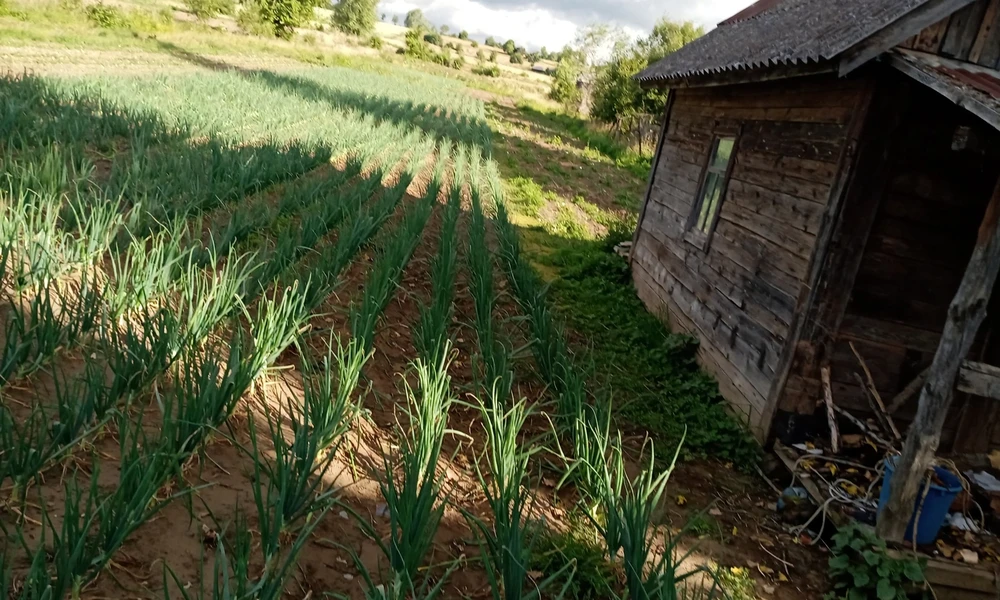
An onion farm retreat means three to five nights on a working farm that grows onions, with the lifting weeks as the reason for the trip. Guests sleep in a farmhouse room or a converted barn, eat what the farm kitchen cooks, and join the harvest, walking the beds to see sweet onions pulled from sandy soil, storage bulbs laid out to cure, and red onions braided for the barn wall.
Onions have been grown since the first gardens, and the great onion regions took shape around the dishes they served. Georgia turned its sweet onions into a spring feast, Calabria kept its red onions for salads and grills, India built its cooking around the everyday brown onion, and Japan grew its bulbs through the cool northern summer for the winter store.
Days on these farms follow the bulb’s timetable rather than a hotel’s, with supper at one shared table and work offered to guests who ask for it.
How we picked these stays, and what to ask first
We began with where onions truly grow, not where they sell best. A genuine onion farm offers beds to walk through, bulbs to stand among at lifting time, and a kitchen working with its own onions. A farm that buys its bulbs in is not an onion farm, whatever the website says.
The finest farms take only a handful of guests at a time, so the lifting stays honest labour, not a performance for visitors. They also spell out in the first email what the nightly rate includes, with supper, the drive in and walks among the beds folded into the price, not billed on arrival. Plain talk about sets, lifting and curing is usually a sign the farm looks after its guests well too.
The 9 best luxury onion farm retreats of 2027
Vidalia, Georgia, USA — Sweet Onions in the Georgia Low Country
What we like: Vidalia onions grow only in the sandy soil of south-east Georgia, where the low sulphur keeps them sweet enough to eat raw. The farm serves them sliced thick over ham and baked whole in their skins, and the spring festival fills the town with cook-offs and farm stands.
What to consider: The lifting season is short, and the festival week fills early, so the farm books its rooms a year ahead.
Style: Georgian low-country farm stay. Best for: Travellers who want the sweetest onion in America where it is grown. Price range: $65–$95 per night. Standout feature: Sweet onions sliced raw at the farm table, straight from the sandy beds.
Tropea, Calabria, Italy — Red Onions on the Tyrrhenian Coast
What we like: The red onion of Tropea grows in the sandy soil above the Tyrrhenian Sea, and the farm serves it grilled with olive oil and jammed with sugar for cheese. The coast is steep, the town keeps its old cliff houses, and the kitchen serves red onions with bread, fish and focaccia.
What to consider: The hillside sun is fierce at lifting time, and the farm sits above the town, so the walk back is steep.
Style: Italian coastal farm stay. Best for: Travellers who want red onions the Calabrian way. Price range: $100–$130 per night. Standout feature: Red onions grilled over charcoal and served with olive oil.
Nashik, Maharashtra, India — Onions on the Deccan Plateau
What we like: Nashik is the onion heart of India, and the farm grows the brown storage onions that carry the country’s cooking. The kitchen serves them slow-fried into curries and crisped into bhaji, and the plateau markets run thick with sacks of bulbs in brown and red.
What to consider: The plateau heat is strong by midday, and the farm is a long drive from Mumbai, so travel in the cool of the morning.
Style: Indian plateau farm stay. Best for: Travellers who want onions at the centre of a working food region. Price range: $135–$165 per night. Standout feature: Brown storage onions fried slow for the evening curry.
Kitami, Hokkaido, Japan — Onions in the Northern Fields
What we like: Kitami grows more onions than anywhere else in Japan, and the farm lifts pale storage bulbs from the cool northern soil for the winter store. The kitchen serves them simmered into soup and caramelised for rice bowls, and the autumn fields run wide under a low sky.
What to consider: The northern autumn turns cold fast, and the farm sits far from the railway, so arrange the lift in advance.
Style: Japanese northern farm stay. Best for: Travellers who want onions grown for the long winter store. Price range: $170–$200 per night. Standout feature: Pale storage bulbs lifted from cool northern soil.
Treasure Valley, Idaho, USA — Onions Along the Snake River
What we like: The Treasure Valley grows onions on the irrigated plain along the Snake River, and the farm lifts yellow storage bulbs by the crate. The valley is wide, the canals run beside the beds, and the kitchen serves onions roasted with potatoes and grilled beside river trout.
What to consider: The valley sun is fierce at lifting time, and the farm is a drive from Boise, so plan the journey before the lifting week.
Style: American river valley farm stay. Best for: Travellers who want onions from the irrigated west. Price range: $205–$235 per night. Standout feature: Yellow storage bulbs lifted by the crate from the river plain.
Tulelake, California, USA — Onions on the High Lava Plain
What we like: Tulelake grows onions on the high volcanic plain of far northern California, where the dry air and cold nights cure the bulbs hard. The farm serves them baked with sage and grilled over coals, and the plain runs flat to the mountains with cranes overhead.
What to consider: The plain wind is sharp in the morning, and the farm is a long drive from the nearest town, so bring what you need with you.
Style: Californian high-plain farm stay. Best for: Travellers who want onions cured hard in dry mountain air. Price range: $240–$270 per night. Standout feature: Storage bulbs cured hard in the dry high air.
Columbia Basin, Washington, USA — Onions in the Irrigated Desert
What we like: The Columbia Basin grows onions in the irrigated desert of central Washington, where the circles of green stand out against the dry sagebrush. The farm lifts white and yellow bulbs, and the kitchen serves them raw in salads and grilled in rings.
What to consider: The desert sun is fierce at lifting time, and the farm sits far from the highway, so allow a day for the journey.
Style: Washington desert farm stay. Best for: Travellers who want onions from the irrigated desert. Price range: $275–$305 per night. Standout feature: White and yellow bulbs lifted from green circles in the dry basin.
Rio Grande Valley, Texas, USA — Onions on the Border Plain
What we like: The Rio Grande Valley grows sweet spring onions on the warm border plain, and the farm pulls them young for the table. The valley is flat, the citrus groves stand beside the beds, and the kitchen serves spring onions grilled with lime and chopped raw over beans.
What to consider: The border heat arrives early, and the farm books its spring weeks fast, so write well ahead.
Style: Texan border farm stay. Best for: Travellers who want sweet spring onions on the warm plain. Price range: $310–$340 per night. Standout feature: Sweet spring onions pulled young and grilled with lime.
Pukekohe, New Zealand — Onions South of Auckland
What we like: Pukekohe grows onions in the rich volcanic soil south of Auckland, and the farm lifts brown storage bulbs through the southern summer. The fields are green, the hills roll behind the beds, and the kitchen serves onions roasted with lamb and caramelised for the farm table.
What to consider: This is the dearest stay of the nine, and the southern harvest runs opposite to the northern farms, so book a year ahead.
Style: New Zealand volcanic farm stay. Best for: Travellers who want onions from the southern hemisphere. Price range: $345–$380 per night. Standout feature: Brown storage bulbs lifted from rich volcanic soil.
Which onion region fits your trip
If you want onions where the bulb is treated as a feast, start with Vidalia or Tropea, where the sweet and red onions are pulled, sliced and served the same day they were lifted. Both suit a first visit, with short walks and long meals at the farm table.
If you want scenery with your onions, Pukekohe puts the beds on green volcanic hills, Tulelake on a high lava plain, and the Columbia Basin in a desert ringed by sagebrush.
If you want the vegetable that grows beside the onion, our guide to the tomato farm retreats covers a summer crop altogether, with sun-ripened fruit and sauce pots instead of lifted bulbs, and the parsnip farm retreats offer a root for the cold months, with roasts and mash instead of grilled onions and caramelised rings.
The caveats that matter
Onion farming answers to the weather: farms give a best guess, never a promise, and a trip pinned to one lifting day gambles on rain. The real warning is the bulb itself, easy to miss when the stay is sold as gentle country.
| Detail | What is known |
|---|---|
| Best time to visit | Spring and early summer in the north for sweet onions, with the southern season running the other way round |
| What the work involves | Walking the beds, watching the sweet onions pulled and the storage bulbs laid out to cure, and seeing the onions cooked |
| How long a stay runs | Three to five nights, set around the lifting weeks |
| Who should take care | Guests with a strong sensitivity to onions, and anyone unused to fierce sun, loose soil or thin mountain air |
| What the kitchen serves | Sweet onions sliced raw, red onions grilled with olive oil, storage onions roasted and caramelised, with bread and farm butter beside the plate |
| Gluten note | Onions carry no gluten, but the bread and pastry served beside them are usually wheat, so ask the kitchen what it can safely serve |
| What to pack | Closed walking shoes, a broad sun hat, a warm layer for chilly nights, and clothes that wash easily by hand |
| What it does not do | No promised lifting day, no fixed menu, and no hotel-style service on a working farm |
Anyone with a strict gluten-free diet should ring the farm before booking. One question about the kitchen and the onions can save a difficult stay, and a farm that answers honestly is usually worth the visit. Our radish farm retreats carry the same warning, since wheat loaves sit on those tables too.
Checklist: booking an onion farm stay without surprises
Work through this list before you pay, and go over it again in the week before you travel.
- Get the lifting window in writing, and ask what happens if the bulbs are still small when you arrive.
- Confirm the nightly rate covers supper, the drive in from town and the walks among the beds.
- Ask whether the lifting and cooking happen on the farm, and whether the kitchen can serve a meal without onions.
- Before you pay, look at the room itself, and run the taps, sit on the bed and switch the heater on, because farm rooms are plain.
- Pack for sun and dust: sturdy shoes, a hat, a warm layer for cold evenings, and clothes you can wash in a basin.
- Leave a day free for the nearest town, so a lifting week that shifts still leaves you a good trip.
Frequently asked questions
Sweet or storage: which onion keeps, and which eats raw?
A sweet onion is mild and wet, with more water and less sulphur, so it eats well raw but keeps for only a few weeks. A storage onion is firmer and drier, with a tight skin and a sealed neck, so it keeps for months. Sweet onions suit salads and grills, storage onions suit roasts and soups.
When do onions come out of the ground in the north?
Bulb onions come out through late spring and summer, from May into August, with the precise week shifting with the warmth and the rain, so ask the farm for its lifting window instead of a single date, and wait for the window before booking flights.
How do you know the bulbs are ready to come up?
A ripe onion shows it in the tops: the necks soften, the leaves fall over and lie flat on the ground, and the bulb has filled its skin. Pull one and the flesh should be firm and heavy, the neck dry and thin, and the bed should smell of warm earth and cut grass.
Why do onions need to cure after lifting?
Curing dries the neck and the outer skins until they seal, and a sealed neck keeps rot and damp out of the bulb. Uncured onions spoil in days, while a well-cured storage onion keeps for months. Farms lay the bulbs out for a week or two, turning them until the skins rustle.
Where should a first-timer start with onion farms?
Vidalia is the easiest first trip: the sweet onion beds are widest there, the farms are used to guests, and the onions sliced raw best show what the vegetable can do. If you want the story as well as the plate, Tropea is the coastal town where red onions have been grown for generations.
What does an onion farm serve a guest who cannot eat gluten?
Mostly. The fields, the lifting and the harvest are worth the trip alone, and onions carry no gluten, but the bread and pastry served beside them are usually wheat. Ask the farm what it can make without wheat for a gluten-free guest, and settle the lifting week before the kitchen bakes bread.
The bottom line
An onion farm retreat suits travellers who prefer lifted bulbs, farm kitchens and onions cooked the farm’s own way to a hotel. The sweet onions come fresh and mild, the storage bulbs roast and caramelise, and the best stays feed you from ground they worked.
Settle the lifting week before the travel dates, and leave a spare day at the end. When the onions lift on time you will eat bulbs pulled that morning, and when they do not, the hills and old towns will still carry the trip.