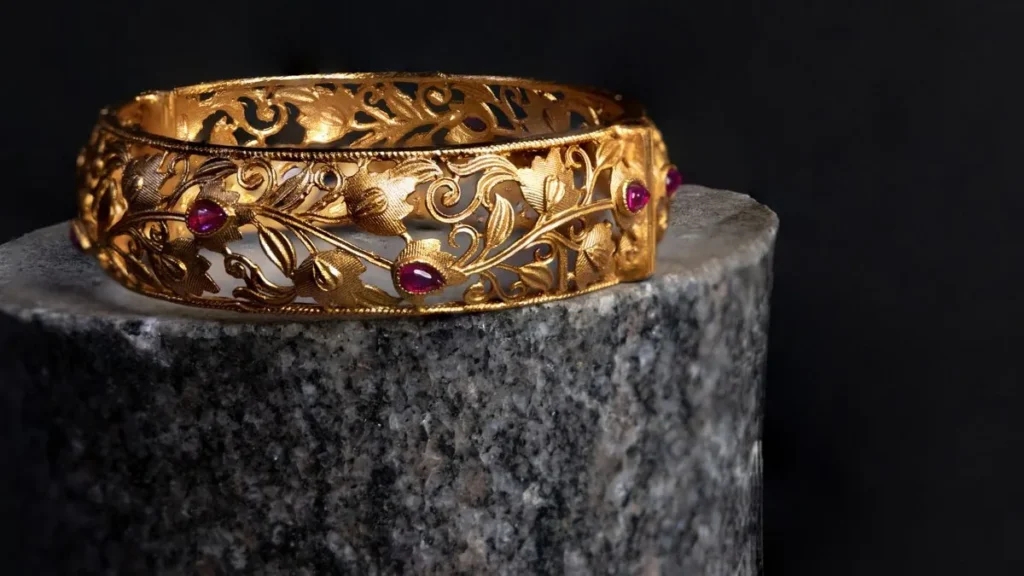
Gold jewellery is the most argued-over purchase in a jewellery box. It costs far more than the plated pieces beside it, and somebody is always ready to tell you that you are paying for a name or a shine. And yet the gold piece is almost always the one people would save first: the chain worn daily for years, the ring that has outlasted three trends, the bangle that still looks right with everything.
That instinct is worth taking seriously, because it is not really about sentiment. Gold does not tarnish, does not rust, and does not go out of fashion in any lasting way. A solid gold piece bought well can be worn daily for decades, repaired rather than replaced, and sold on for a real part of what it cost. The question is whether the piece in front of you is really gold where it matters, and whether you are paying for the metal or for everything around it.
This is an argument, not a shopping list: no picks, no named pieces. What follows is the case for gold jewellery in 2027 — the karat, the resale maths, the durability, the timelessness — and the things that are not worth paying for. Buy with those two lists in mind, and gold is worth it; buy without them, and it very often is not.
Key takeaways
- Solid gold is worth it because it does not tarnish, it can be worn daily for decades, and it keeps a real resale value — plated gold offers almost none of that.
- Karat is the key number: 18k is 75 percent gold, the sweet spot for fine jewellery; 14k is 58.3 percent and toughest for everyday wear; 24k is too soft for most pieces.
- Resale pays for the metal, not the making: expect below melt value, and treat design, branding and labour as money you will not get back.
- Gold hit a record above $5,500 an ounce in January 2026, then pulled back — so 2027 is a year to buy the piece, not chase the price.
- The case has limits: hollow pieces, heavy branding, fashion-led designs and unhallmarked gold can turn an expensive purchase into a poor one.
What “worth it” actually means here
Worth it is a slippery phrase, so pin it down before spending anything. A piece is worth it if it survives daily life, still looks right when fashion moves on, and holds enough value to sell one day. It does not have to be the most expensive piece in the shop. Jewellery is something you wear, not a bar in a vault, and judging it purely as an investment misses the point.
By that test, most solid gold passes and most plated gold fails. A solid 14k or 18k chain can be worn daily and polished back to new. A plated chain lasts a season or two before the thin layer wears through at the clasp and edges, the base metal shows, and the piece goes in a drawer. The plated piece cost a tenth of the price and lasted a twentieth of the time. Gold is expensive to buy and cheap to own, because the cost spreads over years of wear. Our guide to buying gold jewellery covers the practical steps; this article is about whether the money is well spent.
What to look for before you buy
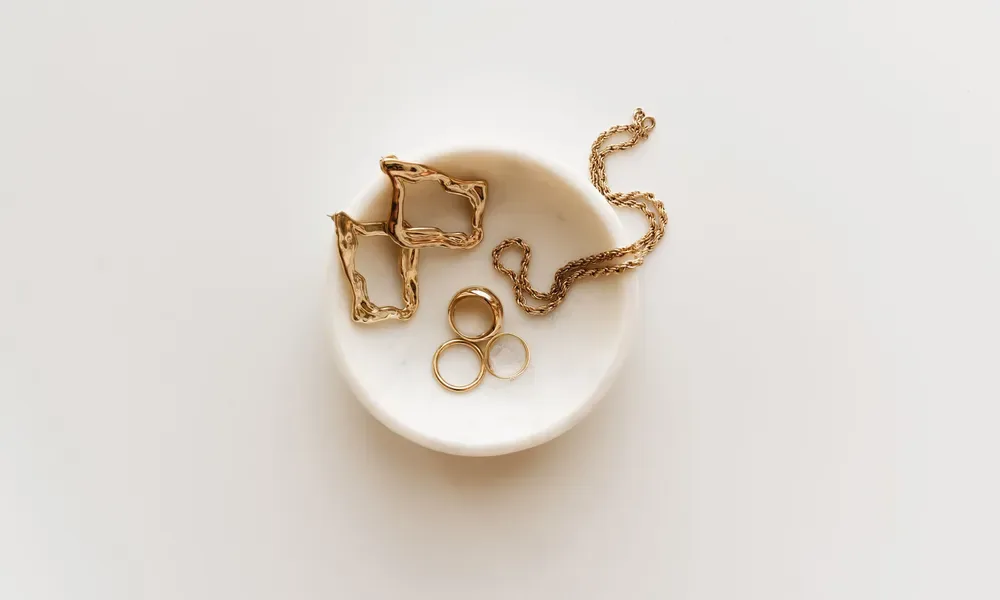
The worth-it case collapses if the piece itself is poor, so the buying check matters more than the brand name. Start with the hallmark: a stamped mark inside a ring band, on a clasp, or behind a pendant stating the karat, such as 750 for 18k or 585 for 14k. A reputable seller provides a receipt stating karat and weight in grams. If a seller cannot tell you the weight, walk away.
Next, check how the piece is made. Solid gold is gold all the way through. Hollow gold is a thin shell: lighter and cheaper, but it dents easily and cannot always be repaired. Gold-filled pieces have a thick bonded gold layer, around five percent of the weight, and wear far better than plated pieces, which have a microscopically thin layer that wears off. Vermeil is sterling silver with a thicker gold coating. The problem is only when a plated piece is priced as if it were solid. Our comparison of gold filled versus gold plated jewellery sets out the differences. Buy the plainest classic version of the design you love, and check the clasp: it fails first, and nobody inspects it in the shop.
Karat, colour and construction: the facts that decide value
Karat decides how much of your piece is actually gold. Pure gold is 24 karat, but too soft for everyday jewellery: a 24k ring bends and scratches. So gold is alloyed with copper, silver or palladium for strength and colour. Eighteen karat is 75 percent gold, the standard for fine jewellery: rich in colour, hard enough for daily wear, and high in gold content. Fourteen karat is 58.3 percent gold, harder and more scratch-resistant, and the most practical choice for rings and bracelets.
Colour is a matter of alloy, not quality. Yellow gold suits warm skin and deep colours best. Rose gold’s pink comes from extra copper, and it flatters most complexions, which is why it has become the default for everyday pieces. White gold is alloyed with palladium or nickel and coated with rhodium for a bright finish; the coating wears thin over a couple of years and needs replating.
Construction matters as much as karat. A well-made piece has clean joins, secure stone settings, and a weight that feels right. A piece that feels suspiciously light for its size is often hollow. Check for rough edges inside rings and behind pendants, and check that stones sit level and do not wobble.
The money side: resale, gold prices and the 2027 question
Here is the honest resale maths. When you buy, you pay for three things: the metal, the making, and the margin. When you sell, you are paid for one: the metal. A jeweller will weigh the piece, test the karat, and offer below the melt value of the gold content. Making charges, design and branding are not refunded, so a piece can lose a third of its price at once. That is a reason to buy pieces where the metal is most of the price.
Gold prices have been dramatic. Gold hit a record high above $5,500 an ounce in January 2026, then pulled back sharply. Forecasts for 2027 are scattered: Goldman Sachs expects around $4,650 an ounce by the end of 2027, UBS sees about $5,000, and the World Bank expects an average of around $4,250. Nobody knows where the price goes next. Gold is historically expensive right now, and buying jewellery to bet on the price is a poor strategy.
Solid gold in a classic design is worth paying for, because the metal and the wearability are both real. It is worth paying a little more for a reputable jeweller, for the hallmark, certificate and aftercare. It is not worth paying a premium for a famous name on a plain chain, because the name adds nothing to the melt value. And never stretch your budget for gold: a piece bought on credit is not a pleasure, whatever its karat.
The caveats that matter
Gold’s case is strong, but it is not unconditional.
| Point | What is known |
|---|---|
| Hollow pieces | Light and cheaper, but they dent easily and are often impossible to repair properly. |
| Plated gold | The thin gold layer wears through in months of daily wear, and resale value is close to zero. |
| Missing hallmark | No stamp and no certificate means no proof of karat; you are trusting the seller’s word alone. |
| Brand premiums | A famous name can double the price while adding nothing to the metal value or the look. |
| White gold upkeep | The rhodium coating wears thin and needs replating every couple of years at your expense. |
| Resale reality | You are paid for the metal only, below melt value; making charges and margins are not recovered. |
| High gold prices | With gold near record highs, buying for price gains is speculation, not a jewellery decision. |
| Allergies | Nickel in some white gold alloys can irritate sensitive skin; ask for nickel-free or palladium alloys. |
Checklist: before you pay for gold jewellery
- Check the hallmark and ask for the karat and the weight in grams, in writing, on the receipt.
- Confirm whether the piece is solid, filled, vermeil or plated — and pay a price that matches the answer.
- Choose 18k for fine pieces and 14k for rings and bracelets that will take daily knocks.
- Inspect the clasp, the joins and the stone settings, and hold the piece to judge its weight.
- Buy the plainest classic version of the design you love, and leave fashion-led shapes to plated metal.
- Keep the certificate and receipt together, and insure the piece if it is expensive.
Frequently asked questions
Is gold jewellery worth buying in 2027?
Yes, if you buy solid gold in a classic design from a reputable seller. The value is in decades of daily wear, no tarnishing, and a real resale value for the metal. It is not worth it for plated pieces at solid prices, hollow pieces, or gold bought as a price bet.
What karat of gold is best for everyday jewellery?
Eighteen karat, at 75 percent gold, is the best balance of colour, value and durability for necklaces, earrings and pendants. Fourteen karat is harder, so it suits rings and bracelets that take knocks.
Does gold jewellery hold its value?
Partly. Solid gold keeps its metal value, which can always be sold. But making charges and margins are not recovered, so expect an offer below melt value. Plated gold holds almost no resale value.
Is gold-filled jewellery worth it?
Often, yes. Gold-filled pieces have a thick bonded gold layer, around five percent of the total weight, and wear far better than plated pieces at a fraction of solid gold’s price. A sensible middle ground, if priced as filled.
Why is gold jewellery so expensive right now?
Gold hit a record high above $5,500 an ounce in January 2026 after a very strong 2025, and prices remain historically high even after the pullback. That feeds directly into retail prices, because the metal is the biggest part of what you pay for.
What gold jewellery is not worth paying for?
Hollow pieces that dent, plated pieces priced like solid gold, heavy brand premiums on plain designs, and fashion-led shapes that will date within a season. The money is better spent on one plain solid piece than on several of those.
The bottom line
Gold jewellery is worth it in 2027 for the same reasons it has always been worth it: it does not tarnish, it survives daily life, and it keeps enough value to sell on one day. The case does not depend on the gold price going up or on a brand name. It depends on buying solid, hallmarked gold in a design you will still like in ten years, from a seller who tells you the karat and the weight without being asked.
Buy the other way — plated metal at solid prices, hollow statement pieces, a famous name on a plain chain — and gold is a poor buy, however beautiful the box. The metal has not changed; only the purchase has. So the honest answer to the question in the title is yes, with a condition: gold jewellery is worth it when you pay for the gold. Our guide to wearing gold jewellery shows how to make one good piece work across outfits.
Note: Gold prices move daily and forecasts differ; check the current price before buying. This is general guidance, not financial advice.
Meet Our Experts
BrassSmile’s fashion editors cover jewellery, diamonds and luxury style, drawing on jewellers’ guidance and published market reporting.
Why Trust BrassSmile
We explain what a piece is made of, what it costs and what it is worth afterwards, using hallmarking standards and published gold-price forecasts, and we do not take payment for the opinions in this article.
Sources
World Gold Council guidance on karat and hallmarking; Goldman Sachs, UBS and World Bank gold price forecasts for 2027; BullionStar 2027 gold price forecast roundup.