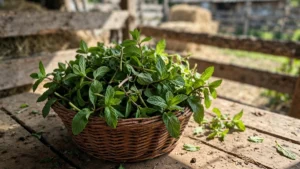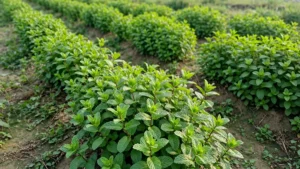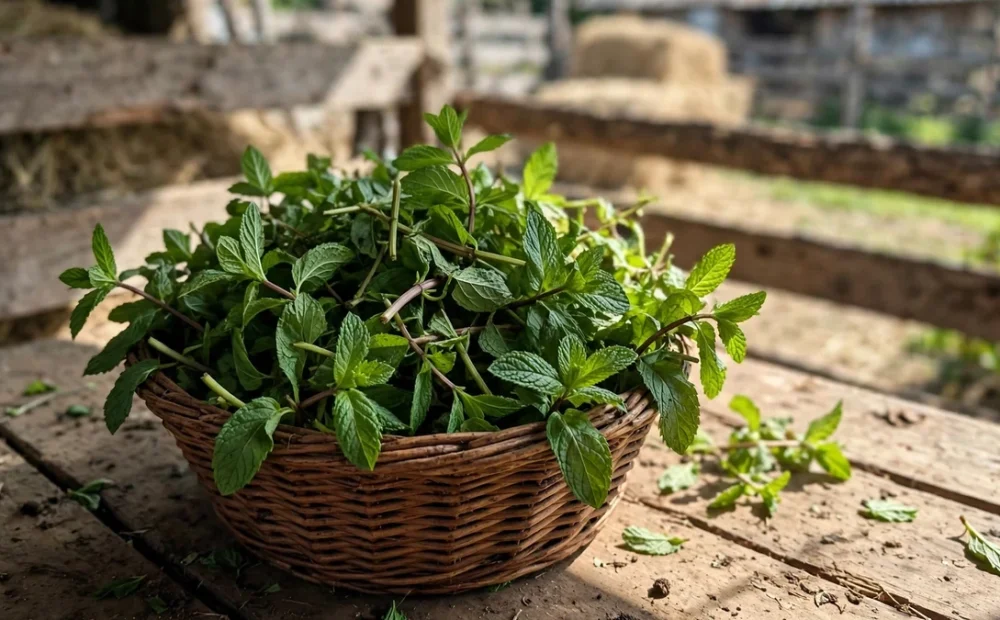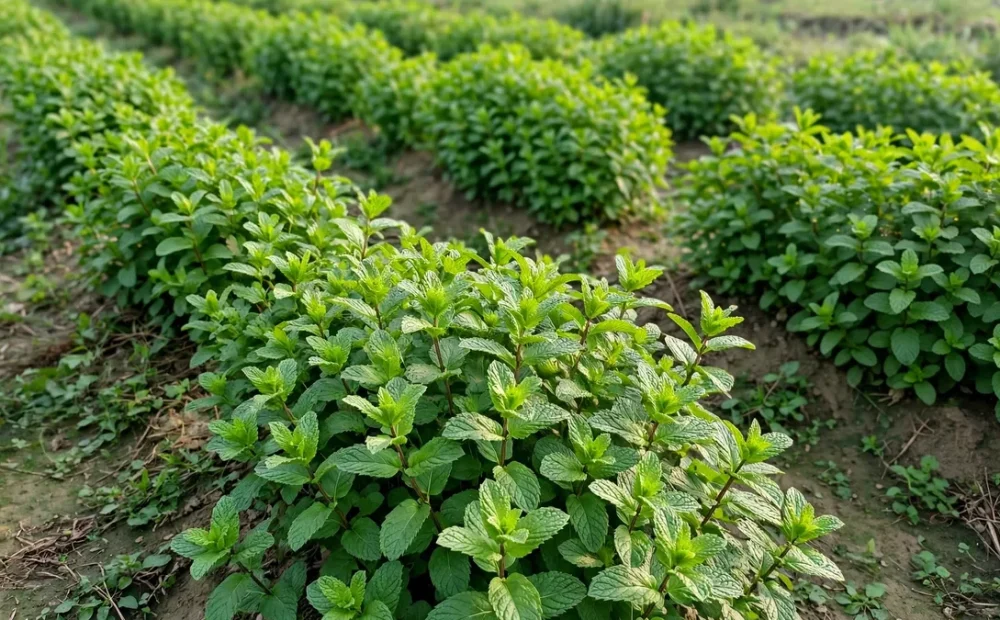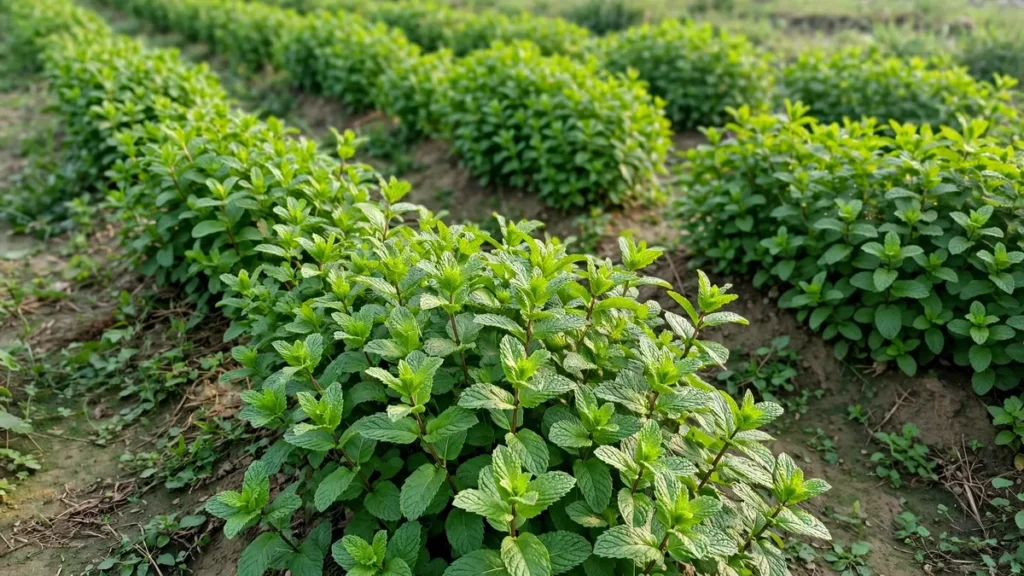
Mint is the most generous herb a farm grows, and the hardest to keep in its place. A single plant sends runners under the soil in every direction, and by midsummer a bed planted with a handful of cuttings is a thick green carpet that smells of menthol every time a boot brushes it. Peppermint is the sharp one, a natural hybrid of watermint and spearmint, rich in menthol and cool on the tongue. Spearmint is the soft one, sweet and mild, the mint of tea glasses and garden borders. A mint farm retreat is a few nights on a working farm in the cutting weeks, when the beds are at their fullest and the kitchen is cooking with what was cut that morning.
The farms stretch from the old peppermint grounds of Mitcham in Surrey to the warm Midlands of KwaZulu-Natal, and the herb ties them together. Mint needs damp soil, sun and room to run, so the farms sit where the water is close and the summers are warm, from the irrigated valleys of Washington State to the tea gardens of Meknes.
Here are nine mint farm retreats to weigh for 2027, from the cheapest Mitcham stay to the dearest KwaZulu-Natal farm, covering peppermint, spearmint and the tea mints of Morocco and China, so the decision turns on the way you travel rather than the place on the map.
Key takeaways
- Peppermint is a natural hybrid of watermint and spearmint, sharp with menthol, while spearmint is mild and sweet, and the two cook and brew differently.
- Mint spreads by runners under the soil, so farms grow it in contained beds or pots, and guests should never take a cutting home to plant loose in a garden.
- The strongest oil comes from leaves cut before the plants flower, so the farm names its cutting week, not a month, and the week is worth booking around.
- Mint farms run small, with a handful of rooms and meals shared at one table, so expect plain comfort, mud on your boots and menthol on your hands.
- Mint carries no gluten, but the bread and pastry served beside it are usually wheat, so settle the kitchen and the calendar before you pay.
What a mint farm retreat actually is
A mint farm retreat means three to five nights on a working farm that grows mint, with the cutting weeks as the reason for the trip. Guests sleep in a farmhouse room or a converted barn, eat what the farm kitchen cooks, and join the harvest, walking the beds to see the runners cut back, the leaves carried to the drying racks, and the fresh sprigs torn into tea, salads and sauces for the table. The great mint regions each grew up around a drink.
The work is gentle compared with the root crops, but it is still real work. Mint is cut with a sickle or shears, bundled, and carried to the racks before the sun takes the oil out of the leaves. Guests who ask can cut a bundle, strip leaves for the kitchen, or watch the still run, but nobody is made to work, and the afternoons are for walking, reading and long teas.
How we picked these stays, and what to ask first
We began with where mint truly grows, not where it sells best. A genuine mint farm offers beds to walk through, leaves to stand among at cutting time, and a kitchen working with its own mint. A farm that buys its mint in is not a mint farm, whatever the website says. Look for damp, rich soil, beds held in check by boards or pots, and a kitchen that brews tea from the leaves it cut that morning.

Ask three questions before you pay. First, which mint does the farm grow, peppermint or spearmint, and what does the kitchen do with it. Second, when is the cutting week, and will guests be there for it or just before it. Third, what the kitchen can serve if you eat gluten-free, since the bread on a farm table is almost always wheat. The ginger farm retreats follow the same test, and the farms that pass it tend to be the ones guests remember.
The 9 best luxury mint farm retreats of 2027
Mitcham, Surrey, England — Peppermint on the Old Herb Grounds
What we like: Mitcham was the historic peppermint centre of England, and the black Mitcham peppermint grown here is still the sharpest of the mints, rich in menthol and cool on the tongue. The farm keeps its beds in the old herb-ground style, bordered and contained, and the kitchen brews tea from the morning cut.
What to consider: The English summer is changeable, and a wet cutting week means muddy paths and indoor drying. The rooms are plain rather than grand.
Style: Historic English herb farm stay. Best for: Travellers who want peppermint where England grew it best. Price range: $65–$95 per night. Standout feature: Black Mitcham peppermint cut from the old herb grounds.
St. Johns, Michigan, USA — Mint on the Great Lakes Plain
What we like: Central Michigan is the heart of the American mint belt, and the farm here grows broad acres of peppermint and spearmint on flat, dark soil under a big lake sky. The cutting is done in long straight rows, and the drying barn smells of menthol for weeks.
What to consider: The farm is a working mint operation first, so the days start early and the machinery runs loud at cutting time. The nearest town is a drive away.
Style: American Midwest mint farm stay. Best for: Travellers who want to see mint grown at real scale. Price range: $100–$130 per night. Standout feature: Long mint rows cut under a Great Lakes sky.
Toppenish, Washington, USA — Mint in the Yakima Valley
What we like: The Yakima Valley is one of the great mint valleys of the world, and the farm here grows peppermint on irrigated ground under a hot desert sun. Dry sage hills stand on one side, green mint beds on the other, and the still runs in the late afternoon.
What to consider: The summer heat is fierce by midday, and the work is done early or not at all. The farm is remote, and the drive in is long.
Style: Irrigated desert valley farm stay. Best for: Travellers who want mint oil country at its most dramatic. Price range: $135–$165 per night. Standout feature: Peppermint distilled on the farm in the late afternoon.
Meknes, Morocco — Mint for the Tea Gardens
What we like: Meknes sits in Morocco’s mint-tea country, and the farm here grows spearmint for the tea glass, cut fresh every morning and brewed sweet with green tea. The garden is a courtyard of pots and raised beds, and the tea is poured from a height in the Moroccan way.
What to consider: The summer heat is strong, and the farm runs on Moroccan time, which means slow mornings and late suppers. Guests should expect shared bathrooms rather than private ones.
Style: Moroccan courtyard tea-garden stay. Best for: Travellers who want mint as Morocco drinks it. Price range: $170–$200 per night. Standout feature: Spearmint cut each morning for the tea glass.
Grasse, France — Mint on the Perfume Hills
What we like: Grasse is the perfume town of France, and the farm here grows mint on terraced hills above the town, where the leaves are cut for fragrance as well as the kitchen. The terraces are stone-walled, the air carries mint and jasmine, and the kitchen folds mint into salads, fish and fruit.
What to consider: The terraces are steep, and the paths between them are stone steps rather than flat walks. The farm is small and books up early.
Style: Provençal terraced hillside farm stay. Best for: Travellers who want mint grown for scent as well as flavour. Price range: $205–$235 per night. Standout feature: Mint terraces above the perfume town.
Hangzhou, Zhejiang, China — Mint Beside West Lake
What we like: Hangzhou is China’s tea city, and the farm here grows field mint beside West Lake, where the leaves are brewed into cooling teas and folded into cold dishes. The beds sit below green hills, and the lake is near enough for a morning walk.
What to consider: The summer humidity is heavy, and the mosquitoes are keen near the water. The farm speaks little English, so a translator or a phrasebook helps.
Style: Chinese lakeside tea farm stay. Best for: Travellers who want mint in China’s tea country. Price range: $240–$270 per night. Standout feature: Field mint brewed beside West Lake.
Kerry, Ireland — Mint on the Wild Atlantic Coast
What we like: Kerry’s Atlantic coast is wet, green and windy, and the farm here grows mint in damp meadow beds behind a stone farmhouse. The mint is spearmint, mild and sweet, and the kitchen uses it in peas, lamb and summer puddings.
What to consider: The Irish weather is changeable, and a wet week means indoor drying and muddy boots. The farm is a long drive from the nearest airport.
Style: Irish Atlantic coast farmhouse stay. Best for: Travellers who want mint in soft Atlantic weather. Price range: $275–$305 per night. Standout feature: Spearmint beds behind a stone farmhouse on the coast road.
Maule Valley, Chile — Mint in the Central Valley
What we like: The Maule Valley runs between the Andes and the coastal hills, and the farm here grows mint on river-irrigated ground in long green rows. The mint is peppermint, sharp and clean, and the kitchen uses it in salads, with grilled fish and in iced drinks.
What to consider: The farm is a long drive from Santiago, and the valley heat builds by midday. The menu is Chilean and hearty, and the English is limited.
Style: Chilean river-valley farm stay. Best for: Travellers who want mint below the Andes. Price range: $310–$340 per night. Standout feature: Peppermint rows irrigated from the Maule River.
KwaZulu-Natal, South Africa — Mint in the Midlands
What we like: The KwaZulu-Natal Midlands are warm green hills of rich red soil, and the farm here grows mint in raised beds above the valleys. The mint is spearmint, lush and sweet, and the kitchen folds it into salads, curries and iced tea.
What to consider: The farm is a long drive from Durban, and the summer rains can be heavy in the afternoons. The nights are cool, and guests should pack a rain layer and strong repellent.
Style: South African Midlands hill farm stay. Best for: Travellers who want mint in warm African hills. Price range: $345–$380 per night. Standout feature: Spearmint beds on red soil above the valleys, with farm honey at breakfast.
Which mint region fits your trip
Start with the mint you like, not the map. Peppermint people should look at Mitcham, Toppenish and the Maule Valley, where the menthol runs sharp and the oil is the point. Spearmint people should look at Meknes, Kerry and KwaZulu-Natal, where the mint is mild, sweet and made for tea and the table.
Then weigh the weather and the walking. The cool-climate farms, Mitcham and Kerry, suit travellers who dislike heat and want green lanes and fires in the evening. The hot-climate farms, Meknes, Toppenish and the Maule Valley, suit travellers who want sun, early mornings and long shaded lunches. The asparagus farm retreats run on the same seasonal logic, and the same question applies there: pick the crop you love, then pick the climate you can stand.
The caveats that matter
Mint is an easy crop to love and a hard crop to contain, and the farms are honest about both sides. The runners spread fast, so a farm that does not contain its mint will lose a field to it in a season, and guests should never take a cutting home without asking. The oil is strongest before flowering, so a stay booked after the plants have flowered will smell lovely and taste mild. The farms are small, the rooms are plain, and the supper table is shared, which suits travellers who like company and not those who want privacy. The leek farm retreats carry the same small-farm caveats, and the same advice holds: read the first email carefully, and ask what the rate actually covers.
| Detail | What is known |
|---|---|
| Best time to visit | The cutting weeks, when the leaves are full and the oil is strongest, before the plants flower, with the season shifting by region |
| What the work involves | Walking the beds, cutting mint with a sickle or shears, carrying bundles to the drying racks, and watching the leaves dried or distilled |
| How long a stay runs | Three to five nights, set around the cutting weeks |
| Who should take care | Guests with a strong sensitivity to menthol, and anyone unused to fierce sun, heavy rain or steep muddy paths |
| What the kitchen serves | Mint tea, mint with peas and lamb, mint in salads and sauces, and mint over fruit and puddings, with fresh bread beside the plate |
| Gluten note | Mint carries no gluten, but the bread and pastry served beside it are usually wheat, so ask the kitchen what it can safely serve |
| What to pack | Closed walking shoes, a broad sun hat, a rain layer for sudden showers, and clothes that wash easily by hand |
| What it does not do | No promised cutting day, no fixed menu, and no hotel-style service on a working farm |
Checklist: booking a mint farm stay honestly
- Ask which mint the farm grows, peppermint or spearmint, and what the kitchen does with it.
- Book the cutting week, not a month, and confirm the dates in writing before the flights.
- Ask what the nightly rate covers, and what is billed on arrival.
- Settle the gluten-free question with the kitchen before you pay.
- Pack boots that wash clean, a sun hat and a rain layer, and leave room for dried mint.
- Never take a mint cutting home without asking, and never plant it loose in a garden.
Frequently asked questions
Is peppermint the same as spearmint?
No. Peppermint is a natural hybrid of watermint and spearmint, sharp with menthol and cool on the tongue, while spearmint is mild and sweet.
When do mint farms cut their mint?
Just before the plants flower, when the leaves hold the most oil. The exact week shifts by region and by year, and the farm names it a few weeks ahead, so the sensible move is to hold the flights until the farm fixes its dates.
Why do farms grow mint in beds or pots?
Because mint spreads by runners under the soil, and a loose plant will take over a field in a season. Contained beds, boards and pots keep the mint where the farm wants it, and they make the cutting easier too, since the rows stay straight and the bundles stay clean.
Can guests help with the cutting?
Yes, on most of these farms, and the work is gentle: a sickle or shears, a bundle, and a carry to the drying racks. Nobody is made to work, and the farms are glad of hands that ask first.
Which mint region suits a first trip best?
Mitcham for peppermint history and an easy journey, Meknes for mint tea and warm weather, or Kerry for gentle walking and soft Atlantic air. All three are small, friendly and used to first-time farm guests, and all three keep the work optional.
Can gluten-free guests eat well on a mint farm?
Yes, if the kitchen knows before you arrive. Mint itself carries no gluten, and the farm cooking leans on vegetables, meat, fish and rice, so a gluten-free table is usually easy.
The bottom line
Mint farm retreats are small, plain and honest, and that is their charm. Pick the mint you like, book the cutting week, and ask the kitchen your questions before you pay, and the farm will do the rest.
Of the nine, Mitcham is the cheapest way in and the best peppermint history, Meknes is the warmest welcome and the finest tea, and KwaZulu-Natal is the dearest and the most beautiful. Any of them will show you what mint is when it is grown properly, and none of them will pretend to be a hotel.