Perfume oil asks for a different hand than a spray. There is no mist to catch and no cloud to walk through. What you get instead is a small, warm patch of scent that stays close and lasts for hours, and the whole result depends on where you put it, how much you use, and whether you leave it alone afterwards. Most people who say perfume oil does not work for them have been let down by the way they applied it, not by the oil.
The technique is simple once you stop treating the bottle like a spray. Oil needs warm, slightly moisturised skin, a light touch, and time. A single drop in the right place will do more than a generous smear in the wrong one, and the most common error is doing too much of everything: too many spots, too much oil, too much rubbing, and then a top-up an hour later because the scent seems to have gone, when your nose has simply got used to it.
Below is a plain guide to applying perfume oil properly: preparation, the step-by-step method, the pulse points that work, how much to use, what oil can and cannot touch, how to reapply, and the mistakes that flatten a good oil. If you are still deciding whether the format suits you, our guide to what a perfume oil is explains how it differs from a spray before you start.
Key takeaways
- Apply perfume oil to clean, warm, slightly moisturised skin at one or two pulse points, and let it absorb on its own.
- One small roll, one drop, or one light dab per spot is enough to start.
- Never rub your wrists together after applying, and never apply oil over clothes, because oil stains fabric and rubbing breaks the scent down faster.
- Hair takes oil only on the ends, never at the roots or scalp, and only in the smallest amount.
- Perfume oil sits close by design, so a scent you can barely smell may still be clear to everyone else.
What applying perfume oil actually involves
A spray does most of the work for you. It spreads the scent over a wide area, dries in seconds, and reaches places you never aimed at. An oil does none of that. It goes exactly where you put it and stays there, releasing scent slowly as your body warms it. That is why the application matters so much more with oil: the bottle gives you complete control, and every choice shows. If you are still choosing a bottle, our guide to how to choose a perfume covers strength and scent families before you buy.
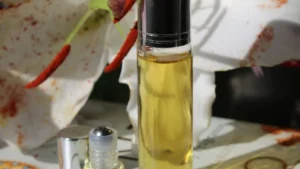
The applicator decides the gesture. A rollerball lays down a thin, even line and is the most forgiving way to start, because it is hard to overdo. A dropper gives you a single measured drop. A stopper bottle, the traditional style for attars, asks you to touch the glass rod to the skin, which gives the least control of all.
How to apply perfume oil, step by step
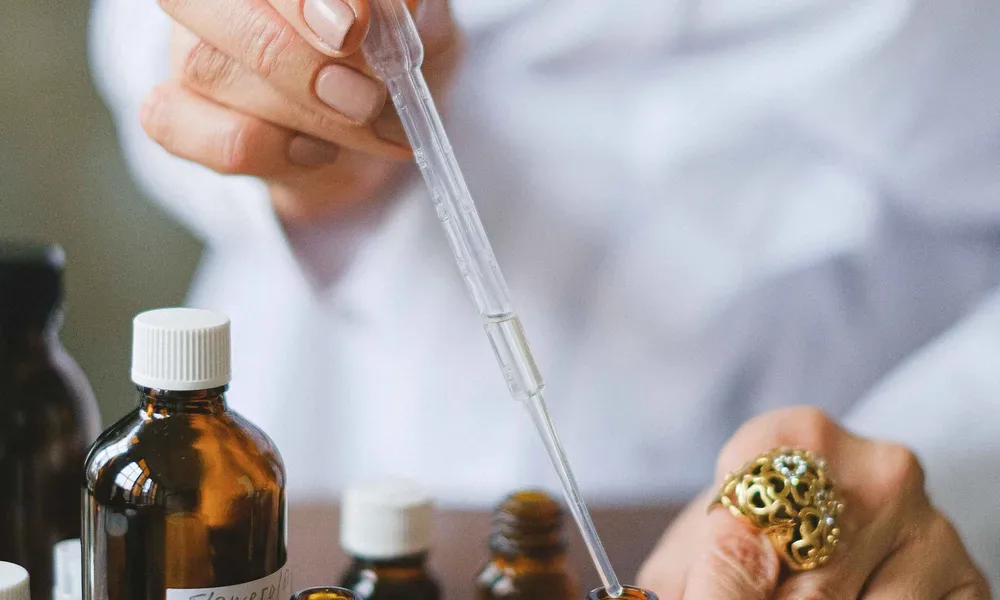
Start with clean skin and a thin layer of unscented moisturiser on the places you plan to scent. Let the moisturiser sink in for a minute. Oil sitting on top of a greasy or half-absorbed cream will slide and spread further than you intended, so the skin should feel soft, not slick, before the oil goes on.
Choose one pulse point to begin with, and apply a single small amount there. With a rollerball, that is one slow roll across the inside of the wrist. With a dropper, it is one drop, placed on the skin and then spread with a fingertip in one gentle stroke. With a stopper bottle, it is one light touch of the rod. Wait thirty seconds. If the scent feels too quiet after that, add a second spot, not a second layer on the same spot.
Then stop. Do not rub the spot, press your wrists together, or wave your hand to dry it. Let the oil warm on the skin by itself, and give it a minute or two before you put on a sleeve, a collar, or a watch strap over the area. Oil that has not absorbed will transfer to fabric and stain it. Dress after the oil, not before it.
Where to apply it: the pulse points that work
Pulse points work because the blood runs close to the surface there, warming the skin a fraction more than the skin around it. That gentle warmth is what lifts the scent out of the oil over hours. Start with the wrists: the skin is thin, the area is warm, and you can check the scent easily. The sides of the neck and the hollow behind the ears work the same way.
The inner elbows and the backs of the knees are the quieter choices, and they are worth knowing about. They are warm, they are rarely washed during the day, and they release scent slowly as you move. The centre of the chest is another good spot, especially under a shirt, because the warmth there is steady and the scent rises gently through the day. Two of these spots are enough for most days.
Some spots sound good and perform badly. The palms are a poor choice: you wash your hands constantly, and the oil ends up on everything you touch. The face is worse, because fragrance oils can irritate delicate skin. And any broken, freshly shaved, or sunburned skin should be left alone until it has healed.
How much to use, and how to tell you have used too much
The right amount of perfume oil is smaller than most people expect. One small roll, one drop, or one dab per spot, on one or two spots, is a full application for a normal day. A strong oil needs even less.
The honest test is not your own nose. You stop noticing your own scent within twenty minutes or so, because your nose tunes out a constant smell. That is normal, not a sign the oil has faded. Ask someone you trust: if nobody reacts at all, add one more spot next time, and if someone steps back, use half as much the next day.
Skin, clothes and hair: what oil can and cannot touch
Oil belongs on skin, and on skin only. That is the rule that protects both your clothes and your scent. Oil soaks into fabric, and on light colours, silk, and delicate materials it leaves a mark. Apply to bare skin, let the oil absorb for a minute or two, and only then dress over the area, and put jewellery on after the oil, not before.
Hair is the one exception, and it is a narrow one. A tiny amount of oil on the very ends of the hair can give a soft, moving scent that people notice when you turn your head. But the amount is the whole trick: one drop, warmed between the fingertips and smoothed over the ends only. Never apply oil to the roots or scalp, where it will look greasy, and never run an oiled hand through the lengths.
Reapplying through the day
A good perfume oil does not need reapplying for most of a day. The oil base releases scent slowly, so the fragrance you put on in the morning is usually still there in the afternoon, even if you have stopped noticing it. Reapply only when the scent has genuinely faded, and only ever to a fresh spot rather than on top of the morning’s application. If you want the oil to sit under a spray as a base, the order is fixed: oil first on the skin, then the spray over it, as our guide to how to layer perfume explains.
If you do top up, use half the morning amount. One small roll on one wrist, or one drop, is enough. Layering fresh oil over old oil smells heavier and flatter than a fresh application. Use a fresh spot you have not used yet, such as the inner elbow, rather than doubling the amount on a morning spot.
The mistakes that flatten a perfume oil
The most common mistake is rubbing. Pressing your wrists together feels natural, but with oil it crushes the lightest notes before they develop. The top notes are the first thing rubbing destroys, so the fragrance goes straight to its heavy base and smells flat.
The second mistake is applying too much in too many places. Oil is concentrated, and five spots of a strong oil will announce you before you enter a room. Two spots are a full application, and one is often enough. The third mistake is applying to the wrong surface: over clothes, a watch strap, a collar, or skin still wet with scented lotion.
Perfume oil application at a glance
| Detail | What is known |
|---|---|
| Best time to apply | Just after a shower, on clean, warm, lightly moisturised skin. |
| Best spots | Wrists, sides of the neck, behind the ears, inner elbows, backs of the knees, centre of the chest. |
| How many spots | One or two for a normal day; three at most. |
| How much per spot | One small roll, one drop, or one light dab; a strong oil needs even less. |
| Rubbing | Never rub wrists together; it breaks down the top notes and flattens the scent. |
| Clothes and fabric | Oil stains light colours and silk; skin only, and let it absorb before dressing. |
| Hair | Ends only, one drop; never roots or scalp. |
| Reapplying | Half the morning amount, on a fresh spot. |
Checklist: before you walk out the door
- Skin is clean and lightly moisturised, and the cream has sunk in.
- One or two pulse points chosen, with no oil on broken, shaved, or sunburned skin.
- One small roll, drop, or dab per spot, and no rubbing afterwards.
- Oil left to absorb before sleeves, collars, watches, or jewellery go on.
- Hair has one drop on the ends only, and nothing at the roots.
- Bottle capped, upright, and stored somewhere cool and dark.
Frequently asked questions
How much perfume oil should I apply?
Less than you think. One small roll, one drop, or one light dab per spot, on one or two pulse points, is a full application for a normal day. Add a second spot only if the scent feels too quiet after thirty minutes.
Should I rub my wrists together after applying perfume oil?
No. Rubbing crushes the lightest notes out of the scent before they develop, so the fragrance goes straight to its heavy base and smells flat. Apply the oil and leave it alone to warm on the skin by itself.
Can I apply perfume oil to my clothes?
No. Oil soaks into fabric and can stain light colours, silk, and delicate materials. Apply oil to bare skin only, let it absorb for a minute or two, and then dress over the area.
Can I put perfume oil in my hair?
Yes, but only on the ends and only in the smallest amount. Warm one drop between your fingertips and smooth it over the very ends of the hair.
How often should I reapply perfume oil?
Most good oils do not need reapplying during a normal day. If you do top up, use half the morning amount on a fresh spot, not on top of the old application.
Why can I not smell my perfume oil after an hour?
Your nose tunes out a constant smell within about twenty minutes, which is normal and not a sign the oil has faded. The scent is almost certainly still there, and people around you can still smell it. Ask someone you trust before adding more.
The bottom line
Applying perfume oil well comes down to restraint and patience. Clean, warm, lightly moisturised skin, one or two pulse points, a single small amount per spot, and then no rubbing, no rushing to dress, and no topping up on the word of a nose that stopped noticing the scent twenty minutes ago.
The format rewards anyone willing to learn its habits. Start with a small rollerball, test it on one wrist for a full day, and let the oil teach you how much it needs on your skin. Note: Fragrance is personal, and skin chemistry changes how any oil wears, so patch-test a new oil on one small area first and stop using it if your skin reacts.