Pick up a wool blanket and a cotton blanket side by side and they feel like answers to two different questions. The wool one is heavy, springy and warm before you have even unfolded it. The cotton one is light, cool and smooth, the kind of blanket you reach for without thinking. Both are natural fibres, both have been keeping people warm for centuries, and both can be the right buy — but they are right for different rooms, different sleepers and different seasons.
The mistake is choosing on warmth alone. Wool is the warmer fibre, and in a cold house in January that settles the argument for many people. Cotton wins almost everywhere else that daily life happens: it washes in the machine, it breathes on a warm night, it rarely irritates skin, and it costs far less. A household that buys wool for the bed and cotton for the sofa is not being indecisive. It is using each fibre where it works best.
This comparison puts wool and cotton blankets head to head on warmth, weight, breathability, feel, durability, care and price. No shortlist, no brand ranking — just the fibre facts, so you can choose once and choose well.
Key takeaways
- Wool is the warmer blanket by a clear margin: it traps air, stays warm when damp, and suits cold rooms, draughty houses and winter beds.
- Cotton is the cooler, lighter blanket: it breathes, wicks moisture away from the skin, and suits warm sleepers, summer evenings and layered bedding.
- Feel is decided by fineness and weave: fine merino wool under 20 microns can feel soft, coarse wool above 30 microns prickles, and cotton is reliably smooth but can feel thin and flat on its own.
- Cotton is far easier to live with: it machine-washes, tumble-dries on low, and shrugs off the moths that hunt wool, while wool needs gentler washing and proper storage.
- Wool usually costs more and lasts longer under daily use, but cotton is the better value if you want a washable everyday blanket and will replace it sooner.
What each fibre actually is
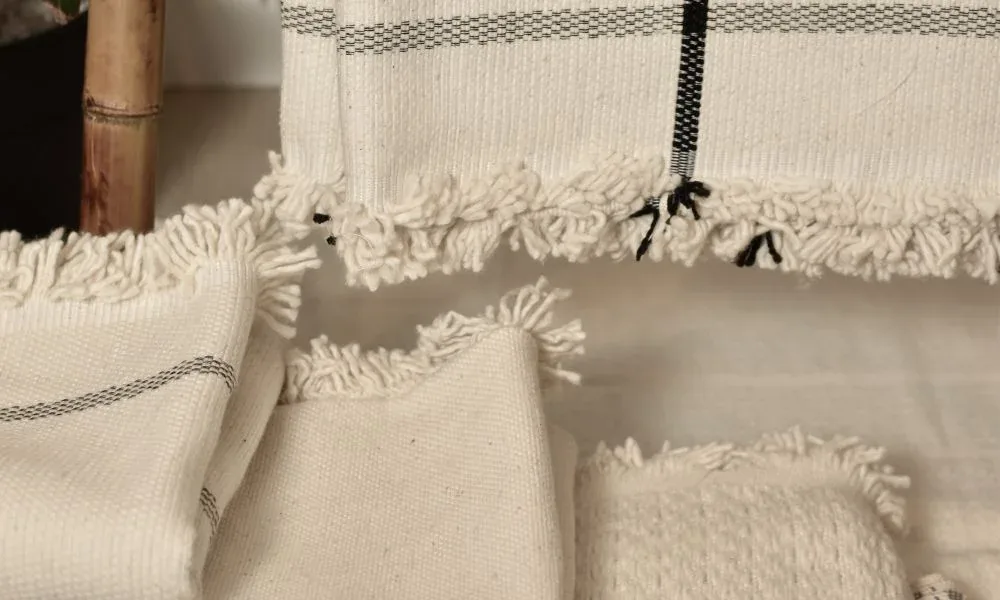
Wool is the fleece of sheep, an animal protein fibre with a natural crimp — a wave in each strand that traps still air and gives wool its spring. Merino wool is the finest and softest kind, often 18 to 22 microns across, and it is the wool most often used for blankets meant to touch skin. Ordinary wool, at 25 microns and above, is coarser and better suited to hard-wearing throws. Our guide to how to choose a wool blanket explains the grades and weights worth checking before you buy.
Cotton is the soft fibre that grows around the seeds of the cotton plant, a plant cellulose fibre that is spun into yarn and woven or knitted into cloth. Long-staple cottons, sold as Egyptian or Pima cotton, have longer, smoother fibres and make a softer, stronger blanket. Most cotton blankets are woven in a flat weave, a waffle weave or a thermal honeycomb weave, and the weave matters as much as the fibre: a waffle weave traps small pockets of air and feels warmer than a flat weave of the same weight.
Warmth, weight and breathability
Wool wins on warmth, and it is not close. Its crimped fibres trap still air, and wool can absorb up to a third of its weight in moisture without feeling wet, so it keeps insulating on a damp night. A typical wool throw weighs 800 grams to 1.5 kilograms, and that weight is part of the comfort: it drapes, stays put, and feels substantial on a cold sofa.
Cotton wins on breathability. Its fibres absorb moisture and let it pass through, so a cotton blanket feels cool and dry against warm skin instead of clammy. A typical cotton throw weighs 400 to 800 grams, roughly half the weight of a comparable wool throw, and it folds into almost nothing.
Feel, skin and allergies
Feel is where the two fibres part company most clearly. Fine merino wool is soft, almost silky, and most people could not tell a good merino throw from a much more expensive blanket with their eyes closed. Coarse wool above 30 microns is what gives wool its itchy reputation: the thick fibre ends prickle the skin, and no amount of washing removes that prickle. If a wool blanket itches, it is almost always a coarse wool, not wool itself.
Durability, pilling and lifespan
Wool fibres are naturally elastic: they bend thousands of times and spring back, so a wool blanket resists crushing, keeps its loft, and recovers its shape after being sat on, folded and draped. A well-made wool blanket used every evening can last ten to twenty years. Wool does pill, because pilling is what happens when short fibres work loose and tangle on the surface, but a wool comb restores the surface, and the blanket underneath is still sound.
Cotton is strong when dry and weaker when wet, which is the opposite of what most people expect. A cotton blanket handles daily folding, dragging and washing well, and it does not pill the way wool does — its fibres are longer and smoother, so the surface stays clean. What cotton does instead is thin out: after years of washing, the weave loosens, the edges fray, and the colour fades, especially in strong colours. A cotton blanket used every day will usually look tired after three to five years, even if it is still perfectly usable.
Care, washing and storage
This is cotton’s biggest win. A cotton blanket goes in the washing machine on a warm cycle with ordinary detergent, tumble-dries on low, and comes out soft and fresh. The one rule is shrinkage: cotton can shrink in a hot wash or a hot dryer, so wash warm and dry low.
Wool needs gentler handling. Most pure wool blankets should be hand-washed in cool water with a gentle wool detergent, pressed dry without wringing, and dried flat away from direct heat. Some are labelled superwash and can be machine-washed on a cold wool cycle, but a hot wash will still felt them.
Price and value in 2027
A good pure wool throw in 2027 starts at around $80 to $150, and a premium merino throw runs $200 to $350. A good pure cotton throw starts at around $40 to $90, and a premium long-staple cotton throw runs $120 to $180. Our roundup of the best luxury blanket brands shows the real price spread across both fibres.
Per evening of use, a $200 wool blanket that lasts fifteen years is cheaper than a $60 cotton blanket replaced every three years — but that arithmetic misses how the two blankets are actually used. A cotton blanket that gets washed weekly and used every night is better value than a wool blanket that lives in a drawer because you are afraid of spoiling it. The sensible middle ground is a blend: a wool-cotton throw gives you some of wool’s warmth with cotton’s washability, at a price between the two, and it suits households that want one blanket to do everything.
Wool vs cotton at a glance
| Detail | Wool | Cotton |
|---|---|---|
| Warmth | Higher — traps air, stays warm when damp | Lower — a light layer, best in warm weather |
| Weight of a typical throw | 800 grams to 1.5 kilograms — heavy and cosy | 400 to 800 grams — light and easy to fold |
| Breathability | Good — regulates temperature, can feel hot to warm sleepers | Excellent — cool, dry and airy against skin |
| Feel against skin | Soft when fine merino, itchy when coarse | Smooth and gentle, softer with every wash |
| Durability | 10 to 20 years — springy, pills but stays sound | 3 to 5 years of daily use — thins and fades |
| Care | Hand wash cold, dry flat, moths love it | Machine wash warm, tumble dry low, no moths |
| Typical price in 2027 | $80 to $350 for a good pure throw | $40 to $180 for a good pure throw |
| Best for | Winter beds, cold rooms, daily hard use | Warm sleepers, summer, children, guest rooms |
Checklist: before you buy
- Check the composition: 100 percent wool with the type named, or 100 percent cotton, or a blend with percentages stated.
- Feel the fibre: fine merino under 20 microns should feel soft against your neck, and cotton should feel smooth, never stiff or scratchy.
- Read the care label first: if it says dry clean only and you will never dry clean it, buy the cotton blanket instead.
- Weigh the throw: wool should feel substantial but not stiff, cotton light but not flimsy — a blanket that feels like a sheet will not keep you warm.
- Buy the size you will use: about 50 by 60 inches covers one person on a sofa, and a larger throw is worth it for a bed.
- Plan the storage: wool needs a breathable cotton bag with cedar or lavender, while cotton can simply be folded away clean and dry.
Frequently asked questions
Is wool warmer than cotton?
Yes, by a clear margin. Wool’s crimped fibres trap still air, and wool keeps insulating when it absorbs moisture, while cotton loses warmth when it gets damp. A thick cotton blanket can still feel warm on a mild evening, but for real cold, wool is the fibre to buy.
Which blanket is better for summer?
Cotton, without question. It breathes, wicks moisture away from the skin, and never traps heat the way a thick wool blanket can. A light cotton throw or a waffle-weave cotton blanket is the right choice for summer evenings and warm bedrooms.
Can I machine-wash a wool blanket?
Most pure wool blankets should be hand-washed in cool water or dry-cleaned. Some are labelled superwash and can be machine-washed on a cold wool cycle, but hot water will felt them and the tumble dryer will ruin them. Cotton, by contrast, machine-washes on a warm cycle and tumble-dries on low.
Is cotton or wool better for sensitive skin?
Cotton is the safer default: it is smooth, free of lanolin, and rarely irritates skin. Fine merino wool can also be gentle, but coarse wool above 30 microns prickles, and a small number of people react to lanolin. If anyone in the house has eczema, start with cotton.
Why does my wool blanket pill but my cotton one does not?
Wool pills because its short fibres work loose and tangle on the surface, especially in the first weeks of use. Cotton fibres are longer and smoother, so the surface stays clean — but cotton thins and fades instead. Comb wool pills off gently instead of pulling them, which drags more fibre out.
Is a wool-cotton blend worth buying?
Often, yes. A blend gives you some of wool’s warmth with cotton’s washability, at a price between the two, and it suits households that want one blanket to do everything. Check the percentages are printed on the label, and be wary of a blend that is mostly synthetic fibre with a little wool or cotton added for the name.
The bottom line
Buy wool if you want the warmest blanket you can own, you sleep in a cold room, and you are willing to hand-wash it and store it properly. Buy cotton if you want a light, breathable blanket you can wash every week, you sleep hot, or the blanket is for a child, a guest room or a summer sofa. Our comparison of cashmere vs wool blankets covers the other classic pairing if you are weighing a softer luxury fibre against wool.
The real mistake is buying on the label alone. Feel the fibre, check the composition, read the care instructions, and choose the blanket that fits your life. A blanket you use every night is better value than one you are afraid to wash.
Note: Prices and fibre measurements are typical for 2027 throws and vary by maker and retailer; check the composition and care labels on the blanket you buy.