Hold a cashmere blanket in one hand and a silk blanket in the other and they barely seem to belong to the same category. One is soft, fuzzy and cloud-like. The other is cool, smooth and fluid, sliding through your fingers like water and settling over you without any weight at all.
The confusion starts at the shop, because the two are sold as if they were interchangeable. They are not. Cashmere is animal hair, short and crimped, built to trap warmth. Silk is a single continuous filament, smooth and flat, built to breathe and regulate temperature. One warms you up; the other keeps you from overheating.
This is a head-to-head between cashmere blankets and silk blankets only — not wool, not cotton, not a blend of the two. Warmth, weight, softness, durability, care and price are each judged on the two fibres’ own terms, so you can choose the blanket that fits the way you actually sleep and live.
Key takeaways
- Cashmere is warmer for its weight and softer in a fuzzy way, but it pills, attracts moths and needs gentle washing or dry cleaning.
- Silk is the better temperature regulator: it feels cool on first touch, wicks moisture away from the skin and suits hot sleepers far better than cashmere.
- Softness differs: cashmere is downy and plush, silk is smooth and slippery with a soft sheen.
- Neither blanket is tough. Cashmere pills and thins with friction, while silk snags, weakens when wet and fades in strong sunlight.
- Cashmere wins on winter warmth and cosiness; silk wins on cool comfort, drape and breathability.
What cashmere and silk actually are
Cashmere is the soft undercoat of cashmere goats, combed out in the spring moult, mostly in Mongolia and Inner Mongolia. Each goat yields only about 150 to 200 grams of usable fibre a year, and the raw down has to be de-haired by hand. The finest fibres, Grade A, measure about 15 to 15.5 microns across. That scarcity is why a genuine cashmere blanket costs what it does, and why the label matters.
Silk is spun by the mulberry silkworm, which builds its cocoon from a single continuous filament hundreds of metres long. A silk blanket comes in two forms, and you need to know which one you are buying: a woven silk throw, where silk is the visible fabric, and a silk-filled blanket, where loose silk floss forms the filling inside a cotton or silk cover. The first shows off the sheen; the second sleeps like a light duvet.
Quality is measured differently for each fibre. For cashmere, look at the micron grade and the ply: two-ply yarn is stronger and pills less than single-ply yarn of the same softness. For woven silk, look at the momme weight: 19 to 25 momme is the usual range for good silk bedding. For a silk-filled blanket, look at the fill weight: about 200 grams per square metre suits a warm room, nearer 350 an ordinary one. If winter warmth comes first, our roundup of the best cashmere blankets for winter sets out what a good cold-weather throw looks like.
Warmth, weight and temperature regulation
Cashmere wins on warmth per gram, and it is not close. Its fine, crimped fibres trap a great deal of still air, so a typical throw weighs only 300 to 500 grams and still feels properly warm. That warmth is the whole point on a cold evening: cashmere holds heat close to the body and gives it back slowly.
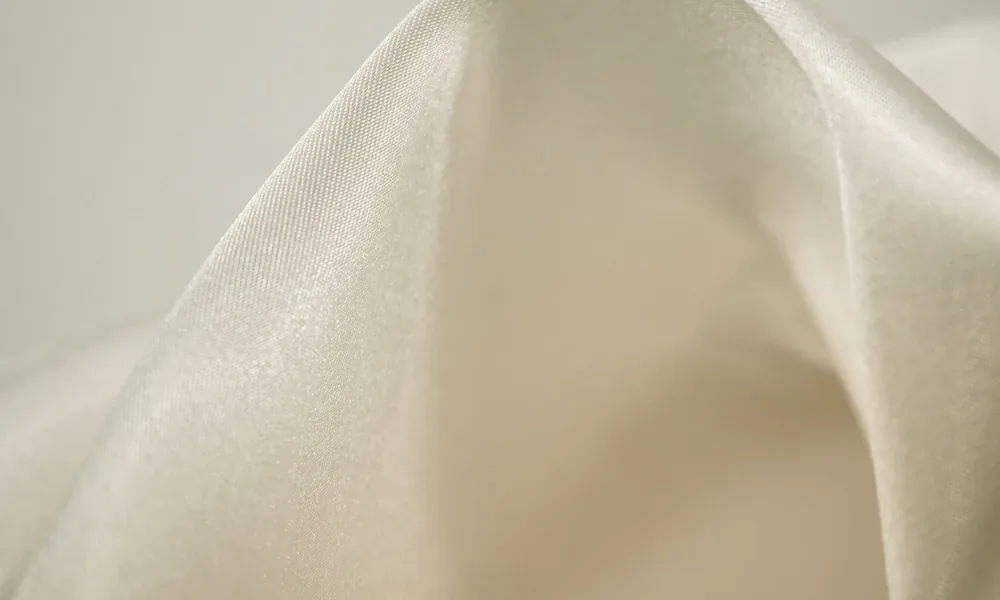
Silk wins on temperature regulation, which is a different skill. A silk blanket rarely feels as warm as cashmere on a cold night, because its smooth filament does not trap air the way crimped cashmere does. What silk does instead is move heat and moisture away from the body, so it feels cool on first touch and does not build up the clammy warmth that wakes hot sleepers. A silk throw is often lighter than a cashmere throw of the same size, and it drapes differently: silk falls in fluid folds, cashmere holds a soft loft.
Softness against skin: smooth filament vs fine down
Both fibres are soft, but they are soft in ways that have almost nothing in common. Cashmere is soft the way a cloud is soft: downy, slightly fuzzy, with a surface that yields under your fingers and warms as you hold it. The finest cashmere, at about 15 microns, bends against the skin instead of prickling it. Cheap cashmere is a different story: short, coarse fibres feel scratchy and pill within weeks, so a low price is usually a warning.
Silk is soft the way still water is soft: perfectly smooth, with no fuzz at all and a gentle sheen. Because the filament is continuous and round, there are no fibre ends to prickle the skin, and the fabric glides rather than grips. Silk is also kind to skin and hair and naturally hypoallergenic. Our guide to the best luxury silk bedding sets shows how silk sheets, pillowcases and blankets work together.
Durability, pilling and lifespan
Neither of these fibres is tough, and anyone who tells you otherwise is selling you something. Cashmere’s weakness is pilling: its short fibres work loose with friction and roll into small balls on the surface, especially where the blanket rubs against a sofa arm or against itself. Pilling is not a defect — it is what short, fine fibres do — but a cheap throw pills far faster than a well-made two-ply one. Cashmere is also a favourite food of clothes moths, so it needs proper storage.
Silk’s weakness is different. It does not pill, because its filament is continuous, but it snags easily on rough skin, jewellery or a broken nail, and a pulled thread can run. Silk is also weaker when wet than when dry, and strong sunlight fades it and breaks the fibre down over time. With careful handling, both can last about a decade: a good cashmere blanket lasts ten years or more with gentle washing, regular de-pilling and moth protection, and a good silk blanket lasts just as long kept out of direct sun and cleaned as the label asks.
Care, washing and storage
Care is where many buyers make their decision, because both fibres demand more attention than an ordinary throw. Cashmere should be hand-washed in cool water with a gentle wool detergent, or dry-cleaned if the label says so. Never use hot water, never wring it, and always dry it flat on a towel, away from direct heat, so it keeps its shape. If you are unsure what the label should say, read what to look for in a cashmere blanket. Between washes, air it outside and use a cashmere comb to remove pills before they mat.
Silk is more delicate in the wash and easier between washes. Most silk blankets should be dry-cleaned, or hand-washed very gently in cold water with a detergent made for delicates, then rolled in a towel to remove water and dried flat in the shade. Never wring silk, never tumble-dry it, and never leave it in strong sun. Silk rarely needs washing as often as cashmere: it does not hold odours the way animal fibres can, and airing it is usually enough.
Price and value in 2027
Silk is more variable in price because it comes in two forms. A woven silk throw typically costs from around 150 to 400 for a good mulberry silk piece, with the price rising with momme weight and size. A silk-filled blanket is often better value: the filling is silk floss rather than woven cloth, so a well-made one can cost from around 150 to 350. Watch out for the word “silk” on its own: a blanket labelled silk may be a silk blend, or silk-look polyester, and only a composition label that says 100 percent mulberry silk tells you what you are paying for. Cashmere is usually the dearer of the two, because a goat gives so little fibre and the de-hairing is done by hand: a genuine throw typically costs from around 200 pounds or dollars, reaching 500 to 800 or more for larger or finer pieces. Value depends on use: a cashmere throw reached for every cold evening for ten years costs very little per use, and a silk blanket slept under every summer night costs even less.
Cashmere vs silk at a glance
| Detail | Cashmere | Silk |
|---|---|---|
| Source | Undercoat of cashmere goats | Filament from mulberry silkworm cocoons |
| Warmth | Warmer; best for cold rooms | Cooler; best for warm rooms |
| Weight and drape | Light, soft loft; sits like a cloud | Very light, fluid drape |
| Feel against skin | Downy, fuzzy, warm to the touch | Smooth, cool, slippery with a soft sheen |
| Durability | Pills with friction; moth-prone | Snags easily; weaker when wet; fades in sun |
| Care | Hand wash cold or dry clean; dry flat | Dry clean or gentle cold hand wash; dry in shade |
| Typical lifespan | About ten years with gentle care | About ten years if kept from sun and snags |
| Typical price | About 200 to 800 or more for a good throw | About 150 to 400 for a good throw or fill |
Checklist: before you buy
- Read the composition label first: 100 percent cashmere or 100 percent mulberry silk, with the grade or momme weight named.
- Decide which form of silk you want: a woven silk throw for sheen and drape, or a silk-filled blanket for cool, breathable sleeping.
- Hold the blanket against your wrist for a minute: cashmere should feel warm and downy, silk cool and weightless, and neither should prickle.
- Match the fibre to your bedroom: cashmere for a cold room, silk for a warm room or a hot sleeper.
- Check the care label before you pay: if you will not hand-wash or dry-clean, neither fibre is the right buy.
- Plan the storage: a breathable bag out of direct sunlight, and moth protection for cashmere.
Frequently asked questions
Which is warmer, cashmere or silk?
Cashmere is warmer for its weight: its short, crimped fibres trap still air. Silk regulates temperature and feels cool, so it keeps you comfortable in a warm room but will not warm a cold one.
Is silk good for hot sleepers?
Yes — silk is one of the best choices for hot sleepers. It feels cool on first touch, wicks moisture away and does not trap the clammy heat that wakes people at night.
Which blanket is better for sensitive skin?
Both can suit sensitive skin. Fine cashmere at about 15 microns bends instead of prickling, and silk is smoother still, with no fibre ends to irritate and a natural resistance to dust mites.
Do silk blankets pill like cashmere?
No. Silk does not pill, because pilling comes from short fibres working loose, and silk is a single continuous filament. What silk does instead is snag: a rough nail or a cat’s claw can pull a thread, and a pulled thread can run.
Can I machine-wash a cashmere or silk blanket?
Usually not. Most cashmere blankets should be hand-washed in cool water or dry-cleaned, and most silk blankets dry-cleaned or hand-washed very gently in cold water. Machine washing and hot water can shrink cashmere and weaken silk.
Which should I buy for the bed, and which for the sofa?
Buy silk for the bed if you sleep warm: its regulation and cool touch work all night. Buy cashmere for the sofa or reading chair: its warmth and loft are made for wrapping up on a cold evening. If your bedroom is cold in winter, cashmere earns its place on the bed too.
The bottom line
Buy cashmere if you want the warmest, softest blanket you can own, and you will hand-wash it, de-pill it and protect it from moths. Buy silk if you sleep warm or want a blanket that feels cool, smooth and weightless, and you will keep it out of the sun and dry-clean it when needed.
The real mistake is buying on the label alone. Feel the fibre, check the composition and the grade or momme weight, and choose the blanket that fits your bedroom and the way you sleep. A silk blanket slept under every night beats a cashmere throw you are afraid to touch, and a cashmere throw reached for every cold evening is worth every penny it cost.
Note: Prices, fibre measurements and fill weights are typical for 2027 throws and vary by maker and retailer; check the composition and care labels on the blanket you buy.