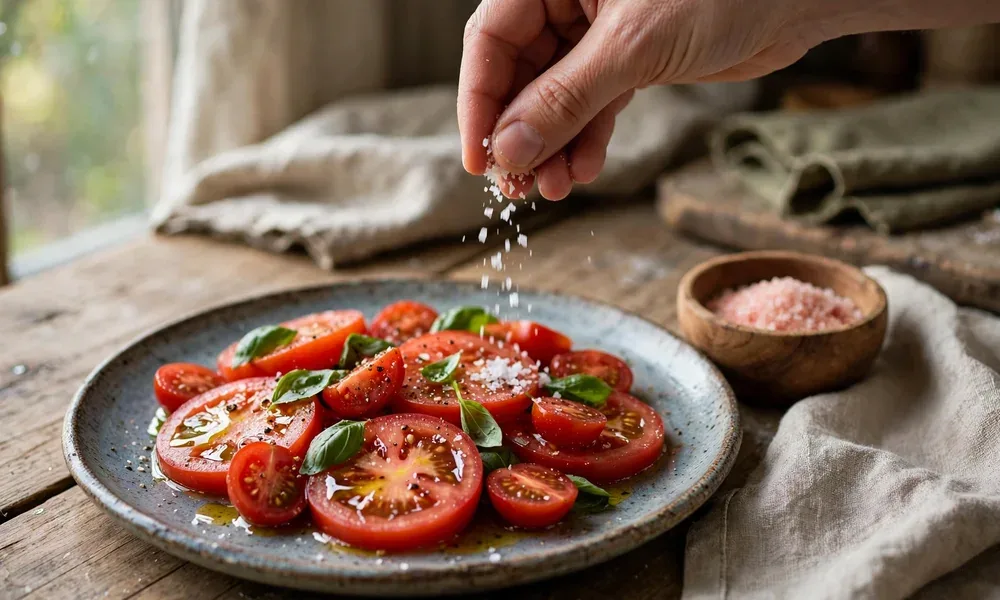
The best luxury salt brands prove that the smallest ingredient in the kitchen can make the biggest difference to a finished dish. A pinch of flaky sea salt on a ripe tomato, a few crystals over dark chocolate, or a delicate scatter across a grilled steak can sharpen flavour, add texture, and turn a simple plate into something that feels considered. Ordinary table salt dissolves and disappears. A good luxury salt stays visible, crunches gently, and releases its flavour slowly, which is why chefs and home cooks alike keep a small jar of it beside the stove.
The difference is not marketing. It is how the salt is made. Luxury salts are harvested by hand from the sea, from ancient underground deposits, or from mineral-rich river beds, then dried slowly so the crystals keep their shape. Fleur de sel is skimmed from salt ponds on calm, sunny days. Flaky sea salt is evaporated in shallow pans until it forms hollow, pyramid-shaped crystals. Himalayan pink salt is mined from rock deposits laid down hundreds of millions of years ago. Each method leaves a different texture and a different way of behaving on food.
Below are nine luxury salt brands worth knowing in 2027, from the classic English flake in almost every professional kitchen to small-batch American sea salts and rare pink flakes from Australia. Each one is described by what it does best, what to watch for, and where it belongs, so you can choose by texture and use, not by the prettiest jar.
Key takeaways
- Flaky sea salt is a finishing salt, not a cooking salt: add it at the end, so the crystals stay crisp and visible.
- Fleur de sel is the most delicate finishing salt, best on vegetables, fish, eggs, and chocolate, where its soft crunch can be tasted.
- Texture matters more than origin: choose flakes for crunch, fine crystals for even seasoning, and coarse salt for brines and pasta water.
- Use less than you think at first, then taste: luxury salts are more intense per pinch than fine table salt, and oversalting is easy.
- No salt is a health food, and a luxury label does not make a salt more nutritious; the value is flavour, texture, and craft, not minerals.
What makes a salt a luxury salt
A luxury salt earns its place by the care taken to produce it, not by the price on the jar. Hand-harvested sea salts are raked, skimmed, or lifted from evaporation ponds by workers who judge the crystals by eye and touch, and the best producers wash and dry their salt slowly so the flakes do not collapse into dust. That slow handling is the reason a flake of Maldon holds its shape on a salad while a spoonful of ordinary salt simply melts away. When a salt is produced in small batches and packed soon after harvest, the crystals arrive intact, which is exactly what a finishing salt is for.
Mineral content also shapes flavour, though more subtly than many labels suggest. Sea salts carry traces of magnesium, calcium, and potassium from the water they came from, which can give a salt a faint sweetness or a clean, bright finish. Pink salts owe their colour to iron oxide in the rock. What you taste most clearly is the size and shape of the crystal, which decides how quickly the salt dissolves on the tongue.
Price follows scarcity and labour. Fleur de sel is rare because only a thin layer forms on the surface of a salt pond on the right days, and it must be skimmed by hand before the wind breaks it up. Flaky sea salt needs shallow pans, steady heat, and careful timing. A salt that is mined, washed, and milled by machine will always cost less, and it will usually taste flatter too. The practical test is simple: taste a pinch of each salt on its own, then on a slice of tomato. The one that lifts the tomato without overwhelming it is the one worth keeping. A good guide to the best grilled cheese shows the same principle at work, because the right salt on a simple sandwich does more than any extra filling.
What to look for in a luxury salt
Start with the job you want the salt to do. A finishing salt should be flaky, light, and slow to dissolve, so it adds crunch to the last moment of a dish. A cooking salt should be fine or medium-grained, so it dissolves evenly into sauces, doughs, and brines. A salt for baking needs to disappear completely, while a salt for a steak needs enough body to sit on the crust. Buy one flaky finishing salt and one reliable fine sea salt first, then add a speciality such as fleur de sel or pink salt once you know which dishes you reach for most.
Look next at the crystal. Hold a pinch up to the light and press it gently between your fingers. A good flake should feel light and crisp, not damp or powdery, and it should break into smaller pieces rather than crumbling into dust. Damp salt clumps in the jar and dissolves too fast on food. A wide-mouthed jar is easier to pinch from than a narrow shaker, and a resealable container keeps salt dry far longer.
Maldon Sea Salt Flakes
What we like: Clean, crisp, pyramid-shaped flakes that dissolve slowly on the tongue, with a mild, pure flavour that suits almost any dish. The flakes are large enough to see and feel, yet delicate enough to melt quickly.
What to consider: It is a finishing salt, so it is wasted in pasta water or dough, and the large flakes can be too much for fine baking. Origin: Maldon, Essex, England, evaporated from seawater since 1882. Crystal: Large, hollow pyramids. Best for: Steaks, roasted vegetables, salads, chocolate, and caramel.
This is the salt most professional kitchens reach for: consistent, widely available, and honest about what it is. If you buy one luxury salt, make it this one.
Jacobsen Salt Co. Pure Flake Sea Salt
What we like: Delicate, snow-white flakes harvested from the cold waters of Netarts Bay, Oregon, with a bright, clean flavour and a gentle crunch that works on everything from eggs to fresh fruit.
What to consider: The flakes are lighter than Maldon, so they can disappear faster on hot food, and the price is higher per gram. Origin: Netarts Bay, Oregon, United States. Crystal: Fine, light flakes. Best for: Eggs, avocado toast, fresh tomatoes, and baked goods.
Jacobsen is the American answer to the classic English flake, with a notably clean flavour and no bitterness. It is a good choice if you want a flake a little more delicate than Maldon.
Amagansett Sea Salt
What we like: A small-batch American sea salt made in the Hamptons from Atlantic seawater, with a soft, slightly sweet flavour and flakes that are light, crisp, and easy to scatter by hand.
What to consider: Small batches mean it can sell out, and the flakes are best used as a finishing salt rather than for everyday cooking. Origin: Amagansett, New York, United States. Crystal: Light, irregular flakes. Best for: Fish, shellfish, salads, and grilled vegetables.
The production is genuinely small scale and the salt is evaporated slowly, leaving a flake with a gentle, almost sweet character. It is particularly good on seafood, where a heavy salt would overwhelm the fish.
Saltverk Flaky Sea Salt
What we like: Hand-harvested Icelandic sea salt made using geothermal energy, with large, crunchy flakes and a pure, mineral-clean taste that holds up on rich, hearty dishes.
What to consider: The flakes are bold and crunchy, so use a light hand on delicate dishes, and it is priced as a premium import. Origin: Reykjanes Peninsula, Iceland. Crystal: Large, sturdy flakes. Best for: Roast meats, root vegetables, dark chocolate, and bread.
Saltverk is one of the most distinctive flakes you can buy: a very clean flavour and larger, crunchier crystals. Reach for it when you want the salt itself to be noticed, such as on sourdough with butter or over dark chocolate.
Murray River Salt Flakes
What we like: Soft, pale pink flakes from the ancient salt beds of the Murray River in Australia, with a mild, almost sweet flavour and a delicate texture that dissolves quickly on the tongue.
What to consider: The flavour is very gentle, so it can be lost in strongly spiced dishes, and the pink colour fades when the salt dissolves. Origin: Murray River basin, Australia. Crystal: Soft, pale pink flakes. Best for: Salads, seafood, eggs, and light desserts.
Murray River salt is a quiet luxury: it lifts a dish without shouting, and the mild flavour suits dishes where you want seasoning without a sharp salty edge.
La Baleine Fleur de Sel
What we like: The classic French fleur de sel from the salt marshes of the Camargue, with fine, moist crystals and a soft, almost floral delicacy that is the benchmark for finishing salts.
What to consider: It is best used by hand at the table, not in cooking, and the crystals are delicate, so handle the jar gently. Origin: Camargue, France. Crystal: Fine, slightly moist crystals. Best for: Tomatoes, fish, eggs, chocolate, and caramel.
Fleur de sel is the salt other finishing salts are compared with: softer and more delicate than a flake, with a gentle crunch. Keep it for the final touch, added at the table.
Sal de Ibiza Fleur de Sel
What we like: A Mediterranean fleur de sel from the salt flats of Ibiza, with bright, clean crystals and a fresh, lightly mineral flavour that suits vegetables, fish, and grilled meats.
What to consider: The flavour is clean rather than complex, so it suits simple dishes best, and it should be kept dry to preserve the crystals. Origin: Ses Salines, Ibiza, Spain. Crystal: Fine, bright crystals. Best for: Grilled fish, salads, gazpacho, and roasted vegetables.
Sal de Ibiza is a good everyday luxury salt, less precious than French fleur de sel but just as useful, and particularly good on simple, sun-ripened food that needs little more than olive oil and a pinch of salt.
The Meadow Sel Gris
What we like: A moist, grey sea salt from the Guerande marshes of Brittany, with a rich, mineral depth and a satisfying crunch that stands up to hearty cooking and roasting.
What to consider: The grey colour and moist texture can look unusual to guests, and it is a stronger salt, so measure carefully. Origin: Guerande, Brittany, France. Crystal: Coarse, moist grey crystals. Best for: Roasts, stews, root vegetables, and bread dough.
Sel gris is the salt traditional French cooking was built on, harvested from the clay-lined ponds of Guerande. It is the only salt in this list that works as well in cooking as at the table: use it where you want depth as well as saltiness, such as on a roast chicken.
SaltWorks Ancient Ocean Himalayan Pink Salt
What we like: Fine and coarse pink salt mined from ancient rock deposits in the Himalayas, with a mild, rounded flavour and a warm colour that looks striking in a grinder or a serving bowl.
What to consider: The mineral flavour is subtle, so buy it for texture and appearance rather than a dramatic taste difference, and avoid dyed imitations by buying from a reputable source. Origin: Khewra Salt Mine, Punjab, Pakistan. Crystal: Fine to coarse pink crystals. Best for: Grinding at the table, roasting, and seasoning blends.
Himalayan pink salt is the most recognisable luxury salt of all, earning its place as much for its look as for its flavour. The pink colour comes from iron oxide in the rock, and the taste is mild and rounded. It is best used in a grinder or as a cooking salt. For seasoning ideas beyond salt, our guide to the best ramen toppings shows how a good finishing salt can lift a bowl that already has plenty of flavour.
Luxury salt at a glance
| Detail | What is known |
|---|---|
| Best all-round finishing salt | Maldon Sea Salt Flakes, for its clean flavour and reliable crunch |
| Most delicate finishing salt | Fleur de sel, skimmed by hand from salt ponds on calm, sunny days |
| Best for seafood | Amagansett Sea Salt and Murray River Salt Flakes, both light and gentle |
| Best for roasts and hearty dishes | Sel gris from Guerande, for its mineral depth and sturdy crystals |
| Best pink salt | Murray River flakes for finishing, Himalayan pink salt for grinding at the table |
| How to use a finishing salt | Pinch it on at the end, by hand, so the crystals stay visible and crisp |
| How to store it | In a dry, airtight jar away from steam, so the crystals stay crisp and do not clump |
| What it does not do | It does not make food healthier or replace good cooking; it adds flavour and texture only |
Checklist: choosing a luxury salt honestly
Use these checks before you buy, and again when you open a new jar.
- Choose by job first: a flaky finishing salt for the table, a fine salt for cooking, and a speciality salt only once you know you will use it.
- Check the crystal: it should be light and crisp, not damp, powdery, or clumped together in the jar.
- Taste it plain: a pinch on the tongue should be clean and bright, not bitter, metallic, or harsh.
- Check the origin and the producer: a named source, a real harvest method, and a clear description of how the salt is made.
- Buy a small jar first: luxury salt is used by the pinch, so a small jar lasts months and stays fresher than a large one.
- Store it well: keep it in a dry, airtight jar away from the steam of the stove, and use a dry spoon or clean fingers.
Frequently asked questions
What is the difference between flaky sea salt and table salt?
Flaky sea salt is made of large, hollow crystals that dissolve slowly and add crunch, while table salt is finely milled and dissolves instantly. Flaky salt is a finishing salt, added at the end of cooking, while table salt is best for seasoning during cooking.
Is fleur de sel worth the price?
For dishes where the salt is tasted directly, such as tomatoes, fish, eggs, or chocolate, yes. Fleur de sel is rare because it must be skimmed by hand on calm, sunny days, and its delicate crunch is hard to match. For everyday cooking, pasta water, or dough, it is wasted, and a good fine sea salt is the better buy.
Does pink salt taste different from white salt?
Only slightly. Himalayan pink salt has a mild, rounded flavour from the minerals in the rock, and Murray River flakes are gentle and almost sweet, but the difference is subtle. Most of what you notice is the texture and the colour, not a strong new flavour, so buy pink salt for its look and its crunch rather than expecting a dramatic taste change.
How should I store luxury salt?
Keep it in a dry, airtight jar away from steam and heat, and use a dry spoon or clean, dry fingers. Moisture is the main enemy: damp salt clumps, loses its crunch, and dissolves too fast on food. A small open bowl by the stove is fine for daily use, refilled from the sealed jar.
Can I use luxury salt in baking?
Yes, but choose the right crystal. Fine sea salt or fine Himalayan pink salt dissolves evenly into dough and batter, while large flakes will not dissolve and can leave salty pockets. Save flakes and fleur de sel for the top of baked goods, such as chocolate chip cookies, brownies, or focaccia, where the crunch is part of the pleasure.
How much luxury salt should I use?
Less than you expect. Luxury salts are often more intense per pinch than fine table salt, because the crystals sit on the tongue rather than disappearing into the food. Start with a small pinch, taste, and add more if needed. It is easy to add salt and impossible to take it away, so build up slowly. For a full pantry of flavours to pair it with, our guide to the best cheese subscription boxes is a good place to find the cheeses and accompaniments that a good salt brings to life.
The bottom line
The best luxury salt brands do not try to reinvent salt. They harvest it carefully, dry it slowly, and leave the crystals intact, so that a pinch at the end of cooking adds flavour, texture, and a small moment of pleasure to the plate. Maldon is the reliable all-rounder, fleur de sel is the delicate choice for simple dishes, and the small-batch salts from Oregon, New York, Iceland, and Australia each bring their own character to the table.
Start with one flaky finishing salt and one fine cooking salt, taste them side by side on a tomato or a piece of bread, and keep the one you reach for most. That is the honest way to find the salt that suits your cooking.