

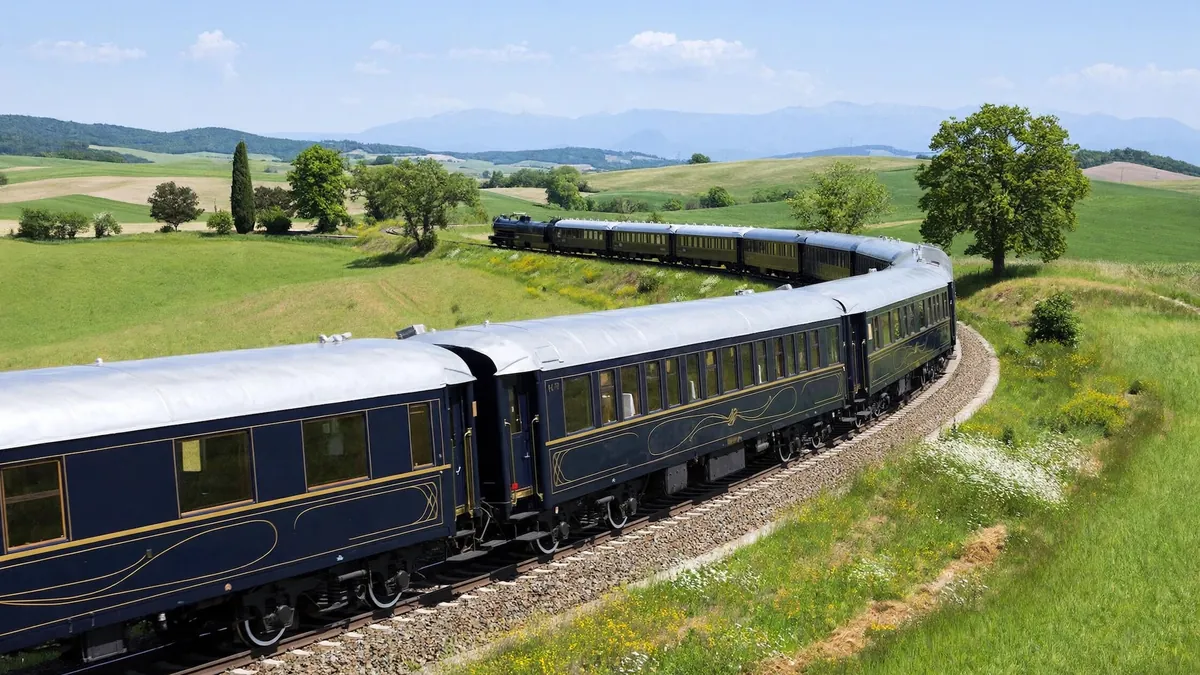
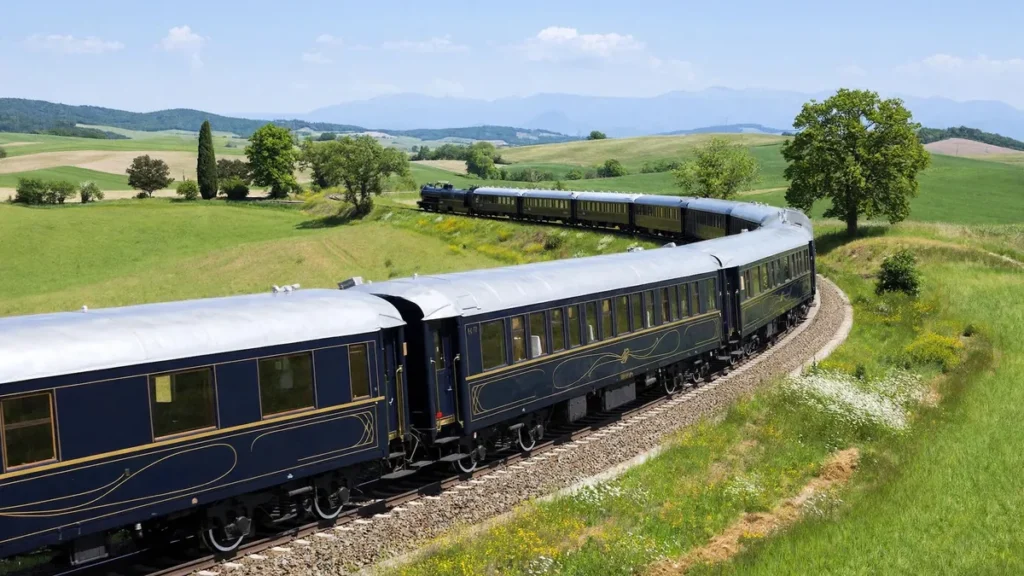
A luxury train journey is the opposite of getting from A to B as quickly as possible. It is slow travel at its most deliberate: long days watching landscapes change through a wide window, meals served in a dining car with real linen and glassware, and evenings in a small, beautifully finished cabin. The train does the work of moving you, and you do the work of looking, eating, reading, and resting.
That is the appeal, and it is also why these trips need careful choosing. Prices start in the low thousands and climb steeply for suites, cabins vary enormously in size and comfort, and the best journeys sell out months ahead for peak seasons.
Below are nine luxury train journeys worth considering in 2027, from the classic Orient Express route through Europe to the long desert crossing of Australia and the mountain railways of Switzerland and Japan. Each one is described by what it is good at, what to watch for, and who it suits best.
Key takeaways
- Luxury train journeys are slow travel: the journey itself is the holiday, with dining, scenery, and cabin comfort as the main event.
- Cabin type matters more than the train’s name. Compare sleeper size, private bathroom, and inclusions before you book.
- Most luxury fares include meals, drinks, and excursions, but transfers, gratuities, and premium wines are often extra.
- Book three to six months ahead for peak seasons, and check departure days, since many trains run only once or twice a week.
- No train journey suits every traveller, and prices, routes, and schedules change; confirm dates, inclusions, and cancellation terms with the operator before paying.
What a luxury train journey actually is
A luxury train is not simply a first-class seat. It is a small moving hotel: sleeping cabins, a dining car, a lounge or observation car, and a crew that looks after a few dozen guests rather than a few hundred. The best trains carry fewer than one hundred passengers, and the service is personal in a way a large cruise ship or a busy airport never is.
The pace is the point. A luxury train covers a few hundred miles a day, often stopping for guided excursions along the way, and it travels at a speed that lets you actually see the landscape. On the Rocky Mountaineer you watch the Canadian Rockies pass in daylight, because the train stops overnight in a hotel. On the Venice Simplon-Orient-Express you dress for dinner and watch the Alps slide past between courses.
What a luxury train is not is a fast or flexible way to travel. Routes and departure days are fixed, and a missed connection can cost you the whole trip. These journeys suit travellers who want the train to be the holiday, not just the transport.
How we chose these journeys and what to look for
Look first at the route and the scenery, because that is what you will spend most of your waking hours watching. A journey through the Scottish Highlands, the Australian outback, or the Peruvian Andes offers a very different beauty from a run through the Swiss Alps or the Indian desert, and the best route is the one whose landscape you want to spend two or three days looking at. Our guide to the best luxury ski resorts is a useful companion here, because several of these routes pass through the same mountain regions, and the seasons that suit skiing are not always the seasons that suit a train window.
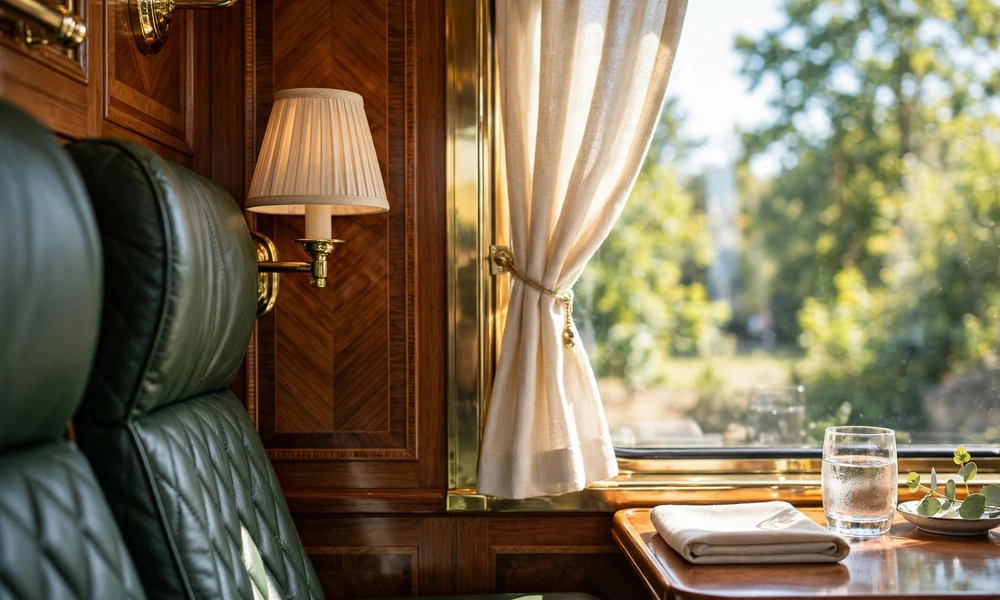
Look next at the cabin. On some trains a standard sleeper is a compact room with a bed that converts from a daytime sofa, a washbasin, and a shared bathroom down the corridor. On others, even the entry-level cabin has an en-suite shower and a proper double bed. Read the cabin dimensions and the bathroom arrangements before you compare fares.
Finally, look at what the fare includes. Most luxury trains include meals, a selection of drinks, and off-train excursions, but the details vary. Some include transfers, some do not, and premium wines are often extra. Gratuities are usually extra, and travel insurance is essential, since these fares are often only partly refundable. Compare the full cost, not just the headline fare.
The 9 best luxury train journeys of 2027
Venice Simplon-Orient-Express, London or Paris to Venice
What we like: The most famous luxury train in the world, with restored 1920s carriages, polished wood, Lalique glass, and a dining car serving some of the best food on any train.
What to consider: The most expensive way to cross Europe by rail, with small historic cabins and no en-suite bathroom in the standard grade. Route: London or Paris to Venice, one night. Best for: A special occasion, a first luxury train, a romantic break. Price range: From around £3,500 per person. Standout feature: The original 1920s dining cars and the sense of stepping into another era.
This is the train other luxury trains are measured against. For a one-night celebration with dinner, champagne, and the Alps at dawn, it remains the benchmark.
Belmond Royal Scotsman, Scotland
What we like: A slow loop through the Scottish Highlands in a small, elegant train with just over thirty guests, a spa carriage, and an open-air observation car.
What to consider: Short journeys of two to seven nights, and Scottish weather can hide the scenery. Route: Edinburgh, returning via the Highlands. Best for: Food lovers, whisky fans, and travellers who want a gentle introduction to rail travel. Price range: From around £5,000 per person. Standout feature: The open observation car, where you can stand outside and watch the Highlands pass.
A practical first multi-night luxury train: the journeys are short, the train is small, and two or three nights is enough to know whether slow rail travel suits you.
The Ghan, Adelaide to Darwin, Australia
What we like: A three-night crossing of the Australian continent, from South Australia through the red centre to the tropical Top End, with off-train stops in Alice Springs, Katherine, and Coober Pedy.
What to consider: A long journey with stretches of desert some travellers find repetitive, and mid-year heat. Route: Adelaide to Darwin, three nights. Best for: Travellers who want to see the Australian outback properly, in comfort. Price range: From around £2,500 per person. Standout feature: The sheer scale of the crossing, nearly 3,000 kilometres from one coast to the other.
This is the best way to understand how big Australia is, with stops that break the crossing into memorable pieces.
Rocky Mountaineer, Western Canada
What we like: Daylight-only travel through the Canadian Rockies in glass-domed coaches, with generous meals and overnight hotel stops. The First Passage to the West route, from Vancouver to Banff, is the classic.
What to consider: No sleeping cabins on board, since you stay in hotels, and the season runs roughly April to October. Route: Vancouver to Banff or Jasper, two days. Best for: Scenery lovers, photographers, and travellers who prefer a proper bed in a hotel each night. Price range: From around £1,500 per person. Standout feature: The glass-domed coaches, which make the mountains feel close enough to touch.
A sensible first luxury rail trip for anyone who likes the idea of a train but not sleeping on one. The Rockies are at their best from the dome car.
Rovos Rail Pride of Africa, Pretoria to Cape Town
What we like: A three-night journey across South Africa in restored wood-panelled coaches, with large suites, an observation car at the rear, and stops at Kimberley and the diamond mines.
What to consider: A long, slow journey with flat, dry stretches, on a fixed weekly schedule. Route: Pretoria to Cape Town, three nights. Best for: Travellers who want to see South Africa at ground level, in old-fashioned comfort. Price range: From around £1,800 per person. Standout feature: The wood-panelled suites, which are among the largest on any luxury train.
If you like the idea of a train as a moving country house, this is the one, with spacious suites and an observation car that is a lovely place to end the day.
Maharajas’ Express, India
What we like: A week-long loop through Rajasthan and Agra in a train that feels like a palace on wheels, with guided visits to forts, palaces, and the Taj Mahal.
What to consider: The longest and most structured journey here, with early starts and a busy sightseeing schedule. Route: Delhi, returning via Jaipur, Agra, and Rajasthan. Best for: A first trip to India, a special occasion, and travellers who like their sightseeing organised. Price range: From around £5,000 per person. Standout feature: The palace-style cabins and the guided visits, which take the logistics of India off your shoulders.
This is the best way to see the Golden Triangle without the stress of Indian road travel: the train handles the distances and the guides handle the sights.
Seven Stars in Kyushu, Japan
What we like: A small, exquisite train that loops around Kyushu in two or four days, with fourteen suites, a lounge car with a piano, and excursions to hot springs and pottery towns.
What to consider: Very small and popular, usually booked by lottery, so getting a place takes patience. Route: Hakata, returning via Kyushu. Best for: Design lovers, Japan enthusiasts, and travellers who want something genuinely different. Price range: From around £3,000 per person. Standout feature: The craftsmanship of the interiors, from the woodwork to the ceramics.
The most beautiful train on this list, and the hardest to book. The two-day loop is a concentrated dose of Kyushu, and the four-day version is one of the great rail journeys of the world.
Belmond Andean Explorer, Peru
What we like: A two-night journey from Cusco to Arequipa across the Peruvian Altiplano, climbing to over 4,300 metres at La Raya, with a spa carriage and an open deck.
What to consider: The altitude is serious, and altitude sickness is a real possibility. Route: Cusco to Arequipa, two nights. Best for: Adventurous travellers, photographers, and anyone who has already acclimatised in Cusco. Price range: From around £2,000 per person. Standout feature: The open deck at the rear, where you can stand in the thin mountain air and watch the Altiplano roll past.
A journey that rewards preparation: arrive in Cusco a few days early, take the altitude seriously, and you will get one of the most dramatic rail routes in the world.
Glacier Express, Zermatt to St. Moritz, Switzerland
What we like: An eight-hour daylight run through the Swiss Alps on panoramic coaches, crossing 291 bridges and 91 tunnels, including the Landwasser Viaduct. The Excellence Class adds a guaranteed window seat and a multi-course lunch.
What to consider: A day train rather than a sleeper, so there is no cabin on board. Route: Zermatt to St. Moritz, one day. Best for: A single unforgettable day in the Alps, and travellers who want luxury without committing to a multi-night journey. Price range: From around £250 per person in Excellence Class. Standout feature: The Landwasser Viaduct, crossed in full daylight on a panoramic coach.
The most accessible journey on this list, and the best value: one day, one spectacular route, and a proper lunch with a guaranteed window seat.
Which luxury train journey is right for you
Start with the landscape you want to see, then work backwards to the train. For mountains, the Glacier Express and the Rocky Mountaineer are the obvious choices, and both run in daylight so you miss nothing. For deserts, the Ghan and Rovos Rail offer the scale that only a long crossing provides. For culture and history, the Venice Simplon-Orient-Express and the Maharajas’ Express are the most theatrical options.
Then think about how you sleep. If you like a proper bed and a private bathroom, budget for a higher cabin grade, or choose a train like the Rocky Mountaineer that puts you in a hotel each night. If you are happy with a compact sleeper and a shared bathroom, the entry-level cabins are perfectly comfortable for one or two nights. A honeymoon destination guide is a useful frame here, because many of these journeys are booked as honeymoons, and the cabin you choose will shape the trip more than the route will.
Finally, think about time. A one-day journey like the Glacier Express is a taster, a two-night journey like the Andean Explorer is a proper holiday, and a week on the Maharajas’ Express is a major commitment. Shorter journeys are the best way to find out whether you enjoy slow travel before you book a longer one.
The caveats that matter
Luxury train travel is wonderful, but it is not flexible. Departure days and routes are fixed, and a delay can change your plans with little warning. Most fares are partly or wholly non-refundable, so travel insurance that covers cancellation and interruption is not optional. Read the cancellation terms before you pay, and check whether your fare includes transfers, gratuities, and drinks.
Health matters too. Altitude affects the Andean Explorer, heat affects the Ghan and Rovos Rail in summer, and the motion of a train can unsettle people prone to motion sickness. Tell the operator about dietary needs and mobility requirements when you book. A St. Barts travel guide is a reminder that even a relaxing trip needs practical planning, and a train journey is no different.
| Detail | What is known |
|---|---|
| Best first journey | Glacier Express or Rocky Mountaineer, daylight only, no sleeping cabin needed |
| Best for romance | Venice Simplon-Orient-Express or Belmond Royal Scotsman, small trains, fine dining |
| Best for scenery | Rocky Mountaineer and Glacier Express for mountains, the Ghan for desert scale |
| Book ahead | Three to six months for peak season, longer for Seven Stars in Kyushu |
| What to check | Cabin size, private bathroom, what meals and drinks are included |
| Health notes | Altitude on the Andean Explorer, heat in the Australian and African summer |
| What is often extra | Transfers, gratuities, premium wines, and some excursions |
| What it does not do | It does not move fast or flexibly; routes and dates are fixed |
If you are pregnant, have a heart or lung condition, or take medication that affects how you handle altitude or heat, speak to your clinician before booking a high-altitude or desert journey. A train is a long way from a hospital in the middle of the Altiplano or the outback, and a simple check avoids a difficult trip.
Checklist: choosing a luxury train journey honestly
Use these checks before you book.
- Check the route: is it scenery you want to spend days looking at?
- Check the cabin: size, bed type, and whether the bathroom is private.
- Check the inclusions: meals, drinks, excursions, transfers, and gratuities.
- Check the dates: departure days are limited.
- Check the cancellation terms: most fares are partly or wholly non-refundable.
- Check your insurance: cancellation, interruption, and medical cover, including evacuation.
Frequently asked questions
How far ahead should I book a luxury train journey?
Three to six months ahead for peak season is a sensible minimum. Seven Stars in Kyushu is booked by lottery, so apply early and stay flexible.
Are meals and drinks included in the fare?
Usually, yes for meals and a selection of drinks, but the details vary. Premium wines, transfers, and gratuities are often extra. Ask for the full inclusions list before you book.
Can I travel on a luxury train if I have limited mobility?
Often yes, but it depends on the train. Historic carriages have narrow corridors and steep steps, and some excursions involve uneven ground. Tell the operator when you book.
Is a luxury train journey suitable for children?
Some are, some are not. The Rocky Mountaineer and the Glacier Express work well for families, while the Venice Simplon-Orient-Express and the Maharajas’ Express suit adults better.
What should I pack for a luxury train journey?
Lightly, in a soft bag rather than a hard suitcase, because cabin storage is limited. Pack layers, comfortable shoes, and one smart outfit for dinner.
Do luxury trains run all year?
Most do not. The Rocky Mountaineer runs roughly April to October, the Ghan runs year-round, and the Venice Simplon-Orient-Express runs seasonally.
The bottom line
The best luxury train journey in 2027 is not the most famous or the most expensive. It is the one whose route you want to watch, whose cabin suits the way you sleep, and whose pace matches the holiday you want. For a first taste, the Glacier Express or the Rocky Mountaineer is hard to beat.
Choose one route, book early, read the inclusions and the cancellation terms, and treat the train as the holiday rather than the transport. That is the honest way to enjoy slow travel at its best.


