Best Nose Studs for Beginners 2027
A first nose stud is a small piece of jewellery with a big job. It has to look good, feel comfortable all day, and be gentle enough for skin that is still getting used to having a piercing. The wrong choice can mean constant irritation, a stud that catches on everything, or a metal that does not agree with your skin. The right choice disappears into your day and simply looks like it belongs there.
That is why this guide is written for beginners, not collectors. It favours simple shapes, smooth finishes, and metals that are widely chosen for sensitive skin, rather than statement pieces or complicated fastenings. A beginner does not need the most expensive stud or the most unusual one. They need one that is easy to wear, easy to clean, and easy to live with while they learn what suits them.
Below are nine nose studs worth considering in 2027, from a classic titanium ball stud to a tiny diamond bezel that works for work and weekends alike. Each one is described by what it is good at, what to watch for, and who it suits best, so you can choose with confidence, not guesswork.
Key takeaways
- Beginners should start with a simple ball or flat-back stud in a smooth, rounded shape, because it catches less and sits more comfortably than ornate designs.
- Titanium and implant-grade steel are the most widely chosen metals for sensitive skin, while gold and sterling silver suit most people once a piercing is fully healed.
- Gauge and length matter as much as metal: a standard 20-gauge stud with a short post is the usual starting point for a nostril piercing.
- Wait until your piercing is fully healed before changing jewellery, and see a professional piercer if you are unsure whether it is ready.
- No stud suits everyone, and a stud that irritates, snags, or feels tight is the wrong fit, not a sign that you should push through the discomfort.
What beginner nose studs actually are
A beginner nose stud is a small piece of jewellery designed to be worn in a nostril piercing, usually in a simple ball, flat-back, or L-bend shape. It has a short post that passes through the piercing and a decorative end that sits on the outside of the nose. The decorative end is deliberately small, often a smooth ball, a tiny gem, or a flat disc, because a large or spiky end is more likely to catch on clothing, towels, and hair.
The shape of the post matters as much as the decoration. A flat-back stud, also called a labret stud, has a small flat disc on the inside of the nose, which many beginners find the most comfortable because it does not press or poke. An L-bend stud has a post that bends at a right angle inside the nose, which holds it in place without a separate backing. A screw or corkscrew stud twists gently into place. All three are common, and the best choice is usually the one your piercer fitted first, because your piercing was made with that shape in mind.
Size is the other thing beginners often overlook. Most nostril piercings are done at 20 gauge, which is a slim post, or 18 gauge, which is slightly thicker. The post length is usually around 6 millimetres, though a longer post is sometimes fitted at first to allow for swelling. A stud that is too long will wobble and catch. A stud that is too short will press into the skin. If you are buying a replacement, matching the gauge and length of the stud you were pierced with is the safest starting point.
How we chose these nose studs and what to look for
Look first at the metal. For a new or recently healed piercing, titanium is the most widely recommended choice, because it is light, strong, and rarely causes a reaction. Implant-grade steel is another common choice for the same reason. Gold is a good option once a piercing is fully healed, and 14-karat gold is generally preferred over higher karats, which are softer. Sterling silver looks lovely, but it is best kept for healed piercings and for short periods of wear, because it can tarnish and is not ideal for a fresh piercing.
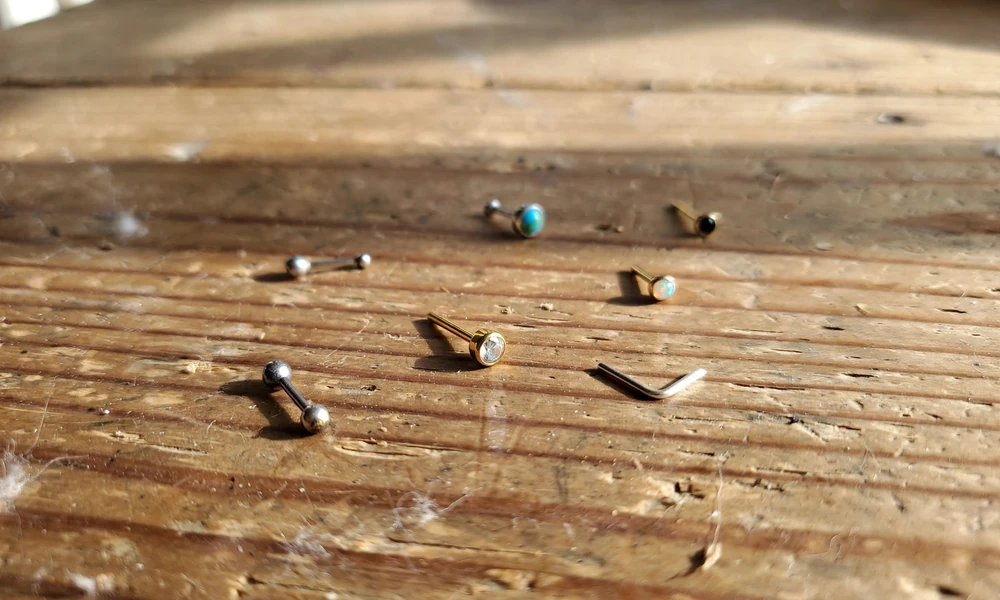
Look next at the shape and the finish. A smooth, rounded end is kinder to skin and clothing than a pointed or heavily textured one. A bezel-set gem, where the stone sits in a smooth metal cup, is safer than a prong-set gem, where small claws can catch. A flat back is worth considering if you have found other studs uncomfortable on the inside of your nose. And a stud that is easy to put in and take out, without force, is worth more than a clever design that fights you every time.
Finally, look at the price with a clear head. A good beginner stud does not need to be expensive, but the cheapest options are often made from mystery metals that are more likely to irritate. A mid-priced stud from a reputable maker, in a named metal, is usually the best value. Our guide to the best nose studs for women covers the wider range, but the nine below are the ones that make the most sense when you are starting out.
The 9 best nose studs for beginners of 2027
The Classic Polished Titanium Ball Stud
What we like: A smooth, polished ball in implant-grade titanium, light enough to forget and gentle on sensitive skin. What to consider: It is deliberately plain, so it makes no statement on its own. Best for: A first stud, or a calm everyday piece. Material: Implant-grade titanium. Price range: Low to mid. Standout feature: The smoothest, least irritating finish in this guide.
This is the stud most piercers would suggest as a starting point, and for good reason. It does not try to do anything clever. It sits quietly, catches on almost nothing, and suits every face and every outfit, which is exactly what a beginner needs while they learn what they like.
The Slim Gold Flat-Back Stud
What we like: A slim 14-karat gold ball on a flat-back post, comfortable inside the nose and warm against the skin. What to consider: Gold costs more than titanium, and the flat back needs a gentle touch to fit. Best for: Everyday wear once a piercing is healed. Material: 14-karat gold. Price range: Mid to high. Standout feature: A flat back that sits comfortably against the inside of the nose.
The Tiny Diamond Bezel Stud
What we like: A tiny diamond set in a smooth bezel cup, so there are no prongs to catch, with a sparkle that reads as polished rather than flashy. What to consider: The stone is small by design, and a real diamond costs more than a crystal. Best for: A first special stud, or a gift to yourself. Material: Gold with a diamond. Price range: High. Standout feature: A prong-free bezel that will not snag on fabric.
The Brushed Silver L-Bend Stud
What we like: A brushed silver ball on an L-bend post, which holds itself in place without a separate backing and has a soft, matte finish. What to consider: Silver can tarnish and is best for healed piercings and shorter wear. Best for: A low-cost first stud for a healed piercing. Material: Sterling silver. Price range: Low. Standout feature: An L-bend that stays put without a backing.
The Sterling Silver Ball Stud with a Crystal
What we like: A small silver ball topped with a clear crystal, bright and cheerful, at a price that makes it easy to try. What to consider: The crystal is decorative rather than precious, and silver needs regular cleaning. Best for: Trying a sparkle without spending much. Material: Sterling silver with a crystal. Price range: Low. Standout feature: A bright, affordable sparkle for a first try.
The Rose Gold Seamless Stud
What we like: A small rose gold ball with a warm, soft tone that flatters most skin, on a smooth seamless post. What to consider: Rose gold is an alloy, so check the karat and the metal mix if your skin is very reactive. Best for: A warm, gentle first gold-toned stud. Material: 14-karat rose gold. Price range: Mid to high. Standout feature: A warm tone that suits most skin without shouting.
The Implant-Grade Steel Stud with a Pearl End
What we like: A smooth steel post with a small pearl end, classic and calm, in a metal widely chosen for sensitive skin. What to consider: A pearl is softer than metal or gem, so handle it gently and keep it away from harsh cleaners. Best for: A soft, classic look for everyday wear. Material: Implant-grade steel with a pearl. Price range: Low to mid. Standout feature: A pearl end that softens the whole look.
The White Gold Pavé Stud
What we like: A small white gold stud with a pavé cluster of tiny stones, bright and detailed without being large. What to consider: Pavé settings have many small stones, so check them regularly and clean gently. Best for: A dressier first stud, or a special occasion. Material: 14-karat white gold with crystals. Price range: Mid to high. Standout feature: A cluster of tiny stones that catches the light from every angle.
The Tiny Mixed Metal Stud
What we like: A tiny ball that mixes gold and silver tones, so it works with whatever other jewellery you are wearing. What to consider: Two-tone designs are a matter of taste, and the mix is subtle at this size. Best for: Anyone who mixes metals and does not want to choose. Material: Gold and silver-tone metals. Price range: Low to mid. Standout feature: A two-tone finish that matches everything.
Which nose stud is right for you
Start with your skin. If you have sensitive skin, or if your piercing is still fairly new, titanium or implant-grade steel is the safest place to begin. Both are light, smooth, and rarely cause a reaction. If your skin is not reactive and your piercing is fully healed, gold and sterling silver open up, and the choice becomes more about look than about comfort. Our explainer on what a nose stud is covers the shapes and fastenings in more detail, if you want to understand the options before you buy.
Then think about your day. If you work with your hands, play sport, or change clothes often, a small, smooth ball or a flat-back stud will give you the least trouble. If you want a little sparkle, a bezel-set gem is safer than a prong-set one. If you wear glasses or sunglasses, a very small stud is less likely to interfere with the frames. None of this is about rules. It is about choosing a stud that fits the life you actually live.
Finally, think about size. A tiny stud, around 2 millimetres, is the most discreet and the easiest to wear every day. A slightly larger ball, around 2.5 to 3 millimetres, is more visible and still comfortable. Anything much larger starts to feel like a statement piece, which is fine if that is what you want, but it is not the easiest place to start. Buy small first. You can always go bigger later.
The caveats that matter
A nose stud is a small piece of jewellery, but it sits in a piercing, and piercings deserve respect. The most common beginner mistake is changing the stud too soon, before the piercing has fully healed. A nostril piercing can take several months to heal properly, and changing the jewellery early can irritate it, delay healing, or cause a bump. If you are unsure whether your piercing is ready, ask the piercer who did it. That is what they are there for.
| Detail | What is known |
|---|---|
| Best first metal | Implant-grade titanium or implant-grade steel, both widely chosen for sensitive skin |
| Usual gauge | 20 gauge for most nostril piercings, 18 gauge for a slightly thicker post |
| Usual post length | Around 6 millimetres, longer at first to allow for swelling |
| Safest gem setting | A bezel setting, where the stone sits in a smooth metal cup with no prongs to catch |
| When to change a stud | Only when the piercing is fully healed, which can take several months |
| Who should ask a piercer first | Anyone with a new piercing, sensitive skin, or a history of reactions to metals |
| What to avoid | Mystery metals, sharp prongs, and very cheap studs with no named metal |
| What it does not do | No stud heals a piercing faster, and no metal suits every single person |
Metal reactions are the other thing to watch. If a stud makes the skin around your piercing red, itchy, or sore, stop wearing it and try a different metal, or ask your piercer for advice. Nickel is the most common culprit, and it turns up in cheap, unlabelled jewellery more than anywhere else. A stud that names its metal, titanium, steel, or 14-karat gold, is a much safer buy than one that does not.
Checklist: buying a nose stud honestly
Use these checks before you buy, and again after a week of wear.
- Check the metal: titanium or implant-grade steel for a new piercing, gold or silver once it is healed.
- Check the gauge and length: match the stud you were pierced with, usually 20 gauge and around 6 millimetres.
- Check the setting: a bezel or a smooth ball catches less than prongs or sharp edges.
- Check the back: a flat back is the most comfortable for most beginners, an L-bend is the simplest to keep in place.
- Wait for healing: do not change a stud until the piercing is fully healed, and ask your piercer if you are unsure.
- Watch your skin: redness, itching, or soreness means the stud or the timing is wrong, not that you should push through it.
Frequently asked questions
What is the best first nose stud?
A small, smooth ball stud in implant-grade titanium is the most widely recommended first stud. It is light, gentle on sensitive skin, and unlikely to catch on clothing or towels. A flat-back version is even more comfortable for many beginners.
How long should I wait before changing my nose stud?
Until the piercing is fully healed, which for a nostril piercing can take several months. Your piercer can tell you when it is ready. Changing it early can irritate the piercing and slow healing, so patience is genuinely worth it.
Is titanium better than gold for beginners?
For a new piercing, yes, titanium is the safer choice, because it is very rarely irritating. Once a piercing is fully healed, 14-karat gold is a good option too, and many people prefer the warmth and colour of gold for everyday wear.
What size nose stud should a beginner buy?
Match the gauge and length of the stud you were pierced with, usually 20 gauge and around 6 millimetres long. For the decorative end, a ball of about 2 millimetres is discreet and comfortable, while 2.5 to 3 millimetres is a little more visible.
Can I wear sterling silver in a new piercing?
It is best to wait. Sterling silver is fine for a fully healed piercing, but it can tarnish and is not ideal for a fresh one. Titanium or implant-grade steel is the safer choice until healing is complete. A guide to the best titanium nose studs is a useful place to start if you want to see the options in one metal.
Why does my nose stud keep catching on things?
Usually because the decorative end is too large, too spiky, or set with prongs. A small, smooth ball or a bezel-set gem catches far less. A shorter post can also help, because a stud that wobbles is more likely to snag. If it keeps happening, try a smaller, smoother design.
The bottom line
The best nose stud for a beginner in 2027 is not the most expensive or the most striking. It is the one that is gentle on your skin, simple to wear, and easy to live with while you learn what suits you. A small titanium ball stud is the safest first step, and a tiny gold or diamond stud is a lovely next step once your piercing is fully healed.
Buy a named metal, match your gauge and length, wait for healing, and listen to your skin. Do those four things and your first nose stud will feel less like a gamble and more like a small, quiet pleasure you barely have to think about.