

A nose pin looks simple, a thin post with a decorative end, but if the gauge is too thick, the length too short, or the bend the wrong shape, it will pinch, poke, or fall out. Many people blame their nose, or the pin, when the real problem is a size that was never measured properly.
Sizing a nose pin is not guesswork. Four measurements matter: the gauge, or how thick the post is; the length, or how far it reaches through the nostril; the bend, which holds it in place; and the size of the decorative head. Get those four right and the pin sits comfortably, stays put, and looks made for you.
This guide explains nose pin sizing in 2027, from the most common gauges to how to measure a pin you already own. It covers new and healed piercings, thick and thin nostrils, and the mistakes that make a pin uncomfortable. If your piercing is new, sore, or still healing, do not change your jewellery until it is fully healed, and ask a professional piercer to check the size first.
Key takeaways
- The four measurements that matter for a nose pin are gauge, length, bend shape, and head size.
- Most nostril piercings use a 20 gauge or 18 gauge pin, with 20 gauge the more common choice for everyday comfort.
- Length matters as much as thickness: a post too short pinches, and one too long pokes and catches.
- Measure a pin you already own before buying a new one.
- A pin that hurts, falls out, or leaves a mark is the wrong size, and should be changed or checked by a piercer.
What nose pin sizing actually means
A nose pin is a straight or bent post that passes through a nostril piercing, with a decorative head outside and a bend, screw, or flat end inside that stops it falling out. It differs from a nose stud, which usually has a flat back or a ball, and from a nose ring, which is a hoop. Its job is to sit neatly through the piercing without pressing, poking, or moving around.
Sizing is measured in gauge for thickness and millimetres for length. Gauge runs backwards: a higher number means a thinner post. A 20 gauge pin is about 0.8 millimetres thick, and an 18 gauge pin about 1.0 millimetre. Most nostril piercings are made at one of these two sizes.
The bend is the other half of the size story. An L-shaped pin has a short right-angle bend, a screw pin has a small curl, and a straight pin relies on a tiny ball or flat disc. Each shape holds the pin differently and suits a different nostril and level of experience. A beginner often finds an L-shape easiest, while a screw holds more securely once you are used to it.
What you need and what to look for
You need a ruler or a calliper, a mirror with good light, and the pin you currently wear. A digital calliper measures a post most accurately, but a millimetre ruler works for length, and a jewellery sizing card will tell you the gauge. Never measure a pin while it is in your nose. Take it out, clean it, and measure it on a flat surface.
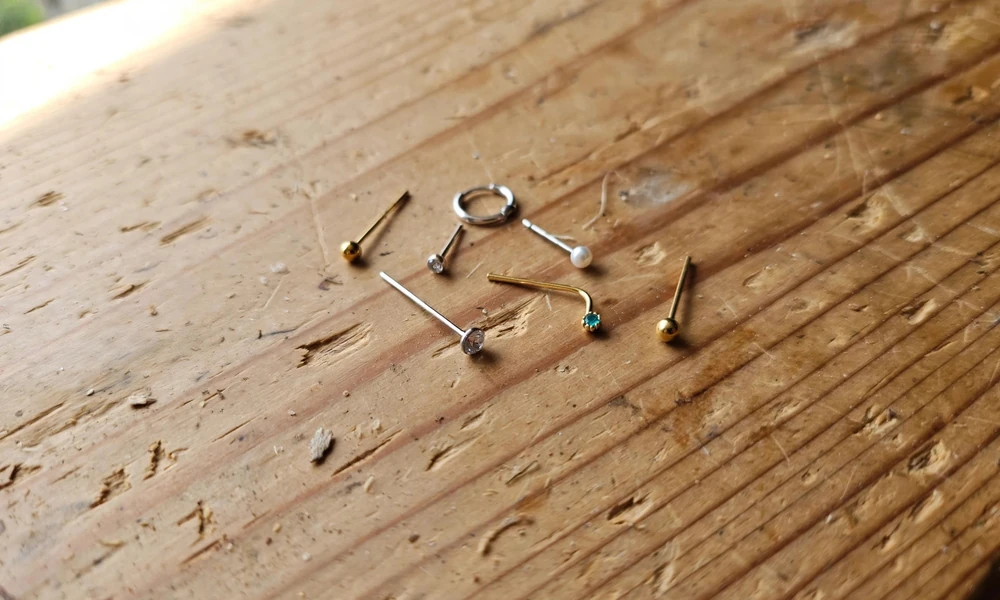
Look first at the gauge. If your piercing was done at 20 gauge, a 20 gauge pin will slide through easily. An 18 gauge pin is slightly thicker and will feel snug, and should only be used if your piercing was made at that size or stretched to it. Never force a thicker pin through a piercing made for a thinner one. Our guide to nose stud sizing explains the same gauge system, and the measurements are directly comparable, because studs and pins use the same standard sizes.
Then look at the length. The post must pass through your nostril with a little room to spare, but not poke the inside of your nose or catch on clothing. Nostril thickness varies a lot, which is why a length that is perfect for one person can be uncomfortable for another. Measure your own nostril, not someone else’s pin.
The 9 nose pin sizing facts that matter
The gauge: how thick the post should be
What it shows: The gauge is how thick the post is, and it must match the size your piercing was made at. Most nostril piercings are 20 gauge, about 0.8 millimetres, with 18 gauge, about 1.0 millimetre, the other common choice.
What to consider: A pin thinner than your piercing will feel loose and move around, while a thicker one will be hard to insert and can irritate the piercing. Best for: Anyone buying their first replacement pin. Material: Titanium, surgical steel, or solid gold in either gauge. Price range: $10 to $60 for a single pin. Standout feature: Getting the gauge right is the single most important sizing decision.
The length: how long the post needs to be
What it shows: Length runs from the decorative head to the end of the post, and must match your nostril’s thickness. Common lengths are 6 millimetres, 7 millimetres, and 8 millimetres.
What to consider: A post too short pulls tight and pinches, while one too long sticks out inside your nose and catches on tissues or clothing. Best for: Thick or thin nostrils. Material: Any metal, but a smooth, polished post is more comfortable at any length. Price range: $10 to $50. Standout feature: Length is the measurement most people forget, and the most common reason a new pin feels wrong.
The diameter: how wide a curved pin sits
What it shows: For curved pins, the diameter is the width of the curve, usually 8 or 10 millimetres, and it decides how closely the jewellery hugs your nostril.
What to consider: A small diameter sits snugly and looks neat, while a larger one hangs looser and moves more. Best for: Curved pins. Material: Gold, silver, or titanium, with a smooth curve and no sharp joins. Price range: $15 to $70. Standout feature: The right diameter makes the pin look like it belongs.
The head size: how big the decorative end looks
What it shows: The head is the part people see, ranging from a tiny 1.5 millimetre ball to a 3 millimetre stone or decorative shape, and its size decides how noticeable the pin is.
What to consider: A large head suits a bold look but can feel heavy and catch on things, while a small head is discreet and comfortable. Best for: Matching the pin to your face and your style. Material: Gold, silver, or titanium with a gemstone, crystal, or plain metal head. Price range: $10 to $120, depending on the stone. Standout feature: A small head is the safest choice for everyday wear.
The bend: L-shape, screw, or straight post
What it shows: The bend is the shape at the inner end, and it stops the pin falling out. An L-shape bends at a right angle, a screw curls into a small spiral, and a straight post uses a ball or flat disc.
What to consider: An L-shape is easiest to insert and remove, a screw holds most securely, and a straight post is simplest but most likely to slip. Best for: Beginners should start with an L-shape. Material: Titanium or surgical steel, which hold their bend without softening. Price range: $10 to $60. Standout feature: The bend affects comfort more than the gauge, because it decides how the pin sits inside your nose.
The fit for your nostril thickness
What it shows: Nostril thickness varies widely, from about 4 to 8 millimetres, and the pin’s length must match it. A thick nostril needs a longer post, a thin one a shorter post.
What to consider: Check how much post shows when you wear your current pin, or ask a piercer to measure it. Best for: Anyone whose pins always feel too tight or too loose. Material: Any metal, but a polished post slides more easily through a thick nostril. Price range: $10 to $50. Standout feature: Two people can wear the same gauge and need completely different lengths.
Sizing for a new piercing vs a healed one
What it shows: A new piercing needs a slightly longer post than a healed one, because the tissue swells in the first weeks. A healed piercing can take a shorter, neater post.
What to consider: Never downsize while the piercing is still healing, and never change the jewellery at all until it is fully healed, which usually takes several months. Best for: Anyone with a piercing less than six months old. Material: Implant-grade titanium or surgical steel for new piercings, which are the least likely to irritate healing skin. Price range: $15 to $60. Standout feature: Patience is part of the sizing: a pin that fits a healed piercing will not fit one still swollen.
How to measure what you already own
What it shows: Measuring your current pin gives you a baseline to buy from. Remove it, clean it, and measure the post’s thickness with a calliper and its length with a ruler.
What to consider: Write the measurements down, including bend shape and head size, so you can compare them when you shop. Best for: Anyone who has lost the packaging or the listing for their current pin. Material: A digital calliper, or a jewellery sizing card, both inexpensive and reusable. Price range: $5 to $15 for a basic calliper. Standout feature: Five minutes of measuring saves the cost of buying the wrong size twice.
When a size feels wrong and what to change
What it shows: A pin that hurts, falls out, spins freely, or leaves a mark is the wrong size. Pain usually means the gauge or length is wrong, falling out means the bend is too small, and spinning means the gauge is too thin.
What to consider: Change one measurement at a time, starting with length, because that is the most common problem and the easiest to fix. Best for: Pins that never quite feel right. Material: Titanium, which is light and comfortable while you test a new size. Price range: $10 to $40 for a test pin. Standout feature: One well-chosen change usually fixes the problem; changing everything at once makes it impossible to know what worked.
Which nose pin size is right for you
Start with what you know. If your piercing was done at 20 gauge, buy a 20 gauge pin. If you are not sure, ask your piercer, or measure your current pin. For length, 6 millimetres suits a slim nostril, 7 suits most people, and 8 suits a thicker one. If you are between sizes, choose the longer one, because a slightly long pin is more comfortable than a slightly short one.
For the bend, an L-shape is the best starting point. It is easy to insert and remove, and holds well enough for everyday wear. A screw pin is a good second step once you are comfortable changing jewellery, because it holds more securely but needs a little practice. Our roundup of the best gold nose pins shows both shapes across the common sizes.
For the head, small is the safer choice. A 2 millimetre stone or ball looks polished without drawing too much attention, and is less likely to catch on clothing. Larger heads look striking, but are better as occasional pieces. Whatever size you choose, make sure the head is firmly fixed to the post, because a loose head is the most common reason a pin is lost.
The caveats that matter
Sizing is not the same as healing. A pin that fits perfectly in a healed piercing can still irritate a new one, because healing tissue is swollen and sensitive. If your piercing is less than four to six months old, do not change the jewellery at all, and do not downsize to a shorter post, even if the original feels long. The extra length makes room for swelling, and removing it too early can slow healing.
| Detail | What is known |
|---|---|
| Most common gauge | 20 gauge, about 0.8 millimetres, with 18 gauge, about 1.0 millimetre, also common |
| Common lengths | 6, 7, and 8 millimetres, matched to nostril thickness |
| Common diameters | 8 and 10 millimetres for curved pins |
| Best bend for beginners | L-shape, easy to insert and remove |
| Most secure bend | Screw, which holds best once you are used to it |
| Best head size for everyday | About 2 millimetres, discreet and comfortable |
| When not to change size | While the piercing is healing, sore, or swollen |
| What a wrong size feels like | Pain, pinching, falling out, spinning, or a red mark |
Material matters too. Cheap plated pins can irritate a piercing, especially a new one, because the plating wears away and exposes nickel or other metals. Titanium and surgical steel are the safest choices for sensitive skin and healing piercings, while solid gold is a good option once the piercing is fully healed. If your skin itches or feels sore around the piercing, switch to titanium and see a piercer if it does not fade.
Checklist: sizing a nose pin honestly
Use these checks before you buy, and again when the pin arrives.
- Confirm your gauge: 20 gauge for most nostrils, 18 gauge only if your piercing was made at that size.
- Measure your nostril thickness and choose a length that leaves a little room, usually 6, 7, or 8 millimetres.
- Pick an L-shape bend if you are new to nose pins, and a screw only once you are comfortable changing jewellery.
- Choose a small head, about 2 millimetres, for everyday wear, and save larger heads for special occasions.
- Measure a pin you already own before ordering, and write the gauge, length, bend, and head size down.
- Do not change the size while the piercing is healing, sore, or swollen, and see a piercer if you are unsure.
Frequently asked questions
What gauge is a standard nose pin?
20 gauge, about 0.8 millimetres, is the most common size for a nostril piercing, with 18 gauge, about 1.0 millimetre, the other standard choice. Your pin should match the gauge your piercing was made at, and if you are not sure, ask your piercer or measure your current pin.
How do I know what length nose pin I need?
Measure your nostril thickness, or check how much post shows on the pin you wear now. A slim nostril usually needs 6 millimetres, most people need 7, and a thicker one needs 8. If you are between sizes, choose the longer one.
Can I wear an 18 gauge pin in a 20 gauge piercing?
No, not without stretching the piercing, which should only be done slowly and with professional advice. An 18 gauge pin is thicker than a 20 gauge piercing, so forcing it through will irritate or tear the tissue.
What is the difference between an L-shape and a screw nose pin?
An L-shape has a short right-angle bend, which makes it easy to insert and remove. A screw has a small curl, which holds more securely but takes a little practice. Beginners usually start with an L-shape, and many move to a screw once they are comfortable. Titanium pins, such as the best titanium nose pins, are a good choice in either shape, because the metal holds its bend well.
Why does my nose pin keep falling out?
The bend is usually too small, or the post too thin for your piercing. A screw bend holds better than a straight post, and a pin that matches your gauge will not spin or slide out as easily. If the problem continues, ask a piercer to check the fit.
How long should I wait before changing my nose pin size?
Wait until the piercing is fully healed, which usually takes four to six months, and longer for some people. Changing size while it is healing can cause swelling or irritation. When you do change it, change one measurement at a time and give your nose a few days to adjust.
The bottom line
Nose pin sizing comes down to four measurements: gauge, length, bend, and head size. Most people need a 20 gauge pin, 6 to 8 millimetres long, with an L-shape bend and a small head. Measure what you already own, match your piercing’s gauge, and choose the length for your own nostril.
If a pin hurts, falls out, or leaves a mark, it is the wrong size, and one careful change will usually fix it. And if your piercing is still healing, wait. The right size at the right time is what makes a nose pin comfortable enough to forget.