


What if the single most memorable trip of your life was hiding in a country most travelers think they already understand? Canada gets reduced to maple syrup and polite small talk, yet it holds rainforests, desert-like badlands, Arctic tundra, and some of the oldest rock on Earth. The trick is knowing which places reward the journey and which ones eat your budget without giving much back. This guide sorts the standouts by what they actually deliver, so you can build an itinerary around real strengths instead of a map dotted with pins.
How to Choose Where to Go in Canada
Canada is the second-largest country by land area, so distance is the first thing to respect. A common mistake is booking Toronto and Vancouver in the same week without checking the flight time. It is roughly a five-hour flight, and you lose most of a day to airports. Pick one region and go deep.
The second mistake is ignoring season. Summer (June to August) works for most of the country, winter belongs to ski towns and northern lights country, and fall is the sweet spot for foliage in Ontario and Quebec. Show up in the wrong month and you will find closed roads, shuttered attractions, or crowds that make every photo a group shot.
Third, budget for park fees and shuttles. Parks Canada manages most national parks and historic sites and publishes current fees, closures, and reservation rules, so check before you commit. Popular campgrounds and lake shuttles sell out months ahead.
| Region | Best Season | Best For | Watch Out For |
|---|---|---|---|
| Alberta Rockies | June to September | Hiking, lakes, wildlife | Shuttle bookings, summer crowds |
| Ontario | May to October | Cities, falls, fall color | Peak prices near Niagara |
| Quebec | June to October, plus winter | History, food, winter festivals | Cold snaps from December to February |
| Atlantic Canada | June to September | Coastal drives, small towns | Short season, some closures in May |
| North (Yukon, NWT) | Winter for auroras | Northern lights, wilderness | Extreme cold, limited services |
Banff National Park and the Canadian Rockies

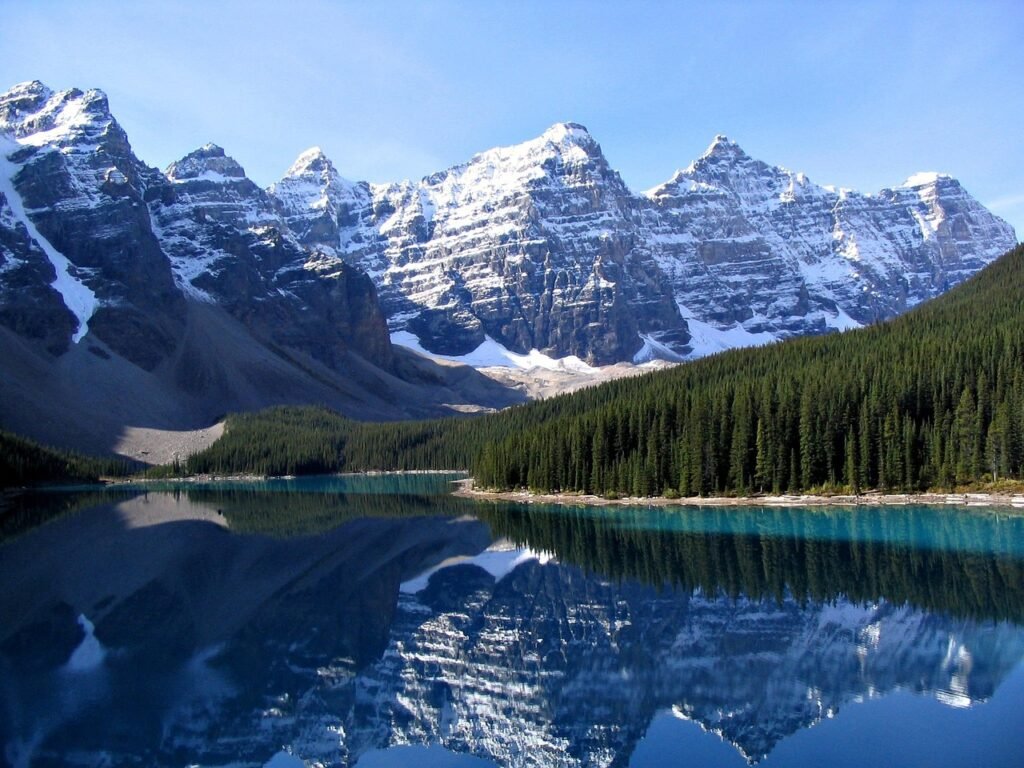
Banff is the postcard, and it earns the hype. Established in 1885 as Canada’s first national park, it forms part of the Canadian Rocky Mountain Parks UNESCO World Heritage Site, inscribed in 1984. Turquoise lakes, glacier-fed rivers, and elk grazing beside the highway all sit within an hour of town.
Lake Louise and Moraine Lake are the icons. Access to Moraine Lake has been restricted to shuttle, transit, or commercial vehicles during peak season in recent years. This is the classic trap: travelers drive up expecting to park, then discover the road closed. Book the shuttle early and treat the reservation as non-negotiable.
Jasper National Park, north of Banff, was hit by a major wildfire in 2024, and some infrastructure and access may still be recovering. Check current conditions before building a trip around it. When it is fully open, Jasper is quieter and darker at night, which makes it better for stargazing.
Practical tip: base yourself in Canmore or Banff and do one big hike per day rather than three small ones. Mountain weather turns fast, and afternoon storms are routine in July.
Niagara Falls and Ontario’s Great Lakes
Niagara Falls straddles the Canada–US border, and the Canadian Horseshoe Falls is the larger of the main falls. The town around it is unapologetically touristy, but the falls themselves still stop people mid-sentence. Go early morning or after dark when the lights come on.
Beyond the falls, Ontario rewards slow travel. Toronto is the country’s largest city and a natural entry point, with food scenes that rival cities twice its size. A few hours north, Algonquin-style lake country offers canoe routes and moose sightings. In fall, the drive toward Muskoka turns into a wall of red and orange.
If you are weighing a colder-weather trip, the same planning logic applies as with other best places to visit in December destinations: book early, dress in layers, and expect shorter daylight hours.
Old Quebec and Montreal
Old Quebec, or Vieux-Québec, is a UNESCO World Heritage Site inscribed in 1985. It is the only fortified city north of Mexico whose walls remain largely intact. Walking through the gates feels like stepping into a different century, and the funicular between the upper and lower town saves your knees.
Montreal brings the counterweight: bagels, smoked meat, jazz bars, and a underground city that makes winter bearable. Quebec City in winter hosts a famous carnival, but the cold is serious. Pack boots rated for real snow, not fashion boots.
A frequent mistake is treating Quebec as a day trip from Montreal. It is about three hours each way. Give it two nights minimum, and eat at least one meal in a neighborhood rather than on the main tourist strip.
Vancouver and Whistler
Vancouver is a major West Coast entry point with mountains and coastline in the same frame. You can ski in the morning and eat seafood by the water in the afternoon, though not usually in the same month. Stanley Park, Granville Island, and the seawall fill an easy two days.
Whistler, about two hours north, is one of North America’s best-known ski resorts and a solid summer destination for biking and alpine hiking. Winter prices spike around holidays, so book lifts and lodging together.
For travelers building a longer western loop, pairing coastal cities with mountain towns works well, similar to how a spring getaway pairs shoulder-season prices with decent weather.
The Cabot Trail and Atlantic Canada
Nova Scotia’s Cabot Trail loops through Cape Breton Highlands and ranks among the world’s great scenic drives. Allow two days so you can stop at viewpoints instead of white-knuckling the curves. Fall is spectacular, but some businesses close after October.
Newfoundland’s Gros Morne National Park is a UNESCO World Heritage Site inscribed in 1987. The tablelands look like Mars, and the hiking is genuinely world-class. The catch is logistics: ferries, long drives, and weather that changes hourly. Build buffer days into the plan.
Atlantic Canada suits travelers who prefer small towns, seafood shacks, and quiet over nightlife. If you want city energy, this is not the region for you.
The North: Yukon and Northwest Territories
Northern lights viewing is best in northern regions such as Yukon and the Northwest Territories during winter. The trade-off is extreme cold and limited services. Whitehorse and Yellowknife both have aurora tours, and a clear-sky window of three or four nights gives reasonable odds.
This is not a spontaneous trip. Book accommodations early, confirm road and flight schedules, and pack for temperatures that can drop far below freezing. The reward is a sky that makes every other night sky look broken.
Canada Travel Seasons at a Glance
Timing decides everything in Canada. Use this as a starting filter, then confirm local conditions before booking.
| Month | Strong Choices | Why |
|---|---|---|
| January to March | Whistler, Banff, Yukon | Skiing, auroras, winter festivals |
| April to May | Vancouver, Toronto, Montreal | Lower prices, fewer crowds |
| June to August | Rockies, Cabot Trail, Gros Morne | Long days, all services open |
| September to October | Ontario, Quebec, Cape Breton | Fall color, mild weather |
| November | Cities only | Many parks and tours wind down |
If you are planning a winter escape instead of a cold-weather one, the logic flips entirely, and warm places to visit in december become the better comparison point.
Entry Rules and Practical Planning
Most visitors need a visa or an Electronic Travel Authorization depending on nationality, and the rules are set by Immigration, Refugees and Citizenship Canada. Check the official requirements for your passport well before booking flights, since approvals are not instant.
A few habits that separate smooth trips from stressful ones:
- Book park shuttles and campsites the moment reservations open.
- Carry layers even in July. Mountain evenings drop fast.
- Rent a car outside major cities. Rail is limited outside the Toronto–Montreal corridor.
- Keep cash for small-town businesses and tips.
- Buy travel insurance that covers hiking and winter sports.
Travelers comparing Canada with European options often find that Canadian national parks feel wilder and less developed, while European cities offer denser sightseeing. For a sense of how the other side stacks up, see these top European destinations.
Common Mistakes That Ruin Canada Trips
The biggest one is overpacking the itinerary. Canada is huge, and a seven-day trip with four cities means you remember airports, not landscapes.
The second is underestimating wildlife. Stay back from elk and bison, especially in Banff and Jasper. Tourists get charged every year because they treat wild animals like photo props.
The third is skipping reservations. Moraine Lake shuttles, popular campgrounds, and iconic hikes with parking limits all require advance booking. Show up without one and you will spend the morning improvising.
Finally, do not assume every road is open. Mountain passes close for snow, and northern highways have limited services. Check conditions daily.
Conclusion
Canada rewards travelers who pick a region, respect the seasons, and book the logistics that matter. Banff and the Rockies deliver the iconic scenery, Niagara and Ontario mix spectacle with city life, Old Quebec and Montreal bring history and food, and Atlantic Canada and the North offer something quieter and stranger. The country is too big to see in one trip, and that is fine. Choose two or three places, give them real time, and let the rest wait for next year. The best trip to Canada is not the one that covers the most ground. It is the one where you actually stop and look.
What is the single best place to visit in Canada for first-timers?
Banff National Park is the safest first choice. It combines glacier lakes, mountain wildlife, and reliable tourism infrastructure within a compact area. Lake Louise and Moraine Lake sit nearby, and the towns of Banff and Canmore offer plenty of places to stay and eat.
When is the best time to visit Canada?
Summer, from June to August, works best for most of the country because parks, tours, and roads are fully open. Winter suits ski destinations like Whistler and Banff, plus northern lights viewing in Yukon and the Northwest Territories. Fall is ideal for foliage in Ontario and Quebec.
How many days do you need for a Canada trip?
Ten to fourteen days allows two or three regions without constant travel. A week is enough for one region, such as the Rockies or Ontario. Trying to cover both coasts in under two weeks usually means spending too much time in transit.
Do you need a visa to visit Canada?
It depends on nationality. Most visitors need either a visa or an Electronic Travel Authorization, and the rules are set by Immigration, Refugees and Citizenship Canada. Check the official requirements for your passport early, since processing takes time.
Is Canada expensive to travel in?
Costs vary widely by region. National park fees, shuttles, and lodging in Banff and Whistler add up quickly, while Atlantic Canada and smaller towns are generally cheaper. Booking campsites, cooking some meals, and traveling in shoulder season all reduce the total.
Can you see the northern lights in Canada?
Yes. Northern lights viewing is best in northern regions such as Yukon and the Northwest Territories during winter. Whitehorse and Yellowknife are common bases, and a stay of three or four clear nights gives reasonable odds. Expect extreme cold and limited services.














