Best Pocket Squares for Men 2027
A pocket square is the smallest detail in a tailored outfit, and it is often the first one people notice. A plain navy suit with a white linen square looks finished in a way the same suit without one never quite does. It adds colour, texture and intention without saying a word. That is why pocket squares have survived every change in menswear fashion, from the strict formality of the 1950s to the softer, more relaxed tailoring of today.
The trouble is that most men buy their first pocket square the wrong way round. They match it exactly to their tie, pick a shiny satin square for a daytime wedding, or buy a stiff, pre-folded insert that never sits properly. A good pocket square should complement the rest of the outfit, not copy it. It should suit the fabric of the jacket, the formality of the occasion, and the season, and it should be easy to fold and refold without a fight.
Below are nine pocket squares worth considering in 2027, from a classic white linen square that works with almost anything to a soft cashmere option for cold-weather tailoring. Each one is described by what it does well, what to watch for, and who it suits best, so you can choose with your outfit in mind, not just a colour chart.
Key takeaways
- A pocket square should complement your tie, not match it exactly; a shared colour family with a different pattern is the classic rule.
- Linen is the most versatile fabric for beginners because it holds a fold, while silk suits formal occasions and wool suits cold weather.
- White linen works with almost every suit and occasion, which is why it is the first square most men should own.
- A square should sit about a centimetre above the pocket, not burst out of it, and it should be refolded, not ironed flat, between wears.
- No pocket square fixes a badly fitting jacket, and a pre-folded cardboard insert is not a substitute for a real square.
What a pocket square actually does for a man
A pocket square is a small square of fabric, usually 30 to 45 centimetres across, worn in the breast pocket of a jacket. Its job is decorative, not practical. It draws the eye to the chest, adds a point of colour or texture, and signals that the outfit was put together on purpose rather than thrown on. In formal dress it is close to essential. In smart-casual dress it is the easiest way to make a simple jacket look considered.
The effect comes from contrast. A white square against a dark jacket creates a clean line. A coloured silk square against a grey suit adds warmth. A textured linen square against a smooth worsted jacket adds depth. The square does not need to be expensive or loud to work. The most effective pocket squares are often the quietest ones, a plain white linen square or a deep navy silk square that lets the rest of the outfit do the talking.
There is also a practical side. A pocket square can soften a strong tie, pick up a colour from a shirt, or mark a change in formality. Swap a silk square for a linen one and the same suit reads as more relaxed. It is the cheapest way to change the mood of an outfit, and it takes up no space in a bag.
How we chose these pocket squares and what to look for
Look first at the fabric. Linen is the easiest to fold and the most forgiving, because it holds a shape without slipping. Silk is the most formal and the most colourful, but it is slippery and needs a firmer fold. Cotton sits in the middle, easy to handle and good for everyday wear. Wool and cashmere are warmer and softer, and they suit autumn and winter tailoring, where a silk square can look too light.
Look next at the size and the edge. A square of about 40 centimetres is the most useful size, large enough to fold into a full puff and small enough not to bulk up the pocket. A hand-rolled edge is a sign of a well-made square, and it also helps the fabric sit neatly. A machine-stitched edge is fine for a cotton everyday square, but it looks flatter and less finished on silk.
Finally, look at the colour and the pattern in the context of your own wardrobe. A man who owns one navy suit and one grey suit needs a white square first, then a navy silk square, then something with a pattern. Our guide to the best silk ties for men is a useful companion here, because the tie and the square are chosen together, and the same rules about colour, pattern and formality apply to both.
The 9 best pocket squares for men in 2027
The Classic White Linen Pocket Square
What we like: Crisp, clean and endlessly versatile, white linen works with every suit colour and every level of formality, and it holds a fold better than any other fabric. What to consider: It shows marks easily, so keep it clean and carry a spare for long days.
Best for: Weddings, interviews, formal dinners and first-time buyers. Material: 100% linen. Price range: Around £15 to £40. Standout feature: The one square that goes with everything.
If you own only one pocket square, this should be it, formal when folded flat and relaxed as a puff.
The Navy Silk Pocket Square
What we like: A deep navy silk square adds colour without shouting, and the slight sheen of silk lifts a dark suit in a way linen cannot. What to consider: Silk slips, so use a firm fold and check it before you leave the house.
Best for: Evening events, dark suits and occasions where a white square feels too plain. Material: 100% silk. Price range: Around £25 to £60. Standout feature: Rich colour with a soft, formal sheen.
This is the natural second square after white linen, for occasions that call for something a little richer.
The Burgundy Silk Pocket Square
What we like: Burgundy is one of the most flattering colours against navy, charcoal and grey, and it works in every season. What to consider: A very bright burgundy can dominate a pale suit, so choose a deep, muted tone.
Best for: Autumn and winter suits, evening weddings and anyone who wants colour without pattern. Material: 100% silk. Price range: Around £25 to £60. Standout feature: Warm, deep colour that flatters most skin tones.
Burgundy is the colour to try when you are ready to move beyond white and navy.
The Paisley Silk Pocket Square
What we like: Paisley is the classic pocket square pattern, and a well-drawn paisley in two or three colours adds interest without looking busy. What to consider: Keep the tie plain when the square is patterned, or the two will compete.
Best for: Weddings, parties and men who want a traditional pattern with personality. Material: 100% silk. Price range: Around £30 to £70. Standout feature: A timeless pattern that never looks dated.
A paisley square is the easiest way to add pattern, because the shape is familiar and easy to read.
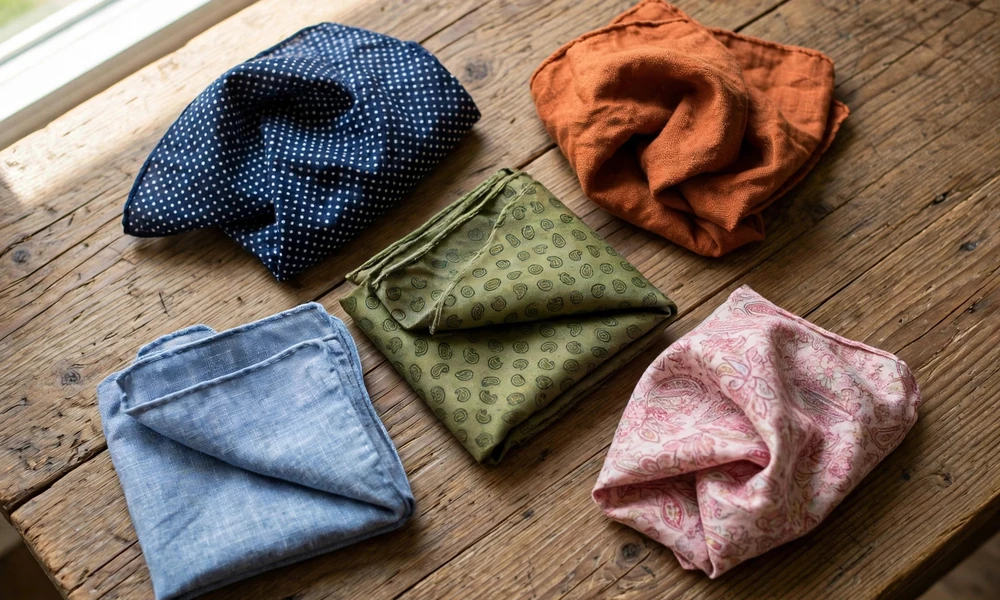
The Polka Dot Cotton Pocket Square
What we like: Cotton is easy to fold, easy to wash and easy to wear, and a small polka dot adds a playful touch without looking childish. What to consider: Large dots can look loud, so choose a small, evenly spaced dot.
Best for: Daytime events, smart-casual jackets and summer weddings. Material: 100% cotton. Price range: Around £15 to £35. Standout feature: Light, cheerful and very easy to live with.
This is a good everyday square for a man who wears a jacket most days and wants something simple to fold and care for.
The Floral Linen Pocket Square
What we like: A small floral print on linen feels relaxed and seasonal, and linen holds the fold well even in warm weather. What to consider: Floral prints vary a lot in scale, so a small, muted print is safer than a large, bright one.
Best for: Spring and summer weddings, garden parties and light-coloured suits. Material: 100% linen. Price range: Around £20 to £45. Standout feature: A seasonal print with the practicality of linen.
Floral works best when the rest of the outfit is plain, so let the square be the one patterned piece.
The Grey Wool Pocket Square
What we like: Wool has a soft, matte texture that suits tweed and flannel, and a grey wool square adds depth to a winter outfit without adding colour. What to consider: Wool can look heavy with a lightweight summer suit, so save it for cold weather.
Best for: Autumn and winter, tweed jackets and country weddings. Material: 100% wool. Price range: Around £25 to £55. Standout feature: Warm texture that matches cold-weather fabrics.
A wool square is the right choice when silk looks too slick and linen looks too light.
The Striped Silk Pocket Square
What we like: A fine stripe is the most restrained pattern a pocket square can carry, and it works well with a solid tie and a plain shirt. What to consider: Avoid stripes that match the stripes on your tie or shirt, or the outfit starts to look matched rather than coordinated.
Best for: Business dress, formal lunches and men who prefer quiet patterns. Material: 100% silk. Price range: Around £25 to £60. Standout feature: A subtle pattern that reads as polished, not busy.
Stripes are a safe first pattern for a man who usually wears plain squares.
The Cream Cashmere Pocket Square
What we like: Cashmere is the softest pocket square fabric, with a gentle, matte finish that looks expensive without being shiny. What to consider: It is the most expensive fabric here, and it needs gentle care and dry cleaning.
Best for: Winter weddings, formal evenings and anyone who wants a luxury finish. Material: 100% cashmere. Price range: Around £50 to £120. Standout feature: The softest, most luxurious square in this list.
Cream cashmere is a quiet luxury that does not shout, but the texture and quality are clear up close.
Which pocket square is right for you
Start with your suits. A man in navy and charcoal needs white linen first, then navy silk, then burgundy. A man in lighter grey and beige can start with white linen too, but his second square should be a soft blue or a muted floral, because dark burgundy can sit heavily against a pale jacket. A man who wears tweed and flannel should look at wool first, because silk can look out of place against heavy tweed.
Then think about the occasion. Formal evening events call for silk or white linen, folded flat and neat. Daytime weddings suit linen, cotton and small patterns. Business dress suits plain or striped silk. A smart-casual jacket with no tie suits a puff fold in linen or cotton, which looks relaxed rather than staged. The square should match the mood of the event, not just the colour of the suit.
Finally, think about the rest of the outfit. A patterned tie needs a plain square, and a plain tie can take a patterned square. A patterned shirt needs a plain square and a plain tie. With a heavy coat, a wool square will sit better than a silk one, because the textures match. Our guide to the best wool coats for men is worth a look here, because the coat and the square are part of the same cold-weather outfit, and the fabrics should work together rather than fight each other.
The caveats that matter
A pocket square is a small detail, but it is easy to get wrong. The most common mistake is matching the square exactly to the tie, usually by buying a matching set, which looks like a costume, not a coordinated outfit. The second mistake is choosing a square that is too large for the pocket, so it bulges and pulls the jacket out of shape. The third is wearing a pre-folded cardboard insert, which looks stiff and fake from more than a few steps away.
| Detail | What is known |
|---|---|
| Best first square | White linen, around 40 centimetres, with a hand-rolled edge |
| Best formal fabric | Silk, in white, navy or burgundy, folded flat |
| Best cold-weather fabric | Wool or cashmere, which match tweed and flannel |
| How much should show | About a centimetre above the pocket, no more |
| What to avoid | Matching the tie exactly, pre-folded inserts, oversized squares |
| Care | Hand wash or dry clean silk and cashmere; cotton and linen wash gently |
| Who should skip patterns | Anyone wearing a patterned tie or a patterned shirt at the same time |
| What it does not do | It does not fix a badly fitting jacket or rescue a clashing outfit |
There is also a limit to what a pocket square can do. It will not make a cheap, shiny suit look expensive, and it will not save an outfit where the colours already clash. It is a finishing touch, not a repair. If the jacket does not fit, fix the fit first. The square works best when everything else is already right, and it is at its best when it is the quietest part of the outfit.
Checklist: choosing a pocket square honestly
Use these checks before you buy, and again before you wear a new square out.
- Check the fabric: linen for everyday, silk for formal, wool or cashmere for cold weather.
- Check the size: around 40 centimetres is the most useful, and it should not bulk up the pocket.
- Check the edge: a hand-rolled edge is a sign of a well-made square, especially on silk.
- Check the tie: if the tie is patterned, the square should be plain, and never match the two exactly.
- Check the fold: it should sit about a centimetre above the pocket and stay put when you move.
- Check the care label: silk and cashmere need dry cleaning, so factor that into the real cost.
Frequently asked questions
Should a pocket square match the tie?
No, it should complement it. A shared colour family with a different pattern is the classic rule. An exact match, usually from a bought-together set, looks like a costume rather than a coordinated outfit.
How much of the pocket square should show?
About a centimetre is right for most folds. A flat presidential fold shows a thin, straight line. A puff fold shows a soft, rounded shape. More than two centimetres usually looks like the square is escaping from the pocket.
Can I wear a pocket square without a tie?
Yes, and it often looks better that way. A linen or cotton square in a puff fold is the natural partner for a jacket worn open-collared, and it keeps the outfit looking finished without a tie.
What is the best pocket square for a wedding?
White linen is the safest choice for a wedding guest, and it suits the groom too. For an evening wedding, a silk square in white, navy or burgundy is a good alternative, folded flat and neat.
How do I stop a silk pocket square from slipping?
Use a firmer fold, such as the one-point fold, and push the square down so it sits snugly in the pocket. A square that is too small will slip more, so a 40-centimetre square is a better choice than a 30-centimetre one.
Do I need a different pocket square for each season?
Not many. White linen works all year, and one silk square and one wool square will cover most occasions. If you want a seasonal touch, add a floral linen square for spring and summer. Our guide to buying a tie follows the same logic, because a small, well-chosen collection beats a drawer full of squares you never wear.
The bottom line
The best pocket square for most men in 2027 is a white linen square, because it works with every suit, every occasion and every level of formality. After that, a navy silk square and a burgundy silk square will cover most of what remains, and a wool square will see you through the colder months. Three well-chosen ones are enough to start.
Choose by fabric first, then by colour, then by pattern, and never match the square exactly to the tie. Fold it neatly, let about a centimetre show, and check it once before you leave the house. That is all it takes for a small square of fabric to make a tailored outfit look finished.