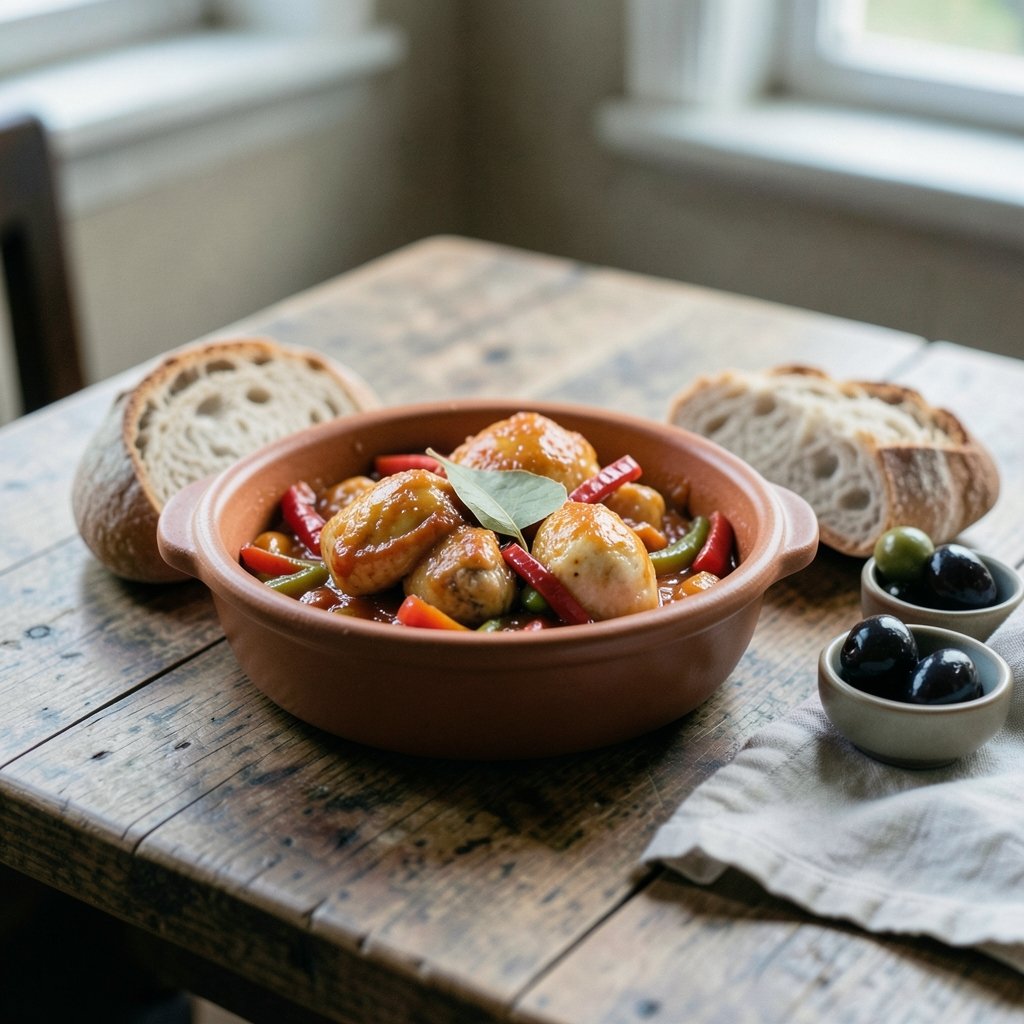
What separates a great pollo al chilindrón from a forgettable one? It is not the chicken. It is the peppers, the patience, and the cook who knows when to stop stirring. Anyone typing a search for the best pollo al chilindrón near me is chasing a very specific experience: tender chicken braised in a glossy, sweet-savory pepper sauce that tastes like someone’s grandmother is still supervising the pot. This guide explains what the dish actually is, how to judge a version before you order it, where to look in your own city, and the mistakes that lead people to disappointing plates.
What Pollo al Chilindrón Actually Is
Pollo al chilindrón is a Spanish braised chicken dish associated with Aragón and Navarra, in the country’s northeast. The name comes from chilindrón, a term for a pepper-and-tomato sauce base built from a sofrito of peppers, onion, garlic, and tomato cooked down in olive oil.
The classic build looks like this:
- Chicken pieces, usually bone-in, browned first in olive oil
- Red and/or green peppers, sometimes dried peppers for depth
- Tomato, onion, and garlic cooked into a thick sauce
- Cured ham or a bit of bacon in many home versions
- White wine for deglazing, plus a slow simmer until the sauce clings to the meat
It is not a spicy dish. People often assume “pepper sauce” means heat, but chilindrón is mild, sweet, and rich. It is also not the same as pollo al ajillo, the garlic-heavy Spanish chicken, or a Latin American chicken stew, even though home cooks improvise in every direction.
The dish is a weekend braise, not a quick sear. That matters when you are judging a restaurant, because a kitchen that rushes it produces thin sauce and dry meat.
What a Great Version Tastes Like

Before hunting for a table, it helps to know the target. A strong pollo al chilindrón has a few unmistakable markers.
| Marker | What Good Looks Like | What It Signals When Missing |
|---|---|---|
| Sauce texture | Thick enough to coat a spoon, glossy from olive oil | Watery, or pasty from too much thickener |
| Pepper flavor | Sweet, rounded, layered | Flat, or raw and sharp |
| Chicken | Moist, pulls from the bone, seasoned through | Dry, bland interior, rubbery skin |
| Seasoning | Salty-savory from ham, balanced by sweetness | One-note salt bomb, or sweet like dessert |
| Aroma | Peppers and garlic, faint wine | Nothing much, or a reheated smell |
If a plate arrives with sauce sliding off the chicken like broth, the kitchen either skipped the reduction or plated too fast. If the peppers taste like they came out of a jar five minutes ago, they probably did.
Why “Near Me” Searches Go Wrong
The phrase “near me” hides a real problem: your phone does not know what you want, only where you are. Search results for a regional Spanish dish are noisy for several reasons.
Distance beats quality. Map results rank partly by proximity, so a mediocre place two blocks away can outrank an excellent one across town. If you only look at the first three pins, you are ranking by geography, not cooking.
The dish is uncommon. Pollo al chilindrón is not on every Spanish menu. Many tapas bars lean on patatas bravas, tortilla, and jamón, and treat the braises as specials. A restaurant that lists it may do it well, or may keep one lonely chicken dish for the tourists.
Menus go stale. Aggregator listings lag behind reality. A dish listed online may have left the menu a year ago, or the restaurant may have changed hands.
Reviews describe the wrong thing. A five-star review for “amazing tapas” tells you nothing about a slow-braised chicken. You need reviews that name the dish.
The fix is to treat the search as a shortlist, not an answer. Use maps to gather candidates, then verify each one directly.
How to Vet a Restaurant Before You Go
This is where most people skip steps and waste an evening. A few checks take five minutes and save a bad dinner.
Check the menu for the dish by name
Look for pollo al chilindrón spelled out rather than “chicken stew.” A kitchen proud of a regional braise usually names it. If the menu says “Spanish chicken,” ask what it is before you commit.
Call and ask two questions
Ask whether the dish is on today, and ask how it is made. A server who can describe the peppers, the ham, and the simmer time is telling you the kitchen knows the plate. A vague answer is useful information too.
Read reviews that mention the dish
Search reviews for the dish name and for words like “braised,” “peppers,” and “sauce.” Skip the generic praise. You want the person who wrote three sentences about the sauce.
Look at the photos
Photos reveal sauce texture better than any description. A dark, clinging sauce and visible pepper strips are good signs. A pale pool of liquid under the chicken is not.
Time your visit
Braises improve overnight and can run out. Lunch service on a busy weekend is often the safest window, and asking whether it is fresh today is fair game.
If you are also weighing clinics for other personal-care errands, the same logic of verifying before you commit applies, as this guide to choosing a laser hair removal clinic near you explains. Good research habits travel well between completely unrelated errands.
Where to Look in Your City
You will not find pollo al chilindrón at a random corner café. Focus your search on places that have a reason to cook it.
Spanish and Basque restaurants. This is the obvious first stop. Regional Spanish kitchens in bigger cities often carry one or two braises alongside tapas.
Tapas bars with a daily specials board. Specials boards are where braises live, because they suit batch cooking and sell out.
Wine bars with a short food menu. A small kitchen with a Spanish wine list often keeps one slow-cooked dish that pairs with reds from Rioja or Navarra.
Markets and food halls. Spanish stalls in larger markets sometimes serve stews by the bowl at lunch.
Cooking classes and supper clubs. If no restaurant near you makes it, a Spanish cooking class or a supper club with a regional theme is a realistic path to the real thing.
A quick filter helps. Search for the dish name plus your neighborhood, then repeat with the Spanish spelling and with “Spanish restaurant” plus your city. Compare the lists. Overlap is your shortlist.
The Home Version as a Benchmark
Cooking the dish once, even imperfectly, changes how you judge it in restaurants. You learn three things fast.
First, the peppers carry the dish. Jarred roasted peppers work in a pinch, but fresh peppers cooked down slowly give a sweetness that shortcuts cannot match. Second, browning the chicken first builds the flavor base, and skipping it leaves the sauce thin. Third, time is the ingredient nobody lists. A forty-minute simmer and a ninety-minute simmer are different dishes.
Common home mistakes are worth knowing because restaurants make them too:
- Adding too much liquid and never reducing it
- Underseasoning because the ham was expected to do all the work
- Cooking the garlic until bitter instead of golden
- Serving immediately instead of resting the pot
If you enjoy building flavor from scratch, the same balancing act shows up in this guide to building a chili seasoning recipe that actually tastes balanced. Sweet, salt, and heat need the same negotiation in a pepper braise.
What to Order Alongside
Pollo al chilindrón is rich, so the sides matter. Good pairings:
- Bread, for the sauce, ideally something with structure
- Roasted potatoes or fried potatoes, not rice, which dilutes the sauce
- A simple green salad with vinegar to cut the richness
- A red wine from Navarra or Rioja, or a dry rosé
- Roasted peppers as a starter only if you love the flavor profile, since the main already delivers it
Skip heavy starters. The braise is the point, and a plate of croquettes beforehand dulls your read on the sauce.
Red Flags and Green Flags
After enough plates, patterns emerge. Here is the practical checklist.
Green flags:
- The dish is named on the menu with its region
- Staff can describe how it is made
- The sauce looks reduced, not soupy
- Chicken is bone-in and moist
- Reviews mention the dish specifically
Red flags:
- The sauce tastes of thickener rather than peppers
- Chicken is boneless and dry, suggesting a shortcut
- The dish is listed but nobody has ordered it recently
- The plate arrives lukewarm, a sign of a rushed reheat
- Everything on the table tastes the same
One more practical note: if you are scouting a neighborhood for the first time, treat it like any other local search. The same approach that helps you find a good Chinese restaurant fast works here, meaning shortlist by menu, verify by phone, and trust dish-specific reviews over star averages.
If You Cannot Find It Nearby
Not every city has a Spanish kitchen with this dish. Options exist.
Travel planning. In Aragón and Navarra, the dish is standard home cooking and appears on many restaurant menus. A trip built around food is a legitimate reason to plan a route.
Special-order nights. Some Spanish restaurants will make a braise for a group with advance notice. It never hurts to ask for a party of six.
Cooking classes. A class focused on Spanish regional cooking often covers one braise, and chilindrón is a common choice.
Community and cultural groups. Spanish expat groups, language meetups, and food clubs occasionally host dinners. These are underrated sources for regional dishes.
Frozen and prepared versions. Quality varies widely, but a well-made frozen braise beats a bad restaurant plate. Check ingredient lists for real peppers rather than flavoring.
Conclusion
Finding the best pollo al chilindrón near you is less about luck and more about method. Know what the dish should taste like, treat map results as a shortlist rather than a verdict, verify the menu by phone, and read reviews that name the dish. Look in Spanish kitchens, tapas bars with specials boards, and market stalls rather than anywhere with a broad menu. And if the plate arrives with thin sauce and dry chicken, you now know exactly why, and where to look next. The best bowl is usually one phone call and one careful shortlist away.
Frequently Asked Questions
What is pollo al chilindrón made of?
It is chicken braised with red and green peppers, tomato, onion, and garlic in olive oil, often with cured ham and a splash of white wine. The peppers and tomato cook down into a thick, sweet-savory sauce that coats the meat.
Is pollo al chilindrón spicy?
No. Despite the peppers, the dish is mild and slightly sweet. The peppers are cooked long enough to lose their bite and turn soft and rounded, so heat is not the point.
Which region of Spain is pollo al chilindrón from?
It is traditionally associated with Aragón and Navarra in northeastern Spain. Both regions claim versions, and home recipes vary in whether they use red peppers, green peppers, or both, and whether ham is included.
How do I find a restaurant near me that serves it?
Search for the dish name plus your city and neighborhood, then check each candidate’s menu directly. Call to confirm it is on today, and read reviews that mention the dish by name rather than general praise for the restaurant.
What should I order with pollo al chilindrón?
Bread and roasted or fried potatoes are the classic pairings, plus a simple salad with vinegar to cut the richness. A red from Navarra or Rioja works well. Avoid heavy starters that dull your read on the sauce.
Can I make pollo al chilindrón at home?
Yes, and it is worth trying once. Brown the chicken first, cook the peppers, onion, and garlic down slowly, add tomato and wine, then simmer until the sauce clings to the meat. The main mistake is adding too much liquid and not reducing it enough.