


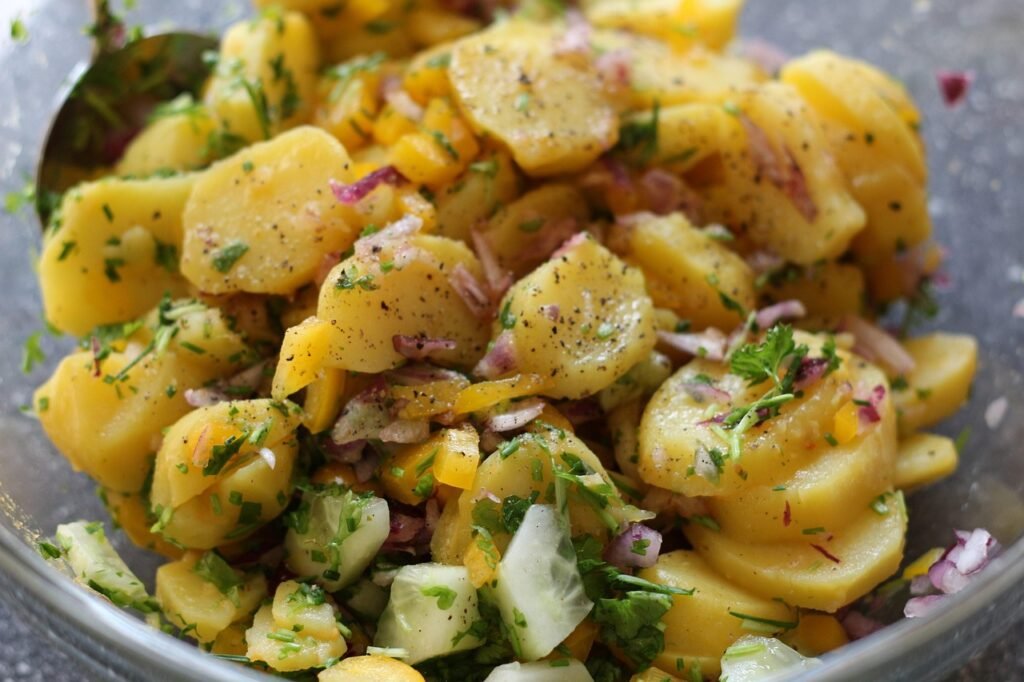
What if the difference between a forgettable potato salad and one you’d drive across town for comes down to a single decision: whether it’s made with mayonnaise or broth? That question sits at the heart of every search for the best Kartoffelsalat near you. The German potato salad is one of those dishes that people get fiercely loyal about, and for good reason. Every region, every family, and every good deli seems to have its own version, and they can taste wildly different from one another.
The good news is that finding a great one is a skill you can learn. Once you know what to look for, how to read a menu, and which questions to ask, you can sort the standout bowls from the sad, gluey ones in seconds. This guide walks through the styles, the practical hunting tactics, the mistakes most people make, and the details that separate a truly excellent Kartoffelsalat from an average one.
What “Kartoffelsalat” Actually Means on a Menu
The word translates simply to “potato salad,” but the dish behind it is anything but simple. In Germany, Kartoffelsalat is a cornerstone of home cooking and celebration tables alike, and it shows up at everything from weekday lunches to holiday feasts.
The first thing to understand is that there are two broad families of the dish, and they are almost like two different foods that happen to share a name. One is creamy and cold. The other is tangy, savory, and often served warm. Knowing which one a kitchen makes before you walk in saves you from ordering the wrong bowl and being disappointed by a perfectly good salad you simply didn’t want.
A second useful piece of menu literacy involves the labels. On German menus, “Kartoffelsalat Wiener Art” usually signals a vinegar-and-oil salad with no mayonnaise, while “Schwäbischer Kartoffelsalat” points to a warm salad built on beef broth, vinegar, oil, mustard, and onions. Those phrases are your shorthand. If a menu lists either one, you already know roughly what will land on your table.
The Two Great Styles, Compared

Most people searching for the best Kartoffelsalat near them don’t yet know which camp they belong to. The table below lays out the practical differences so you can decide what you’re actually craving before you start scrolling through results.
| Feature | Mayonnaise-based style | Vinegar-and-broth style |
|---|---|---|
| Typical region | Northern and eastern Germany | Southern Germany, Swabia, Austria |
| Serving temperature | Usually cold | Often warm or lukewarm |
| Base liquid | Mayonnaise, sometimes with yogurt or sour cream | Vinegar, oil, hot broth, mustard |
| Texture | Creamy, rich, heavier | Tangy, looser, more savory |
| Common pairings | Sausages, cold cuts, picnic spreads | Schnitzel, roast meats, hearty dinners |
| Allergen watch | Egg (from mayonnaise) | Possible gluten or meat broth |
One important caveat: the north-south split is a helpful rule of thumb, not a law of nature. Plenty of northern kitchens make a vinegar-based salad, and plenty of southern ones serve a creamy version. Treat the table as a starting map, not a final answer.
Why Potato Variety Matters More Than You Think
Here’s something most diners never consider, and it explains why two salads made from the same recipe can taste so different. The potato itself is doing half the work.
Waxy potatoes are the standard choice for Kartoffelsalat because they hold their shape after boiling. They slice cleanly and stay distinct in the bowl. Floury potatoes break down, turn to mush, and give you a pasty, dense result. A kitchen that cares about its salad uses waxy varieties, and that single choice tells you a lot about how seriously it takes the dish.
This is one of the most practical things to look for in practice. When you taste a great Kartoffelsalat, the slices are intact and the texture is clean. When you taste a mediocre one, the potatoes have collapsed into a starchy paste. You don’t need to know the variety’s name to spot the difference. Your fork tells you everything.
A Practical Checklist for Finding a Great Bowl Nearby
Local searches for food are usually resolved by map and local-pack results, which means the listings that appear first are shaped by proximity, relevance, and reputation signals rather than by who makes the objectively best salad. That’s a useful thing to keep in mind, because the top result isn’t automatically the best plate. Here’s a workflow that actually works in practice.
- Search by style, not just by dish. Instead of only typing the dish name, add the style you want. “Schwäbischer Kartoffelsalat near me” or “vinegar potato salad near me” will surface very different places than a generic query.
- Read the menu before the reviews. A menu that names its style is a menu written by people who understand the dish. That alone is a positive signal.
- Look for a specialty angle. German delis, butcher shops with prepared foods, beer gardens, and bakeries with lunch counters are often stronger bets than general restaurants that treat the salad as an afterthought.
- Check the photos for texture. Close-up images reveal whether the potatoes are intact or mushy. This is the fastest visual filter you have.
- Call ahead for warm versions. If you want a broth-based salad served warm, confirm it’s made that day. Warm salads don’t hold well, so freshness matters more.
- Go at peak hours. A salad assembled to order at lunchtime will beat one that’s been sitting in a display case since morning.
If you’re also comparing local businesses in general, the same instincts apply across categories. The approach in this guide to finding a Chinese restaurant near you quickly maps neatly onto the Kartoffelsalat hunt: filter by what you actually want, read the menu critically, and trust texture over marketing.
Common Mistakes People Make
Even enthusiastic eaters trip over the same few pitfalls. Avoiding them puts you ahead of most diners.
Judging by appearance alone. A glossy, snow-white mayonnaise salad can look impressive and taste flat. A looser, humbler-looking broth salad can be the best thing on the table.
Assuming “German restaurant” means good Kartoffelsalat. Many places offer it as a token side dish. The ones that do it well usually treat it as a signature, not a garnish.
Ignoring temperature. Ordering a warm-style salad and receiving it ice-cold, or the reverse, is the most common letdown. Ask before you commit.
Overlooking the sides. Kartoffelsalat is traditionally a companion, not a solo act. It shines next to a sausage, a schnitzel, or roast meat. Ordering it as a main course often undersells it.
Skipping the allergen question. Mayonnaise-based versions contain egg. Broth-based versions may include meat broth or gluten if thickened, which matters for vegetarians, vegans, and anyone with allergies. Under EU food information rules, allergen details should be available, so it’s fair to ask.
How to Read Reviews Without Getting Fooled
Reviews are useful, but only if you read them the right way. Star ratings compress wildly different experiences into a single number, and that number rarely captures what you care about.
Instead, scan for specific language. Comments that mention “not mushy,” “tangy,” “just like my grandmother’s,” or “the potatoes held together” are far more informative than generic praise. Look for reviewers who describe the style they received. A review that says “creamy and rich” tells you something concrete. One that says “amazing” tells you almost nothing.
Pay attention to consistency too. A place with a hundred reviews and a steady theme of “the potato salad is the reason we come back” is a strong signal. A place with a handful of five-star reviews and no mention of the dish is a gamble.
The “Near Me” Factor: Why Location Changes Everything
There’s a quiet trap in the phrase “near me.” The results you see are shaped by your exact location, the time of day, and how the platform ranks local businesses. Two people a mile apart can get different top results for the same query.
The practical fix is to widen your radius deliberately. If you’re chasing a specific style, expand the search area and accept a short drive. The best bowl in your city is often not the closest one. Serious eaters treat a fifteen-minute drive as a small price for a salad that’s actually worth eating.
It also helps to search by neighborhood or district rather than relying only on your current position. And if you’re hunting for a clinic or service rather than food, the same local-search logic applies, which is why guides like this one on choosing a laser hair removal clinic near you emphasize verifying local listings carefully before committing. The principle is universal: proximity is a starting filter, not a quality guarantee. For more on local discovery habits, this collection of laser hair removal near me resources shows how the same search patterns repeat across very different industries.
What a Truly Excellent Kartoffelsalat Tastes Like
So what should you actually expect from a great bowl? A few markers stand out, and once you’ve tasted them, you’ll never settle again.
The potatoes should be intact and tender, never crumbling. The dressing should taste balanced, with enough acidity to cut through richness. If it’s a broth style, the liquid should be savory and absorbed rather than pooling at the bottom. If it’s a mayonnaise style, it should taste fresh and light, not heavy or cloying. Onions, whether raw or lightly cooked, add a brightness that separates a lively salad from a dull one.
Freshness is the final and most important marker. Kartoffelsalat is a perishable prepared food, and broth-based versions left sitting at room temperature are a genuine food-safety concern. Reputable kitchens refrigerate properly and don’t let the salad linger. If something tastes off or has clearly been out too long, that’s your answer.
Conclusion
Finding the best Kartoffelsalat near you isn’t about luck. It’s about knowing the two great styles, reading a menu with a little confidence, and letting texture and freshness guide your choice. The creamy northern version and the tangy southern one are both worth seeking out, and the best kitchens make their allegiance clear before you even sit down.
Start with a style-specific search, check the photos for intact potatoes, ask about temperature and allergens, and don’t be afraid to drive a little farther than the nearest option. The right bowl, served at the right temperature alongside the right companion, is one of the simple pleasures worth chasing. Your next great Kartoffelsalat is probably closer than you think, and now you know exactly how to find it.
Frequently Asked Questions
What is the difference between Kartoffelsalat and regular potato salad?
Kartoffelsalat is the German version of potato salad, and it comes in two main families. The mayonnaise-based style is creamy and usually served cold, while the vinegar-and-broth style is tangy, savory, and often served warm. Both use cooked potatoes, but the dressings and serving temperatures make them taste very different.
Is Kartoffelsalat always served cold?
No. The mayonnaise-based style is typically served cold, but the southern German and Swabian vinegar-and-broth versions are often served warm or lukewarm. If temperature matters to you, it’s worth asking before you order, since the same dish name can arrive either way.
What does “Wiener Art” mean on a Kartoffelsalat menu?
“Wiener Art” usually signals a vinegar-and-oil potato salad made without mayonnaise. It’s a useful menu shorthand that tells you which style to expect before the plate arrives. “Schwäbischer Kartoffelsalat,” by contrast, points to a warm salad built on beef broth, vinegar, oil, mustard, and onions.
Which potatoes make the best Kartoffelsalat?
Waxy potatoes are the standard choice because they hold their shape after boiling and slice cleanly. Floury potatoes break down and turn the salad pasty. You don’t need to memorize variety names to judge the result: if the slices are intact and the texture is clean, the kitchen chose well.
Does Kartoffelsalat contain allergens?
It can. Mayonnaise-based versions contain egg, while broth-based versions may include meat broth or gluten if thickened. That matters for vegetarians, vegans, and anyone with allergies. Allergen information should be available on request, so it’s always fair to ask.
How do I find the best Kartoffelsalat near me?
Search by style rather than by the generic dish name, read the menu to see whether it names its style, and check photos for intact potatoes rather than mush. Call ahead for warm versions, go at peak hours for the freshest batch, and be willing to drive a little farther than the closest option.














