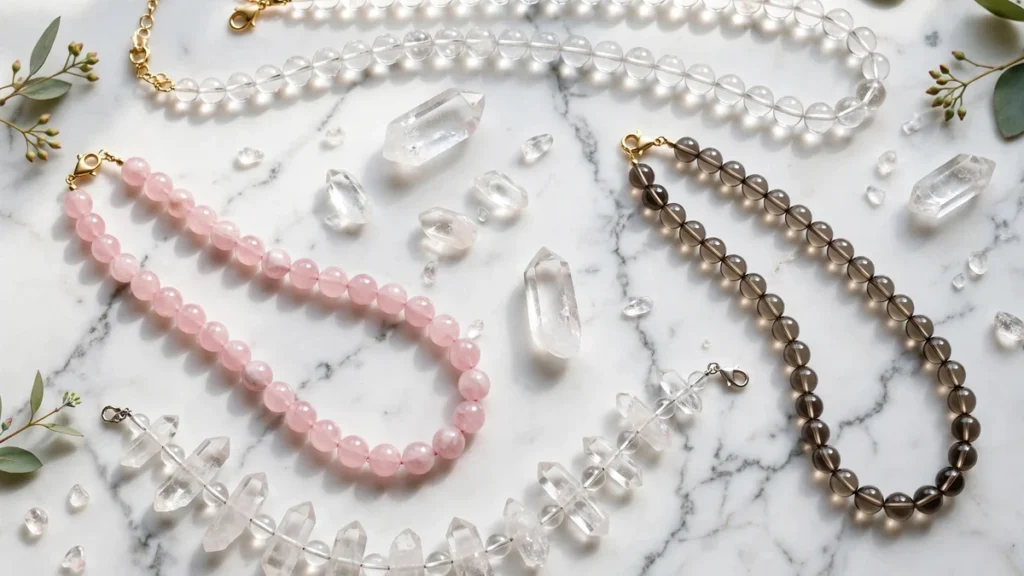
Quartz necklaces are the quiet workhorses of a jewellery box. Quartz is silicon dioxide, one of the most common minerals on earth, and it appears in more colours than almost any other gemstone. Clear quartz is bright and glassy, rose quartz is soft pink, smoky quartz is warm brown-grey, citrine is sunny yellow, and amethyst is violet. All of them are quartz, all of them are hard enough for daily wear, and all of them cost far less than a diamond or a sapphire of the same size. That combination makes a quartz necklace an easy first fine-jewellery purchase and a reliable everyday piece.
The problem is not finding a quartz necklace. It is finding one that is honest about what it is. Because quartz is plentiful, it is also widely imitated. Glass is the most common substitute, and it looks convincing in a photograph. Dyed quartz is sold without disclosure, lab-grown quartz is sold as natural, and heat-treated amethyst is sold as citrine. None of those things make a necklace unwearable, but they change what it is worth, and a buyer should know which one they are paying for.
Below are nine quartz necklaces worth considering in 2027, from a classic clear quartz pendant to soft rose quartz and warm smoky quartz. Each one is described by what it does well, what to watch for, and who it suits best, so you can choose with the stone in mind, not just the sparkle.
Key takeaways
- Quartz is silicon dioxide, Mohs 7, hard enough for daily wear and for pendants that are worn every day.
- Clear quartz, rose quartz, smoky quartz, citrine and amethyst are all quartz varieties, so one stone family covers almost every colour.
- Look for a solid stone, a secure setting, and honest disclosure of any dyeing, heat treatment, or lab-grown origin.
- A quartz necklace suits everyday wear, layering, and gifting, because it is durable, light, and far more affordable than most gemstones.
- Quartz is plentiful and affordable, so it is not an investment stone, healing claims about quartz are not proven, and glass imitations are common.
What quartz actually is
Quartz is a mineral made of silicon and oxygen, and it forms in large, clean crystals. On the Mohs hardness scale it scores 7, which means it resists scratches from everyday contact and holds a polish well. That is why quartz has been cut into beads, pendants and seals for thousands of years, and why a quartz pendant can be worn daily without the careful handling a softer stone demands. It is not as hard as sapphire or diamond, so it can still scratch if it is knocked against something harder, but for normal wear it is a practical choice.
The colour of quartz comes from tiny traces of other elements and from natural irradiation in the earth. Iron gives amethyst its violet and citrine its yellow. Titanium and manganese give rose quartz its pink. Natural radiation gives smoky quartz its brown-grey tone. Clear quartz, sometimes called rock crystal, has almost no colour at all and is valued for its brightness and clarity. Because all of these are the same mineral, a jeweller can offer a full colour range from one stone family, and a buyer can match a necklace to a wardrobe without learning five different stones.
Treatments are part of the quartz story, and they are normal when they are disclosed. Much of the citrine sold today is amethyst that has been heat-treated to turn yellow or orange, and that is standard practice in the trade. Pale rose quartz is sometimes dyed to a deeper pink, and clear quartz can be coated to create an iridescent finish. Lab-grown quartz is chemically the same as natural quartz and is used in watches and electronics as well as jewellery. None of these are reasons to avoid a necklace, but each one should be stated plainly on the listing, because an undisclosed treatment is a misrepresentation, not a bargain.
How we chose these necklaces and what to look for
Look first at the stone itself. A good quartz pendant is clean to the eye, with no obvious cracks, cloudy patches, or bubbles. Small bubbles are a warning sign, because natural quartz does not contain round air bubbles, while glass usually does. The colour should be even, the cut should be symmetrical, and the polish should be bright rather than dull or waxy. A pendant that looks flat or greasy in daylight is often glass, or quartz that has been poorly polished, and neither is worth a fine-jewellery price.
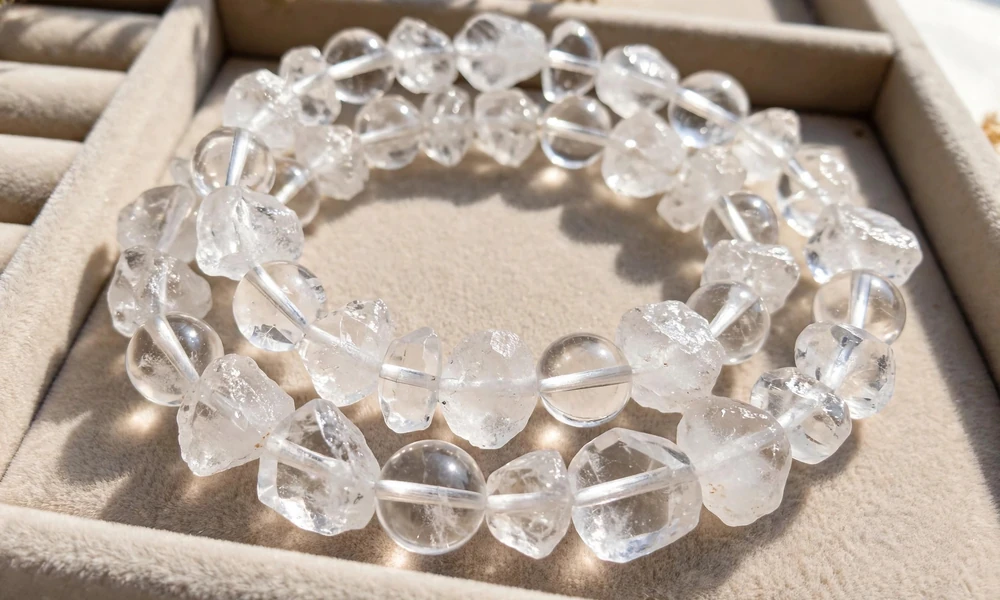
Look next at the setting and the chain. A bezel setting protects the edges of the stone and suits daily wear, while a prong setting shows more of the stone but leaves it more exposed. The chain should match the weight of the pendant, with a secure clasp and a metal that suits your skin. Gold, vermeil, and sterling silver all work with quartz, and the choice is mostly about budget and taste. A matching quartz bracelet is an easy way to build a small set, and our guide to the best quartz bracelets of 2027 covers the same stone in bracelet form.
Finally, check the disclosure. A trustworthy listing states whether the stone is natural or lab-grown, whether it has been dyed or heat-treated, and what the metal is. If a listing says nothing at all, ask before buying. The price should also make sense. Quartz is affordable, so a simple quartz pendant at a very high price is paying for the brand and the setting, not the stone, and that is fine as long as you know it.
The 9 best quartz necklaces of 2027
Tiffany & Co. Clear Quartz Pendant
What we like: A clean, bright clear quartz pendant in a polished setting, with the proportions and finish you expect from Tiffany & Co. What to consider: Premium price for a stone that is widely available elsewhere. Stone: Clear quartz. Setting: Sterling silver or 18k gold. Best for: A first fine-jewellery pendant. Price range: $450 to $1,200.
The classic choice in this list, and the one to buy if you want a quartz necklace that reads as fine jewellery rather than costume. The stone is bright, the setting is secure, and the design is simple enough to wear every day.
Cartier Clear Quartz Pendant
What we like: A refined pendant with Cartier’s clean lines and a well-cut stone that catches the light. What to consider: Luxury pricing, and the design is deliberately understated. Stone: Clear quartz. Setting: 18k gold. Best for: Quiet luxury and special occasions. Price range: $1,500 to $4,000.
For buyers who want the brand and the craftsmanship as much as the stone. The quartz is excellent, but the value here is in the design and the making, not the gemstone itself.
David Yurman Clear Quartz Pendant
What we like: A sculptural pendant with Yurman’s signature cable detail, and a stone with good clarity. What to consider: The cable design is distinctive and may not suit minimal tastes. Stone: Clear quartz. Setting: Sterling silver with 18k gold accents. Best for: A statement pendant with a designer signature. Price range: $395 to $950.
A good middle ground between high street and high jewellery. The cable work gives the piece character, and the quartz is bright and clean.
Mejuri Rose Quartz Pendant
What we like: A soft pink rose quartz pendant at a fair price, with a delicate chain that layers well. What to consider: Rose quartz can fade in prolonged sunlight, so store it away from windows. Stone: Rose quartz. Setting: 14k gold vermeil. Best for: Everyday wear and layering. Price range: $78 to $198.
The most wearable rose quartz in this list. The pink is gentle rather than sugary, and the price makes it an easy gift as well as an easy first purchase.
Monica Vinader Smoky Quartz Pendant
What we like: A warm brown-grey smoky quartz pendant with a modern setting and a strong, earthy colour. What to consider: Very dark stones can read almost black indoors. Stone: Smoky quartz. Setting: 18k gold vermeil. Best for: Autumn wardrobes and warm skin tones. Price range: $130 to $290.
Smoky quartz suits people who find clear quartz too bright and rose quartz too sweet. This is the most grown-up option in the list, and it pairs well with gold.
Missoma Citrine Pendant
What we like: A sunny yellow citrine pendant with a clean setting and a cheerful colour that suits summer and winter alike. What to consider: Most citrine is heat-treated amethyst, so check the disclosure. Stone: Citrine. Setting: 18k gold vermeil. Best for: A bright, everyday pendant. Price range: $110 to $250.
Citrine is the happiest stone in the quartz family, and this pendant shows it at its best. Just remember that deep orange citrine is almost always treated, and that is normal when it is disclosed.
Maria Black Amethyst Pendant
What we like: A violet amethyst pendant with a sculptural, contemporary setting that stands out from classic pendants. What to consider: The design is bold, so it suits confident styling more than minimal looks. Stone: Amethyst. Setting: Sterling silver. Best for: A modern statement piece. Price range: $180 to $420.
Amethyst is the best-known quartz variety, and this pendant treats it as a design stone rather than a birthstone cliché. The violet is rich without being dark.
Astrid & Miyu Clear Quartz Pendant
What we like: A light, bright clear quartz pendant at an accessible price, with a fine chain that suits layering. What to consider: The chain is delicate, so it suits lighter pendants and gentle wear. Stone: Clear quartz. Setting: 18k gold plated sterling silver. Best for: Layering and first pendants. Price range: $85 to $180.
A good entry point into quartz necklaces. The stone is clean, the design is simple, and the price leaves room to add a second layer.
Thomas Sabo Rose Quartz Pendant
What we like: A soft pink rose quartz pendant with a charm-style setting and a friendly, wearable design. What to consider: The style is casual, so it suits daytime looks more than evening wear. Stone: Rose quartz. Setting: Sterling silver. Best for: Casual everyday wear and gifts. Price range: $99 to $229.
The most relaxed pendant in this list. It works as a standalone piece or layered with a longer chain, and the rose quartz is a gentle pink rather than a bright dye.
Which quartz necklace is right for you
Start with colour, because that is what you will see every day. Clear quartz is the most versatile and suits every outfit, which is why it is the safest first choice. Rose quartz is softer and more romantic, and it suits fair skin and pastel wardrobes. Smoky quartz is warmer and more grounded, and it suits autumn colours and gold jewellery. Citrine is bright and cheerful, and amethyst is the most dramatic of the quartz colours. There is no wrong answer, but the colour you reach for most often is the right one.
Then think about how you will wear it. A short pendant on a 16-inch chain sits at the collarbone and suits crew necks and open collars. A longer pendant on an 18 to 20-inch chain suits layering and deeper necklines. A bezel setting is the practical choice for daily wear, because it protects the stone. A prong setting shows more of the stone and suits occasional wear. If you already wear gold every day, our guide to gold jewellery for everyday wear can help you match the metal to the rest of your jewellery box.
Finally, think about budget honestly. Quartz itself is affordable, so most of the price of a quartz necklace is the metal, the brand, and the making. A well-made vermeil pendant at $100 can look as good as a gold pendant at $1,000, and the difference is durability and resale, not beauty. Buy the best metal you can afford, check the disclosure, and do not pay a gemstone price for a stone that is plentiful.
The caveats that matter
Quartz is a forgiving stone, but it is not indestructible, and the market around it is full of imitations. The table below covers the points that matter most before you buy.
| Detail | What is known |
|---|---|
| What quartz is | Silicon dioxide, Mohs 7, hard enough for daily wear |
| Main varieties | Clear, rose, smoky, citrine and amethyst are all quartz |
| Common imitation | Glass, often with round air bubbles that natural quartz lacks |
| Common treatments | Heat treatment, dyeing, and lab-grown stones, all normal when disclosed |
| What to avoid | Hard knocks, ultrasonic cleaners with dyed stones, and prolonged strong sun for rose quartz |
| Cleaning | Warm water, mild soap, and a soft cloth; dry before storing |
| What it is not | Not an investment stone, and healing claims about quartz are not proven |
| Best use | Everyday pendants, layering, and gifting at an honest price |
If a deal looks too good to be true, it usually is. A large, flawless, deeply coloured stone at a very low price is almost certainly glass or heavily treated quartz. Buy from sellers who disclose treatments, keep the receipt, and check the stone in daylight before you commit.
Checklist: choosing a quartz necklace honestly
Use these checks before you buy, and again when the necklace arrives.
- Check the stone: clean to the eye, no bubbles, even colour, bright polish.
- Check the disclosure: natural or lab-grown, dyed or heat-treated, stated plainly.
- Check the setting: bezel for daily wear, prongs if you want to show more stone.
- Check the chain: strong enough for the pendant, with a secure clasp.
- Check the price: quartz is affordable, so a very high price should be for metal and making, not the stone.
- Check the care: warm water and mild soap, no harsh chemicals, store away from strong sun.
Frequently asked questions
Is quartz a real gemstone?
Yes. Quartz is a genuine mineral gemstone, and its varieties include amethyst, citrine, rose quartz and smoky quartz. It is common, which keeps the price low, but that does not make it any less real than a rarer stone.
How can I tell quartz from glass?
Look for round air bubbles, which are common in glass and absent in natural quartz. Quartz also feels cool to the touch and stays cool longer than glass. A jeweller can confirm it with a simple test, and a reputable seller will be happy to do so.
Does quartz fade in sunlight?
Most quartz is stable in sunlight, but rose quartz can fade with prolonged strong sun, and dyed quartz can lose colour. Store your necklace in a jewellery box away from windows, and do not leave it on a sunny sill.
Can I wear a quartz necklace every day?
Yes, quartz at Mohs 7 is hard enough for daily wear. Choose a bezel setting for the most protection, remove it for heavy exercise or manual work, and clean it with warm water and mild soap.
Is citrine the same as heat-treated amethyst?
Often, yes. Most citrine on the market is amethyst that has been heat-treated to turn yellow or orange. Natural citrine exists and is usually pale yellow. Heat treatment is standard practice, but it should be disclosed by the seller.
How should I style a quartz necklace?
Clear quartz suits everything and layers well with gold chains. Rose quartz suits soft, light outfits, smoky quartz suits warm and autumn colours, and citrine suits bright summer looks. For bolder styling ideas, our guide to the best statement necklaces of 2027 shows how a single pendant can anchor a whole outfit.
The bottom line
The best quartz necklace in 2027 is not the most expensive or the rarest. It is the one with a clean, honest stone, a secure setting, and a colour you will actually wear. Clear quartz is the safest first choice, rose quartz is the softest, smoky quartz is the warmest, and citrine and amethyst add colour without adding much cost. Buy the best metal you can afford, check the disclosure, and do not pay a gemstone price for a plentiful stone.
Choose one necklace, wear it for a few weeks, and judge it on how it looks in daylight and how it feels at the end of the day. A good quartz pendant should be easy to wear, easy to care for, and easy to love, and at an honest price it is one of the best-value pieces in any jewellery box.