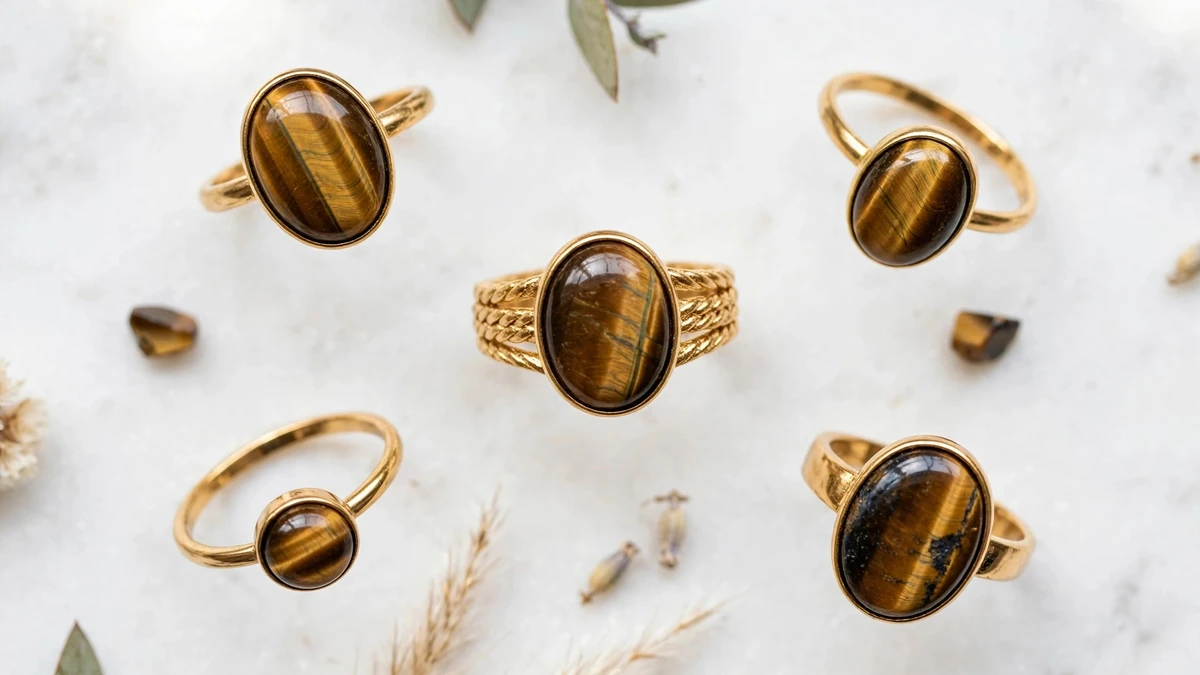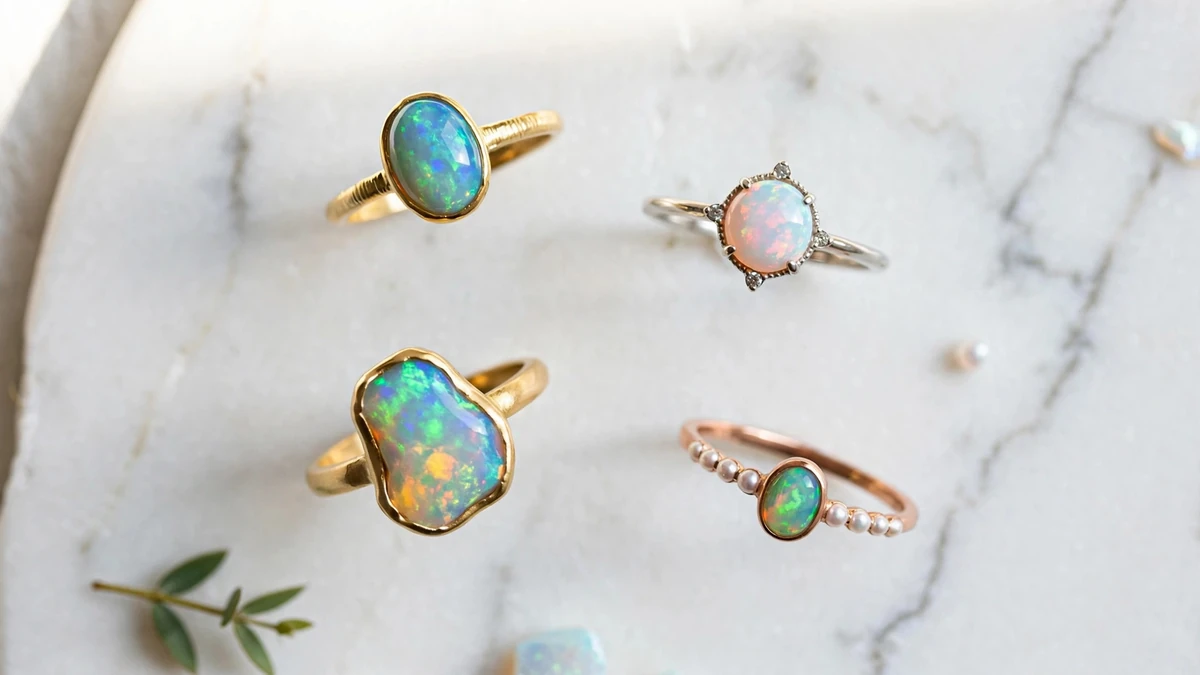

Opal is the most unpredictable gemstone you can put on your finger. No two stones look the same, and the same stone can look completely different under shop lights, daylight, and candlelight. That play of colour is exactly why people love opal rings, and exactly why buying one takes more care than buying a sapphire or a diamond. A good opal ring is a small piece of theatre. A bad one is a soft, cloudy stone that loses its fire within a year.
The problem is not finding opal rings. It is knowing which kind of opal you are looking at, how it is set, and whether it will survive daily wear. Australian white opal, black opal, Ethiopian opal, boulder opal, and doublet and triplet opals all behave differently, and they are not interchangeable. A doublet can look spectacular in a photo and still be a thin slice of opal glued to a dark backing, and an Ethiopian opal can be beautiful and porous enough to change colour if it gets wet.
Below are nine opal rings worth considering in 2027, from a classic white opal solitaire to a bold black opal statement ring. Each one is described by what it does well, what to watch for, and who it suits best, so you can choose with your opal in mind, not just a bestseller list.
Key takeaways
- Opal is soft, at 5.5 to 6.5 on the Mohs scale, so a protective setting and gentle wear matter more than the brand name.
- Black opal shows the strongest play of colour, white opal is the classic choice, and Ethiopian opal is bright but porous and needs dry care.
- Doublets and triplets are real opal layered on a backing, so ask exactly what you are buying and pay a layered price, not a solid price.
- Never put an opal ring in an ultrasonic cleaner or steam cleaner, and keep it away from harsh chemicals and long soaks.
- Opal is not an investment stone and its colour play cannot be graded the way a diamond is graded, so buy for beauty, not for resale.
What makes an opal ring different
Opal is not a crystal. It is a mineraloid made of tiny silica spheres and water, and its colour comes from light bending through those spheres rather than from a pigment in the stone. That is why opal does not have a single colour. A white opal flashes green, blue, and pink against a milky body. A black opal flashes the same colours against a dark body, which makes them look brighter and more dramatic. A boulder opal keeps its ironstone backing, so the colour sits in veins and patches across a brown matrix.
That structure is also what makes opal fragile. The water content, usually between three and ten percent, means an opal can dry out, craze, or crack if it is stored badly or exposed to sudden heat. It is softer than most ring stones, so it scratches more easily than sapphire, ruby, or diamond. None of this means opal rings are a bad idea. It means the setting and the way you wear the ring matter as much as the stone itself.
A good opal ring protects the stone. A bezel setting, where metal wraps around the edge of the stone, guards it far better than tall prongs. A halo of small diamonds can protect the edge too, and it adds sparkle that suits opal well. A ring you wear every day should have a lower profile and a solid band, while a tall cocktail ring is better kept for evenings and special occasions.
How we chose these rings and what to look for
Look first at the type of opal and how it is described. A reputable seller names the origin and the type: Australian white opal, Australian black opal, Ethiopian opal, boulder opal, or doublet and triplet. If a listing just says “opal” with no origin and no type, ask. The answer changes the price by hundreds of pounds and changes how you should care for the ring.
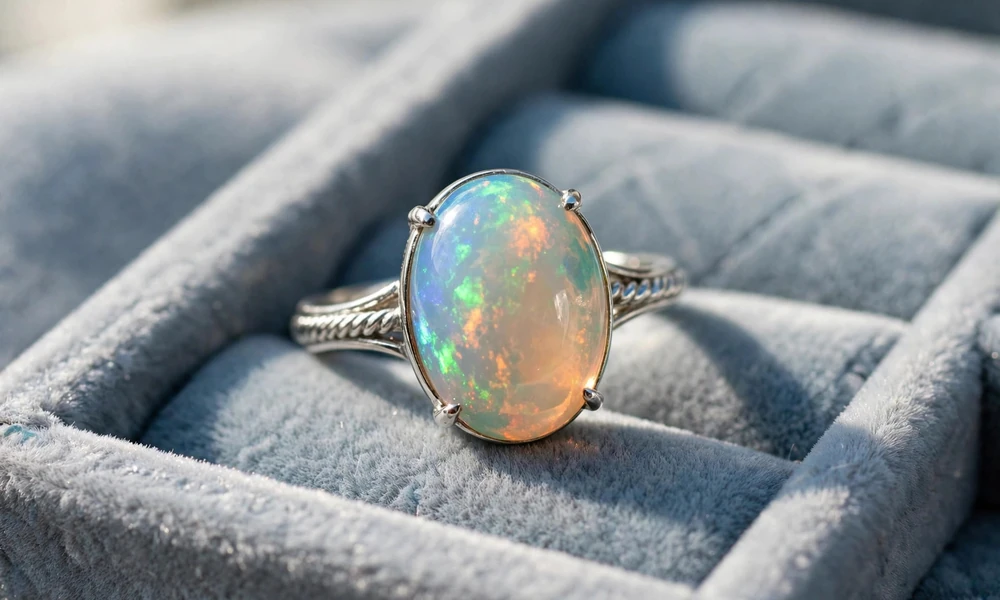
Look next at the play of colour. The best opals show bright flashes across most of the stone, in more than one colour, and the colour is visible from several angles rather than only one. A stone that is bright from the front and dead from the side is less satisfying in wear. Red and orange flashes are the rarest and usually the most expensive, while blue and green are the most common. Our guide to opal necklaces explains the same colour rules, because the stone behaves the same way whatever the setting.
Finally, look at the setting and the metal. Yellow gold warms a white opal and suits vintage styles. White gold and platinum keep the focus on the stone and suit a modern look. Rose gold flatters the pink and orange flashes in many opals. Check that the stone sits level in its setting, that the bezel or prongs are even, and that the band is thick enough to hold its shape. A thin band on a daily ring will bend, and a bent band can loosen the stone.
The 9 best opal rings of 2027
Tiffany & Co. White Opal Solitaire
What we like: A classic white opal in a clean platinum solitaire setting, with bright green and blue flashes and a low profile that suits daily wear. What to consider: Premium price, and white opal is quieter than black opal, so it suits people who want subtle colour rather than drama. Stone: Australian white opal. Setting: Platinum bezel solitaire. Best For: Everyday elegance. Price Range: Premium.
Cartier Black Opal Ring
What we like: A vivid Australian black opal with red, green, and blue flashes, set in yellow gold with a slim band that keeps the focus on the stone. What to consider: Black opal is the most expensive opal type, and the stone needs gentle care. Stone: Australian black opal. Setting: Yellow gold bezel. Best For: Statement occasions. Price Range: Premium.
David Yurman Opal Cable Ring
What we like: A white opal cabochon in the signature cable setting, with a sculptural band that feels modern and substantial on the hand. What to consider: The cable detail adds weight, and the stone sits slightly proud, so it is better as a regular-wear ring than a hard-wearing daily ring. Stone: Australian white opal. Setting: Sterling silver and 18k gold cable bezel. Best For: Modern everyday style. Price Range: High.
Mejuri Opal Signet Ring
What we like: A small, affordable white opal in a clean gold signet setting, easy to wear alone or stacked with other rings. What to consider: The stone is small, so the colour play is subtle rather than dramatic, and the gold is vermeil, so it needs gentle care. Stone: Australian white opal. Setting: Gold vermeil signet. Best For: Everyday stacking. Price Range: Affordable.
Monica Vinader Opal Cocktail Ring
What we like: A generous Ethiopian opal in a gold vermeil cocktail setting, with bright flashes and a bold, modern silhouette. What to consider: Ethiopian opal is porous, so it must be kept dry and away from oils and perfumes. Stone: Ethiopian opal. Setting: Gold vermeil bezel. Best For: Evenings and events. Price Range: Mid-range.
If you want maximum colour for the price, Ethiopian opal is hard to beat. Treat it as an occasion ring, keep it dry, and it will reward you with some of the brightest flashes in this list.
Missoma Boulder Opal Ring
What we like: A boulder opal with natural ironstone veining, so every ring is genuinely one of a kind, set in gold vermeil with a slim band. What to consider: The stone is irregular by nature, so it suits people who like organic shapes rather than perfect symmetry. Stone: Australian boulder opal. Setting: Gold vermeil bezel. Best For: Unique, earthy style. Price Range: Mid-range.
Maria Black Opal Sculptural Ring
What we like: A sculptural, architectural setting with a white opal cabochon, modern and distinctive without being unwearable. What to consider: The sculptural band can catch on knitwear, and the stone is best kept for regular rather than rough daily wear. Stone: Australian white opal. Setting: Sterling silver sculptural bezel. Best For: Contemporary style. Price Range: Mid-range.
Astrid & Miyu Opal Stacking Ring
What we like: A slim, delicate white opal ring in gold vermeil, designed for stacking and very easy to wear every day. What to consider: The stone is small and the band is slim, so it is best worn with other rings rather than alone. Stone: Australian white opal. Setting: Gold vermeil bezel. Best For: Stacking and gifting. Price Range: Affordable.
A sensible, affordable choice, especially as a first opal ring or a gift. It is gentle enough for most people to wear daily, and it layers well with plain gold bands.
Thomas Sabo Opal Charm Ring
What we like: A playful opal ring with a charm-inspired design, bright colour play, and a price that makes it easy to try opal without a big commitment. What to consider: The design is more decorative than classic, so it suits casual and creative styling best. Stone: Ethiopian opal. Setting: Sterling silver bezel. Best For: Casual, playful wear. Price Range: Affordable.
A fun, low-risk way to wear opal. Keep it dry, as with all Ethiopian opal, and it will give you bright colour at a friendly price.
Which opal ring is right for you
For daily wear, choose a white opal or boulder opal in a bezel setting with a low profile. White opal is the most forgiving in everyday light, and boulder opal has a natural ironstone backing that adds toughness. A bezel protects the edge of the stone, which is where most chips start, and a low profile means the ring is less likely to catch on clothing or knock against hard surfaces.
For a statement ring, black opal is the clearest choice. Its dark body makes the play of colour look brighter and more vivid than any other opal type, and it suits evening wear and special occasions particularly well. Expect to pay more, and expect to treat it gently. A black opal ring is a piece to wear with intention, not to wear while gardening or at the gym.
For a first opal ring on a smaller budget, an Ethiopian opal ring or a small white opal signet is the sensible start. Ethiopian opal gives you the brightest colour for the price, but it must be kept dry, because it can absorb water and oils and change appearance. A small white opal signet is tougher and more forgiving, and it will show you whether you love wearing opal before you spend more. A ring guide such as our engagement ring guide is a useful frame here, because the same setting rules apply, and a ring you wear every day needs a tougher stone and a more protective mount than a ring you wear occasionally.
The caveats that matter
Opal is beautiful, but it is not a hard stone, and it is not a stone you can treat like a diamond. It will scratch, it can crack, and it needs care that a sapphire or a ruby does not. It can also be imitated. Glass, plastic, and synthetic opal are all sold, and doublets and triplets are real opal layered on a backing, which is legitimate when it is disclosed and priced accordingly, but misleading when it is not.
| Detail | What is known |
|---|---|
| Hardness | 5.5 to 6.5 on the Mohs scale, softer than sapphire, ruby, and diamond |
| Best opal for daily wear | White opal or boulder opal in a low bezel setting |
| Best opal for colour | Black opal, with the brightest play of colour against a dark body |
| Opal to keep dry | Ethiopian opal, which is porous and can absorb water and oils |
| What to avoid | Ultrasonic cleaners, steam cleaners, harsh chemicals, and long soaks |
| Doublets and triplets | Real opal layered on a backing, legitimate only when disclosed and priced as layered |
| Cleaning | Soft cloth and lukewarm water only, then dry gently and store separately |
| What it does not do | It is not an investment stone and has no proven healing properties |
If you are buying an opal ring as an engagement ring, think carefully. Opal can work for an engagement ring if the wearer understands the care it needs and is happy to wear it gently, but it will not survive the same rough treatment as a diamond or sapphire. Many people choose opal for a right-hand ring, a dress ring, or an anniversary ring instead, where it can be worn with more care. Our guide to opal bracelets covers the same care rules, because the stone is just as soft on the wrist as it is on the finger.
Checklist: choosing an opal ring honestly
Use these checks before you buy, and again after two weeks of wear.
- Check the type and origin: Australian white, black, boulder, or Ethiopian opal, named clearly, not just “opal”.
- Check the play of colour in daylight: bright flashes in more than one colour, visible from several angles.
- Check the setting: a bezel protects the stone far better than tall prongs, and a low profile suits daily wear.
- Check for doublets and triplets: ask directly, and pay a layered price if the stone is layered.
- Check the band: thick enough to hold its shape, with the stone sitting level in its mount.
- Check the care rules: no ultrasonic or steam cleaning, no harsh chemicals, and store the ring separately in a soft pouch.
Frequently asked questions
Can I wear an opal ring every day?
Yes, if you choose the right stone and setting. A white opal or boulder opal in a low bezel setting can be worn daily, but you should take it off for gardening, cleaning, sport, and the gym. Opal is soft, so rough treatment will scratch and chip it.
Is black opal better than white opal?
Black opal shows brighter play of colour because of its dark body, and it is rarer and more expensive. White opal is more affordable and more subtle, and it suits daily wear better. Neither is better in absolute terms. Choose the one whose look you prefer and whose price you are comfortable with.
What is the difference between a doublet and a triplet?
A doublet is a thin slice of opal glued to a dark backing, which makes the colour look brighter. A triplet adds a clear glass or quartz dome on top. Both are real opal, but they are layered products and should be priced far below a solid opal. Always ask, and never pay a solid-opal price for a layered stone.
Can opal rings get wet?
Solid Australian opal can handle brief contact with water, but it should not be soaked, and it should never go in a hot tub or a swimming pool. Ethiopian opal is porous and can absorb water and change appearance, so keep it dry. Always dry an opal ring gently after washing your hands.
How do I clean an opal ring?
Use a soft, dry cloth, or lukewarm water with a drop of mild soap, then dry it gently. Never use an ultrasonic cleaner, a steam cleaner, or a chemical jewellery dip. Store the ring separately in a soft pouch so it does not scratch against harder stones.
Is opal a good engagement ring stone?
It can be, for someone who loves opal and understands its care needs, but it is not a hard-wearing choice. A diamond or sapphire will survive rough daily wear far better. Many people choose opal for a dress ring or an anniversary ring instead, where it can be worn more gently.
The bottom line
The best opal ring in 2027 is not the most expensive or the most dramatic. It is the one whose type, setting, and care needs match the way you actually wear rings. For daily wear, a white opal or boulder opal in a low bezel setting is the honest choice. For a statement, a black opal in yellow gold is hard to beat. For a first opal ring, a small white opal signet or an Ethiopian opal cocktail ring gives you the colour without the commitment.
Choose one ring, ask exactly what kind of opal it is, check the colour in daylight, and judge it on how it looks on your hand, not on how bright it looks under shop lights. That is the honest way to buy opal, and it is how you end up with a ring you will still love in five years.