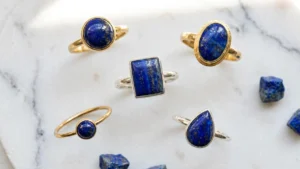
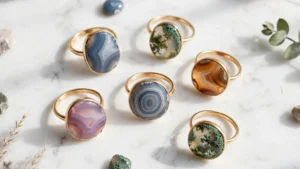
Peridot is the green stone that looks like summer. It is a fresh, olive-to-lime green that glows in daylight, flatters warm skin tones, and costs far less than an emerald of the same size. That combination makes peridot rings an easy first gemstone ring, and a practical one for everyday wear if it is set well. The problem is not finding a peridot ring. It is finding one whose colour is vivid rather than muddy, whose stone is large enough to show its colour, and whose setting protects a stone that is softer than most people expect.
That is why this guide is organised by colour and durability, not just by price. A vivid green peridot with no brown cast is a different stone, in practical terms, from a pale yellow-green one, and a ring in a protective bezel setting will outlast a high claw setting by years. Price is a poor guide on its own. Some of the most attractive peridot rings are mid-priced, and some of the most expensive are the hardest to wear every day.
Below are nine peridot rings worth considering in 2027, from a classic solitaire to a bold cocktail ring and a simple stacking band. Each one is described by what it is good at, what to watch for, and who it suits best, so you can choose with your hand in mind, not just a bestseller list.
Key takeaways
- Peridot is the gem variety of olivine, green from iron, ranging from olive to vivid lime green.
- At Mohs 6.5 to 7, peridot is softer than sapphire or diamond, so it needs a protective setting for daily wear.
- The best colour is a vivid green with no brown cast; large stones are relatively affordable because peridot grows in large crystals.
- Peridot is sensitive to acids and should never go in an ultrasonic or steam cleaner.
- Peridot has no proven healing properties, and a peridot ring is not an investment stone, however much a seller suggests otherwise.
What peridot actually is
Peridot is the gem-quality variety of olivine, a mineral that forms deep in the earth and is also found in meteorites. Its green colour comes from iron, and it ranges from a yellowish olive green to a vivid lime green. Unlike most green stones, peridot is always green: it is coloured by its own chemistry rather than by trace impurities, so the colour is never faked by a different mineral.
What matters most for a ring is that peridot is softer and more brittle than most people expect. At Mohs 6.5 to 7 it can be scratched by everyday contact with harder materials, and it is sensitive to sudden temperature changes and to acids, including household cleaners. That makes peridot one of the less forgiving coloured stones for a ring, and the reason a protective setting matters more here than it does for sapphire or citrine.
The honest complication is colour. Peridot’s best colour is a vivid, slightly yellowish green with no brown cast, and the finest stones come from Pakistan and Myanmar. Stones with a brown or grey cast are common and much cheaper, and they can look muddy indoors. Glass imitations are also common at the cheap end, and synthetic peridot exists too, so a very large, very cheap stone deserves a second look.
How we chose these rings and what to look for
Look first at the colour. Hold the ring in daylight, not under shop lighting, and ask whether the green is vivid and clean. A good peridot glows, with a fresh lime-green light that is easy to see across a room. Brown or grey casts dull that glow, and very pale stones can look washed out against the skin. The best colour for most people sits in the middle: a clear, vivid green that is neither too yellow nor too dark.

Look next at the size and the setting. Peridot grows in large crystals, so a large stone is affordable, and a ring with a stone of one carat or more shows the colour properly. A bezel or halo setting protects the stone best and suits daily wear, while a high claw setting leaves it exposed to knocks. Our guide to peridot necklaces covers the same colour rules in more detail, and much of it applies to rings too.
Finally, look at the metal and the price. Peridot pairs well with yellow gold, which warms the green, and with white gold or platinum, which makes the colour look cleaner and cooler. A 14-karat gold band is harder and better for daily wear than 18-karat. If a ring is priced like an emerald, ask what you are paying for, because the stone itself is affordable and the value should sit in the design and the craftsmanship.
The 9 best peridot rings of 2027
Tiffany & Co. Peridot Solitaire Ring
What we like: A clean, classic solitaire with a well-cut vivid green peridot in a polished band, from a house with a long record of consistent stone quality and finishing.
What to consider: Premium price for a stone that is affordable elsewhere, and the high claw setting needs care in daily wear. Stone: Vivid green peridot, oval cut. Setting: Four-prong solitaire. Best for: A first gemstone ring or an understated August birthstone ring. Price range: Premium.
This is the ring other peridot solitaires are measured against. It is not the cheapest, and it is not the most adventurous, but for a clean, well-made classic that will still look right in ten years, it remains a strong first choice.
Cartier Peridot Cocktail Ring
What we like: A bold, architectural cocktail ring with a large, vivid green peridot, set low enough to wear comfortably despite its size.
What to consider: A statement piece rather than an everyday ring, and the large stone makes it a poor choice for hands-on work. Stone: Vivid green peridot, cushion cut. Setting: Bezel with pavé shoulders. Best for: Evening wear and special occasions. Price range: Premium.
A practical way to wear a large peridot without worrying about it. The bezel setting protects the stone, and the low profile means it does not catch on everything you touch.
David Yurman Peridot Cable Ring
What we like: A signature cable band with a fresh green peridot, comfortable to wear and easy to pair with other rings in the same collection.
What to consider: The cable detail collects soap and lotion and needs regular cleaning, and the stone is on the paler side. Stone: Green peridot, oval cut. Setting: Cable band with four prongs. Best for: Everyday wear and stacking. Price range: High.
For people who want a peridot ring that reads as jewellery rather than as a gemstone showcase, this is an easy, wearable choice. The cable band is the design, and the peridot adds a fresh touch of colour.
Mejuri Peridot Dome Ring
What we like: A smooth, modern dome ring with a vivid green peridot, at a price that makes it an easy first buy, in solid gold rather than plated.
What to consider: A smaller stone than the luxury houses offer, and the dome shape can feel bulky on smaller fingers. Stone: Vivid green peridot, round cut. Setting: Dome bezel. Best for: A first peridot ring or a gift. Price range: Mid-range.
This is the sensible entry point. It is well made, honestly priced for the stone, and the bezel setting means it can be worn every day without worry.
Monica Vinader Peridot Signet Ring
What we like: A modern signet with a flat-cut peridot, comfortable, versatile, and easy to wear with both gold and silver jewellery.
What to consider: The flat cut shows less sparkle than a faceted stone, and the vermeil version needs gentle care. Stone: Green peridot, flat cut. Setting: Signet bezel. Best for: Everyday wear and layering. Price range: Mid-range.
A good choice if you want a peridot ring that works with everything you already own. The signet shape is current without being tied to one season, and the flat stone is hard to damage.
Missoma Peridot Stacking Ring
What we like: A slim, delicate stacking ring with a small vivid green peridot, designed to sit neatly alongside other bands.
What to consider: A small stone that reads as an accent rather than a centrepiece, and the thin band can bend if worn alone every day. Stone: Vivid green peridot, round cut. Setting: Four-prong stacking band. Best for: Stacking and layering. Price range: Affordable.
For people who already wear rings and want to add a touch of fresh green, this is the easiest option. It is light, comfortable, and honest about what it is.
Maria Black Peridot Sculptural Ring
What we like: A sculptural, architectural ring with a vivid green peridot, for people who want a peridot ring that looks like nothing else in the drawer.
What to consider: A bold design that suits some hands and not others, and the sculptural band can feel unusual at first. Stone: Vivid green peridot, freeform cut. Setting: Sculptural bezel. Best for: Making a statement. Price range: Mid-range.
This is the ring for someone who finds classic solitaires boring. The stone is genuinely good, the design is distinctive, and it is still comfortable enough to wear all day.
Astrid & Miyu Peridot Halo Ring
What we like: A halo ring with a vivid green peridot surrounded by small white stones, which makes the centre stone look larger and brighter than it is.
What to consider: The halo adds maintenance, since small stones need checking, and the ring is dressier than an everyday band. Stone: Vivid green peridot, oval cut. Setting: Halo with pavé band. Best for: Engagement rings and occasions. Price range: Mid-range.
A smart way to get more presence from a modest stone. The halo does the work, and the peridot supplies the colour. It is a good choice for an August birthstone ring on a sensible budget.
Thomas Sabo Peridot Charm Ring
What we like: A playful charm-style ring with a bright green peridot, affordable, and easy to wear with casual clothes.
What to consider: A fashion ring rather than a fine jewellery piece, and the plated versions will wear over time. Stone: Green peridot, round cut. Setting: Charm bezel. Best for: Casual wear and gifting. Price range: Affordable.
For a first peridot ring, or a gift where you do not know the recipient’s taste well, this is a low-risk choice. It is cheerful, well priced, and easy to wear.
Which peridot ring is right for you
For everyday wear, choose a bezel or halo setting in 14-karat gold. The stone is protected, the band is hard enough to hold its shape, and the ring will not catch on clothing. A solitaire or a dome ring is the safest shape, and a vivid green stone suits most skin tones better than a very pale or brownish one.
For an August birthstone ring, peridot is the natural choice, and a larger stone is affordable here in a way it is not with emerald or sapphire. A halo setting makes the most of that, and a matching peridot bracelet is an easy way to build a set.
For evening wear, go bold. A large cushion-cut or freeform peridot in a cocktail ring is where the stone looks its best, because the size lets the colour show properly. Keep the metal simple, yellow gold or plain white gold, and let the stone do the work.
The caveats that matter
Peridot is beautiful but delicate for a ring stone. It can scratch if it is stored loose with harder stones such as diamond or sapphire, and it can chip if it takes a hard knock on a corner. It is sensitive to acids, so keep it away from household cleaners, vinegar and citrus, and it should never go in an ultrasonic or steam cleaner. A simple rule covers most of this: store the ring in its own pouch, clean it with warm soapy water and a soft brush, and take it off for heavy work, cleaning and gardening.
| Detail | What is known |
|---|---|
| What it is | Gem variety of olivine, green from iron, always naturally green |
| Hardness | Mohs 6.5 to 7, softer than sapphire or diamond, somewhat brittle |
| Best colour | Vivid green with no brown cast; large stones are relatively affordable |
| Treatment | Usually untreated; synthetic peridot and glass imitations exist |
| Imitations | Glass is common at the cheap end; look for round bubbles and too-even colour |
| Best settings | Bezel and halo protect the stone; high claws leave it exposed |
| Cleaning | Warm soapy water and a soft brush only; never ultrasonic or steam, avoid acids |
| What it does not do | It has no proven healing properties and is not an investment stone |
If you are buying a ring with a very large peridot at a low price, ask for a certificate from an independent gemmological laboratory. A reputable seller will provide one, and it is the only way to be sure the stone is what the label claims. That check matters more than the brand name on the box.
Checklist: choosing a peridot ring honestly
Use these checks before you buy, and again when the ring arrives.
- Check the colour in daylight: vivid green with no brown or grey cast.
- Check the size: a stone of one carat or more shows the colour properly.
- Check the setting: bezel or halo for daily wear, and prongs that feel firm, not loose.
- Check the stone: ask whether it is natural, synthetic or glass, and expect the price to reflect it.
- Check the metal: 14-karat gold is harder and better for daily wear than 18-karat.
- Check the fit: try the ring on in the afternoon, when fingers are at their largest, and check it still fits comfortably.
Frequently asked questions
Is peridot durable enough for an engagement ring?
It can be, with care. At Mohs 6.5 to 7, peridot is softer than sapphire or diamond, and it is somewhat brittle, so a bezel or halo setting is important. If the ring will be worn every day for years, a harder stone is the safer choice, but for occasional wear or a second ring, peridot is perfectly practical.
What is the best colour of peridot?
A vivid, slightly yellowish green with no brown cast. The finest stones are a rich lime green, often from Pakistan or Myanmar. Stones with a brown or grey cast are common and much cheaper, and they can look muddy indoors.
Is peridot the August birthstone?
Yes. Peridot is the traditional birthstone for August, which makes peridot rings a popular birthday gift. It is also sometimes given for a sixteenth wedding anniversary.
Can peridot go in an ultrasonic cleaner?
No. Peridot is sensitive to vibration and heat, and ultrasonic and steam cleaners can damage it. Clean it only with warm soapy water and a soft brush, and take it off before using household cleaners.
How do I tell peridot from glass?
Glass imitations often contain round air bubbles, feel warmer to the touch than a real stone, and have a colour that is too even and too perfect. A real peridot feels cool at first touch and usually shows tiny natural inclusions. When in doubt, ask a jeweller to test it. A guide to statement necklaces also covers how to judge a bold gemstone piece without overpaying.
Is peridot a good investment?
No. Peridot is affordable and widely available, and it does not hold resale value the way diamond or fine sapphire can. Buy a peridot ring because you love the colour and the design, not because you expect it to appreciate.
The bottom line
The best peridot ring in 2027 is not the most expensive or the largest. It is the one with a clean, vivid green colour, a well-cut stone, and a setting that protects a softer stone. For daily wear, a bezel-set solitaire or dome ring in 14-karat gold is the honest choice. For an occasion, a bold cocktail ring lets the colour show properly.
Choose one ring, check the colour in daylight, ask whether the stone is natural, and judge it on how it looks on your hand, not on how it looks in a photograph. That is the honest way to buy a peridot ring, and it is how you end up with one you actually wear.