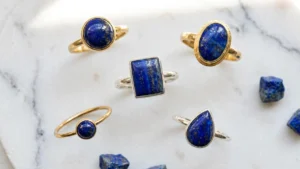
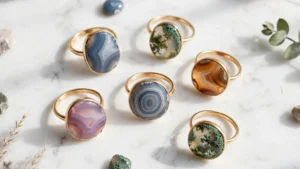
Agate rings are the quiet overachievers of the jewellery box. They cost far less than a sapphire or an emerald, they come in more colours than almost any other stone, and they suit everyday wear in a way that softer gems simply do not. The problem is not finding an agate ring. It is knowing what you are actually buying, because the vivid blue, pink and purple stones that fill shop windows are rarely the colour nature made, and the price on the tag tells you almost nothing about the quality of the stone inside the setting.
That is why this guide is organised around the stone first and the brand second. Agate is a banded form of chalcedony quartz, hard enough for daily wear at 6.5 to 7 on the Mohs scale, and the bands are its fingerprint. A natural agate is usually grey, white, brown or softly banded, while the bright colours most people recognise are dyed, which is standard practice in the trade but should always be disclosed.
Below are nine agate rings worth considering in 2027, from a classic solitaire to bold cocktail rings and easy stacking bands. Each one is described by what it does well, what to watch for, and who it suits best, so you can choose with your eyes open rather than being dazzled by colour alone.
Key takeaways
- Agate is banded chalcedony quartz, hard enough at Mohs 6.5 to 7 for everyday ring wear, and it is one of the most affordable genuine gemstones.
- Most vivid blue, pink and purple agate is dyed, which is standard practice, but the treatment should be disclosed and it should not command a premium price.
- Natural agate is usually grey, white, brown or softly banded, so a strongly coloured stone at a low price is almost certainly dyed rather than rare.
- Bezel and halo settings protect agate best, and it should never go in an ultrasonic or steam cleaner.
- Agate has no proven healing properties and is not an investment stone, so buy it for how it looks and how it wears, not for what it promises.
What agate actually is for rings
Agate is a variety of chalcedony, which is itself a form of quartz. It forms in layers inside volcanic rock, and those layers are what give it its bands. Cut across the bands, the stone shows concentric rings like a tree trunk. Cut along them, it shows soft, flowing stripes. No two stones are alike, which is part of the appeal, and it is also why a good agate ring feels personal in a way a mass-produced stone cannot.
At 6.5 to 7 on the Mohs hardness scale, agate is hard enough for a ring you wear every day, though it is not as hard as sapphire or diamond. It will resist most scratches from daily life, but it can chip if it is knocked hard against a door frame or dropped on a tiled floor. A protective setting matters more than it does for a harder stone, and that is a practical point rather than a warning. A bezel that wraps the stone in metal, or a halo of small diamonds or metal that shields the edges, makes a real difference to how long the ring stays looking good.
The colour question is the one that matters most. Natural agate is usually white, grey, brown, black or softly banded in muted tones. The bright blues, pinks, purples and greens that dominate the market are dyed, and dyeing is a long-established, accepted treatment for agate. It is not a flaw in itself, but it should be disclosed by the seller, and it should not be priced as if the colour were natural. A dyed stone can also fade with long exposure to strong sunlight, so a ring you wear every day in summer will keep its colour longer if it is not left on a sunny windowsill.
How we chose these rings and what to look for
Look first at the stone itself. Hold it in good daylight and check the bands. In a good agate the banding is clear and even, the polish is smooth and glassy, and the colour, whether natural or dyed, is consistent across the stone rather than blotchy. A stone with visible pits, dull patches or cracks is a poor choice at any price, because those flaws will only become more obvious with wear.
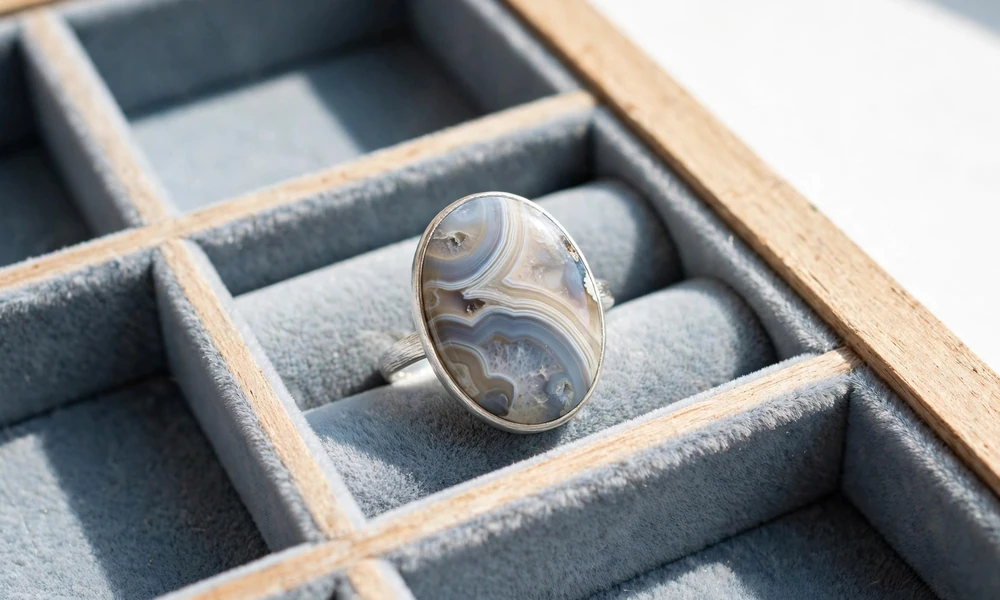
Look next at the setting. A bezel setting wraps the stone in a rim of metal and protects its edges, which is the best choice for an everyday ring. A prong setting shows more of the stone and lets in more light, which suits a cocktail ring you wear occasionally, but it leaves the edges exposed. A halo setting adds a ring of small stones around the agate, which both protects it and makes the centre stone look larger. Our guide to agate bracelets covers the same stone in a gentler setting, which is useful if you want to see how the bands look at a larger scale before choosing a ring.
Finally, look at the metal and the price. Agate is an affordable stone, so most of the cost of a good ring is in the metal and the craftsmanship. Gold vermeil and sterling silver keep the price sensible, while solid gold makes sense if you plan to wear the ring for years. Be suspicious of a ring that costs very little but claims a rare natural colour, and equally suspicious of a ring that costs a great deal for a dyed stone. The stone is the least expensive part of the piece, so the price should reflect the metal and the making, not the colour.
The 9 best agate rings of 2027
Tiffany & Co. Agate Solitaire Ring
What we like: A clean solitaire in a polished setting that lets the stone do the talking, with the brand’s usual attention to metal finishing and a secure, comfortable band. What to consider: Premium price for a stone that is inherently affordable, and the colour range is limited. Stone: Banded agate. Setting: Solitaire, prong. Best For: Everyday elegance. Price Range: Premium.
Cartier Agate Cocktail Ring
What we like: A bold, architectural cocktail ring with a large, well-polished stone and a setting that feels like jewellery rather than an accessory. What to consider: Too large for everyday wear, and the price reflects the house rather than the stone. Stone: Banded agate. Setting: Cocktail, bezel. Best For: Evenings and occasions. Price Range: Luxury.
David Yurman Agate Cable Ring
What we like: The signature cable band gives the ring a distinctive look, the stone is well cut and evenly coloured, and the setting is secure enough for regular wear. What to consider: The cable design is a strong style statement that does not suit everyone, and sizing can be tricky. Stone: Banded agate. Setting: Cable, bezel. Best For: Signature everyday style. Price Range: Premium.
Mejuri Agate Bezel Ring
What we like: A slim, modern bezel ring at a fair price, with a well-polished stone and a comfortable band that suits daily wear. What to consider: The stone is smaller than in a cocktail ring, and the colour range is mostly dyed blues and pinks. Stone: Banded agate. Setting: Bezel. Best For: Daily wear on a budget. Price Range: Affordable.
Monica Vinader Agate Signet Ring
What we like: A contemporary signet shape with a flat, polished agate face, a solid feel on the finger, and a design that suits both men and women. What to consider: The flat face shows scratches more readily than a domed stone, and the signet shape is a bold look. Stone: Banded agate. Setting: Signet, bezel. Best For: Bold everyday style. Price Range: Mid-range.
Missoma Agate Stacking Ring
What we like: A slim stacking band with a small, bright agate that layers well with other rings, at a price that makes collecting easy. What to consider: The stone is small and the colour is dyed, so it is a fashion piece rather than a fine jewellery investment. Stone: Banded agate. Setting: Stacking, bezel. Best For: Layering and colour. Price Range: Affordable.
Maria Black Agate Sculptural Ring
What we like: A sculptural, contemporary design that treats the agate as part of the metalwork rather than a stone dropped into a setting, with a distinctive, editorial feel. What to consider: The sculptural shape is not comfortable for everyone, and it is a fashion-forward piece rather than a classic. Stone: Banded agate. Setting: Sculptural, bezel. Best For: Fashion-forward styling. Price Range: Mid-range.
Astrid & Miyu Agate Halo Ring
What we like: A halo of small stones around the agate makes the centre stone look larger and brighter, while protecting its edges, at a very reasonable price. What to consider: The halo adds sparkle that can distract from the agate itself, and the setting needs regular cleaning. Stone: Banded agate. Setting: Halo. Best For: Sparkle on a budget. Price Range: Affordable.
Thomas Sabo Agate Charm Ring
What we like: A playful charm-style ring with a bright agate, a comfortable band, and a price that makes it an easy gift or a first coloured-stone ring. What to consider: The colour is dyed and the design is casual, so it is not a fine jewellery piece. Stone: Banded agate. Setting: Charm, bezel. Best For: Gifting and casual wear. Price Range: Affordable.
Which agate ring is right for you
Start with how you will wear it. If the ring is for every day, choose a bezel setting in a slim band, in a colour you will not tire of. Grey, white and black agate are the most versatile, while a dyed blue or pink is a bolder choice that suits occasional wear better. If the ring is for evenings, a cocktail ring with a large stone and a halo or bezel setting makes more sense, because it is designed to be seen rather than to survive a working day.
Think about the colour honestly. Natural agate is usually muted, so if you love a vivid blue or purple, buy it knowing it is dyed and enjoy it for what it is. There is nothing wrong with a dyed stone, provided you paid a dyed-stone price. What matters is that the seller disclosed it, the colour is even, and the polish is good. A well-dyed agate in a good setting is a better buy than a poorly cut natural stone at twice the price. Our guide to agate necklaces shows the same stone at a larger scale, which can help you decide which colours you genuinely like before committing to a ring.
Consider the metal too. Sterling silver keeps the price down and suits agate’s relaxed character, while gold vermeil adds warmth without the cost of solid gold. Solid gold makes sense if you plan to wear the ring for years, because it will not wear through the way vermeil eventually can. Whatever you choose, check that the band is comfortable, that the stone sits securely, and that the ring is sized correctly, because a ring that spins or pinches will spend its life in a drawer.
The caveats that matter
Agate is a durable stone, but it is not indestructible. It can chip if it is knocked hard, it can scratch against harder stones such as diamond or sapphire, and dyed colours can fade in strong sunlight. None of that makes it a bad choice for a ring, but it does mean you should treat it with the same care you would give any coloured gemstone. Keep it in a soft pouch, take it off for heavy work, and clean it gently with warm water and mild soap.
| Detail | What is known |
|---|---|
| What it is | Banded chalcedony quartz, formed in layers inside volcanic rock |
| Hardness | 6.5 to 7 on the Mohs scale, hard enough for everyday ring wear |
| Natural colours | Usually white, grey, brown or black, with soft banding |
| Dyed colours | Bright blue, pink, purple and green are usually dyed, which is standard but must be disclosed |
| Best settings | Bezel and halo settings protect the stone best for daily wear |
| Cleaning | Warm water and mild soap only, never an ultrasonic or steam cleaner |
| What to avoid | Hard knocks, strong sunlight for dyed stones, and contact with harder gems |
| What it is not | It has no proven healing properties and is not an investment stone |
If you are buying a ring as a gift, check the return policy before you buy, because ring sizing is the most common reason a gift goes back. A seller who offers free resizing or exchanges is worth more than a small discount, and a ring that fits properly is a ring that gets worn.
Checklist: choosing an agate ring honestly
Use these checks before you buy, and again when the ring arrives.
- Check the stone in daylight: the banding should be clear and even, the polish smooth and glassy, and the colour consistent across the stone.
- Check the colour honestly: vivid blue, pink or purple is almost certainly dyed, so make sure the seller disclosed it and the price reflects it.
- Check the setting: a bezel or halo protects the stone best, while prongs leave the edges exposed.
- Check the metal: sterling silver and gold vermeil suit agate well, while solid gold makes sense for a ring you will wear for years.
- Check the fit: the ring should sit comfortably, not spin on the finger, and not pinch when your hands are warm.
- Check the care: warm water and mild soap only, stored in a soft pouch away from harder stones, and never in an ultrasonic cleaner.
Frequently asked questions
Is agate durable enough for an everyday ring?
Yes, for most people. At 6.5 to 7 on the Mohs scale it resists everyday scratches well, and a bezel setting protects it further. It can chip if knocked hard against a door frame or dropped on tiles, so take it off for heavy work, but for normal daily wear it is a practical choice.
Is most coloured agate dyed?
Yes. Natural agate is usually white, grey, brown or black with soft banding. The bright blues, pinks, purples and greens are almost always dyed, which is a standard, long-established treatment. It should be disclosed by the seller and it should not command a premium price.
Can agate rings get wet?
Yes, briefly. Warm water and mild soap are the right way to clean an agate ring. Avoid hot water, harsh chemicals, ultrasonic cleaners and steam cleaners, all of which can damage the stone or its setting, and dry the ring properly before putting it away.
Will a dyed agate ring fade?
It can, with long exposure to strong sunlight. The dye is stable under normal wear, but leaving a dyed ring on a sunny windowsill or wearing it every day through a hot summer can fade the colour over time. Store it away from direct sun when you are not wearing it.
Is agate a good choice for an engagement ring?
It can be, if you love the stone and understand what it is. Agate is affordable, beautiful and durable enough for daily wear, but it is softer than sapphire or diamond and it is not a traditional engagement stone. If you are considering it, our guide to engagement rings explains how it compares with harder, more traditional choices.
How do I tell real agate from glass?
Real agate feels cool to the touch and stays cool for a moment, while glass warms up quickly. Agate also has natural banding that is never perfectly regular, while glass imitations often have bubbles or perfectly even colour. If you are unsure, buy from a seller who discloses the stone and the treatment in writing.
The bottom line
The best agate ring in 2027 is not the brightest or the most expensive. It is the one with a well-cut stone, a setting that protects it, and a colour you will still love in a year. For everyday wear, a slim bezel ring in a natural or softly dyed colour is the smartest choice. For occasions, a cocktail ring with a large, well-polished stone makes a confident statement without the price of a precious gem.
Choose the stone in daylight, check that any dyeing was disclosed, pick a setting that suits how you will actually wear the ring, and buy it for how it looks on your hand rather than for what it promises. That is the honest way to enjoy one of the most affordable and most characterful stones in jewellery.