Jade is the oldest gemstone in human jewellery, worn for thousands of years in China, Central America, and New Zealand, and it still divides opinion like no other stone. To some it is a symbol of luck, purity, and protection. To others it is a confusing market where two different minerals share one name, treatments are common, and a ring that looks green and glossy may be worth a fortune or almost nothing. Both views are partly right, which is why buying a jade ring needs more care than buying most other gemstones.
That is why this guide starts with the facts. Jade is not one mineral but two: jadeite, the harder and more valuable stone, and nephrite, the tougher and more traditional one. Both can be beautiful, but they are priced very differently, and both are commonly treated or imitated. Knowing which one you are buying, and whether it has been bleached, dyed, or filled with polymer, matters far more than the brand on the box.
Below are nine jade rings worth considering in 2027, from a classic solitaire to sculptural and stacking styles. Each one is described by what it is good at, what to watch for, and who it suits best, so you can choose with your eyes open, not just your heart.
Key takeaways
- Jade is two minerals: jadeite (Mohs 6.5 to 7, prized for vivid imperial green) and nephrite (Mohs 6 to 6.5, tougher and more traditional).
- Grade A jade is natural and untreated; Grade B has been bleached and polymer-filled, and Grade C has been dyed, and both treatments must be disclosed.
- Nephrite is tougher than jadeite because of its fibrous structure, so it suits everyday ring wear better despite being less valuable.
- Colour, translucency, and evenness matter more than size: a small, vivid, even green stone beats a large, cloudy, uneven one.
- Jade has no proven healing properties, it is not an investment stone for most buyers, and glass, serpentine, and dyed agate are common imitations.
What jade actually is
Jade is two different minerals sold under one name. Jadeite is the rarer and more valuable of the two, a pyroxene mineral that can be vivid imperial green, lavender, white, or yellow, and it takes a high polish. Nephrite is the older, more traditional jade, an amphibole mineral with a fibrous, interlocking structure that makes it extremely tough, and it is usually found in greens, whites, and browns. Both are genuine jade, but they are not the same stone, and a seller should always say which one you are buying.
The most important distinction in the jade market is treatment. Grade A jade is natural and untreated, apart from a light wax polish. Grade B jade has been bleached with acid to remove brown staining and then filled with polymer resin to restore its appearance. Grade C jade has been dyed, often a bright green that looks vivid at first and can fade over time. Grade B and C treatments must be disclosed, and they reduce the value sharply. A ring sold without a treatment grade should be treated with suspicion, and a certificate from a reputable laboratory should state the grade plainly.
Jade is also one of the toughest gemstones, particularly nephrite. Its fibrous structure makes it resistant to breaking, which is why jade has been carved into tools and ornaments for thousands of years. That toughness makes it a good ring stone, but it is still not as hard as sapphire or ruby, so it can scratch over time, and dyed or polymer-filled stones need extra care with heat and chemicals.
Jade’s history is part of its appeal. In China, jade has been carved for more than seven thousand years and is associated with purity, protection, and good fortune. In Central America, the Maya and Aztec civilisations valued jade more highly than gold. In New Zealand, Maori carvers work nephrite, known as pounamu, into ornaments and tools. That long history is why jade carries cultural meaning that other stones do not, and why it is often given as a gift for a birthday or a new baby.
How we chose these rings and what to look for
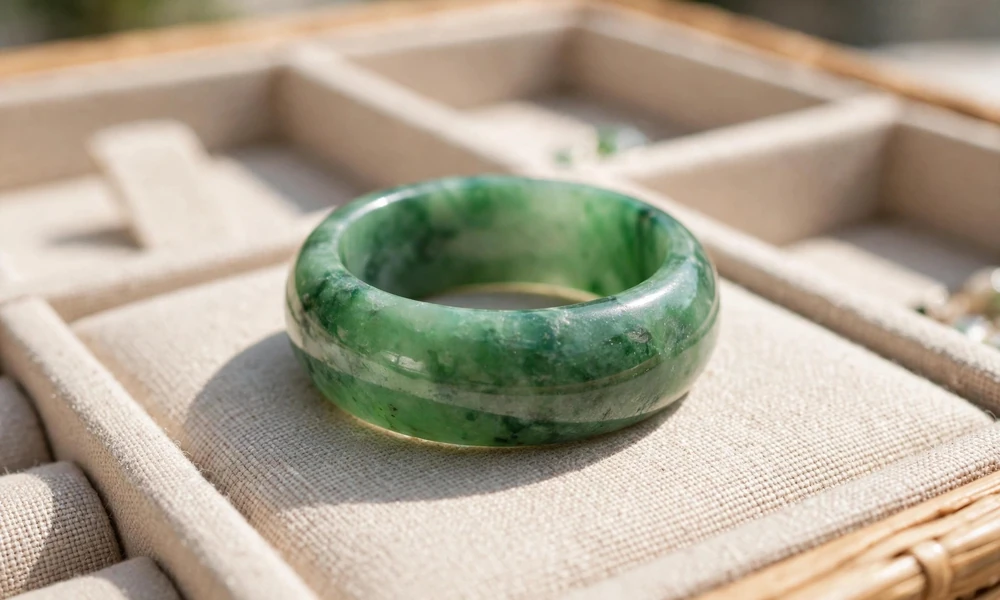
Look first at the colour and translucency. The most prized jadeite is a vivid, even imperial green with a soft glow when light passes through it. Cloudy, uneven, or blotchy stones look dull, and very dark stones can read almost black. For nephrite, look for a rich, even green or a clean white, with a smooth, waxy surface. Hold the stone up to the light: good jade has a gentle translucency, while glass imitations often look too clear or too perfect.
Look next at the treatment grade. Grade A is the only grade that holds its value and its appearance over time. Grade B jade can look good when new, but the polymer filling can yellow or crack with age and heat. Grade C dyed jade can fade, especially in sunlight. Ask for the grade in writing, and buy from a jeweller who offers a laboratory certificate. Our guide to jade necklaces explains the same grading, because the rules are identical wherever jade is set.
Finally, look at the setting and the price. A bezel setting protects the stone and suits jade well, because the stone is often cut as a cabochon with a smooth, domed top. Prices vary enormously: fine imperial green jadeite can cost more per carat than a fine diamond, while good nephrite is far more affordable. If a vivid green jade ring is very cheap, it is almost certainly dyed or glass, and no bargain is worth that disappointment.
The 9 best jade rings of 2027
Tiffany & Co. Jade Solitaire
What we like: A classic solitaire with a clean, even green jadeite, beautifully finished, with a certificate confirming Grade A natural stone. What to consider: Premium price, and jadeite is less tough than nephrite, so the ring needs gentle care. Stone: Natural jadeite, vivid green, Grade A. Setting: Four-prong solitaire in platinum or 18-karat gold. Best For: A special-occasion ring or a statement right-hand ring. Price Range: Premium.
Cartier Jade Ring
What we like: A refined jade ring with an even green stone and Cartier’s precise craftsmanship, set low enough to wear comfortably and safely. What to consider: A high price for the carat weight, and the stone should still be kept away from harsh chemicals. Stone: Natural jadeite, even green, Grade A. Setting: Low bezel or halo in 18-karat gold or platinum. Best For: An elegant everyday ring with heritage craftsmanship. Price Range: Premium.
David Yurman Jade Cable Ring
What we like: A sculptural cable band that gives the ring a distinctive look, with a smooth jade cabochon that sits comfortably and shows off the stone’s waxy lustre. What to consider: The cable design adds weight, and the stone should be cleaned gently. Stone: Natural jade, even green cabochon. Setting: Cable band in sterling silver or 18-karat gold. Best For: Everyday elegance with a designer signature. Price Range: Mid to premium.
Mejuri Jade Bezel Ring
What we like: A modern bezel setting that wraps the stone in gold and protects its edges, at a far more accessible price than the heritage houses, with clear treatment disclosure. What to consider: Smaller stones than the luxury options, and the colour may be less vivid. Stone: Natural jade, medium green, Grade A. Setting: Bezel in 14-karat gold. Best For: A first jade ring or everyday wear. Price Range: Mid-range.
Monica Vinader Jade Signet Ring
What we like: A bold signet shape that suits jade well, because the low, flush setting protects the stone and the wide band suits a larger cabochon. What to consider: A signet is a strong look, so it suits confident styling rather than a delicate stack. Stone: Natural jade, even green cabochon. Setting: Flush signet in 18-karat gold vermeil or solid gold. Best For: A statement ring with built-in protection. Price Range: Mid-range.
Missoma Jade Cocktail Ring
What we like: A generous green stone in a gold cocktail setting that shows off jade’s smooth, waxy lustre, at a price that makes the stone accessible. What to consider: A large stone in a high setting is best saved for evenings and events, not daily wear. Stone: Natural jade, deep green cabochon. Setting: Cocktail setting in gold vermeil. Best For: Evenings, events, and special occasions. Price Range: Affordable to mid-range.
Maria Black Jade Sculptural Ring
What we like: An architectural, sculptural design that treats the jade as part of a modern piece of jewellery rather than a traditional solitaire, with a good, even green stone. What to consider: The sculptural style is distinctive and may not suit a classic jewellery wardrobe. Stone: Natural jade, even green. Setting: Sculptural setting in sterling silver or gold. Best For: A modern, fashion-led ring. Price Range: Mid-range.
Astrid & Miyu Jade Stacking Ring
What we like: A slim stacking ring with a small, bright jade stone that layers well with plain gold bands, making the stone easy to wear every day. What to consider: The stone is small, so the colour is subtle, and stacking rings can rub against each other. Stone: Natural jade, bright green. Setting: Slim band in gold vermeil or solid gold. Best For: Stacking and everyday wear. Price Range: Affordable.
Thomas Sabo Jade Charm Ring
What we like: A playful charm-style ring with a bright green jade accent, good colour for the price, and an easy entry point into the stone. What to consider: A fashion ring rather than a fine jewellery piece, and the stone is small. Stone: Natural jade, bright green. Setting: Charm setting in sterling silver. Best For: A first jade piece or a gift. Price Range: Affordable.
Which jade ring is right for you
If you want a ring to wear every day, nephrite is the tougher and more practical choice, and a bezel setting with a medium-sized cabochon will stand up well to daily life. The Mejuri bezel and the David Yurman cable are the most practical shapes in this guide, because the stone sits low and its edges are protected. A stacking ring also works well for daily wear, because the stone is small and the band is slim.
If you want the finest jade, look for Grade A jadeite in a vivid, even imperial green, and be prepared to pay for it. The Tiffany solitaire and the Cartier ring are the strongest choices here, because their stones are certified Grade A and their colour is even and luminous. Treat them as special-occasion pieces, and have the setting checked once a year.
Colour and evenness should drive the decision more than size. A small stone with vivid, even colour and a soft translucency will look better on the hand than a large, cloudy, uneven one, and it will usually hold its appeal longer. Our guide to engagement rings makes a similar point about coloured stones, because evenness of colour is what the eye notices first.
Metal choice matters too. Yellow gold warms green jade and suits its traditional character, while white gold and platinum give it a cooler, more modern look. Rose gold can work with pale lavender jadeite but tends to fight with deep green stone. A ring you will wear often should also be comfortable: a smooth, rounded band with no sharp edges will sit better on the finger through a long day than a wide, flat one.
The caveats that matter
Jade is a beautiful stone with a confusing market, and the confusion is what most buyers learn too late. Grade B and Grade C treatments are common, and they are not always disclosed by less reputable sellers. Dyed jade can fade, polymer-filled jade can yellow or crack with heat, and both are worth far less than Grade A stone. A laboratory certificate that states the treatment grade is the only reliable protection.
| Detail | What is known |
|---|---|
| What it is | Two minerals: jadeite (harder, more valuable) and nephrite (tougher, more traditional) |
| Hardness | Jadeite Mohs 6.5 to 7; nephrite Mohs 6 to 6.5, but tougher due to its fibrous structure |
| Treatment grades | Grade A is natural; Grade B is bleached and polymer-filled; Grade C is dyed; all must be disclosed |
| Best setting | Bezel, which protects a cabochon stone; low settings suit daily wear |
| Colour | Vivid, even imperial green is most prized; cloudy or blotchy stones look dull |
| Cleaning | Warm water, mild soap, soft cloth only; avoid heat, acids, and harsh chemicals |
| Common imitations | Glass, serpentine, dyed agate, and aventurine quartz |
| What it is not | It has no proven healing properties and is not an investment stone for most buyers |
Jade is often sold with claims about luck, protection, or healing. There is no scientific evidence for any of those claims, and they should not influence what you pay. Buy the stone for its colour, its translucency, and its craftsmanship, and judge it on those terms alone. A certificate from a reputable laboratory is the only reliable proof of what you are buying.
Checklist: choosing a jade ring honestly
Use these checks before you buy, and again before you wear the ring for the first time.
- Check the mineral: ask whether the stone is jadeite or nephrite, because they are priced very differently.
- Check the treatment grade in writing: Grade A only, unless you are knowingly buying Grade B or C at a fair price.
- Check the colour in daylight: it should be vivid and even, not blotchy, cloudy, or almost black.
- Check the translucency: hold the stone up to the light; good jade glows softly, glass looks too clear.
- Check the setting: a bezel protects a cabochon best, and a low setting suits daily wear.
- Check the seller: buy from a reputable jeweller who discloses treatment and offers a laboratory certificate.
Frequently asked questions
Is jadeite or nephrite better for a ring?
It depends on what you value. Jadeite is more valuable and takes a higher polish, while nephrite is tougher and better suited to everyday wear. For a daily ring, nephrite is the more practical choice; for a special piece, fine jadeite is the more prized one.
What does Grade A jade mean?
Grade A means the jade is natural and untreated, apart from a light wax polish. Grade B has been bleached and filled with polymer, and Grade C has been dyed. Only Grade A holds its value and its appearance over time, and the grade should be stated on the certificate.
Can I wear a jade ring every day?
Yes, especially nephrite, which is one of the toughest gemstones. Remove it before harsh chemicals, strong heat, and heavy manual work, and clean it only with warm water and mild soap. Have the setting checked once a year.
How do I know my jade is real?
Real jade feels cool and smooth, has a waxy lustre, and shows gentle translucency when held to the light. Glass imitations are often too clear or too perfect, and dyed stones can show colour concentrated in cracks. A laboratory certificate is the surest check.
Is jade a good investment?
For most buyers, no. Only the finest imperial green jadeite holds significant resale value, and even then the market is specialist and hard to navigate. Buy jade because you love it, not as a financial investment. Our guide to gold jewellery for everyday wear is a useful comparison, because it shows how durability and classic design shape a piece’s long-term value.
Can jade go in an ultrasonic cleaner?
No. Ultrasonic cleaning, steam cleaning, and harsh chemicals can damage jade, especially Grade B polymer-filled stone. Clean it only with warm water, mild soap, and a soft cloth.
The bottom line
The best jade ring in 2027 is the one whose colour and translucency you love, bought as Grade A stone with a laboratory certificate. A vivid, even green stone in a bezel setting, worn with a little care, is a beautiful and durable piece of jewellery with thousands of years of history behind it. The stone’s smooth, waxy glow is genuinely unlike anything else at this price, and that is the honest reason to buy it.
Choose for colour and grade first, setting second, and size third. Avoid dyed and polymer-filled stone, clean it gently, and it will reward you for years. That is the practical way to enjoy one of the oldest gemstones in the world without learning its market the expensive way.