
Jade has been worn for thousands of years, and it still stops people in a room. The deep green of a good jade pendant reads calm and expensive at once, and it goes with almost everything, from a white shirt to a black evening dress. The problem is not finding a jade necklace. It is finding one made from real, well-cut jade, set properly, at a price that matches what you are actually buying.
That is why this guide starts with the stone, not the brand. Jade is two different minerals, nephrite and jadeite, and the difference matters more than the label on the box. A dyed or polymer-filled stone can look beautiful in a photograph and still be a poor buy, while a modest nephrite pendant with a clean cut can be worn every day for decades. Price is a poor guide on its own. Some of the most wearable jade necklaces are mid-priced, and some of the most expensive are the hardest to wear.
Below are nine jade necklaces worth considering in 2027, from a classic jadeite pendant to simple beaded strands for everyday wear. Each one is described by what it is good at, what to watch for, and who it suits best, so you can choose with the stone in mind, not just a bestseller list.
Key takeaways
- Jade is two minerals: nephrite, tougher and more affordable, and jadeite, harder, rarer and more expensive, with the finest green jadeite commanding the highest prices.
- Untreated natural jade is Grade A. Bleached and polymer-filled jade is Grade B, and dyed jade is Grade C, and both treatments should be disclosed before you buy.
- Look for even colour, a smooth polish, and a setting that protects the stone, and buy from a seller who states the jade type and treatment in writing.
- Jade is durable enough for daily wear but it can chip, so avoid hard knocks, ultrasonic cleaners, steam cleaners and harsh chemicals.
- Jade has no proven healing properties, and a necklace is not an investment, so buy the piece you love wearing, not the one you hope will gain value.
What jade actually is
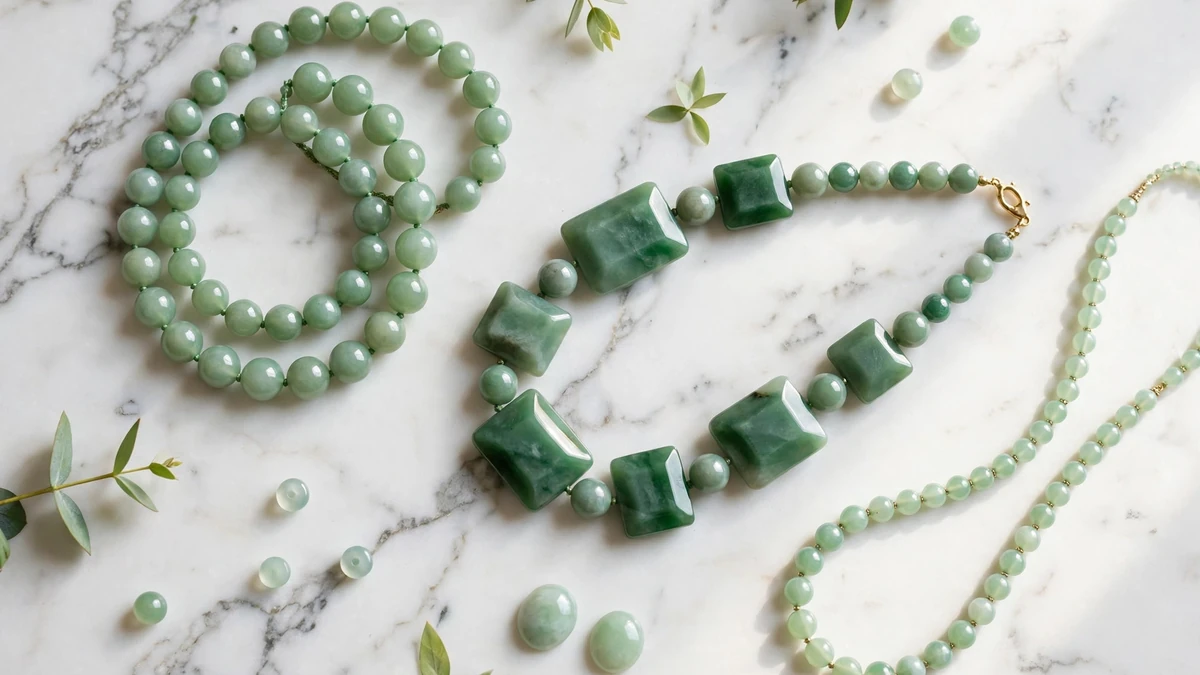
Jade is not one stone. Nephrite is the older, tougher jade, a dense mineral that carvers have used for centuries because it resists breaking. It is usually a softer green, sometimes creamy or spinach-toned, and it takes a warm, waxy polish. Jadeite is the harder, more glassy jade, and the finest green jadeite, often called imperial jade, is the most expensive jade in the world. Most jade necklaces you will meet are nephrite or commercial-grade jadeite, and both are perfectly good choices when the stone is honestly described.
Colour is where most of the confusion lives. A vivid, even emerald green usually means fine jadeite and a high price. A softer, mottled green is more often nephrite, and it can be just as beautiful worn against the skin. White, lavender, yellow and black jade also exist, and each has its own market. What should make you pause is a colour that looks too perfect, too bright, or too uniform for the price, because that is often a sign of dye.
Treatment is the other quiet problem with jade. Grade A means the stone is natural and untreated, apart from a traditional wax polish. Grade B means it has been bleached and filled with polymer to improve clarity and colour, and Grade C means it has been dyed. Both treatments are common and legal when disclosed, but an undisclosed Grade B or C stone sold at a Grade A price is a bad buy, whatever it looks like in the box. A polymer-filled stone can also look cloudy or feel slightly waxy over time, and dyed jade can fade if it is left in strong sunlight, so the grade is not a detail to skip.
How we chose these necklaces and what to look for
Look first at the stone and the disclosure. A good seller names the jade type, nephrite or jadeite, states the grade, and explains the treatment in plain language. If a listing says only “natural jade” with no detail, ask for more before you buy. A certificate from an independent gemmological laboratory is worth having on a more expensive piece, and it should name the stone, the treatment and the weight.
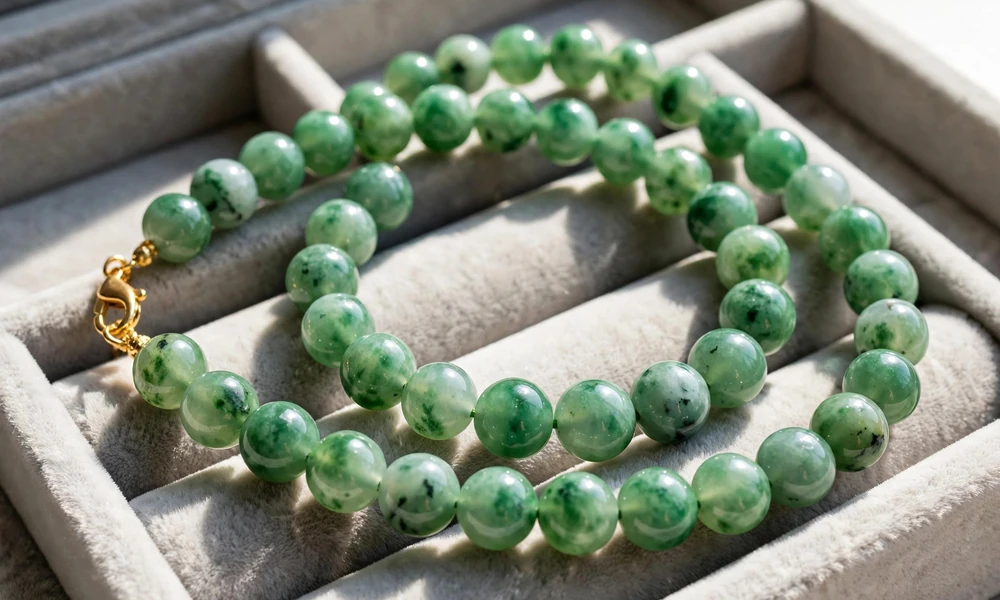
Look next at the cut, the polish and the setting. Jade should feel cool and smooth to the touch, with a polish that reflects light evenly and no dull patches, pits or visible dye pooling in cracks. A bezel or a sturdy prong setting protects the edges, which is where jade chips most easily. A beaded strand should be knotted between beads, so one broken thread does not scatter the whole necklace, and the clasp should feel solid, not flimsy.
Finally, look at the length and the metal. A 16 to 18 inch chain sits at the collarbone and suits a pendant, while a 20 to 24 inch strand suits a beaded necklace worn over a top. Gold brings out the warmth in green jade, and silver suits paler or lavender jade. Our guide to jade bracelets covers the same stone checks in a smaller format, and the same rules apply here, because the stone does not change just because the piece does.
The 9 best jade necklaces of 2027
Tiffany & Co. Jade Pendant
What we like: A clean, polished jade pendant on a fine chain, with the understated design Tiffany does best and a stone chosen for even colour and a smooth finish.
What to consider: Premium price, and the pendant is deliberately simple, so it suits minimal styling rather than a statement look. Stone: Jadeite. Setting: Gold bezel. Best for: Everyday elegance. Price range: Premium.
A quiet, confident piece. It does not shout, and that is the point, it is the jade necklace you reach for when you want the stone to do the talking.
Cartier Jade Pendant
What we like: A refined pendant with Cartier’s precise finishing, a well-matched stone, and a chain that sits flat and comfortably at the collarbone.
What to consider: High price, and the design is classic rather than trend-led. Stone: Jadeite. Setting: Gold bezel. Best for: Special occasions. Price range: Luxury.
This is a piece for a milestone, an anniversary or a significant birthday, and it is built to be worn for decades rather than a season.
David Yurman Jade Pendant
What we like: A sculptural pendant with Yurman’s signature cable detail, a generous stone, and a setting that protects the jade while showing it off.
What to consider: The cable design is distinctive, so it suits people who like the house style. Stone: Nephrite. Setting: Sterling silver and gold cable. Best for: Signature everyday wear. Price range: Premium.
A good middle ground between a fine-jewellery pendant and a fashion piece, with a stone that is sturdy enough for regular wear.
Mejuri Jade Pendant
What we like: A simple, well-priced pendant in solid gold, with a smooth jade stone and a delicate chain that layers easily with other necklaces.
What to consider: A smaller stone than the luxury options, and the design is intentionally minimal. Stone: Nephrite. Setting: Gold bezel. Best for: Daily layering. Price range: Mid-range.
The easiest entry point on this list. It is the pendant to buy if you want real jade in solid gold without a luxury price tag.
Monica Vinader Jade Pendant
What we like: A modern pendant with a clean silhouette, a well-polished stone, and a chain length that works alone or layered.
What to consider: The stone is modest in size, and the style is contemporary rather than traditional. Stone: Nephrite. Setting: Gold vermeil bezel. Best for: Modern everyday wear. Price range: Mid-range.
A good choice if your style is modern and you want jade that fits a working wardrobe rather than a jewellery box.
Missoma Jade Pendant
What we like: A delicate pendant with a smooth jade drop, a fine chain, and a price that makes it easy to try jade for the first time.
What to consider: Gold vermeil rather than solid gold, so it needs gentle care and should be kept away from water and perfume. Stone: Nephrite. Setting: Gold vermeil bezel. Best for: First jade purchase. Price range: Affordable.
The friendliest price on this list, and a sensible way to find out whether you love wearing jade before spending more.
Maria Black Jade Pendant
What we like: An sculptural, design-led pendant with a bold shape and a jade stone chosen for character rather than perfect uniformity.
What to consider: The design is distinctive and modern, so it suits a confident, fashion-forward wardrobe. Stone: Nephrite. Setting: Sterling silver. Best for: Statement styling. Price range: Mid-range.
For anyone who finds classic jade pendants too quiet. This one has a point of view, and it wears like a piece of design, not just a stone.
Astrid & Miyu Jade Pendant
What we like: A small, neat pendant with a polished jade stone, a fine chain, and a price that suits gifting and everyday wear.
What to consider: A petite stone, best worn alone or with one other fine chain. Stone: Nephrite. Setting: Gold vermeil bezel. Best for: Gifting and daily wear. Price range: Affordable.
A sweet, simple pendant, and a good gift, because jade carries a long tradition of being given for good luck and protection.
Thomas Sabo Jade Pendant
What we like: A polished jade pendant with a sturdy chain, a clear stone, and a design that works with both casual and smarter outfits.
What to consider: The style is classic and unfussy, and the stone is nephrite rather than fine jadeite. Stone: Nephrite. Setting: Sterling silver bezel. Best for: Versatile everyday wear. Price range: Mid-range.
A reliable, no-fuss jade necklace. It is the one to choose if you want a stone you can wear most days without thinking about it.
Which jade necklace is right for you
Start with how you will wear it. A pendant on a fine chain is the most versatile choice, it works with a white shirt, a silk blouse and a black dress, and it layers easily. A beaded strand makes more of a statement and suits a plain top, while a longer pendant suits a higher neckline. If you want one jade necklace, choose a pendant in a length you can wear most days.
Then think about the stone. Fine green jadeite is the most prized and the most expensive, and it belongs in a piece you will keep. Nephrite is tougher, more affordable, and often the better choice for a necklace you will actually wear every day, because it resists chipping better. Paler, lavender or white jade can be beautiful too, and often costs less than a vivid green, which makes it a smart choice if you love the stone but not the price.
Finally, match the metal to your wardrobe. Yellow gold warms up green jade and suits warm skin tones, while white gold and silver suit paler jade and cooler skin tones. Rose gold can also work beautifully with lavender jade, giving it a soft, modern feel that suits evening wear. A pair of jade earrings in the same metal makes a set feel considered rather than matched, and it is an easy way to build a small jade collection that works together.
The caveats that matter
Jade is durable, but it is not indestructible. It can chip if it hits a hard surface, and a dyed or polymer-filled stone can fade or change colour over time, especially with exposure to heat, chemicals or strong sunlight. That is why the disclosure matters more than the price tag. A honestly described Grade B stone at a fair price is a better buy than an undisclosed one sold as Grade A.
| Detail | What is known |
|---|---|
| Two types of jade | Nephrite, tougher and more affordable, and jadeite, harder, rarer and more expensive |
| Hardness | Nephrite Mohs 6 to 6.5, jadeite Mohs 6.5 to 7, both can chip on a hard knock |
| Grades | Grade A is natural and untreated, Grade B is bleached and polymer-filled, Grade C is dyed |
| Most prized colour | Vivid, even green jadeite, often called imperial jade, and the most expensive |
| Common imitations | Serpentine, dyed quartz, glass and aventurine, all cheaper and softer than real jade |
| Cleaning | Warm water, mild soap and a soft cloth, never ultrasonic or steam cleaners |
| What to avoid | Hard knocks, harsh chemicals, perfume, and prolonged strong sunlight on dyed stones |
| What it does not do | It has no proven healing properties and a necklace is not a financial investment |
If you are spending a significant amount, ask for an independent laboratory certificate before you buy, and keep the receipt and the certificate together. A reputable seller will provide both without hesitation, and that paperwork is what protects you if the stone is ever questioned.
Checklist: choosing a jade necklace honestly
Use these checks before you buy, and again when the piece arrives.
- Check the type: ask whether it is nephrite or jadeite, and get the answer in writing.
- Check the grade: Grade A is untreated, and any bleaching, filling or dyeing must be disclosed.
- Check the stone: even colour, a smooth polish, no dye pooling in cracks or dull patches.
- Check the setting: a bezel or sturdy prongs that protect the edges, and a clasp that feels solid.
- Check the length: 16 to 18 inches for a pendant at the collarbone, longer for a beaded strand.
- Check the paperwork: a laboratory certificate and a clear returns policy on a more expensive piece.
Frequently asked questions
Is jadeite better than nephrite?
It depends on what you want. Jadeite is harder and the finest green jadeite is more valuable, but nephrite is tougher, more resistant to breaking, and usually much more affordable, which makes it the better choice for a necklace you will wear every day.
How can I tell if jade is real?
Real jade feels cool to the touch, is smooth and dense, and has a polish that reflects light evenly. Dyed stones often show colour pooling in cracks, and glass imitations often contain tiny bubbles. For a valuable piece, an independent laboratory certificate is the only reliable proof.
Can I wear a jade necklace every day?
Yes, jade is durable enough for daily wear, but take it off for the gym, swimming, heavy housework and anything where it could hit a hard surface, because a sharp knock can chip it.
Can I wear jade in water?
Brief contact with clean water is usually fine, but avoid swimming pools, hot tubs and the sea, and never wear jade with perfume, sunscreen or cleaning products, which can dull the polish and affect dyed stones.
Does jade fade over time?
Natural Grade A jade does not fade. Dyed Grade C jade can fade with prolonged sunlight and heat, which is another reason to ask about treatment before you buy. A gold chain for everyday wear is a good partner here, because a well-made chain protects the pendant and lasts as long as the stone.
Is a jade necklace a good investment?
No, not in a financial sense. Only the very finest jadeite holds or gains value, and most necklaces are bought to be worn and enjoyed. Buy the piece you love, at a price you are comfortable with, and treat any future value as a bonus, not a plan.
The bottom line
The best jade necklace in 2027 is not the most expensive or the greenest. It is the one with an honestly described stone, a setting that protects it, and a length and metal that suit the way you actually dress. For most people, a well-cut nephrite pendant in gold or silver is the smartest buy, because it is tough, beautiful and wearable every day.
Ask for the jade type and the grade in writing, check the polish and the clasp, and choose the piece you will reach for most often. That is the honest way to buy jade, and it is how a necklace becomes something you wear for years, not something that sits in a box.