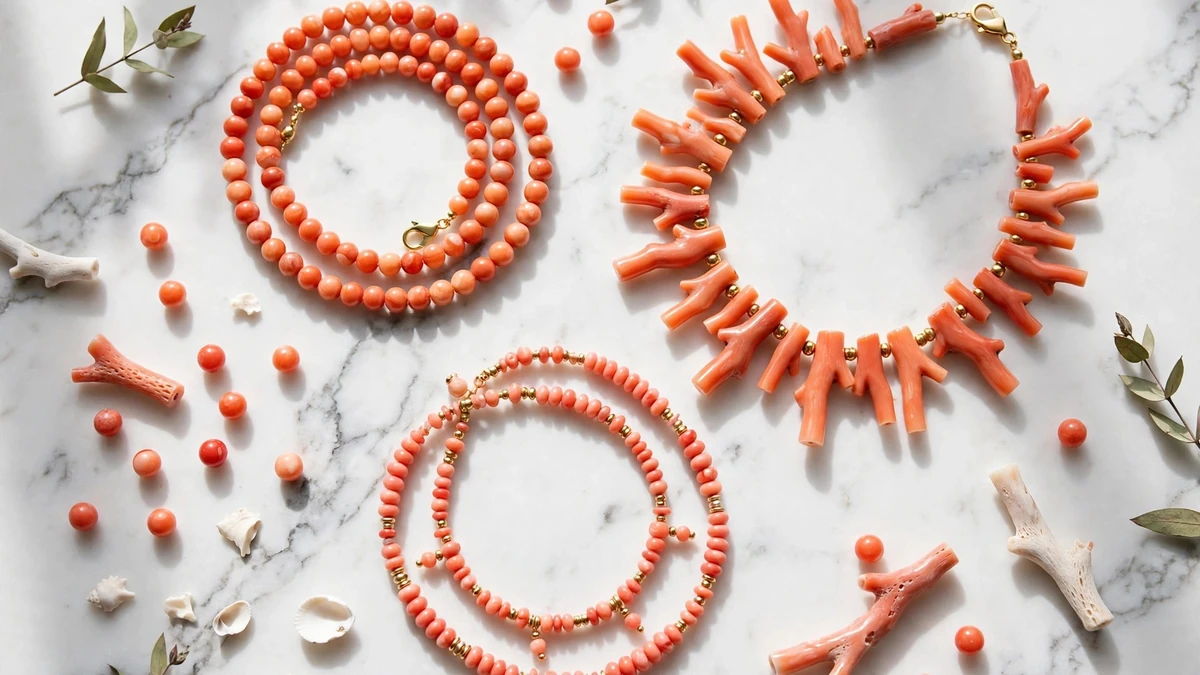

Coral is one of the oldest jewellery materials in the world, and it still feels fresh. A coral pendant has a warmth that no other red stone quite matches, soft, matte, and alive against the skin, and it works beautifully in summer, against white linen, sun-warmed skin and simple gold. The problem is not finding a coral necklace. It is finding one made from genuine coral, honestly described, at a price that matches what you are actually buying.
That is why this guide starts with the stone, not the brand. Most coral sold today is not the rare deep-red coral of antique jewellery, and much of it is dyed, reconstructed or imitation. That does not make it a bad buy, but it does mean the label matters. A dyed white coral bead sold as genuine red coral is a poor buy at any price, while a honestly described sponge coral necklace can be a lovely, wearable piece.
Below are nine coral necklaces worth considering in 2027, from a classic red coral pendant to simple beaded strands for everyday wear. Each one is described by what it is good at, what to watch for, and who it suits best, so you can choose with the stone in mind, not just a bestseller list.
Key takeaways
- Coral is calcium carbonate, soft at Mohs 3 to 3.5, and easy to scratch, so it needs gentle wear and careful storage.
- Genuine deep-red coral is rare, expensive and protected, and most coral sold today is dyed white coral, sponge coral or bamboo coral.
- Look for even colour, a smooth matte polish, and a seller who states the coral type and any dyeing in writing.
- Keep coral away from water, perfume, sunscreen and ultrasonic cleaners, which can dull it, fade it or damage the surface.
- Coral has no proven healing properties, and a necklace is not an investment, so buy the piece you love wearing, not the one you hope will gain value.
What coral actually is
Coral is the skeleton of a tiny marine animal, built from calcium carbonate, and it has been carved into beads and pendants for thousands of years. The most prized coral is the deep red of Corallium rubrum, harvested in the Mediterranean, and it is now rare, expensive and protected under international trade rules. That scarcity is why so much of what is sold as red coral today is something else, and why the description on the label matters more than the colour in the photograph.
Most coral necklaces today use white coral, sponge coral or bamboo coral, often dyed red, pink or orange. White coral is naturally pale and takes dye well. Sponge coral has a porous, matte texture that suits a softer, more casual look. Bamboo coral has a distinctive jointed structure and is often carved into beads. All three are real coral, and all three can make beautiful necklaces, as long as the dyeing is disclosed and the price reflects it.
Imitations are common too. Resin and glass beads can mimic coral closely, and plastic beads are often sold as coral at very low prices. A good test is the feel: real coral feels cool and slightly grainy, while resin feels warm and plastic, and glass feels very smooth and heavy. None of these tests is conclusive on its own, which is why buying from a reputable seller matters. If a strand feels suspiciously light, perfectly uniform and warm to the touch, treat it as imitation until a seller proves otherwise.
How we chose these necklaces and what to look for
Look first at the coral type and the disclosure. A good seller names the coral, white, sponge, bamboo or red, and states whether it has been dyed. If a listing says only “natural coral” with no detail, ask for more before you buy. A deep, even red at a low price is a warning sign, because genuine red coral is never cheap, and an undisclosed dye is the most common problem in coral jewellery.

Look next at the surface, the cut and the setting. Coral should have a smooth, matte to softly polished surface, with no cracks, pits or dye pooling in crevices. Beads should be evenly matched in colour and size, and a beaded strand should be knotted between beads, so one broken thread does not scatter the whole necklace. A bezel setting protects a pendant’s edges, which is where soft coral chips most easily.
Finally, look at the length and the metal. A 16 to 18 inch chain sits at the collarbone and suits a pendant, while a 20 to 24 inch strand suits a beaded necklace worn over a top. Gold brings out the warmth in red and pink coral, and silver suits paler or white coral. Our guide to coral bracelets covers the same stone checks in a smaller format, and the same rules apply here, because the stone does not change just because the piece does.
The 9 best coral necklaces of 2027
Tiffany & Co. Coral Pendant
What we like: A clean, polished coral pendant on a fine chain, with the understated design Tiffany does best and a stone chosen for even colour and a smooth finish.
What to consider: Premium price, and the pendant is deliberately simple, so it suits minimal styling rather than a statement look. Stone: Red coral. Setting: Gold bezel. Best for: Everyday elegance. Price range: Premium.
A quiet, confident piece. It does not shout, and that is the point, it is the coral necklace you reach for when you want the stone to do the talking.
Cartier Coral Pendant
What we like: A refined pendant with Cartier’s precise finishing, a well-matched stone, and a chain that sits flat and comfortably at the collarbone.
What to consider: High price, and the design is classic rather than trend-led. Stone: Red coral. Setting: Gold bezel. Best for: Special occasions. Price range: Luxury.
This is a piece for a milestone, an anniversary or a significant birthday, and it is built to be worn for decades rather than a season.
David Yurman Coral Pendant
What we like: A sculptural pendant with Yurman’s signature cable detail, a generous stone, and a setting that protects the coral while showing it off.
What to consider: The cable design is distinctive, so it suits people who like the house style. Stone: Sponge coral. Setting: Sterling silver and gold cable. Best for: Signature everyday wear. Price range: Premium.
A good middle ground between a fine-jewellery pendant and a fashion piece, with a warm, matte stone that suits relaxed, confident styling.
Mejuri Coral Pendant
What we like: A simple, well-priced pendant in solid gold, with a smooth coral stone and a delicate chain that layers easily with other necklaces.
What to consider: A smaller stone than the luxury options, and the design is intentionally minimal. Stone: Dyed white coral. Setting: Gold bezel. Best for: Daily layering. Price range: Mid-range.
The easiest entry point on this list. It is the pendant to buy if you want real coral in solid gold without a luxury price tag.
Monica Vinader Coral Pendant
What we like: A modern pendant with a clean silhouette, a well-polished stone, and a chain length that works alone or layered.
What to consider: The stone is modest in size, and the style is contemporary rather than traditional. Stone: Dyed white coral. Setting: Gold vermeil bezel. Best for: Modern everyday wear. Price range: Mid-range.
A good choice if your style is modern and you want coral that fits a working wardrobe rather than a jewellery box.
Missoma Coral Pendant
What we like: A delicate pendant with a smooth coral drop, a fine chain, and a price that makes it easy to try coral for the first time.
What to consider: Gold vermeil rather than solid gold, so it needs gentle care and should be kept away from water and perfume. Stone: Dyed white coral. Setting: Gold vermeil bezel. Best for: First coral purchase. Price range: Affordable.
The friendliest price on this list, and a sensible way to find out whether you love wearing coral before spending more.
Maria Black Coral Pendant
What we like: An sculptural, design-led pendant with a bold shape and a coral stone chosen for character rather than perfect uniformity.
What to consider: The design is distinctive and modern, so it suits a confident, fashion-forward wardrobe. Stone: Sponge coral. Setting: Sterling silver. Best for: Statement styling. Price range: Mid-range.
For anyone who finds classic coral pendants too quiet. This one has a point of view, and it wears like a piece of design, not just a stone.
Astrid & Miyu Coral Pendant
What we like: A small, neat pendant with a polished coral stone, a fine chain, and a price that suits gifting and everyday wear.
What to consider: A petite stone, best worn alone or with one other fine chain. Stone: Dyed white coral. Setting: Gold vermeil bezel. Best for: Gifting and daily wear. Price range: Affordable.
A sweet, simple pendant, and a good gift, because coral has long been given as a protective charm, especially for children and travellers.
Thomas Sabo Coral Pendant
What we like: A polished coral pendant with a sturdy chain, a clear stone, and a design that works with both casual and smarter outfits.
What to consider: The style is classic and unfussy, and the stone is dyed white coral rather than rare red coral. Stone: Dyed white coral. Setting: Sterling silver bezel. Best for: Versatile everyday wear. Price range: Mid-range.
A reliable, no-fuss coral necklace. It is the one to choose if you want a warm red stone you can wear most days without thinking about it.
Which coral necklace is right for you
Start with how you will wear it. A pendant on a fine chain is the most versatile choice, it works with a white shirt, a linen dress and a black top, and it layers easily. A beaded strand makes more of a statement and suits a plain top, while a longer pendant suits a higher neckline. If you want one coral necklace, choose a pendant in a length you can wear most days.
Then think about the colour. Deep red is the classic and the most prized, but it is also the most imitated and the most expensive when genuine. Pink and salmon coral are softer, easier to wear every day, and often better value, while white coral has a quiet, elegant look that suits silver and cooler skin tones. Choose the shade that flatters your skin, not the one with the grandest name.
Finally, match the metal to your wardrobe. Yellow gold warms up red and pink coral and suits warm skin tones, while silver suits white and pale pink coral and cooler skin tones. Rose gold is another good partner for salmon coral, softening the red without dulling it, and it works well for evening. A pair of coral earrings in the same metal makes a set feel considered rather than matched, and it is an easy way to build a small coral collection that works together.
The caveats that matter
Coral is soft, and that is the fact that shapes everything else. It scratches easily, it can fade in strong sunlight, and it is damaged by perfume, sunscreen, salt water and cleaning products. A coral necklace is not a piece to wear to the beach, the gym or the pool, however tempting that sounds. It is a piece to wear deliberately, and to store in a soft pouch away from harder jewellery that could scratch it. Treat it gently and it will keep its warm colour and smooth surface for many years.
| Detail | What is known |
|---|---|
| What coral is | Calcium carbonate, the skeleton of a marine animal, Mohs 3 to 3.5, soft and easy to scratch |
| Most prized type | Deep-red Corallium rubrum from the Mediterranean, rare, expensive and protected |
| Most common types sold | Dyed white coral, sponge coral and bamboo coral, all real coral when honestly described |
| Common imitations | Resin, glass and plastic beads, often sold as coral at very low prices |
| Cleaning | A soft, dry cloth only, never water, soap, ultrasonic or steam cleaners |
| What to avoid | Water, perfume, sunscreen, salt water, hard knocks and prolonged strong sunlight |
| Storage | A soft pouch on its own, away from harder stones and metals that could scratch it |
| What it does not do | It has no proven healing properties and a necklace is not a financial investment |
If you are spending a significant amount, ask the seller to confirm the coral type and any dyeing in writing, and keep that description with your receipt. A reputable seller will provide both without hesitation, and that paperwork is what protects you if the stone is ever questioned.
Checklist: choosing a coral necklace honestly
Use these checks before you buy, and again when the piece arrives.
- Check the type: ask whether it is red, white, sponge or bamboo coral, and get the answer in writing.
- Check the dye: any dyeing must be disclosed, and a deep red at a low price is a warning sign.
- Check the surface: smooth, even colour, no cracks, pits or dye pooling in crevices.
- Check the setting: a bezel or sturdy prongs that protect the edges, and a clasp that feels solid.
- Check the length: 16 to 18 inches for a pendant at the collarbone, longer for a beaded strand.
- Check the paperwork: a written description of the coral type and treatment, and a clear returns policy.
Frequently asked questions
Is red coral real coral?
Sometimes. Genuine deep-red coral is rare and expensive, and much of what is sold as red coral is dyed white coral. Both are real coral, but only the first is rare red coral, so ask the seller to state the type and any dyeing in writing.
Can I wear a coral necklace every day?
You can, with care. Coral is soft, so take it off for the gym, swimming, housework and anything where it could be scratched or knocked, and keep it away from perfume and sunscreen.
Can I wear coral in water?
No, not if you want it to last. Water, especially salt water and chlorinated pools, can dull coral and fade dyed stones. Put your necklace on after showering and take it off before swimming.
How do I clean a coral necklace?
Wipe it with a soft, dry cloth after wearing, and store it in a soft pouch on its own. Never use water, soap, ultrasonic cleaners or steam cleaners, and never use a jewellery dip.
Does coral fade over time?
Natural coral can dull with wear and exposure, and dyed coral can fade in strong sunlight and heat. Gentle wear and dark, dry storage slow this down. A statement necklace in a harder stone is a better choice if you want a piece you never have to think about, but coral rewards the small amount of care it asks for.
Is a coral necklace a good investment?
No, not in a financial sense. Only the finest genuine red coral holds value, and most necklaces are bought to be worn and enjoyed. Buy the piece you love, at a price you are comfortable with, and treat any future value as a bonus, not a plan.
The bottom line
The best coral necklace in 2027 is not the reddest or the most expensive. It is the one with an honestly described stone, a setting that protects it, and a length and metal that suit the way you actually dress. For most people, a well-made pendant in dyed white or sponge coral, in gold or silver, is the smartest buy, because it is beautiful, wearable and fairly priced, and it suits almost every summer outfit.
Ask for the coral type and any dyeing in writing, check the surface and the clasp, and choose the piece you will reach for most often. That is the honest way to buy coral, and it is how a necklace becomes something you wear for years, not something that sits in a box, unworn and forgotten.