Woodworking television is the quiet corner of the TV schedule where sawdust, sharp chisels and patient craftsmanship take centre stage, and it has been winning viewers for decades. If you are wondering whether watching woodworking shows can genuinely help you learn the craft, the answer is yes, with one condition: the best shows teach you to think like a woodworker, not just to copy a project, and that way of thinking is what carries over into your own workshop.
The genre covers a wide range, from calm public television programmes that build a single piece of furniture over a whole episode, to fast-moving streaming series about restoring old pieces and making things by hand. What unites them is the pleasure of watching skilled hands turn rough timber into something useful and beautiful, and the way a good presenter explains each decision as they go.
Key takeaways
- Woodworking television spans calm instructional shows, restoration series, workshop builds and streaming channels, each teaching different skills.
- The classic public television programmes remain the best starting point for beginners, because they explain tools, techniques and safety slowly and clearly.
- Watching teaches most when you watch actively: note the order of operations, the measuring habits and the way the presenter handles mistakes.
- Television is a starting point, not a substitute for practice; start with small, simple projects and treat safety as part of the craft, not an afterthought.
What Is Woodworking Television?
Woodworking television is any show built around making things from wood, and it has existed almost as long as home improvement television itself. The earliest programmes were simple demonstrations, a presenter, a workbench and a camera, and the format has barely changed, because it works. Viewers watch a project take shape step by step, hear why each cut matters, and learn the rhythm of measuring, cutting, fitting and finishing.
The Classic Shows That Shaped the Genre
Any guide to woodworking television starts with the public television programmes that defined it. The most famous is The New Yankee Workshop, which aired on PBS from 1989 to 2009, hosted by master carpenter Norm Abram and created by Russell Morash. Over 21 seasons the show built around 235 projects, from simple workshop accessories to complex reproductions of antique furniture, and its calm, methodical style set the template for instructional woodworking on screen.
Abram was also a long-standing presence on This Old House, the home improvement series that has aired on PBS since 1979, where his woodworking and carpentry segments introduced millions of viewers to the craft in the context of real houses and real projects. Its sister programme, Ask This Old House, takes a question-and-answer format, with experts visiting viewers’ homes to solve practical problems.
For a very different flavour, The Woodwright’s Shop, hosted by Roy Underhill, celebrates traditional hand-tool woodworking, using the tools and techniques of earlier centuries. Later public television woodworking includes Classic Woodworking, hosted by Tom McLaughlin, which continues the instructional tradition with furniture projects explained step by step.
Modern Formats: Streaming, Restoration and Makers
Streaming has changed woodworking television without replacing it. The classic shows still circulate, but they now sit alongside a wider range of formats. Restoration series follow a damaged piece of furniture through cleaning, repair and refinishing, teaching viewers to look at old furniture with fresh eyes. Workshop-build series follow the creation of the workspace itself, useful for anyone setting up a first bench or reorganising a garage.
Short-form video has become a major part of the genre too. Independent makers publish build videos, tool reviews and technique demonstrations, often filmed in their own workshops with no crew at all. The best of these are excellent, with close-up camera work that shows details a broadcast camera would miss, but the quality varies widely, and a confident presenter is not always a careful teacher. That is where the classic shows still earn their place: their advice has been tested, edited and checked in a way that a single video rarely is.
| Format | What you learn | Best for |
|---|---|---|
| Classic instructional shows | Step-by-step technique, tool use and project planning | Beginners building real skills |
| Hand-tool and traditional shows | Hand planes, chisels, joinery and craft history | Viewers who enjoy slow, traditional methods |
| Restoration series | Repair, refinishing and judging old furniture | Anyone rescuing or reviving old pieces |
| Workshop-build series | Layout, storage and setting up a workspace | Setting up a first workshop |
| Short-form maker videos | Quick ideas, close-up detail and tool reviews | Exploring ideas and specific techniques |
Learning Woodworking from Television
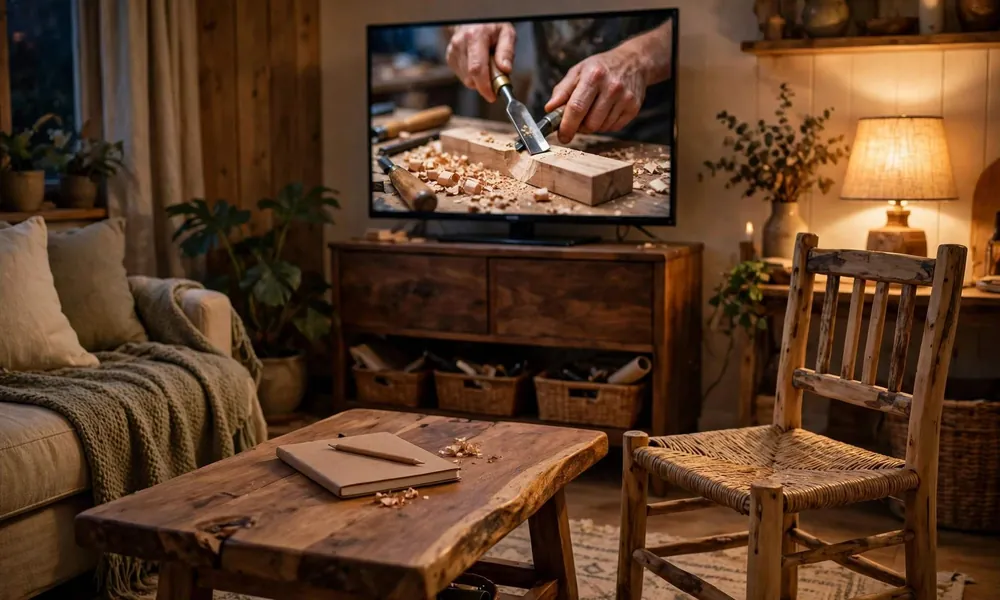
Watching woodworking shows can teach you a great deal, but only if you watch actively. The difference between passive viewing and real learning is small but important: keep a notebook nearby, write down the order in which the presenter works, and note the moments they pause to measure, check a fit or change a tool. Those pauses are where the craft lives, because they show you the habits that keep work accurate and safe.
Start by watching a whole project through before you try anything similar. The first viewing gives you the shape of the job; the second lets you focus on details, such as how the presenter marked out a joint or tested a finish on scrap first. Choose your first projects with the same care. A small box, a simple shelf, a cutting board or a basic stool teaches measuring, sawing, joining and finishing without demanding tools you do not own. Work slowly, measure twice, and accept that your first pieces will be imperfect.
It also helps to watch more than one presenter tackle the same job. Different woodworkers approach the same joint in different ways, and comparing them teaches you there is rarely a single right answer. A well-organised workspace makes learning easier, and our guide to how to organize desk drawers offers simple principles that translate well to a small workshop, where a place for every tool saves time and prevents accidents.
How to Choose What to Watch
Start with the presenter’s approach: do they explain why they are doing something, or only what they are doing? A good teacher talks through their decisions, admits when something needs correcting, and shows the fix rather than hiding it. Presenters who never make a mistake on camera are usually being edited, not being honest.
Consider the tools involved. If you have a small workshop, a show built around a fully equipped professional shop may inspire you but will not help you much day to day. Look for programmes that use tools you own or can reasonably acquire, and projects that fit your space. Clear camera work matters too: you want to see the cut, the joint and the measurement. And if a show is sponsored by a tool brand, watch with a light scepticism; a presenter who only ever uses one brand’s tools may be selling as much as teaching.
From Watching to Doing: Building Your First Projects
The step from watching to doing is where most beginners stall, so make it as small as possible. Pick one project from a show you trust, gather the timber and tools it needs, and set aside an afternoon with no deadline. Work through the episode’s steps in order, pausing the video when you need to, and keep your notes beside you. The goal of the first project is not perfection but familiarity: learning how your saw cuts, how your timber behaves and how long each stage really takes.
Build your tool collection gradually, buying tools for the project in front of you. A tape measure, a square, a sharp hand saw, chisels, a plane and a drill will carry you through many beginner projects. Finishing is where a project becomes furniture: sand in stages from coarse to fine, always with the grain, and test stains and oils on scrap first. When you have finished a piece, look after it: a soft cloth keeps handmade pieces looking their best for years, as our guide to how to polish stainless steel shows for metalwork.
Your Woodworking Television Checklist
- Start with the classic instructional shows, which explain technique slowly and clearly, before exploring modern streaming formats.
- Watch actively, with a notebook, noting the order of operations and how the presenter handles mistakes.
- Choose shows that use tools you own or can acquire, and projects that fit your space and skill level.
- Watch a whole project through once, then rewatch the tricky stages before you begin.
- Start with small, simple projects such as a box, a shelf or a cutting board.
- Build your tool collection gradually, and learn to keep every cutting edge sharp.
- Test finishes on scrap timber first, and always work with safety gear in place.
Frequently Asked Questions
What is the best woodworking TV show for beginners?
For most beginners, the classic public television instructional shows are the best starting point, especially The New Yankee Workshop, because they explain each step slowly and build projects in a logical order.
Can you really learn woodworking from television?
Yes, television can teach you a great deal about technique, planning and tool use, but it cannot replace practice. Watching shows you what good work looks like; only hands-on work builds the feel for timber and tools that the craft depends on.
What is The New Yankee Workshop?
The New Yankee Workshop is an American woodworking television series that aired on PBS from 1989 to 2009, hosted by Norm Abram and created by Russell Morash. Over 21 seasons it built around 235 projects, and episodes remain widely available to stream.
Are hand-tool shows or power-tool shows better for learning?
Neither is better in general; they teach different things. Power-tool shows suit viewers with a modern workshop who want to build efficiently, while hand-tool shows teach patience, accuracy and traditional joinery. Many woodworkers watch both and use whichever approach fits the job.
Where can I watch woodworking shows in 2027?
Classic shows are available through public television streaming services and video platforms, while modern maker channels and restoration series are widely available on streaming services and free video platforms. Availability varies by country.
What tools do I need to start woodworking after watching TV?
A tape measure, a square, a sharp hand saw, a set of chisels, a hand plane and a drill will carry you through many beginner projects. Buy tools for the project in front of you, learn to keep them sharp, and add to your collection gradually as your skills grow.
The Bottom Line
Woodworking television has lasted because it offers something television rarely does: the pleasure of watching skilled work done well, at a pace that lets you understand it. The classic shows remain the genre’s backbone, while streaming and short-form video have widened the range of ideas and presenters on offer.
The best next step is a simple one. Pick a show you trust, watch one complete project from start to finish, and then make something small with your own hands. A box, a shelf or a stool will teach you more in an afternoon than a week of passive viewing, and it will give you a reason to keep watching with sharper eyes. And if you need a calm place to begin, our guide to the best French press can help you set up a slow morning ritual, coffee in hand, before a day at the bench.
Safety note: woodworking involves sharp tools, spinning blades and fine dust, so always wear eye and hearing protection, use a dust mask when sanding or cutting, keep guards in place, and never rush a cut. If a technique looks unsafe on screen, do not copy it; look for a safer method and practise on scrap timber first.