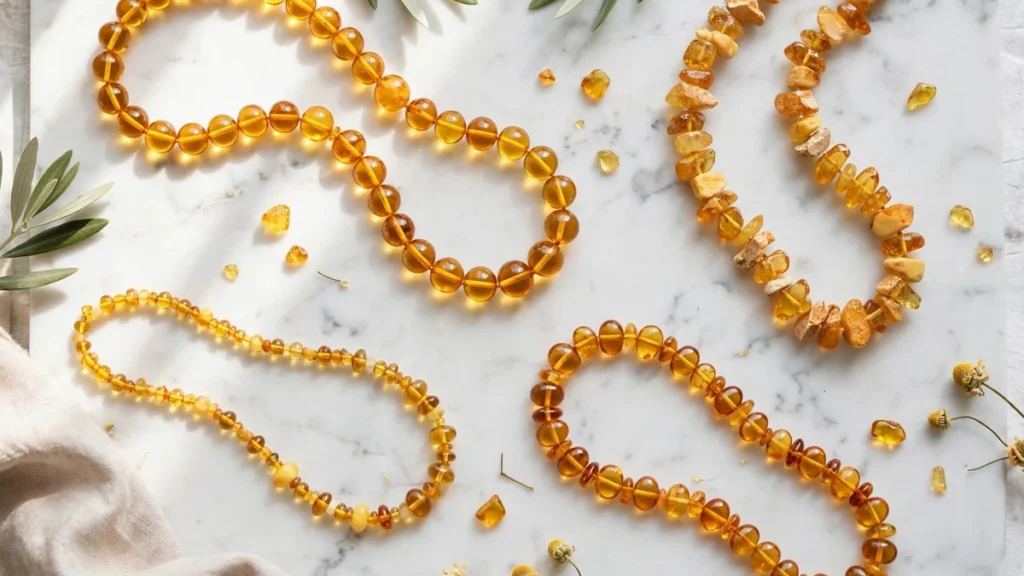
Amber is the warmest stone in a jewellery box. It is not a stone at all, but fossilised tree resin, millions of years old, polished to a honey-gold glow that catches the light like no mineral can. A good amber necklace feels light, looks golden in sunlight, and goes with almost everything. The problem is that amber is also one of the most imitated materials in jewellery, and one of the softest.
Most amber sold today has been heat-treated or pressed, many pieces are copal rather than true amber, and a large share of the market is plastic or glass. None of that makes amber a bad buy. It makes the seller, the disclosure and the price the things that matter most, because a beautiful amber necklace bought honestly is a pleasure for decades, while a fake bought at a genuine price is a disappointment that only grows.
Below are nine amber necklaces worth considering in 2027, from a classic Baltic bead strand to cognac, honey and green amber pendants. Each one is described by what it does well, what to watch for, and who it suits best, so you can choose with the material in mind, not just the colour.
Key takeaways
- Amber is fossilised tree resin, not a mineral, with a Mohs hardness of just 2 to 2.5, which makes it very soft and easy to scratch.
- Most commercial amber is heat-treated or pressed, and both treatments are standard practice, but they should be disclosed.
- Copal, which is young, unfinished resin, plastic and glass are the common imitations, and a very cheap, perfectly clear piece is unlikely to be true amber.
- Keep amber away from perfume, sunscreen, hairspray and ultrasonic cleaners, and store it separately so harder stones do not scratch it.
- Amber has no proven healing properties and is not an investment, and inclusions such as insects are usually added to fakes rather than found in genuine pieces.
What amber actually is
Amber begins as tree resin, the sticky substance trees produce to seal wounds. Over millions of years, buried under sediment, that resin hardens into a fossil. The best-known source is the Baltic region, where amber washed up on beaches has been collected for thousands of years, but amber also comes from the Dominican Republic, Mexico and Myanmar, each with its own colour range. Baltic amber is usually honey, cognac or milky white. Dominican amber is often a clearer blue-green, and it is the source most associated with insect inclusions.
Its hardness is the fact that matters most for a necklace. At Mohs 2 to 2.5, amber is softer than a fingernail is hard, and it can be scratched by almost anything, including other jewellery. That is why amber is usually worn as beads or in a bezel setting, and why it should never be stored loose in a box with diamonds, sapphires or even quartz. It is also light. A strand of amber beads weighs far less than a strand of stone beads the same size, which is part of its charm and part of why it suits a long necklace.
The other fact is the imitation problem. Copal is young resin that has not finished fossilising, and it looks very like amber but is softer still and melts at a lower temperature. Plastic, usually phenolic resin or polyester, is the most common fake, and glass is used for larger beads. A simple salt-water test helps: genuine amber floats in a strong salt solution, while most glass sinks and most plastic behaves differently, but the most reliable check is still buying from a seller who discloses the treatment and the origin.
How we chose these necklaces and what to look for
Look first at the colour and the clarity. Honey amber is the classic, warm and translucent. Cognac amber is deeper and richer, and it usually costs more. Milky amber is opaque and pale, and it suits lighter skin and summer styling. Green amber is rarer and more expensive, and it is the colour most often faked, so buy it only from a seller you trust. Our guide to amber bracelets uses the same colour logic, because the material behaves the same way whatever it is set in.

Look next at the beads and the stringing. A well-made amber strand is knotted between each bead, so if the thread breaks, you lose one bead rather than the whole strand. The drill holes should be clean and centred, the beads should be similar in size, and the strand should feel smooth, not gritty. A strand that feels sticky or smells strongly of chemicals has probably been coated, which is a sign of a lower-quality piece.
Finally, look at the treatment and the price. Heat treatment deepens the colour of pale amber and is standard practice, while pressing, which fuses small pieces of amber together under heat and pressure, is also common. Both are acceptable when disclosed. What should worry you is a very low price for a long strand of large, perfectly clear beads, because genuine amber of that size and clarity is not cheap. A fair price for a good Baltic strand reflects the material, the size and the workmanship, not a bargain.
The 9 best amber necklaces of 2027
Tiffany & Co. Amber Bead Necklace
What we like: Evenly matched honey amber beads on a silk strand with a silver clasp, cleanly finished, with the brand’s hallmark. What to consider: Premium price for a simple strand, and the beads are unprotected, so they need careful storage. Stone: Baltic honey amber, polished beads. Setting: Silk strand with a sterling silver clasp. Best for: Everyday wear and a first amber piece. Price range: $300–$400.
Cartier Cognac Amber Pendant
What we like: A deep cognac amber cabochon in a gold bezel, with a rich colour that shows best in daylight and a chain that suits the weight. What to consider: The bezel adds weight, and the stone is soft, so it should not be worn against hard surfaces. Stone: Cognac amber cabochon. Setting: 18k gold bezel on a gold chain. Best for: Evening wear and a statement pendant. Price range: $1,200–$1,600.
David Yurman Amber Bead Necklace
What we like: Warm honey amber beads with the brand’s signature cable clasp, evenly sized, and a strand that sits well on the collarbone. What to consider: The strand is strung on silk, so it needs restringing every year or two with regular wear. Stone: Baltic honey amber, polished beads. Setting: Silk strand with a silver cable clasp. Best for: A classic amber strand with a designer finish. Price range: $500–$650.
Mejuri Amber Pendant Necklace
What we like: A small honey amber pendant on a delicate gold vermeil chain, light enough for daily wear and easy to layer with other necklaces. What to consider: The pendant is small, so it suits layering more than a solo statement. Stone: Honey amber, small cabochon. Setting: Gold vermeil bezel on a gold vermeil chain. Best for: Layering and everyday minimal styling. Price range: $95–$135.
Monica Vinader Amber Pendant
What we like: A bezel-set amber pendant in gold vermeil, with the stone sitting low and protected, and a chain that can be adjusted to two lengths. What to consider: Gold vermeil wears over time and will need replating after a few years of daily use. Stone: Honey amber, bezel-set cabochon. Setting: Gold vermeil bezel on an adjustable chain. Best for: A protected everyday pendant. Price range: $140–$190.
Missoma Milky Amber Necklace
What we like: Milky amber beads with a soft, opaque glow, set on a simple gold vermeil chain, with a paler look that suits summer and light fabrics. What to consider: Milky amber is often heat-treated to achieve its colour, so ask the seller to confirm the treatment. Stone: Milky Baltic amber, polished beads. Setting: Gold vermeil chain with a lobster clasp. Best for: Summer styling and paler skin tones. Price range: $110–$155.
Maria Black Amber Sculptural Pendant
What we like: A sculptural silver setting that holds a raw amber piece, with an organic feel that suits the stone’s origin as tree resin. What to consider: The raw edges are more exposed than a polished bead, so it needs more care. Stone: Raw Baltic amber. Setting: Sterling silver sculptural setting. Best for: Bold, design-led styling. Price range: $210–$290.
Astrid & Miyu Amber Bead Necklace
What we like: An affordable honey amber strand with a gold-plated clasp, even bead sizes, and a length that works well layered with a shorter gold chain. What to consider: The beads are small and the strand is light, so it suits layering more than a solo statement. Stone: Honey amber, small beads. Setting: Beaded strand with a gold-plated clasp. Best for: Layering and a first amber necklace on a budget. Price range: $70–$100.
Thomas Sabo Green Amber Pendant
What we like: Green amber with a clear, unusual colour, set in a sturdy silver bezel that protects the soft stone. What to consider: Green amber is the most faked colour, so buy only from a seller who discloses the origin and treatment. Stone: Green amber cabochon. Setting: Sterling silver bezel on a silver chain. Best for: Collectors and anyone who wants the rarest amber colour. Price range: $160–$220.
Which amber necklace is right for you
If you want a necklace you can wear every day, choose a beaded strand or a bezel-set pendant in honey amber. Both protect the stone, both sit close to the body, and honey is the most affordable colour, so you are not paying a premium for rarity. A strand is the safer choice if you are hard on jewellery, because there is no setting to catch on clothing, while a bezel pendant is the better choice if you want a single focal stone with a clean, finished look. Length matters too. A 16-inch strand sits at the collarbone and shows the beads clearly, while an 18-inch chain with a pendant gives a little more movement and suits a lower neckline.
If you want the richest colour, choose cognac amber, but expect to pay more, and check the treatment. Cognac is often achieved by heating pale amber, which is standard practice, but it should be disclosed, and a very cheap cognac strand is more likely to be pressed amber or plastic than a natural deep colour. A pair of amber earrings in the same colour is a useful comparison, because the same colour should look the same in both pieces if they are genuinely matched.
For summer, milky amber has a softer, paler glow that suits light fabrics and sunlit skin, while green amber is the collector’s choice, rarer and more expensive, and worth buying only from a seller with a clear description and a returns policy. Whatever colour you choose, keep the necklace away from perfume and sunscreen, because amber absorbs chemicals and can cloud or crack over time.
The caveats that matter
Amber is a genuine fossil, but it is not a gemstone in the mineral sense, and it is not rare in its common colours. That combination is what trips people up. They assume a golden stone is hard because it looks solid, and they assume it is valuable because it is sold as a gem. Neither is true. Treat it as a beautiful, very soft fossil resin, handle it gently, and you will enjoy it for years. It also pairs well with gold, which deepens its honey tones, and with silver, which gives it a cooler, more modern feel, so the metal is a matter of taste rather than a rule.
| Detail | What is known |
|---|---|
| What it is | Fossilised tree resin, millions of years old, not a mineral |
| Hardness | Mohs 2 to 2.5, very soft, easily scratched by almost anything |
| Common colours | Honey, cognac, milky white and green, mostly from the Baltic region |
| Standard treatments | Heat treatment and pressing, acceptable when disclosed |
| Main imitations | Copal, plastic and glass, all widely sold as amber |
| What to avoid | Perfume, sunscreen, hairspray, ultrasonic cleaners and storage with harder stones |
| Care | Wipe with a soft, damp cloth, wash with mild soap, store separately in a pouch |
| What it is not | It has no proven healing properties and is not an investment |
If you are buying amber as a gift, keep the receipt and the seller’s description of the treatment and origin. A gift that turns out to be plastic is disappointing, but a gift with a clear, honest description is easy to enjoy, whatever the material is. And be wary of insect inclusions. Genuine insects in amber are rare and expensive, and most “insect amber” sold cheaply has a modern insect pressed into plastic or resin.
Checklist: choosing an amber necklace honestly
Use these checks before you buy, and again when the necklace arrives.
- Check the disclosure: heat treatment and pressing are standard, but the seller should say so.
- Check the beads: knotted between each bead, cleanly drilled, similar in size, and smooth to the touch.
- Check the colour: honey and cognac are common and affordable, green is rare and should cost more.
- Check the price: a very cheap, long strand of large, perfectly clear beads is unlikely to be true amber.
- Check the smell: amber warmed in the hand has a faint pine scent, while plastic smells chemical or of nothing.
- Check the care: no perfume, sunscreen or ultrasonic cleaning, store separately, and wipe with a soft cloth after wear.
Frequently asked questions
Is amber a real gemstone?
It is a real fossil, but not a mineral, so it is not a gemstone in the strict sense. Its value is in its age, colour and warmth, not in hardness or rarity, and common honey amber is affordable rather than precious.
Can I wear an amber necklace every day?
Yes, if it is a beaded strand or a bezel-set pendant, and you take it off before perfume, sunscreen, swimming and housework. Amber is very soft, so daily wear is fine as long as it is not knocked against hard surfaces or exposed to chemicals.
How can I tell amber from plastic?
Warm a bead in your hand and smell it. Genuine amber has a faint pine scent when warmed, while plastic smells chemical or of nothing. Amber also floats in a strong salt-water solution, while most glass sinks. Neither test is conclusive alone, so buy from a seller who discloses the treatment and origin.
Does amber need special cleaning?
It needs gentle cleaning. A soft, damp cloth and mild soap are enough. Never use an ultrasonic or steam cleaner, and never soak it with other jewellery, because harder stones will scratch it and chemicals can cloud it.
What is the difference between amber and copal?
Copal is young resin that has not finished fossilising, usually thousands rather than millions of years old. It looks like amber but is softer, melts at a lower temperature, and is worth far less. It is often sold as amber, which is why the seller’s disclosure matters.
Is amber good for sensitive skin?
The resin itself is inert and rarely causes a reaction, but the metal matters more. If you have a nickel allergy, choose sterling silver or solid gold settings and check the clasp, which sits against your skin. A statement necklace guide is a useful place to compare clasp and chain options, because the metal is the part that touches your skin most.
The bottom line
The best amber necklace in 2027 is not the most expensive or the clearest. It is the one with an honestly disclosed treatment, a well-knotted strand or a protected bezel setting, and a colour you love. Honey amber is the sensible everyday choice, cognac is the richer evening choice, and green is the collector’s choice, worth buying only from a seller you trust.
Choose the colour you like, check the disclosure, keep it away from perfume and sunscreen, and store it separately from harder stones. Treated gently, amber is one of the warmest materials you can wear, at a price that leaves room for the rest of your jewellery box, and its age, millions of years in the making, is a story no mineral can match.