Amber is one of the oldest materials in jewellery, and one of the easiest to get wrong. It is not a stone at all. It is fossilised tree resin, tens of millions of years old, warm to the touch, light on the wrist, and golden in a way no mineral quite matches. A good amber bracelet glows from within. A bad one is plastic, glass, or young copal sold at an old-amber price, and the difference is not always obvious in a photograph.
That is why this guide is organised by what actually matters: whether the amber is genuine, how it is set, and how it will wear. Amber is soft, at just 2 to 2.5 on the Mohs scale, so a bracelet that looks perfect in a product shot can scratch within a week if it is worn against a watch, a metal bangle, or a rough sleeve. The setting matters as much as the bead. A strung bracelet is easy to repair and comfortable to wear. A rigid bangle shows the amber off beautifully and takes more knocks.
Below are nine amber bracelets worth considering in 2027, from a simple Baltic bead strand to a designer bangle. Each one is described by what it is good at, what to watch for, and who it suits best, so you can choose with the material in mind, not just the colour.
Key takeaways
- Amber is fossilised tree resin, not a stone. Genuine Baltic amber is warm to the touch, light on the wrist, and often contains tiny natural inclusions.
- Amber is very soft, at Mohs 2 to 2.5, so it scratches easily. Wear it away from metal bangles, watches, and rough fabrics.
- Most amber sold today is heat-treated or pressed from smaller pieces. That is standard practice, but it should be disclosed and priced accordingly.
- Copal is young resin, often only thousands of years old, and plastic and glass imitations are common. Buy from a seller who states the origin and the treatment.
- Amber has no proven healing properties, and it is not an investment. Buy it because you love the colour and the warmth, not because it will hold value.
What amber actually is
Amber began as sticky resin dripping from trees 30 to 90 million years ago. Over time it hardened, was buried, and fossilised into the warm, translucent material jewellers use today. Most jewellery amber comes from the Baltic region, where it washes up on beaches and is mined from deposits in Poland, Lithuania, Latvia, and the Kaliningrad region. Dominican amber, often a deeper honey or blue-green, is the other well-known source, and it is famous for the insects and plant matter sometimes preserved inside it.
What makes amber different from a stone is how it feels. It is warm the moment you pick it up, because it does not conduct heat the way a mineral does. It is light, so a chunky bead bracelet feels easy on the wrist. Rubbed briskly, it builds a small static charge and can attract tiny pieces of paper or dust. It also floats in salt water, which is one of the traditional quick tests, though it is not a test to rely on alone.
Amber’s softness is its main weakness. At Mohs 2 to 2.5, it can be scratched by a fingernail, a key, or a metal clasp. That does not mean it is fragile. A well-made bead bracelet can be worn for years. It does mean you should treat it gently, store it in a soft pouch away from harder jewellery, and accept that a much-loved amber bracelet will develop fine surface marks over time, much like a favourite leather bag develops a patina.
How we chose these bracelets and what to look for
Look first at the amber itself. Genuine amber is rarely perfectly uniform. Natural pieces vary slightly in tone, show small internal textures, and often contain tiny bubbles or flecks. A strand of beads that are all exactly the same colour, perfectly clear, and flawlessly smooth deserves a second look. It may be pressed amber, made by heating and compressing small fragments, which is legitimate and common, but should be priced lower than natural pieces. It may also be copal, a much younger resin that looks like amber but is softer still and melts more easily.

Look next at the treatment and the origin. Most commercial amber is heat-treated to deepen or clarify its colour, or pressed from offcuts. Neither is a reason to walk away, but both should be disclosed, and the price should reflect them. A seller who states the origin, Baltic or Dominican, and the treatment is a better sign than a listing that says only “genuine amber”. Ask for a certificate on an expensive piece, and be wary of prices that seem too low for the size and clarity claimed.
Finally, look at the setting and the stringing. Beaded bracelets should be strung on strong, knotted cord, so that if the cord ever breaks, you lose one bead rather than the whole strand. Metal settings should be smooth, with no sharp prongs that can press into the soft amber. Our guide to gold jewellery for everyday wear is useful here, because the metal you pair amber with matters: a smooth gold or silver setting protects the beads better than a rough or textured one, and a bracelet you wear alone will last longer than one stacked against hard bangles.
The 9 best amber bracelets of 2027
Tiffany & Co. Bead Bracelet
What we like: Polished Baltic amber beads in warm honey tones, strung on a durable cord with a sterling silver bead, with the clean finishing and reliable sourcing Tiffany is known for. What to consider: Premium price for a simple beaded design, and the beads are smooth and uniform, so purists may prefer a more natural, varied strand. Stone: Baltic amber, polished beads. Setting: Strung, sterling silver accent bead. Best for: Everyday wear and a first quality amber piece. Price range: £350 to £600.
A refined, understated take on the classic amber strand.
Cartier Bangle
What we like: A smooth amber inlay set into a polished gold bangle, with the warmth of the resin set off beautifully against the metal. What to consider: A rigid bangle exposes the amber to more knocks than a strung bracelet, and the price reflects the gold as much as the amber. Stone: Amber inlay, honey tone. Setting: 18k yellow gold bangle. Best for: Evening wear and statement dressing. Price range: £2,500 to £4,000.
David Yurman Cable Bracelet
What we like: Amber cabochons set into the signature twisted cable, with a comfortable fit and a design that suits both men and women. What to consider: The cabochons are set proud of the cable, so they can catch on sleeves, and the price is firmly in designer territory. Stone: Amber cabochons, cognac tone. Setting: Sterling silver cable. Best for: A designer piece with everyday wearability. Price range: £600 to £950.
A good middle ground between a simple strand and a fine jewellery bangle. The cable design is distinctive without overwhelming the amber.
Mejuri Bead Bracelet
What we like: Small, warm amber beads on a fine gold-filled chain, light enough to wear daily and easy to stack with a plain gold bangle. What to consider: The beads are small, so the amber is a subtle accent rather than the star, and the chain needs gentle handling. Stone: Amber beads, honey tone. Setting: Gold-filled chain. Best for: Delicate everyday stacking. Price range: £90 to £160.
Monica Vinader Charm Bracelet
What we like: A single polished amber bead on a fine chain with a small charm, with the option to add further charms over time. What to consider: One bead only, so this is an accent piece rather than an amber showcase, and the charm can rub against the bead. Stone: Amber bead, golden honey. Setting: Gold vermeil chain. Best for: Gifting and charm collectors. Price range: £120 to £220.
A gentle introduction to amber, and a thoughtful gift. The single bead is easy to wear every day and easy to look after.
Missoma Bead Bracelet
What we like: Chunky amber beads with a gold vermeil clasp, warm and tactile, with a relaxed, bohemian feel that suits summer dressing. What to consider: The larger beads are heavier than a fine strand, and the gold vermeil clasp will wear with time. Stone: Amber beads, cognac tone. Setting: Strung, gold vermeil clasp. Best for: Summer outfits and relaxed styling. Price range: £110 to £200.
Maria Black Cuff
What we like: A sculptural open cuff with a single amber cabochon, modern and architectural, with the amber as a warm focal point against polished silver. What to consider: An open cuff can catch on clothing, and the single stone means a scratch would be very visible. Stone: Amber cabochon, deep honey. Setting: Sterling silver open cuff. Best for: Modern, minimal styling. Price range: £250 to £450.
Amber for people who do not usually wear amber. The cuff is contemporary and clean, and the stone warms the whole design.
Astrid & Miyu Bead Bracelet
What we like: Small amber beads mixed with gold vermeil spacers, a playful everyday bracelet at an accessible price, with a secure clasp. What to consider: The beads are small and the amber is an accent, not the main event, and the spacers can scratch the beads if the bracelet is stored loose. Stone: Amber beads, pale honey. Setting: Strung, gold vermeil spacers. Best for: Everyday wear and stacking. Price range: £70 to £130.
Thomas Sabo Charm Bracelet
What we like: Amber beads on a link bracelet with the option to add charms, with a sturdy clasp and a design that suits a charm collection. What to consider: The link bracelet is heavier than a cord strand, and charms can knock against the beads. Stone: Amber beads, honey tone. Setting: Sterling silver link bracelet. Best for: Charm collectors and statement wear. Price range: £150 to £280.
A solid, characterful bracelet that works as the base of a charm collection. Keep the charms light and the beads will stay looking good.
Which amber bracelet is right for you
Start with how you will wear it. If you want a daily bracelet, choose a strung bead strand on knotted cord, with beads that are smooth and not too large. It is comfortable, easy to repair, and forgiving. If you want a piece for evenings and special occasions, a bangle or a cuff with a single cabochon shows the amber off more dramatically, and it will take fewer knocks because you will wear it less often.
Colour is the next decision. Pale honey amber is light, bright, and easy to wear with silver and white gold. Cognac and deep honey amber are richer and warmer, and they look best with yellow gold and autumn colours. Green amber, usually Dominican, is rarer and more expensive, and it suits people who want something unusual. Our amber earrings for winter follow the same logic, and matching a bracelet to a pair of earrings in the same tone is the simplest way to build a set that looks intentional.
Finally, think about the rest of your jewellery. Amber is soft, so it should not be stored loose in a box with diamonds, sapphires, or hard metal chains. Give it its own soft pouch, wear it away from a watch on the same wrist, and take it off before gardening, cleaning, or swimming. A little care goes a long way with a material this soft.
The caveats that matter
Amber’s biggest caveat is imitation. Copal, a resin that is thousands rather than millions of years old, looks very similar and is much softer. Plastic imitations, often phenolic resin, can be warm and light like amber. Glass imitations are heavier and colder. None of these is necessarily a bad purchase at the right price, but all of them should be sold as what they are. A seller who will not state the origin, the treatment, or whether the amber is natural, pressed, or reconstituted is a seller to avoid.
| Detail | What is known |
|---|---|
| What it is | Fossilised tree resin, 30 to 90 million years old, mostly Baltic or Dominican |
| Hardness | Mohs 2 to 2.5, very soft, scratches easily and needs gentle handling |
| Common treatments | Heat treatment to deepen colour, and pressing small fragments into larger pieces |
| Common imitations | Copal, plastic, and glass; all should be disclosed and priced accordingly |
| Best setting | Strung beads on knotted cord, or a smooth bezel; avoid sharp prongs |
| Care | Soft pouch, lukewarm water and mild soap only, no ultrasonic or steam cleaning |
| What to avoid | Perfume, hairspray, solvents, salt water, and hard jewellery stored alongside it |
| What it does not do | It has no proven healing properties and is not an investment stone |
Amber is also a material with a conservation story. Genuine deep red cherry amber is rare and expensive, and some sources are protected. If a deal seems too good for the size and colour claimed, it almost certainly is. Buy the bracelet you love at a price that makes sense, from a seller who answers questions clearly, and you will enjoy it for years.
Checklist: choosing an amber bracelet honestly
Use these checks before you buy, and again when the bracelet arrives.
- Check the seller: origin and treatment stated clearly, with a certificate for expensive pieces.
- Check the beads: warm to the touch, slightly varied in tone, with small natural inclusions rather than perfect uniformity.
- Check the stringing: knotted cord on a beaded bracelet, so a break loses one bead, not the whole strand.
- Check the setting: smooth bezels and clasps, with no sharp edges pressing into the soft amber.
- Check the fit: snug enough not to slide and knock, loose enough to move comfortably on the wrist.
- Check the care: a soft pouch for storage, and no perfume, solvents, or ultrasonic cleaning.
Frequently asked questions
Is amber a stone or a gemstone?
Neither, strictly speaking. Amber is fossilised tree resin, an organic material like pearl or coral. It is classed as a gemstone in jewellery because it is cut, polished, and set, but it is much softer than any mineral gemstone.
How can I tell real amber from plastic?
Real amber is warm to the touch, light for its size, and builds a small static charge when rubbed. Plastic can mimic the warmth and lightness, so these tests are only a starting point. A reputable seller, a stated origin, and a certificate on an expensive piece are more reliable than any home test.
What is copal, and should I avoid it?
Copal is young resin, often only thousands of years old, that has not fully fossilised. It looks like amber but is softer and less durable. It is fine to buy at a copal price, but it should never be sold as amber.
Can I wear an amber bracelet every day?
Yes, if it is a strung bead bracelet and you treat it gently. Wear it on the wrist without a watch, store it in a soft pouch, and take it off for cleaning, gardening, and swimming. A rigid bangle is better kept for occasional wear.
How do I clean an amber bracelet?
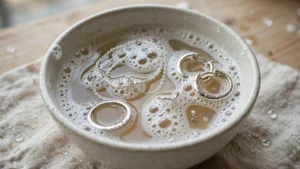
Lukewarm water with a drop of mild soap, a soft cloth, and air drying. Never use an ultrasonic cleaner, a steam cleaner, solvents, or abrasive polish. A tiny drop of olive oil rubbed in occasionally can restore the shine on a dull bead.
Is amber a good investment?
No. Amber is bought for its colour, warmth, and history, not for its resale value. Rare pieces with genuine insect inclusions can be valuable, but ordinary amber jewellery does not appreciate reliably. Our citrine bracelets follow the same rule: buy the bracelet because you love wearing it, not because you expect it to hold value.
The bottom line
The best amber bracelet in 2027 is the one that suits how you actually live. For everyday wear, a strung Baltic bead strand in honey or cognac is hard to beat: warm, light, comfortable, and easy to look after. For a special occasion, a single cabochon in a smooth gold or silver setting shows the material at its most beautiful, and it will last longer because you wear it less often.
Buy from a seller who states the origin and the treatment, choose a setting that protects the soft resin, and give the bracelet its own soft pouch. Do that, and a piece of tree resin tens of millions of years old will sit comfortably on your wrist for years to come.