

Rose gold has a warmth that yellow gold cannot quite match and white gold does not try to. It is soft, blush-toned, and flattering against most skin tones, which is why a rose gold nose stud is often the first piece someone chooses when they want a piercing to look deliberate rather than decorative. It reads as jewellery first and a piercing second, and that is exactly the point for a lot of wearers.
The difficulty is that rose gold is not a single metal. It is an alloy, usually gold mixed with copper, and the shade, the durability, and the price all depend on how much gold is in the mix and what it is mixed with. A 14k rose gold stud and a rose gold plated stud can look identical in a photograph and behave completely differently on skin over six months.
Below are nine rose gold nose studs worth considering in 2027, from a classic polished ball end to slim, minimal designs for a first piercing. Each one is described by what it does well, what to watch for, and who it suits best, so you can choose by fit and finish rather than by colour alone.
Key takeaways
- Rose gold gets its blush colour from copper mixed with gold, and the shade deepens as the copper content rises.
- Solid 14k rose gold is the most reliable choice for daily wear, while plated and filled pieces cost less but wear through faster.
- Match the gauge and the post length to your piercing: a 20 gauge stud suits most nostrils, and a longer post helps a fresh piercing heal.
- Flat-back labret studs sit more comfortably than L-shaped or screw posts for sleeping and for glasses wearers.
- Rose gold is not nickel-free by default, and copper can darken or irritate sensitive skin, so check the alloy before you buy.
What rose gold nose studs actually are
A rose gold nose stud is a small piece of jewellery, usually a ball, gem, or flat disc end on a short post, made from an alloy of gold and copper. The copper gives the metal its pink tone. In 14k rose gold, the mix is roughly 58 percent gold, with copper making up most of the rest, plus a small amount of silver or zinc to keep the alloy workable. In 18k rose gold the colour is paler, because there is more gold and less copper.
The post matters as much as the end. Most nostril studs are 20 gauge, about 0.8 millimetres thick, with a post length of 6 to 7 millimetres for a healed piercing and 7 to 8 millimetres for a fresh one. Flat-back labret posts end in a small disc that sits flush inside the nostril. L-shaped posts bend at a right angle, and screw posts curve into a corkscrew shape. All three hold a stud in place, but they feel different, and they suit different piercings.
Rose gold is also commonly used as a plating over sterling silver or stainless steel. A plated stud is cheaper and looks the same on day one, but the thin layer of rose gold wears away with cleaning, friction, and time, and the metal underneath shows through. Gold-filled pieces, where a thicker layer of gold is bonded to a base metal, last longer than plated ones but are still not solid gold. For a piercing you plan to wear every day, solid 14k is the practical standard.
How we chose these rose gold nose studs and what to look for
Look first at the karat and the alloy. Solid 14k rose gold is the sweet spot for most people: durable enough for daily wear, warm enough in colour to read as rose gold, and less expensive than 18k. Ask the seller what the alloy contains. If you have a nickel sensitivity, confirm the piece is nickel-free, because some rose gold alloys include nickel and some do not.
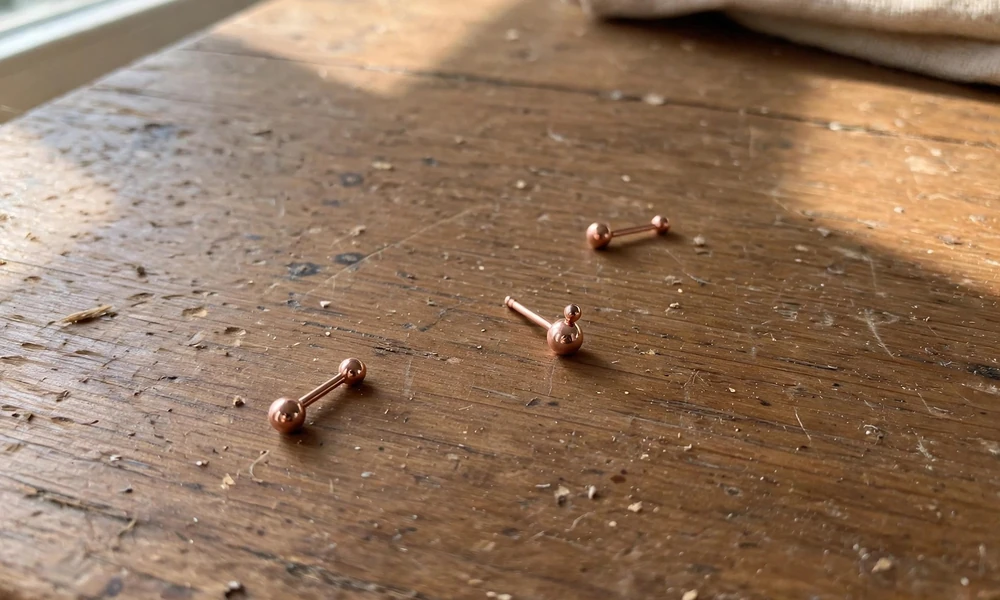
Look next at the post and the backing. A flat-back labret is the most comfortable for sleeping and the least likely to catch on clothing or a towel. An L-shaped post is easier to insert and remove, which suits people who change their jewellery often. A screw post holds well but can be fiddly. For a fresh piercing, your piercer will usually recommend a longer post, which you can swap for a shorter one once the swelling settles.
Finally, look at the end. A 2 millimetre ball is discreet and suits a first stud. A 3 millimetre ball or a small cubic zirconia catches more light and reads as jewellery rather than a dot. A flat disc end is the most understated of all. Our guide to the best nose studs for women covers the full range of end styles, and it is a useful companion if you are still deciding between a ball, a gem, and a disc.
The 9 best rose gold nose studs of 2027
The Classic Polished Rose Gold Ball Stud
What we like: A 2.5 millimetre polished ball in solid 14k rose gold, on a flat-back labret post, with a warm, even colour and a mirror finish. What to consider: The ball is small, so it is discreet rather than decorative. Best for: Everyday wear and first piercings. Material: Solid 14k rose gold. Price range: Mid-range. Standout feature: The polished finish catches light without a stone.
The Rose Gold Stud with a Tiny Diamond
What we like: A 2 millimetre diamond set in a four-prong rose gold head, with a slim flat-back post and a clean, low profile. What to consider: A real diamond at this size costs noticeably more than a cubic zirconia. Best for: Occasions and anyone who wants a stud that reads as fine jewellery. Material: Solid 14k rose gold, diamond. Price range: Premium. Standout feature: The prong setting lets light through the stone from all sides.
A small diamond in rose gold is a classic pairing. The warm metal softens the stone, and the low setting means it sits close to the nose and does not catch on fabric. Buy the smallest size you are happy with, because a 2 millimetre stone looks larger on the nose than it does in a photograph.
The Brushed Rose Gold Seamless Stud
What we like: A matte, brushed finish in solid 14k rose gold, with a flat disc end and a flat-back post that sits flush against the skin. What to consider: The brushed finish shows fingerprints and needs occasional cleaning to stay even. Best for: Minimal styling and people who dislike shine. Material: Solid 14k rose gold. Price range: Mid-range. Standout feature: The matte surface gives a soft, modern look.
Not every rose gold piece needs to be polished. A brushed finish reads as quiet and contemporary, and it pairs well with brushed or matte jewellery elsewhere. It is also a good choice if you find polished gold too bright against your skin.
The Rose Gold Ball with a Cubic Zirconia End
What we like: A 3 millimetre cubic zirconia in a rose gold bezel, on an L-shaped post that is easy to insert and remove. What to consider: Cubic zirconia can cloud over time and needs regular cleaning to stay bright. Best for: Trying a gem look without the price of a diamond. Material: Solid 14k rose gold, cubic zirconia. Price range: Mid-range. Standout feature: The bezel setting protects the stone and feels smooth.
This is the practical way to get sparkle. The bezel holds the stone securely, the L-shaped post is easy to change, and the price leaves room to buy a second stud in a different size. Clean it weekly with warm water and mild soap to keep the stone clear.
The Rose Gold Stud with a Pearl Accent
What we like: A 3 millimetre freshwater pearl set in rose gold, with a flat-back post and a soft, warm glow that suits evening wear. What to consider: Pearls are softer than metal and should not be cleaned with harsh chemicals or ultrasonic cleaners. Best for: Weddings, evenings, and soft, romantic styling. Material: Solid 14k rose gold, freshwater pearl. Price range: Mid-range to premium. Standout feature: The pearl adds warmth that a clear stone cannot.
The Slim Rose Gold Nose Stud
What we like: A 1.8 millimetre ball on a fine 20 gauge post, the most discreet solid gold stud here, with a polished finish and a flat back. What to consider: It is easy to lose if you drop it, and it is barely visible from more than a metre away. Best for: Workplaces with strict dress codes and very subtle styling. Material: Solid 14k rose gold. Price range: Mid-range. Standout feature: The smallest end here, for the quietest look.
Some people want a nose stud that is almost invisible. This is that stud. It marks the piercing without drawing attention to it, and it is comfortable enough to forget you are wearing it, which is the highest praise a daily stud can earn.
The Rose Gold and White Gold Two-Tone Stud
What we like: A rose gold ball paired with a white gold post and backing, giving a two-tone effect that bridges warm and cool jewellery. What to consider: The two metals wear at slightly different rates, and the colour contrast fades if the piece is heavily polished. Best for: People who mix gold and silver jewellery. Material: Solid 14k rose gold and white gold. Price range: Premium. Standout feature: The two-tone design works with any other jewellery you own.
If your jewellery box is split between warm and cool metals, a two-tone stud solves the problem. It sits comfortably with either, and the contrast is subtle enough that it does not look like a compromise. Our roundup of the best rose gold nose rings shows the same two-tone idea in ring form, if you prefer a hoop to a stud.
The Rose Gold Beaded Nose Stud
What we like: A small cluster of three rose gold beads in a triangular arrangement, with a flat-back post and a textured, handcrafted feel. What to consider: The beaded texture collects skin oils and needs more frequent cleaning than a smooth ball. Best for: Boho styling and anyone who wants texture rather than sparkle. Material: Solid 14k rose gold. Price range: Mid-range. Standout feature: The beaded cluster reads as a tiny piece of sculpture.
The Tiny Rose Gold Nose Stud
What we like: A 1.5 millimetre ball in solid 14k rose gold, the smallest stud here, on a short flat-back post for a snug fit. What to consider: It can be hard to handle, and it is not a good choice for a fresh piercing that still needs a longer post. Best for: Healed piercings and the most minimal look possible. Material: Solid 14k rose gold. Price range: Affordable to mid-range. Standout feature: The smallest, lightest stud in this roundup.
Which rose gold nose stud is right for you
Start with your piercing. A fresh piercing needs a longer post and a simple end, usually a ball or a flat disc, because anything with a stone or a textured surface is harder to clean and easier to catch. A healed piercing can take any end you like. If you are not sure whether your piercing is fully healed, ask your piercer before swapping to a shorter post or a decorative end.
Then think about your skin. Rose gold suits warm and neutral skin tones particularly well, and it flatters most people because the copper in the alloy echoes the warmth in skin. If your skin is very cool-toned, a rose gold stud can still work, but you may prefer the two-tone piece here, or a paler 18k rose gold that reads closer to champagne.
Finally, think about how often you will change it. If you swap jewellery weekly, an L-shaped post is easier to handle. If you wear one stud for months at a time, a flat-back labret is more comfortable and more secure. A diamond nose stud is worth considering if you want a stone that will not cloud, but for most people a solid gold ball or a cubic zirconia is the more practical daily choice.
The caveats that matter
Rose gold is durable, but it is not indestructible. The copper in the alloy can oxidise over time, especially if the stud is stored in a damp bathroom or cleaned with harsh chemicals. A gentle clean with warm water and mild soap, followed by a soft dry, is enough. Avoid ultrasonic cleaners for pearl or stone-set pieces, and avoid chlorine, which can weaken gold alloys.
| Detail | What is known |
|---|---|
| Best metal for daily wear | Solid 14k rose gold, nickel-free where possible |
| Usual gauge | 20 gauge, about 0.8 millimetres, for most nostrils |
| Post length | 6 to 7 millimetres healed, 7 to 8 millimetres for a fresh piercing |
| Most comfortable backing | Flat-back labret, which sits flush inside the nostril |
| Who should check the alloy | Anyone with a nickel or copper sensitivity |
| What to avoid | Chlorine, harsh chemicals, and ultrasonic cleaners for stone or pearl ends |
| Cleaning | Warm water and mild soap, soft cloth, weekly for gem-set pieces |
| What it does not do | It does not suit every skin tone equally, and plated rose gold will wear through |
If you have a nickel allergy, confirm the alloy before buying. Many rose gold alloys are nickel-free, but not all, and a seller who cannot tell you what is in the metal is a seller to avoid. The same applies to copper sensitivity: it is uncommon, but if your skin reacts to copper jewellery, a rose gold stud with a high copper content may irritate you, and a different metal is the safer choice.
Checklist: buying a rose gold nose stud honestly
Use these checks before you buy, and again when the stud arrives.
- Check the karat: solid 14k rose gold for daily wear, not plated or filled.
- Check the alloy: ask whether it is nickel-free if you have a metal sensitivity.
- Check the gauge and post length: 20 gauge, with a longer post for a fresh piercing.
- Check the backing: flat-back labret for comfort, L-shaped for easy changes.
- Check the end size: 2 to 3 millimetres for a visible stud, 1.5 to 2 millimetres for a discreet one.
- Check the return policy: a stud that does not fit should be returnable if it has not been worn.
Frequently asked questions
Does rose gold tarnish?
Solid rose gold does not tarnish the way silver does, but the copper in the alloy can darken slightly over time, especially with exposure to moisture and chemicals. Regular gentle cleaning keeps the colour bright.
Is rose gold good for a new nose piercing?
Yes, if it is solid 14k rose gold and nickel-free. Many piercers recommend it, but some prefer implant-grade titanium for the initial healing period. Ask your piercer what they recommend for your skin.
Will rose gold irritate sensitive skin?
Usually not, but it depends on the alloy. If you react to nickel, confirm the piece is nickel-free. If you react to copper, rose gold may not be the right choice for you.
How do I clean a rose gold nose stud?
Soak it in warm water with a drop of mild soap, brush it gently with a soft toothbrush, rinse, and dry it with a soft cloth. Do not use ultrasonic cleaners on pearl or stone-set pieces.
What size rose gold nose stud should I buy?
A 2 to 2.5 millimetre ball or stone suits most people. Go smaller for a discreet look, larger for a visible one. For the post, 6 to 7 millimetres fits a healed piercing, and 7 to 8 millimetres suits a fresh one.
Is rose gold more expensive than yellow gold?
No, they cost roughly the same at the same karat, because both are gold alloys. The price difference comes from the stone, the craftsmanship, and the brand, not the colour of the gold.
The bottom line
The best rose gold nose stud in 2027 is a solid 14k piece in a size and end style that suits your piercing and your routine. For most people, that is a 2 to 2.5 millimetre polished ball on a flat-back post: comfortable, durable, and warm enough to flatter almost any skin tone. A small diamond or a cubic zirconia adds sparkle if you want it, and a pearl or beaded end adds character.
Buy solid gold, check the alloy if you have a sensitivity, and match the post length to your piercing. Do that, and a rose gold stud will be the piece you reach for every day, not the one you keep in a drawer.