Platinum nose rings sit at the top of the fine jewellery ladder for a simple reason: the metal is rare, dense, naturally white, and almost entirely pure. A platinum nose ring is usually 95 percent platinum, compared with 58.5 or 75 percent gold in 14k and 18k gold, and that purity is why it suits sensitive skin so well and why it never needs plating to stay white. It is also why it costs more, and why it is worth thinking carefully before you buy one.
The appeal is not just the colour. Platinum is heavier than gold, so a platinum nose ring has a satisfying weight for its size, and it is far more resistant to wear. It does not thin out over years of daily wear the way gold can, and it does not tarnish at all. What it does develop, slowly, is a soft satin finish called a patina, where the surface picks up tiny marks. Some people love that lived-in look. Others prefer to have it polished back to a bright shine, which a jeweller can do easily.
Below are nine platinum nose rings worth considering in 2027, from a classic polished hoop to a pavé ring set with small diamonds. Each one is described by what it does well, what to watch for, and who it suits best, so you can decide whether platinum is right for you, and which ring is worth the investment.
Key takeaways
- Platinum nose rings are usually 95 percent pure platinum, naturally white, and they never need plating to stay white.
- Platinum is dense, durable, and hypoallergenic, which makes it one of the best metals for sensitive skin and long-term wear.
- Expect to pay far more than for gold or silver, and check for a Plat or 950 stamp before you buy.
- Platinum develops a soft patina over time; it can be polished back to a bright shine by a jeweller.
- Platinum is not a budget metal, and a very cheap “platinum” ring is almost certainly plated base metal, not solid platinum.
What platinum nose rings actually are
A platinum nose ring is a small hoop, seamless ring, clicker, or L-shaped stud made from platinum, most often 950 platinum, meaning 95 percent pure platinum with 5 percent other platinum-group metals. That high purity is the point. White gold is white because it is plated with rhodium, which wears away and needs replacing. Platinum is white all the way through, so its colour never changes, and it never needs plating.
Platinum is also one of the densest metals used in jewellery, which means a platinum nose ring feels noticeably heavier than a gold ring of the same size. That weight is a sign of quality, not a problem, and most people get used to it within a day. The density also makes platinum very durable. It resists scratching better than gold, and when it is scratched, the metal is displaced rather than lost, so a platinum ring does not thin out over decades of wear the way a gold ring can.
Price reflects all of this. A simple platinum nose ring typically costs between 180 and 450 pounds or dollars, and a ring with diamonds can cost 600 to 900 or more. That is a serious amount for a small piece of jewellery, and it is the main reason to be sure about size, gauge, and style before you buy, because a platinum ring is not something you replace casually.
How we chose these platinum nose rings and what to look for
Look first at the stamp. Genuine platinum jewellery is marked Plat, Pt950, or 950, and the listing should say solid platinum, not platinum-plated or platinum tone. Anything without a clear stamp should be treated with suspicion, especially at a low price, because platinum-plated base metal is common at the cheap end of the market and wears through quickly.
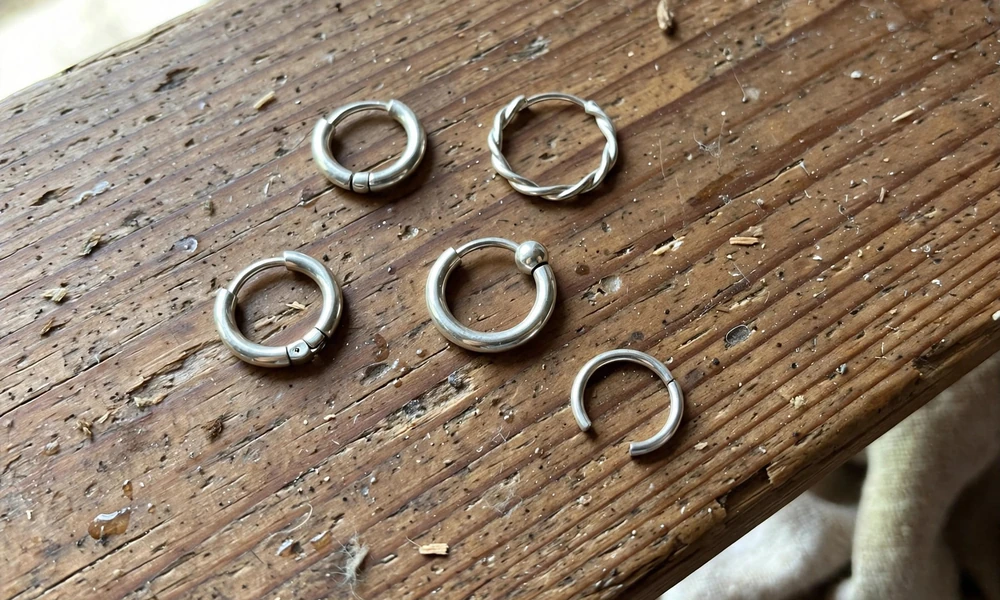
Look next at the closure and the gauge. A seamless ring should close with no visible gap and no sharp edge, and a clicker should snap shut firmly and stay shut. Platinum is a strong metal, so an 18 gauge ring holds its shape very well, while a 20 gauge ring is finer and more delicate. Our guide to the best nose rings for women explains how gauge and diameter work together, because a ring that is the right thickness but the wrong size will still sit awkwardly.
Finally, look at the finish and any stones. A high polish shows platinum at its brightest, while a brushed finish develops a softer patina sooner. Diamonds and sapphires should be set securely, with no wobble and no rough prongs. At platinum prices, a loose stone is not a minor flaw, it is a reason to return the ring.
The 9 best platinum nose rings of 2027
The Classic Polished Platinum Ring
What we like: A plain, high-polish seamless hoop in solid 950 platinum, bright, dense, and naturally white with no plating to wear away. What to consider: It is the most expensive simple ring on this list, and it will slowly develop a patina with daily wear. Best for: Everyday wear and a first platinum nose ring. Material: Solid 950 platinum. Price range: $180 to $320. Standout feature: A naturally white metal that never needs re-plating.
The Platinum Ring with a Tiny Diamond
What we like: A slim platinum hoop with a single small diamond, bright, elegant, and just enough sparkle to lift a simple outfit. What to consider: The stone should be checked regularly for looseness, and the ring is best removed before rough handling. Best for: Evenings, occasions, and anyone who wants one special ring. Material: 950 platinum, diamond. Price range: $350 to $600. Standout feature: A single well-set diamond in a naturally white metal.
The Brushed Platinum Ring
What we like: A soft, satin brushed finish that hides small scratches and develops a patina gracefully, with a muted, modern look. What to consider: The muted finish is less bright than a polished ring, so it suits a quieter style. Best for: Minimalist looks and people who like the patina. Material: Solid 950 platinum, brushed finish. Price range: $200 to $350. Standout feature: A satin finish that ages well instead of showing wear.
Brushed platinum is the understated choice. It does not demand attention, it does not show every mark, and it looks better the longer you wear it, which is exactly what platinum is for.
The Platinum Ring with a Pearl Accent
What we like: A small freshwater pearl on the end of a slim platinum hoop, soft, elegant, and unusual for a nose ring. What to consider: Pearls are delicate and should not be soaked in cleaning solutions or exposed to perfume and hairspray. Best for: Weddings, formal occasions, and soft, romantic styling. Material: 950 platinum, freshwater pearl. Price range: $300 to $500. Standout feature: A real pearl end in a precious white metal.
The Thin Platinum Stacking Ring
What we like: An extra-fine hoop designed to be worn alongside a second nose ring, light, neat, and barely there despite the density of platinum. What to consider: The thin gauge is fiddly to put in and take out, so it suits people who leave their ring in for weeks at a time. Best for: Double piercings and layered nose jewellery. Material: Solid 950 platinum, 20 gauge. Price range: $180 to $280. Standout feature: A fine profile made for stacking.
If you have two nostril piercings, this is the ring that makes the pair work in platinum. It sits quietly beside a bolder ring and adds a second line of white metal without competing for attention.
The Platinum Ring with a Sapphire End
What we like: A small blue sapphire set into the end of a polished platinum hoop, with a deep colour that stands out beautifully against the white metal. What to consider: Sapphires are hard and durable, but the setting should still be checked for looseness every few months. Best for: Evening wear and anyone who loves blue stones. Material: 950 platinum, sapphire. Price range: $400 to $650. Standout feature: A rich blue sapphire in a naturally white setting.
The Platinum and Diamond Pavé Ring
What we like: A platinum hoop with a row of tiny pavé diamonds along the front, sparkling from every angle and far more eye-catching than a single stone. What to consider: Pavé settings need care, and a lost stone can be costly to replace, so handle the ring gently and have it checked yearly. Best for: Special occasions and anyone who wants maximum sparkle. Material: 950 platinum, pavé diamonds. Price range: $600 to $900. Standout feature: A continuous line of small diamonds set in platinum.
Pavé is the most glamorous option on this list, and the most demanding. It rewards careful wear with a level of sparkle no single stone can match, and it is the ring to save for the occasions that deserve it.
The Platinum L-Shaped Ring
What we like: An L-shaped stud in solid platinum with a smooth bend and a neat, comfortable fit that stays in place all day. What to consider: The L-shape needs to be the right length for your nostril, so check the fit carefully before committing. Best for: People who prefer studs to hoops, and for secure everyday wear. Material: Solid 950 platinum. Price range: $180 to $300. Standout feature: A secure L-shaped fit that does not slip or rotate.
The Tiny Platinum Ring
What we like: A small-diameter hoop that sits close to the nostril, neat, discreet, and comfortable for all-day wear. What to consider: The small size makes it fiddly to put in and take out, and the price is high for such a small piece. Best for: Workplaces, minimal styling, and smaller noses. Material: Solid 950 platinum. Price range: $180 to $280. Standout feature: A close, discreet fit in the finest metal.
Which platinum nose ring is right for you
Start with whether you want a hoop or a stud. A seamless hoop is the most versatile choice and suits most faces, while an L-shaped stud is more discreet and more secure for active days. A clicker sits between the two, with the look of a hoop and the security of a closure. If you have never worn a nose ring before, a simple polished hoop is the safest first platinum purchase.
Then think about stones. A plain ring is the most practical and the easiest to keep, and it will never look dated. A single diamond or sapphire adds sparkle without much extra care, while a pavé ring is the most glamorous and the most demanding. A gold versus silver nose ring comparison is a useful read here, because it explains how metal colour changes the way a stone looks, and platinum’s pure white is the most neutral setting of all.
Finally, be honest about the budget. Platinum is a long-term purchase, and it makes sense to buy the simplest good ring rather than stretching for a pavé piece you will worry about. A plain platinum hoop worn every day for ten years is better value than a diamond ring that stays in a box.
The caveats that matter
Platinum has few real drawbacks, but the price is the honest one. A platinum nose ring costs several times more than the same design in gold or silver, and that premium is only worth it if you plan to wear the ring for years. If you like to change your nose jewellery often, or you are still deciding what style suits you, a cheaper metal is the smarter choice while you experiment.
The patina is the other caveat worth knowing. Platinum slowly develops a soft, satin surface as it picks up tiny marks, and while many people love that lived-in look, it is not the same as a bright polish. A jeweller can restore the shine in minutes, but it is a maintenance step that gold and silver do not need in the same way.
| Detail | What is known |
|---|---|
| What platinum is | Usually 95 percent pure platinum, marked Plat, Pt950, or 950 |
| How to check it is real | Look for a Plat or 950 stamp and solid construction, not plating |
| Best gauge for daily wear | 18 gauge holds its shape well; 20 gauge looks finer and more delicate |
| Why it suits sensitive skin | High purity and hypoallergenic, with no nickel and no plating to wear off |
| Cleaning | Warm soapy water and a soft cloth; a jeweller can restore the polish |
| The patina | A soft satin finish that develops slowly; it can be polished back to bright |
| Who should think twice | Anyone who changes jewellery often, or who wants a low-cost first ring |
| What it does not do | It does not tarnish, but it is not scratch-proof, and it is not cheap |
If your piercing is new or still healing, wait until it is fully settled before switching to platinum, and ask your piercer to fit the ring. A well-fitted platinum ring in a healed piercing is one of the most comfortable combinations in nose jewellery.
Checklist: buying a platinum nose ring honestly
Use these checks before you buy, and again when the ring arrives.
- Check the stamp: the ring should be marked Plat, Pt950, or 950, and the listing should say solid platinum.
- Check the price: a solid platinum nose ring costs far more than gold or silver; a very cheap one is not solid platinum.
- Check the gauge and diameter: 18 or 20 gauge, and a diameter that fits your nostril without pulling.
- Check the closure: seamless rings should close with no gap, clickers should snap shut firmly, L-bends should be smooth.
- Check the stones: they should sit securely with no wobble, and prongs should be smooth and even.
- Check the seller: buy from a reputable jeweller with a clear return policy and a certificate for diamond-set pieces.
Frequently asked questions
Is platinum better than white gold for a nose ring?
For long-term wear, usually yes. Platinum is naturally white and never needs re-plating, while white gold is coated in rhodium that wears away and needs replacing every year or two. Platinum is also purer and more durable, though it costs more and develops a patina that white gold does not.
Does platinum tarnish?
No. Platinum does not tarnish or corrode, which is one of its main advantages over silver. It does develop a soft patina over time, a satin finish from tiny surface marks, but that is not tarnish, and a jeweller can polish it back to a bright shine.
Can I wear platinum in a new nose piercing?
Platinum is hypoallergenic and well tolerated, but a new piercing still heals best in implant-grade titanium, which is lighter and the standard choice for fresh piercings. Once the piercing is fully healed, platinum is an excellent long-term metal.
How do I clean a platinum nose ring?
Remove the ring, wash it in warm water with a drop of mild soap, and dry it with a soft cloth. Avoid harsh chemicals and abrasive polishes. If the patina bothers you, a jeweller can restore the bright polish quickly and usually for a small fee.
Why is platinum so much more expensive than gold?
Platinum is rarer than gold, denser, so more metal is used for the same piece, and it is harder to work with, which adds to the making cost. A platinum nose ring also contains far more pure precious metal than a 14k or 18k gold ring, which is part alloy.
Will a platinum nose ring suit my skin tone?
Usually yes. Platinum’s cool, pure white suits most skin tones, and it pairs well with both silver and white gold jewellery. Our guide to the best platinum nose screws shows how the same white metal looks across different nose jewellery styles, which can help you picture it before you buy.
The bottom line
The best platinum nose ring in 2027 is a solid 950 piece with a smooth finish, a secure closure, and a size that fits your nostril without pulling. A polished hoop is the most versatile choice, a single diamond adds just enough sparkle, and a brushed finish suits a quieter style. All of them cost far more than gold or silver, and all of them are built to be worn for years, not months.
Buy solid platinum, check the stamp, and choose the simplest ring you will love wearing every day. Do that, and a platinum nose ring will stay white, comfortable, and beautiful for as long as you own it, which is the honest return on the price.