
A mixed metal nostril ring is the answer to a small, everyday problem: your earrings are silver, your necklace is gold, and a single-metal nostril ring has to choose a side. A mixed metal ring does not choose. It combines two or three metals in one piece, so it works with everything you already own.
The idea is simple, but the execution matters. A good mixed metal ring balances its metals so neither one dominates, and it joins them cleanly, with no rough seam and no weak point. A poor one looks muddled, tarnishes unevenly, or falls apart where the metals meet. Knowing what to look for is the difference between a ring that becomes your daily default and one that sits in a drawer.
Below are nine mixed metal nostril rings worth considering in 2027, from a classic gold and silver twist to three-tone designs and two-tone clickers. Each one is described by what it does well, what to watch for, and who it suits best, so you can choose with your piercing and your jewellery box in mind.
Key takeaways
- Mixed metal nostril rings combine two or more metals, so they work with both gold and silver jewellery.
- Look for clearly named metals and a clean, smooth join; avoid rings that do not say what they are made of.
- Gold and silver is the most versatile pairing, while copper and steel gives a warmer, earthier look.
- Different metals tarnish at different rates, so mixed metal rings need even, gentle polishing.
- Mixed metal is not the best choice for a fresh piercing, and it is not a hypoallergenic option, so wear it only once your piercing is fully healed.
What mixed metal nostril rings actually are
A mixed metal nostril ring is a small ring worn through a nostril piercing, made from two or more metals combined in a single piece. The most common pairing is gold and silver, twisted or layered together. Other pairings include copper and steel, rose gold and silver, and gold with a blackened metal accent. The ring is usually a seamless hoop, a clicker, or a horseshoe shape, in 20 or 18 gauge, with a diameter of 6 to 10 millimetres.
The appeal is practical. Most people own jewellery in more than one metal, and a mixed metal nostril ring is the one piece that does not clash with any of it. It also adds visual interest. A single-metal ring is one flat colour; a mixed metal ring has contrast built in, so it catches the eye even at a small size.
What matters most is how the metals are joined. In a well-made ring, the metals are twisted, soldered, or layered so the join is smooth and strong. In a poorly made ring, the join is a weak point, and the ring can snap or separate where the metals meet. A smooth join that you cannot feel with your fingertip is a good sign.
How we chose these mixed metal nostril rings and what to look for
Look first at the metals and the gauge. A ring that names its metals, such as gold-filled and sterling silver, or copper and stainless steel, is a better bet than one described only as mixed metal. For most nostrils, 20 gauge is the delicate, everyday choice, while 18 gauge feels more present and holds its shape better. A diameter of 8 millimetres suits most piercings.
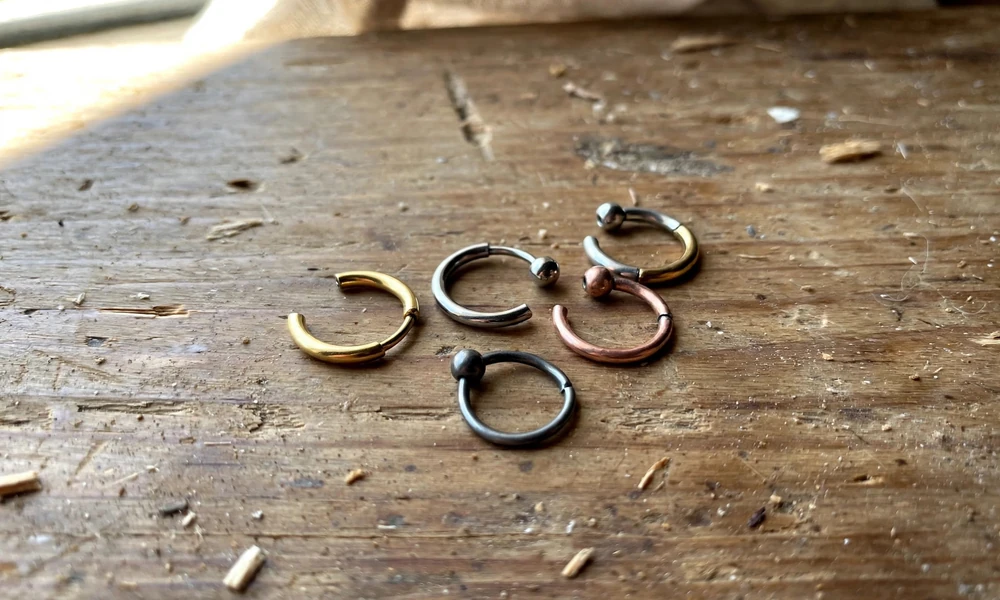
Look next at the balance and the closure. The metals should share the ring fairly, not one tiny accent lost on a ring that is really just one metal. A seamless ring should close cleanly, with no gap and no sharp edge where the ends meet. A clicker should snap shut firmly and open without force.
Finally, think about how the ring will age. Different metals tarnish at different rates, so a mixed metal ring changes unevenly. That is normal, and it can look charming, but it means you will need to polish the whole ring evenly. Our guide to the best nose rings for women is a useful starting point if you are still deciding between ring styles, because the shape of the ring matters as much as the metals in it.
The 9 best mixed metal nostril rings of 2027
The Classic Gold and Silver Twist Ring
What we like: Two strands, one gold and one silver, twisted together into a single ring that works with every other piece of jewellery you own. What to consider: The twist can trap moisture, so dry the ring after washing your face. Best For: Everyday wear and mixed-metal outfits. Material: Gold-filled and sterling silver. Price Range: $20 to $45. Standout Feature: A twisted design that shows both metals equally.
This is the mixed metal ring to buy first. It is the most versatile design on this list, and it is the one most likely to become the ring you reach for every morning.
The Gold and Rose Gold Twisted Ring
What we like: Warm gold and soft rose gold twisted together, a gentle, romantic pairing that suits warm skin tones especially well. What to consider: The two golds are close in colour, so the twist is subtle rather than bold. Best For: A soft, warm look with a hint of contrast. Material: Gold-filled and rose gold-filled. Price Range: $25 to $50. Standout Feature: Two warm golds that blend and contrast at the same time.
If gold and silver feels too stark for your taste, this is the gentler alternative. The two warm tones sit close together, so the ring reads as one warm piece with a quiet twist.
The Three-Tone Ring
What we like: Gold, silver, and copper in one ring, the most versatile piece on this list, because it matches every metal you own. What to consider: Three metals means three tarnish rates, so the ring needs regular, even polishing. Best For: People who wear all three metals and want one ring for everything. Material: Gold-filled, sterling silver, and copper. Price Range: $25 to $50. Standout Feature: Three metals in a single, balanced design.
A three-tone ring is the practical choice for a jewellery box with no single theme. It is also the most eye-catching ring here, because three colours in a small space draw attention.
The Copper and Steel Ring
What we like: Warm copper paired with cool stainless steel, an earthy, grounded combination that suits casual and bohemian styles. What to consider: Copper darkens faster than steel, so the contrast grows stronger over time. Best For: A warm, earthy, everyday look. Material: Copper and stainless steel. Price Range: $15 to $35. Standout Feature: Warm copper against cool, bright steel.
This pairing is less formal than gold and silver, and that is its charm. It looks handmade and natural, and it suits denim, leather, and linen better than a polished gold ring does.
The Two-Tone Clicker with a Crystal
What we like: A gold and silver clicker with a single small crystal, easy to open and close, with a sparkle that lifts the whole design. What to consider: The hinge is a moving part, so it needs to be well made to last. Best For: Evening wear and anyone who changes rings often. Material: Gold-filled and sterling silver with a cubic zirconia. Price Range: $25 to $50. Standout Feature: A hinged clicker that opens and closes with a snap.
Clickers are the easiest rings to live with. They open and close without tools, and this two-tone version adds a crystal for evenings when you want a little more shine.
The Slim Two-Tone Seamless Ring
What we like: A very fine 20 gauge ring in gold and silver, light, comfortable, and barely there, with a seamless closure. What to consider: Thin metal bends more easily, so handle it gently. Best For: A delicate, minimal look. Material: Gold-filled and sterling silver. Price Range: $20 to $40. Standout Feature: A fine gauge that sits almost invisibly on the nostril.
Some people want their nostril ring to be a quiet detail, not a statement. This slim two-tone ring is exactly that, and its lightness makes it comfortable for all-day wear.
The Gold and Black Two-Tone Ring
What we like: Bright gold paired with blackened metal, a bold, modern contrast that stands out without needing a stone. What to consider: The black finish wears lighter over time, especially where the ring rubs against skin. Best For: A bold, modern, or edgy style. Material: Gold-filled and blackened stainless steel. Price Range: $20 to $45. Standout Feature: A sharp gold and black contrast.
This is the most dramatic ring on the list. The black half makes the gold half look brighter, and the result is a ring that reads as deliberate and modern rather than decorative.
The Rose Gold and Silver Ring
What we like: Soft rose gold and bright silver in one ring, a fresh, pretty pairing that suits fair and cool skin tones. What to consider: Rose gold can fade slightly with heavy wear, so polish it gently. Best For: A soft, feminine look with a cool edge. Material: Rose gold-filled and sterling silver. Price Range: $25 to $50. Standout Feature: Blush-toned rose gold against bright silver.
Rose gold and silver is a pairing that feels current without trying too hard. It is soft enough for daytime and pretty enough for an evening out.
The Tiny Two-Tone Ring
What we like: A small 6 millimetre ring in gold and silver that hugs the nostril closely, neat, discreet, and comfortable under a mask or glasses. What to consider: It only suits piercings placed close to the edge of the nostril, so check your piercing placement first. Best For: A close-fitting, barely-there look. Material: Gold-filled and sterling silver. Price Range: $15 to $35. Standout Feature: A small diameter that sits tight and neat against the nose.
A tiny ring is the most discreet option on this list. It reads as a small glint of two metals rather than a piece of jewellery, which is exactly what some people want.
Which mixed metal nostril ring is right for you
Start with your piercing. A healed piercing can take any of these rings, but a piercing that is still settling needs a smooth, simple ring with no stone and no hinge. If your piercing sits close to the edge of your nostril, a small diameter ring will fit neatly. If it sits further back, you will need a larger diameter so the ring does not pull.
Then think about the metals you already wear. If your jewellery is mostly silver, a gold and silver twist will bridge the gap. If you wear copper and brass, a copper and steel ring will feel at home. If you wear everything, a three-tone ring is the simplest answer. The ring should work with your jewellery box, not fight it.
Finally, be honest about maintenance. Mixed metal rings need even polishing, because the metals tarnish at different rates. If you will polish a ring every few weeks, any of these will stay looking good. If you will not, choose a design with a brushed or oxidised finish, which hides uneven tarnish. The same thinking applies to other mixed pieces, such as mixed metal nose pins, where the pairing of metals matters as much as the shape of the piece.
The caveats that matter
Mixed metal rings are versatile, but they are not for everyone. The join between two metals is a potential weak point, and a cheap ring can separate where the metals meet. Different metals also tarnish at different rates, so a ring that starts out balanced can look uneven after a few months unless it is polished evenly.
| Detail | What is known |
|---|---|
| Best pairing for most wearers | Gold and silver, or copper and stainless steel |
| Common gauges | 20 gauge for a delicate look, 18 gauge for a sturdier feel |
| Common diameters | 6 to 10 millimetres, depending on piercing placement |
| Who should avoid mixed metal | People with a fresh piercing, or a known metal sensitivity |
| How it ages | Metals tarnish at different rates; polish the whole ring evenly |
| Weak point to check | The join between the metals; it should feel smooth and hold firmly |
| Cleaning | Warm water, mild soap, and a soft cloth; avoid harsh chemicals |
| What it does not do | It does not stay evenly bright on its own, and it is not a hypoallergenic option |
If your piercing is fresh, wait until it is fully healed before switching to mixed metal. A healing piercing needs a stable, inert metal, and a mixed metal ring can irritate it. If you notice persistent redness, itching, or a rash, remove the ring, clean the area, and switch to a different metal.
Checklist: buying a mixed metal nostril ring honestly
Use these checks before you buy, and again when the ring arrives.
- Check the metals: each metal should be named, not just described as mixed metal.
- Check the gauge and diameter: 20 or 18 gauge, and a diameter that matches your piercing placement.
- Check the join: run a fingertip over it; it should feel smooth, with no gap and no sharp edge.
- Check the closure: a seamless ring should close cleanly, and a clicker should snap shut firmly.
- Try it for a day: wear it at home first and watch for redness, itching, or discomfort.
- Plan for care: keep a soft cloth nearby for polishing, and clean the ring weekly with warm water and mild soap.
Frequently asked questions
Can I wear a mixed metal nostril ring in a new piercing?
No, not while it is healing. A fresh piercing needs a stable, inert metal such as implant-grade titanium or surgical steel. Wait until the piercing is fully healed, which usually takes two to four months, before switching to mixed metal.
Why do the metals on my ring tarnish at different rates?
Each metal reacts to air, moisture, and skin at its own speed. Copper darkens quickly, silver tarnishes more slowly, and gold barely changes. Polishing the whole ring evenly, rather than one part at a time, keeps the balance looking right.
How do I clean a mixed metal nostril ring?
Use warm water, mild soap, and a soft cloth. Avoid harsh chemical dips, which can damage one metal while leaving the other untouched. Dry the ring fully before putting it back in, especially if it has a twist or a hinge.
Will a mixed metal ring break where the metals join?
A well-made ring should not. The join should feel smooth and hold firmly when you flex the ring gently. If you can feel a gap or a sharp edge, or if the ring moves at the join, return it. The same care applies to other mixed pieces, such as mixed metal toe rings, where the join is the part to check first.
Is mixed metal a good choice for everyday wear?
Yes, once your piercing is healed. A mixed metal ring is light, comfortable, and works with every other piece of jewellery you own. Just accept that it will need regular, even polishing to keep the metals looking balanced.
Which mixed metal pairing is best for sensitive skin?
None of them is ideal for very sensitive skin, because mixed metal rings are not hypoallergenic. If your skin reacts easily, choose a single inert metal such as implant-grade titanium instead, and save mixed metal for occasions rather than daily wear.
The bottom line
The best mixed metal nostril ring in 2027 is the one that matches your piercing, your jewellery box, and how much care you are willing to give it. For most people, a classic gold and silver twist ring is the right start: versatile, balanced, and easy to wear. If you want something warmer, try copper and steel. If you wear everything, a three-tone ring covers it all.
Buy named metals, check the join and the closure, and give a new ring a day of wear at home before you commit to it. Mixed metal will tarnish unevenly and it is not the choice for a fresh piercing, but those are the honest trade-offs of a ring that goes with everything you own.