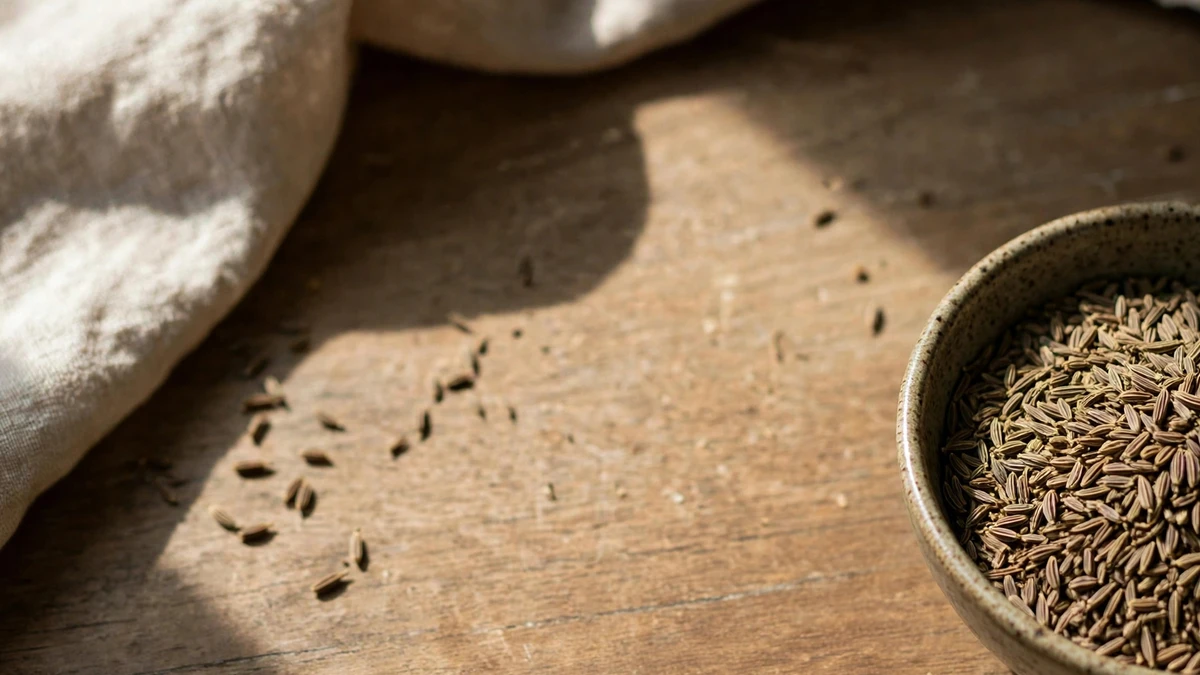

A caraway perfume is a fragrance built around the seed of Carum carvi, a small biennial plant of the parsley family that has flavoured bread, cheese and spirits for thousands of years. The seed oil smells warm and aniseed, with a green, slightly minty edge and a dry herbal character, and it is that cool freshness that sets it apart from the warmer seed spices it is usually grouped with.
The confusion starts in the spice drawer, where caraway, cumin and coriander sit in neighbouring jars and look almost identical. All three are parsley-family seeds, all three are distilled into warm spice oils, and all three turn up in the same fougères and orientals, so most people meet caraway without ever knowing it was there.
This guide explains what a caraway perfume is, how perfumers use the seed oil, and how to tell it apart from its neighbours, cumin, coriander and fennel.
- Key takeaway: A caraway perfume is built on the seed oil of Carum carvi, and it smells warm, aniseed and faintly minty.
- Key takeaway: The smell comes down to carvone, a molecule caraway shares with spearmint, which is where the cool green edge comes from.
- Key takeaway: Caraway usually sits at the top of a perfume, where it opens a fougère or an amber before the heavier notes arrive.
- Key takeaway: The note is most at home in men’s fougères and amber orientals, where it keeps a warm composition from turning heavy.
- Caveat: Caraway is rarely listed as a note, and an aniseed smell in a perfume does not guarantee the seed is in the bottle, so always check the published note list.
What a caraway perfume actually is
A caraway perfume is any fragrance in which caraway seed oil plays a named, perceptible role. The material is the essential oil drawn from the dried seed by steam distillation, and it is one of the cheaper spice materials in the perfumer’s palette, which is part of the reason it turns up in so many classic men’s fragrances.
The first impression is warm aniseed, like a seed cracked between the teeth, and underneath it there is a green, almost minty freshness that keeps the warmth from turning sweet.
How perfumers use caraway and what to look for
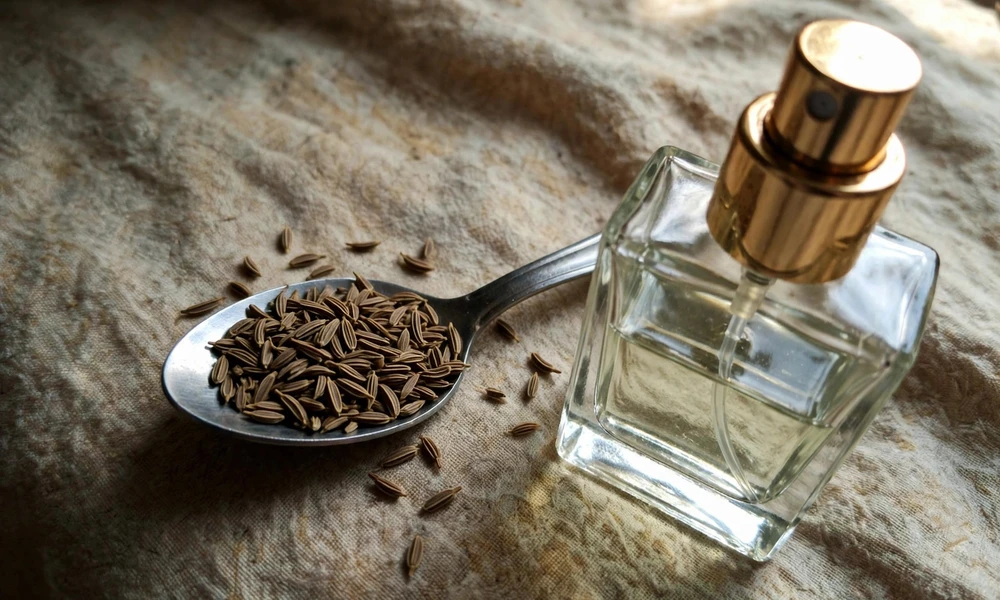
Perfumers reach for caraway when a composition needs a dry, aromatic opening. In a fougère, a small dose sharpens the lavender and gives the top a green lift.
When you are reading a note list, look at where the caraway sits. At the top, it will greet you first and fade within the hour, as it does in Azzaro Pour Homme, where it sits among the lavender and citrus. Our coriander perfume guide explains the same top-versus-heart distinction for another parsley-family seed, and the logic carries over.
Also look at the company it keeps. Lavender and citrus around it mean a fougère; vanilla and tonka mean a sweet oriental; cedar and vetiver mean a dry woody spice.
9 facts about caraway perfume
The aniseed in caraway comes from carvone, a molecule it shares with spearmint
Caraway seed oil is rich in carvone, the same molecule that gives spearmint its cool, clean character, and that shared chemistry is why caraway smells aniseed and faintly minty at the same time.
What It Shows: The minty edge of caraway is not a vague resemblance; it is the same molecule doing the same job in a spice seed and a chewing-gum leaf.
What to Consider: Because carvone is so recognisable, caraway can smell almost like toothpaste in a light composition, and the warmth can be hard to find underneath it.
Best For: Understanding why caraway reads as cool before it reads as spicy.
Material: Carvone, the dominant constituent of caraway seed oil.
Price Range: Carvone itself is cheap to synthesise, but the natural seed oil is inexpensive too, which keeps the note common.
Standout Feature: One molecule, and the same cool note in a rye loaf and a stick of gum.
Caraway sits in the parsley family beside cumin, dill and fennel
Carum carvi is a member of the Apiaceae family, alongside cumin, dill, fennel and coriander, and that shared ancestry is part of why the warm seed spices smell like a family even when each one is distinct.
What It Shows: The warm spices of perfumery are close relatives, and caraway belongs to the same branch of the plant kingdom as its neighbours.
What to Consider: Because it is a parsley-family seed, caraway shares its dry, herbal character with the rest of the family, and that is why it can smell like dill as well as like aniseed.
Best For: Seeing the note as a family member among the warm spices rather than as a lone curiosity.
Material: Caraway seed oil from the parsley family.
Price Range: The family makes no difference to the price; the seed is cheap either way.
Standout Feature: A spice that is botanically closer to a carrot than to a peppercorn.
Caraway is a top note, and it is gone before the base arrives
Unlike fenugreek, which usually works in the heart, caraway is most often a top note, and it appears in the first minutes of a wear, brightening the opening for half an hour or so before the heart takes over.
What It Shows: The note is built for the greeting of a perfume, and its value is in the lift it gives rather than in the warmth it sustains.
What to Consider: Because it leaves early, caraway can be hard to catch in a first spray, and a paper strip will often show it better than skin, where body heat hurries it away.
Best For: Knowing when to judge the note, and why the opening matters.
Material: Caraway seed oil as a top note.
Price Range: The position costs nothing extra; the seed oil is cheap.
Standout Feature: A spice that says hello and then steps aside.
Caraway and lavender built the modern fougere
Caraway turns up alongside lavender more than with any other material, from Azzaro Pour Homme to Le Male, because the two share a dry, aromatic character and the caraway sharpens the lavender instead of sweetening it.
What It Shows: The pairing is not an accident; it is two materials with the same clean, herbal profile building on each other.
What to Consider: Because both materials are aromatic rather than sweet, the combination can smell almost medicinal in cold weather, and that is part of the style rather than a fault.
Best For: Choosing between the aromatic spices when you are building a fougère wardrobe.
Material: Caraway seed oil alongside lavender.
Price Range: The pairing costs nothing extra; the lavender and the rest of the formula set the price.
Standout Feature: Two dry, herbal materials that smell like a barbershop.
The seed gives up its oil under steam, and carvone leads the blend
Caraway oil is produced by passing steam through the dried, crushed seed, and the oil that comes off is roughly half carvone and a third limonene, the citrus molecule, which is where the fresh lift comes from.
What It Shows: The freshness of caraway is a chemical fact, not a matter of taste, and the two molecules together explain the whole smell.
What to Consider: Because the oil is so light and volatile, it evaporates fast, which is why caraway is used at the top of a perfume rather than in the base.
Best For: Understanding why a note you can smell clearly in the opening is gone within the hour.
Material: Caraway seed oil, roughly half carvone and a third limonene.
Price Range: The oil is one of the cheaper spice materials, which is why it is so widely used.
Standout Feature: A light oil that does its work and leaves early.
Caraway is the smell of rye bread and kummel before it is a perfume note
Caraway is the seed scattered through rye bread and the flavour of kümmel, the clear caraway liqueur of northern Europe, and that kitchen and bar association follows the seed into every perfume that contains it.
What It Shows: The note comes from the bakery and the bar, and its first job was in food and drink, not the perfume bottle.
What to Consider: The bread association is why caraway still reads as warm and savoury rather than as exotic or luxurious.
Best For: Placing the note in its long recorded history.
Material: Caraway seed, used in bread, cheese and kümmel for centuries.
Price Range: History adds nothing to the price; the seed is cheap.
Standout Feature: A perfume note that started life in a loaf of rye.
Caraway is the cooler, greener cousin of cumin
Caraway is the closest neighbour of cumin in the spice drawer, and the easiest to confuse with it, because both are warm Apiaceae seeds. But cumin is warmer, earthier and more animalic, with a dry, sweaty edge, while caraway is cooler, greener and more herbal, with a minty lift cumin never has.
What It Shows: The two seeds are siblings with opposite temperaments, and the difference is a matter of temperature rather than of strength.
What to Consider: Because caraway is cooler, it suits a fougère where cumin would suit an oriental, and swapping one for the other changes the whole mood of a perfume.
Best For: Telling the two seeds apart on skin rather than on paper.
Material: Caraway seed oil beside cumin seed oil.
Price Range: Both oils are cheap; the choice is about character, not cost.
Standout Feature: The seed spice that brings a breeze instead of a blanket.
A heavy hand with caraway smells like a medicine cabinet
Underneath the aniseed warmth, caraway carries a dry, herbal note that some noses read as medicinal, and when the dose is too high that facet takes over and the perfume smells like a pharmacy shelf rather than a spice drawer.
What It Shows: The medicinal side of caraway is part of the note, not a flaw in it, and the best caraway perfumes keep the dose low enough to stay on the right side of it.
What to Consider: If you are one of the people who smell medicine first, try caraway in a sweet oriental, where the vanilla and tonka soften the herbal edge.
Best For: Hearing the whole note instead of only the aniseed.
Material: Caraway seed oil, with its medicinal herbal facet.
Price Range: The medicinal side costs nothing extra; it comes with the seed.
Standout Feature: A warm note with a clinical conscience.
Caraway flavoured bread and cured coughs long before it scented perfume
Caraway was chewed for digestion in ancient Egypt and Rome, scattered through bread across medieval Europe, and distilled into kümmel and aquavit, and it entered perfumery only after centuries as a kitchen and medicine-chest staple.
What It Shows: The note arrives in perfumery with a long practical history, and its first job was to settle stomachs, not to scent skin.
What to Consider: Because it was a working spice before it was a perfume material, caraway still reads as honest and unpretentious rather than as a luxury ingredient.
Best For: Explaining why a perfume can smell like a bakery and still be elegant.
Material: Caraway seed, used as food and medicine for thousands of years.
Price Range: The association costs nothing; the cheapest caraway perfumes carry it just as clearly as the dearest.
Standout Feature: The kitchen spice that perfumers decided to keep.
How caraway compares with the other warm spice notes
Cumin is the closest neighbour, and the easiest to confuse with caraway, because both are warm seed spices from the same family. But cumin is warmer, earthier and more animalic, with a dry, sweaty edge, while caraway is cooler, greener and more herbal, with a minty lift cumin never has. In a blend, cumin warms and darkens, while caraway cools and sharpens.
Coriander sits further away. It is lighter, more citrusy and more floral, since linalool leads its chemistry, and it warms a composition without ever smelling edible. Fennel is the nearest aniseed neighbour, and the two are often confused, because both smell of liquorice and green herbs. The difference is that fennel is sweeter and softer, while caraway is drier and sharper, with a herbal edge fennel never has. Our cumin perfume guide sets another warm spice on the same sharp-to-sweet scale.
The caveats that matter
Caraway is an easy material to work with, but it still has boundaries worth knowing before you buy a bottle. It is unrestricted in perfumery, and the seed oil is generally well tolerated, yet the aniseed character can turn medicinal if the dose is high, especially in the fougères, and the top-note position means it fades fast.
| Detail | What is known |
|---|---|
| The material | Essential oil from the seeds of Carum carvi |
| Main constituent | Carvone, the molecule behind the aniseed and minty smell |
| Smell | Warm and aniseed, with a green, minty and slightly herbal edge |
| Pyramid position | Usually top, sometimes heart, rarely the base |
| Caraway versus cumin | Cumin is warmer and more animalic; caraway is cooler and greener |
| Best partners | Lavender, citrus, vanilla, tonka bean, cedar and vetiver |
| Watch out for | Can smell medicinal if overdosed; fades within the first hour |
| Price | The seed oil is one of the cheaper spice materials |
Because caraway is a top note, it usually fades within the first hour in most compositions, and the lavender, vanilla and woods take over from there. That is simply the nature of the material, not a fault in the bottle.
Checklist: understanding a caraway perfume honestly
- Make sure the note is caraway and not aniseed or fennel, by reading the published note list first.
- Look at where the note sits in the pyramid: a top note opens the wear, a heart note warms the middle, and a base note stays quiet under the resins.
- Read the notes around it: lavender and citrus point to a fougère, vanilla and tonka point to a sweet oriental, and cedar and vetiver point to a dry woody spice.
- Smell it on skin rather than on paper, and judge the opening fast, because caraway is gone within the first hour.
- Notice how briefly it stays on your skin, because caraway leaves long before the base notes around it.
- Remember that the cool and warm sides trade places: if it reads too medicinal, a sweet oriental is the place to try it first.
Frequently asked questions
Is the aniseed smell of caraway real or imagined?
Yes, and honestly so. Caraway shares the molecule carvone with spearmint and the aniseed family, so the resemblance is chemical, not imagined.
How do you tell caraway from cumin on skin?
No. Cumin in a perfume is warm, earthy and animalic, while caraway is cool, green and herbal, and that difference is how you tell them apart.
Why do so few note lists mention caraway?
Because the oil is cheap and the dose is small, so houses often use it as a background spice and leave it off the note list altogether. Our fenugreek perfume guide discusses the same listing gap for another rarely named note.
Can a caraway perfume smell medicinal?
Yes, and that is normal. Caraway carries a dry herbal facet that reads as medicinal when the dose is high, especially in a fougère.
Should sensitive skin avoid caraway perfumes?
Generally yes, though the seed oil is potent and should be patch tested on the inner arm first, as with any spice note. If fragranced products usually irritate your skin, try a small patch first and discontinue use if redness or itching shows up.
Which bottle should a caraway newcomer try first?
Start with La Nuit de L’Homme, where the note is warm and gentle under cardamom and vetiver,
The bottom line
A caraway perfume is a fragrance built on the warm, aniseed seed oil of Carum carvi, a material with thousands of years of recorded use and a central role in the history of the warm spices. It smells of aniseed and rye bread at the same time, and that double character is what makes it worth seeking out.
Once your nose knows caraway, you will start noticing it in fougères and orientals you already own, and the note will make more sense with every wear.