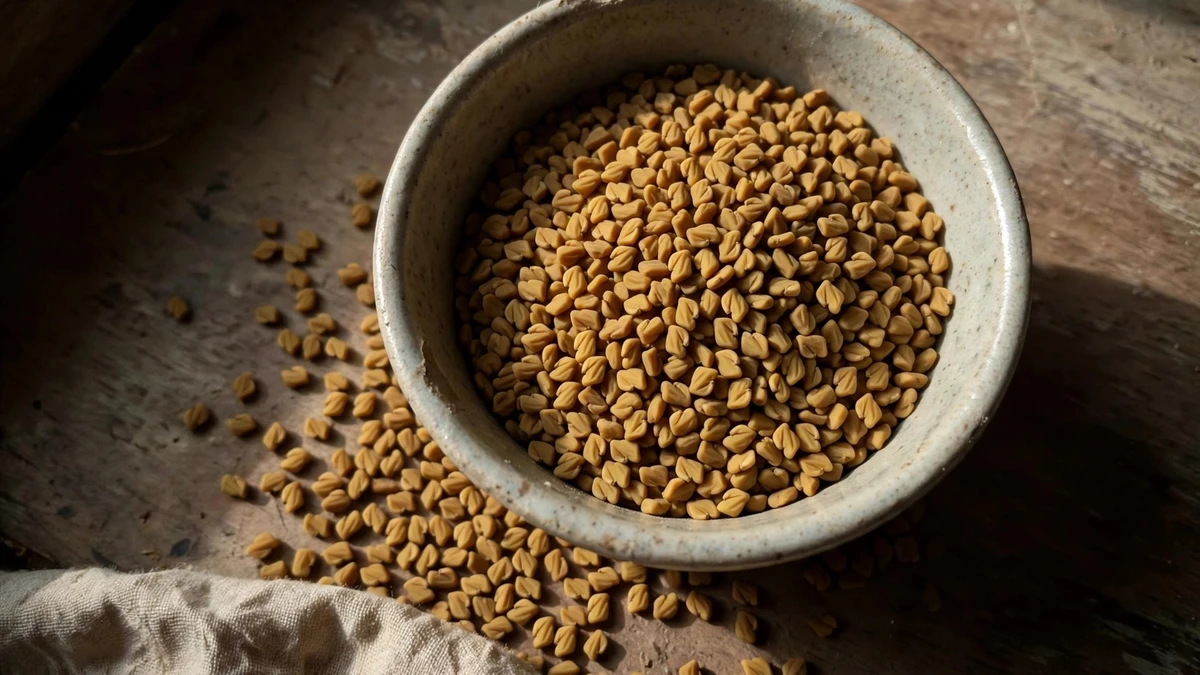

A fenugreek perfume is a fragrance built around the seed of Trigonella foenum-graecum, a small annual legume that has been cultivated for thousands of years. The seed absolute smells warm, sweet and slightly nutty, with a maple-syrup character that comes from the molecule sotolon, and a dry, savoury edge underneath that some noses read as celery and others as curry.
The mix-up starts in the kitchen, where fenugreek is a pantry staple before it is ever a perfume material. Fenugreek is the defining smell of curry powder and the sweetness in maple syrup, and most people meet it as food before they ever meet it as perfume.
This guide explains what a fenugreek perfume is, how perfumers use the material, and how to tell it apart from its neighbours, cumin, coriander and tonka bean.
- Key takeaway: A fenugreek perfume is built on the seed absolute of Trigonella foenum-graecum, and it smells warm, sweet and slightly nutty.
- Key takeaway: The smell comes down to sotolon, a molecule that also gives maple syrup its character.
- Key takeaway: Fenugreek usually sits in the heart, where it bridges the spice family and the gourmand family.
- Key takeaway: The note is most at home in gourmands, tobacco ambers and spicy orientals, where it keeps sweetness from turning cloying.
- Caveat: Fenugreek is rarely listed as a note, and a maple or curry smell in a perfume does not guarantee the seed is in the bottle, so always check the published note list.
What a fenugreek perfume actually is
A fenugreek perfume is any fragrance in which fenugreek seed absolute plays a named, perceptible role. The material is the absolute drawn from the dried seed by solvent extraction, and it is one of the more expensive spice materials in the perfumer’s palette, which is part of the reason it is dosed in small amounts.
A note list cannot do the smell justice on its own, so it is worth describing properly. The first impression is maple syrup and caramel, warm and slightly burnt, and underneath it there is a dry herbal note that keeps the sweetness from turning into dessert.
Fenugreek has never headlined a mainstream perfume, and it almost never takes the leading role in a blend.
How perfumers use fenugreek and what to look for
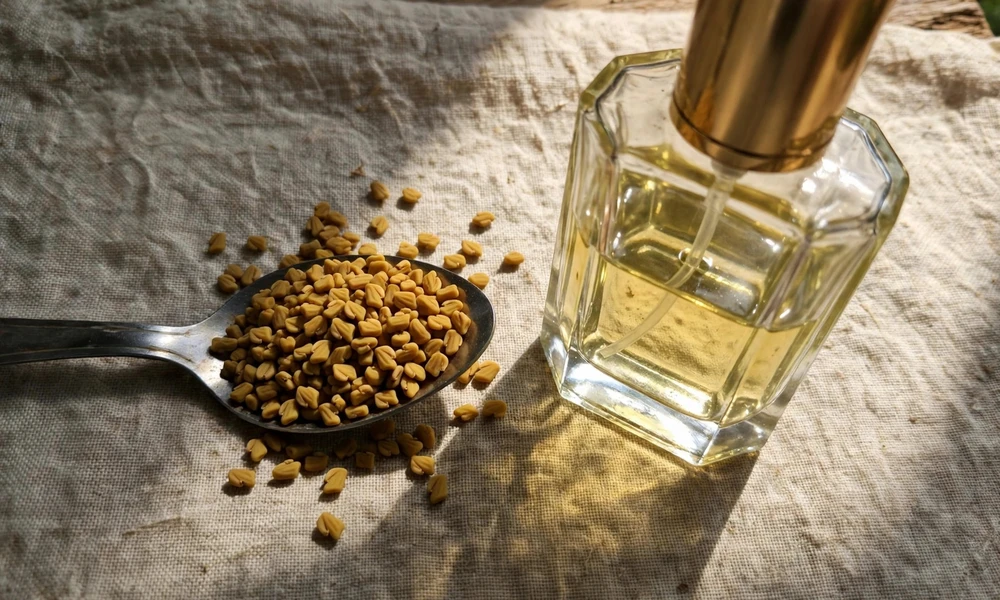
Perfumers reach for fenugreek when a composition needs sweetness with a savoury backbone. In a gourmand, a small dose deepens the caramel and gives it a roasted, nutty quality. In a tobacco amber, it softens the smoke and keeps it from turning dry.
When you are reading a note list, look at where the fenugreek sits. In the heart, it will warm the middle of the wear, as it does in L’Ile Pourpre, where it sits among the vanilla and tonka. As a supporting note, it will be quieter, warming the base without ever announcing itself, as it does in Royal Tobacco, where it sits under the tobacco and woods. Our coriander perfume guide explains the same heart-versus-supporting distinction for another warm spice, and the logic carries over.
Also look at the company it keeps. Tonka bean and vanilla around it mean a gourmand; tobacco and amber mean a dry oriental; rose and saffron mean a floral bridge.
9 facts about fenugreek perfume
Fenugreek smells of maple syrup because of one molecule, sotolon
Fenugreek seed absolute is rich in sotolon, the same molecule that gives maple syrup, lovage and aged rum their characteristic smell.
What It Shows: The maple smell of fenugreek is not a vague resemblance; it is the same chemistry doing the same job in two different places.
What to Consider: Because sotolon is so recognisable, fenugreek can smell almost like breakfast in a light composition, and the spice can be hard to find underneath it.
Best For: Understanding why fenugreek reads as sweet before it reads as spicy.
Material: Sotolon, the dominant sweet constituent of fenugreek seed absolute.
Price Range: Sotolon itself is cheap to synthesise, but the natural absolute is expensive, which keeps the note rare.
Standout Feature: One molecule, and the same smell in a spice seed and a pancake topping.
Fenugreek is a legume, not a parsley-family spice like cumin
Trigonella foenum-graecum is a member of the legume family, related to clover, alfalfa and chickpeas, and that botanical distance from the parsley-family spices is part of why it smells so different from cumin and coriander.
What It Shows: The warm spices of perfumery are not one family, and fenugreek belongs to a different branch of the plant kingdom from its neighbours.
What to Consider: Because it is a legume, fenugreek shares its sweet, hay-like character with other legumes, and that is why it can smell like dried grass as well as maple syrup.
Best For: Seeing the note as a botanical outsider among the warm spices.
Material: Fenugreek seed absolute from the legume family.
Price Range: The family makes no difference to the price; the extraction cost does.
Standout Feature: A spice that is botanically closer to a pea than to a peppercorn.
Fenugreek arrives late, and that is when it matters most
Unlike cumin, which usually opens loudly at the top, fenugreek is a heart note, and it appears after the opening has settled, warming the middle of the wear for three to five hours before the base takes over.
What It Shows: The note is built for the middle of a perfume, and its value is in the warmth it sustains rather than in the greeting it gives.
What to Consider: Because it arrives late, fenugreek can be hard to catch in a first spray, and a paper strip will often miss it entirely.
Best For: Knowing when to judge the note, and why patience matters.
Material: Fenugreek seed absolute as a heart note.
Price Range: The position costs nothing extra; the absolute sets the price.
Standout Feature: A spice that waits for the middle of the wear.
Fenugreek and tonka are regular partners in gourmand perfumes
Fenugreek turns up alongside tonka bean more than with any other material, from Fève Délicieuse to L’Ile Pourpre, because the two share a roasted, caramel character and reinforce each other.
What It Shows: The pairing is not an accident; it is two materials with the same sweet, roasted profile building on each other.
What to Consider: Because both materials are sweet, the combination can turn cloying in warm weather, and that is part of the style rather than a fault.
Best For: Choosing between the sweet spices when you are building a gourmand wardrobe.
Material: Fenugreek seed absolute alongside tonka bean.
Price Range: The pairing costs nothing extra; the tonka and the rest of the formula set the price.
Standout Feature: Two roasted, caramel materials that smell like each other.
The name fenugreek means Greek hay, and it was animal feed before it was perfume
The Latin name foenum-graecum means Greek hay, because the plant was grown in the Mediterranean as fodder for livestock, and the seed was a cheap, everyday food long before perfumers ever used it.
What It Shows: The note comes from humble stock, and its first job was in the field and the kitchen, not the perfume bottle.
What to Consider: The humble origin is why fenugreek still reads as warm and edible rather than as exotic or luxurious.
Best For: Setting the note against its long recorded past.
Material: Fenugreek seed, used as fodder and food for thousands of years.
Price Range: History adds nothing to the price; the extraction cost does.
Standout Feature: A perfume note that started life as animal feed.
Fenugreek absolute costs thousands per kilo, which is why it is dosed in drops
Natural fenugreek absolute costs between $3,000 and $6,000 per kilogram, because the extraction is complex and the yield is limited.
What It Shows: The rarity of fenugreek in perfumery is an economic fact, not a matter of taste, and the material is genuinely scarce.
What to Consider: Because the absolute is so expensive, many perfumes that smell of fenugreek use synthetic sotolon instead, and the note list may not say so.
Best For: Understanding why a note you can smell everywhere is listed almost nowhere.
Material: Fenugreek seed absolute, one of the pricier spice materials.
Price Range: The absolute is expensive; the synthetic molecule is cheap.
Standout Feature: A cheap smell from an expensive material.
Fenugreek bridges the spice family and the gourmand family
Fenugreek is the note perfumers reach for when a composition needs to sit between spice and sweetness, because it carries both characters at once, and it holds a gourmand and a spice accord together in the same bottle.
What It Shows: The note is a connector, and its value is in the families it joins rather than in the smell it adds on its own.
What to Consider: Because it belongs to two families at once, fenugreek can be hard to place in a fragrance pyramid, and houses often list it in the heart for that reason.
Best For: Understanding why fenugreek turns up in perfumes that seem to belong to two families at once.
Material: Fenugreek seed absolute as a bridge between spice and gourmand.
Price Range: The bridging work costs nothing extra; the absolute sets the price.
Standout Feature: The spice that makes a gourmand and an oriental the same perfume.
Fenugreek has a savoury celery side that keeps the sweetness honest
Underneath the maple sweetness, fenugreek carries a dry, herbal note that some noses read as celery and others as lovage, and that savoury facet is what stops the note from smelling like pure sugar.
What It Shows: The sweetness of fenugreek is balanced by a savoury character, and the two sides are the same seed, not two different materials.
What to Consider: Because the savoury side is quieter, it is easy to miss on a first wear, and the perfume can seem sweeter than it really is.
Best For: Hearing the whole note instead of only the maple.
Material: Fenugreek seed absolute, with its celery-like herbal facet.
Price Range: The savoury side costs nothing extra; it comes with the seed.
Standout Feature: A sweet note with a savoury conscience.
The curry smell follows fenugreek into perfume, and perfumers use it rather than fight it
Fenugreek is the defining smell of curry powder, and that kitchen association follows the seed into every perfume that contains it.
What It Shows: The curry association is part of the note, not a flaw in it, and the best fenugreek perfumes lean into the warmth rather than covering it up.
What to Consider: If you are one of the people who smell curry first, try fenugreek in a tobacco or amber perfume, where the resins soften the kitchen edge.
Best For: Explaining why a perfume can smell like dinner and still be beautiful.
Material: Fenugreek seed absolute, with its curry-powder character.
Price Range: The association costs nothing; the cheapest fenugreek perfumes carry it just as clearly as the dearest.
Standout Feature: The kitchen smell that perfumers decided to keep.
How fenugreek compares with the other warm spice notes
Cumin is the closest neighbour, and the easiest to confuse with fenugreek, because both are warm seed spices. But cumin is warmer, earthier and more animalic, with a dry, sweaty edge, while fenugreek is sweeter, rounder and more edible, with a maple character cumin never has. In a blend, cumin warms and darkens, while fenugreek sweetens and rounds.
Coriander sits further away. It is lighter, more citrusy and more floral, because it is dominated by linalool, and it warms a scent without ever smelling of food. Tonka bean is the nearest gourmand neighbour, and the two are often confused, because both smell of caramel and roasted nuts. The difference is that tonka is purely sweet, while fenugreek carries a savoury edge that tonka never has. Our cumin perfume guide compares another warm spice along the same spectrum, from sharp to sweet.
The food connection deserves its own comparison, because it is the one thing fenugreek does that no other warm spice does.
The caveats that matter
Fenugreek is a cooperative material, but it still has limits that are worth knowing before you spend money on a bottle. It is unrestricted in perfumery, and the seed absolute is generally well tolerated, yet the sweet character can become cloying in warm weather, especially in the gourmands, and the curry association can be hard to shake if you dislike it.
| Detail | What is known |
|---|---|
| The material | Absolute from the seeds of Trigonella foenum-graecum |
| Main constituent | Sotolon, the molecule behind the maple-syrup smell |
| Smell | Warm, sweet and slightly nutty, with a savoury, celery-like edge |
| Pyramid position | Usually heart, sometimes supporting, rarely the top |
| Fenugreek versus cumin | Cumin is warmer and more animalic; fenugreek is sweeter and rounder |
| Best partners | Tonka bean, vanilla, tobacco, amber, rose and saffron |
| Watch out for | Can turn cloying in warm weather; the curry association divides opinion |
| Price | The absolute costs $3,000 to $6,000 per kilo, so it is dosed in drops |
Because fenugreek is a heart note, it usually fades within three to five hours in most compositions, and the amber, tobacco and woods take over from there. That is simply how the material behaves, not a defect in the bottle.
Checklist: understanding a fenugreek perfume honestly
- Confirm the note is fenugreek, not maple or curry, by checking the published note list.
- Check the note’s position in the pyramid: in the heart it warms the middle, as a support it stays quiet under the base.
- Notice what sits around it: tonka and vanilla mean a gourmand, tobacco and amber mean a dry oriental, rose and saffron mean a floral bridge.
- Test on skin rather than paper, and give it an hour before judging the heart, where fenugreek does its main work.
- Ask yourself how long it lasts on your skin, since fenugreek disappears sooner than the base notes around it.
- Keep in mind that the sweet and savoury sides swap places: when it reads too sweet, try it in a tobacco or amber composition first.
Frequently asked questions
Does fenugreek in perfume really smell like maple syrup?
Yes, and honestly so. Fenugreek shares the molecule sotolon with maple syrup, so the resemblance is chemical, not imagined. The perfume version is warmer and more complex, because the seed also carries a savoury edge that syrup does not have, but the maple character is real.
Is fenugreek the same as maple in a perfume?
No. Maple in a perfume is usually a sweet accord built from other materials, while fenugreek is a real seed absolute with its own savoury side. A maple accord smells purely sweet, while fenugreek smells sweet and savoury at the same time, and that difference is how you tell them apart.
Why is fenugreek so rarely listed as a note?
Because the absolute is expensive and the yield is limited, so houses use it in small doses and sometimes leave it off the note list altogether. Synthetic sotolon is also widely used, and a perfume that smells of fenugreek may contain no seed absolute at all. Our tarragon perfume guide discusses the same listing gap for another rarely named note.
Can a fenugreek perfume smell savoury, like curry?
Yes, and that is normal. Fenugreek is the defining smell of curry powder, and in a spicy oriental the savoury side leads. If the curry association bothers you, try fenugreek in a tobacco or amber perfume first, where the resins soften it.
Is fenugreek safe for sensitive skin?
Generally yes, though the absolute is potent and should be patch tested on the inner arm first, as with any spice note. If your skin reacts to fragranced products, test on a small area and stop using the perfume if redness or itching appears.
What is the best fenugreek perfume for a beginner?
Start with Chelsea Morning, where the note is warm and gentle under toffee and tonka, then try Arabie to hear it doing spicier work in an oriental.
The bottom line
A fenugreek perfume is a fragrance built on the warm, sweet seed absolute of Trigonella foenum-graecum, a material with thousands of years of recorded use and a central role in the history of the warm spices. It smells of maple syrup and curry at the same time, and that double character is what makes it worth seeking out.
Once your nose knows fenugreek, you will start noticing it in gourmands and orientals you already own, and the note will make more sense with every wear.