Stainless steel is the workhorse of nose jewellery. It is affordable, widely available, strong enough to hold its shape, and easy to find in almost every style, from a plain polished hoop to a black clicker or a crystal-set ring. If titanium is the careful choice for sensitive skin, stainless steel is the practical one: the ring you buy without thinking twice, wear every day, and replace without a second thought.
The catch is the grade. Not all stainless steel is the same, and the difference between a good surgical steel ring and a cheap steel ring is the difference between a piece that sits comfortably for years and one that irritates a piercing within days. Surgical stainless steel, usually 316L, is the standard for body jewellery. Lower grades, and steel that is only plated rather than solid, can contain nickel that leaches out, or a coating that flakes and leaves a rough surface behind.
Below are nine stainless steel nose rings worth considering in 2027, from a classic polished hoop to black and crystal-set pieces, a pearl-ended ring, and a tiny ring for a subtle look.
Key takeaways
- Stainless steel nose rings are affordable, strong, and widely available in almost every style and finish.
- Look for 316L surgical stainless steel, and be wary of rings that do not state the grade or are only plated.
- A smooth, polished finish and a secure closure matter as much as the metal, because rough edges and loose ends irritate a piercing.
- Black steel gets its colour from a surface coating, so the colour can wear at points of friction over time.
- No metal suits every piercing, and a ring that feels uncomfortable, stays red, or will not settle should be checked by a professional piercer rather than worn through.
What stainless steel nose rings actually are
A stainless steel nose ring is a ring made from an iron-based alloy that resists rust and corrosion. The grade used for body jewellery is usually 316L, known as surgical stainless steel, an alloy that includes chromium, nickel, and molybdenum. The chromium forms a thin protective layer on the surface, which is what stops the steel from rusting, and the low carbon content, the L in 316L, makes it more resistant to corrosion than standard 316 steel.
Stainless steel is heavier than titanium and cooler to the touch, with a bright, silver-grey shine that stays bright with very little care. It holds its shape well, which means a steel ring keeps its curve and its closure secure, but it is also harder to bend, so a seamless steel ring can be fiddly to open and close.
What stainless steel is not is nickel-free. Even 316L contains nickel, bound into the alloy in a way that most people tolerate well, but a small number of people with a nickel allergy react to it. That is the main reason titanium is recommended over steel for very sensitive skin. If you know you react to nickel, steel is a poor choice, however good the grade.
How we chose these stainless steel nose rings and what to look for
Look first at the grade and the gauge. Surgical stainless steel, 316L, stated plainly in the description, is the safest starting point. Avoid rings that only say stainless steel with no grade, or that are described as plated, because a plating can wear away and leave a rough base metal underneath. The most common gauge for a nostril ring is 20 gauge, about 0.8 millimetres, with 18 gauge, about 1.0 millimetre, as the slightly thicker alternative.
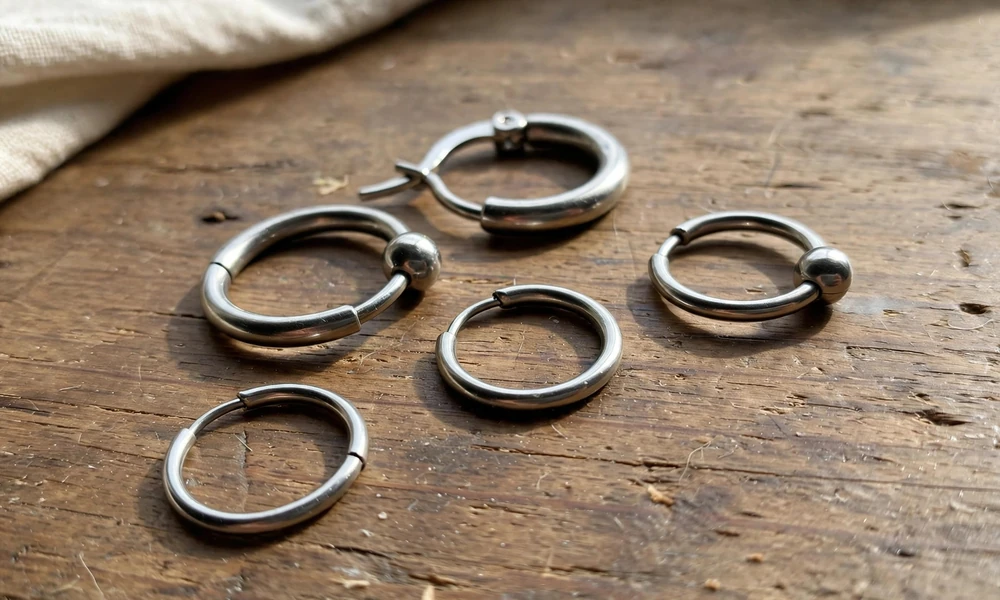
Look next at the finish and the closure. A polished ring feels smooth against the skin and is easier to clean, while a brushed or matte finish hides small scratches but can feel slightly rougher. Seamless rings close with a clean, flush join. Clickers snap shut with a hinge, and L-shaped studs and screws hold with a bend rather than a join. Whichever closure you choose, it should sit flush and stay shut through a normal day. Our roundup of the best nose hoops for women covers the main hoop styles in more detail, and the same shapes apply here in steel.
Finally, look at the diameter. A ring that is too small pulls and pinches, while one that is too large catches on clothing and moves too much. Most nostril rings sit well at 7 to 8 millimetres in diameter, but the right size depends on the placement of your piercing and how much space sits between the piercing and the edge of your nostril. If you are unsure, a piercer can measure it in a minute, and that measurement is worth more than guessing from a size chart.
The 9 best stainless steel nose rings of 2027
The Classic Polished Steel Ring
What we like: A simple, mirror-polished hoop in 316L surgical steel, strong, bright, and easy to clean, at a price that makes it easy to own more than one. What to consider: The plain design shows every fingerprint and water spot, so it needs a quick wipe to stay bright.
Best for: Everyday wear and first steel rings. Material: 316L surgical stainless steel, polished finish. Price range: $8–$20. Standout feature: The most affordable classic hoop in this guide, and one of the hardest wearing.
This is the ring to buy if you want steel without any fuss. It suits almost every style, it goes with gold and silver jewellery alike, and it is the easiest shape to keep clean.
The Brushed Steel Ring
What we like: A soft, matte surface that hides small scratches and fingerprints, with the same strong, affordable steel underneath. What to consider: The brushed finish can look slightly duller than polished steel, and it is harder to restore to a shine at home.
Best for: People who want a quiet, understated look. Material: 316L surgical stainless steel, brushed finish. Price range: $8–$20. Standout feature: A matte finish that stays looking tidy between cleans.
The Steel Ring with a Tiny Crystal
What we like: A small crystal set into a polished steel hoop, adding a point of sparkle without adding weight or bulk. What to consider: The setting needs to be checked now and then, because a loose stone is easier to lose than to notice.
Best for: Evenings, occasions, and anyone who wants a little shine. Material: 316L surgical stainless steel with a cubic zirconia. Price range: $12–$28. Standout feature: A single small crystal that catches the light without overwhelming the ring.
A crystal-ended ring is the easiest way to dress up a steel hoop. Keep it for days when you want sparkle, and wear the plain ring when you want to forget you are wearing anything at all.
The Black Steel Ring
What we like: A deep, even black coating over solid steel, giving a bold, modern look that stands out against the skin. What to consider: The black coating can wear thin at points of friction over months of daily wear, so it may need replacing sooner than a plain ring.
Best for: Bold, modern styling and evening looks. Material: 316L surgical stainless steel with a black PVD coating. Price range: $12–$28. Standout feature: A true black finish on a metal strong enough to hold its shape.
The Steel L-Shaped Stud
What we like: A straight post with an L-shaped bend that sits securely inside the nostril, with a small polished ball or flat end on show. What to consider: The bend needs to match the thickness of your nostril wall, so a wrong size can feel loose or sit at an angle.
Best for: New piercings and people who dislike hoops. Material: 316L surgical stainless steel. Price range: $6–$15. Standout feature: A secure, discreet fit that stays put while you sleep.
The Steel Ring with a Pearl End
What we like: A small, lustrous pearl set at the end of a slim steel ring, giving a soft, classic look with none of the weight of a metal ball. What to consider: Pearls are softer than metal and can scratch, so this ring suits gentle wear rather than rough days.
Best for: Weddings, occasions, and soft, classic styling. Material: 316L surgical stainless steel with a freshwater pearl. Price range: $15–$35. Standout feature: A pearl end that softens the industrial feel of steel.
This is the prettiest ring in the guide, and the most delicate. Wear it for occasions and keep a plain ring for everyday, and the pearl will stay bright for years.
The Slim Steel Seamless Ring
What we like: A fine, 20-gauge seamless ring with a barely-there profile, light enough to wear through sleep, sport, and long days. What to consider: Steel is harder to bend than titanium, so a slim seamless ring can be fiddly to open and close.
Best for: Minimal looks and very small piercings. Material: 316L surgical stainless steel, 20 gauge. Price range: $6–$15. Standout feature: The finest, lightest steel ring here, almost invisible on the nose.
The Steel Ring with a Paved Front
What we like: A row of tiny crystals set along the front of a polished steel hoop, giving a band of sparkle that reads as jewellery rather than a piercing. What to consider: The paved front adds a little weight and needs gentle cleaning, because dirt can collect between the stones.
Best for: Occasions, evenings, and anyone who wants maximum sparkle. Material: 316L surgical stainless steel with cubic zirconia pavé. Price range: $18–$40. Standout feature: A full band of sparkle on an affordable steel hoop.
A paved ring is the most glamorous piece in this guide. It turns a simple hoop into a piece of jewellery, and it is best kept for days when you want to be noticed.
The Tiny Steel Ring
What we like: A small-diameter ring, around 6 millimetres, that hugs the nostril closely for a neat, snug fit. What to consider: A snug ring must be sized exactly right, because a diameter even a millimetre too small will pinch and irritate.
Best for: Small nostrils and close-fitting styles. Material: 316L surgical stainless steel, polished finish. Price range: $6–$15. Standout feature: A close, tidy fit that sits flat against the nostril.
Which stainless steel nose ring is right for you
Start with your skin. If you know you react to nickel, stainless steel is a poor choice, because even 316L contains nickel, and titanium is the safer metal. If you have no nickel sensitivity, steel is a practical daily metal, and a plain, polished, surgical-grade ring is the best place to start. Save coated, black, and crystal-set rings for a fully healed piercing, when the skin is settled and less reactive. A professional piercer can tell you whether your piercing is ready, and that advice is worth taking.
Next, think about how you will wear it. A plain polished or brushed ring is the best daily choice, because it goes with everything and needs almost no care. A black ring makes a stronger statement and suits evenings and occasions, while a pearl or paved ring is best kept for days when you want a softer or more glamorous look. Many people keep two or three steel rings and swap between them, which is easy because the metal is so affordable. The best diamond nose rings offer the same shapes with a precious stone, if you want to step up from steel for an occasion.
Finally, match the size to your nose. A ring that is too large swings and catches, and a ring that is too small pulls. The diameter that fits depends on where your piercing sits and how thick your nostril wall is, so a quick measurement beats a guess. When in doubt, choose the slightly larger diameter and have it adjusted, rather than forcing a ring that is too tight.
The caveats that matter
Stainless steel is one of the most common metals for nose jewellery, but it is not a guarantee. A ring that hides its grade, that is only plated, or that is made from a lower-grade alloy can irritate a piercing even when surgical steel would not. The grade, the finish, and the fit all matter, and a cheap ring that hides those details is a worse bet than a slightly dearer ring that states them plainly.
| Detail | What is known |
|---|---|
| Best grade for piercings | 316L surgical stainless steel, stated plainly in the description |
| Common gauge | 20 gauge (0.8 mm) is most common; 18 gauge (1.0 mm) is the thicker option |
| Common diameter | 7 to 8 mm for most nostrils; 6 mm for a close fit |
| Weight | Heavier than titanium, but still light enough for all-day wear |
| Tarnish and rust | Does not tarnish or rust; keeps its shine with minimal care |
| Nickel content | 316L contains nickel; not suitable for people with a known nickel allergy |
| Who should check first | Anyone with a fresh piercing, a nickel allergy, or a piercing that will not settle |
| What it does not do | It does not heal a piercing on its own, and it cannot fix a wrong size or a poor finish |
If a piercing stays red, swollen, or painful for more than a few days after changing a ring, take the ring out and speak to your piercer before trying another one. The gold versus silver nose rings comparison is also useful here, because it shows how different metals behave on the skin.
Checklist: buying a stainless steel nose ring honestly
Use these checks before you buy, and again when the ring arrives.
- Check the grade: 316L surgical stainless steel, stated plainly in the description.
- Check the gauge: 20 gauge for most nostrils, 18 gauge if your piercing was made thicker.
- Check the diameter: 7 to 8 millimetres for most noses, measured rather than guessed.
- Check the finish: smooth and polished, with no rough edges, burrs, or sharp joins.
- Check the closure: it should sit flush and stay shut through a normal day.
- Check the seller: a clear returns policy, in case the size or the fit is wrong.
Frequently asked questions
Is stainless steel good for a nose piercing?
Yes, for most people. Surgical stainless steel, 316L, is a standard metal for body jewellery, and it is strong, affordable, and resistant to rust and tarnish. It is not the best choice for a fresh piercing or for anyone with a nickel allergy, where titanium is safer.
What gauge is a stainless steel nose ring?
Most nostril rings are 20 gauge, about 0.8 millimetres, with 18 gauge, about 1.0 millimetre, as the thicker alternative. Your piercing was made at a particular gauge, so match the ring to it rather than choosing by feel.
Does stainless steel tarnish?
No. Stainless steel does not tarnish or rust the way silver does, and it keeps its shine with very little care. A quick rinse in warm water and a wipe with a soft cloth is usually enough.
Can I wear a stainless steel nose ring if I am allergic to nickel?
Probably not. Even 316L surgical steel contains nickel, and people with a nickel allergy can react to it. Titanium, which contains no nickel in its pure form, is the safer choice. Check with your piercer or clinician first.
How do I clean a stainless steel nose ring?
Rinse it in warm water with a drop of mild soap, then dry it with a soft cloth. Avoid harsh chemicals and abrasive cloths, which can dull a polished finish or wear a black coating faster.
Will a black steel ring stay black?
For a long time, but not forever. The black colour is a surface coating, and it can wear thin at points of friction over months of daily wear. A plain polished ring, by contrast, keeps its look indefinitely.
The bottom line
The best stainless steel nose ring in 2027 is the one that fits your piercing, states its grade plainly, and feels like nothing at all once it is in. For most people, that is a plain, polished, 316L surgical steel ring in 20 gauge, at a diameter measured for their nose. It is strong, it does not tarnish, and it costs very little.
Choose one ring, wear it daily, and keep the black, crystal-set, and paved pieces for occasions. If a ring ever feels uncomfortable or a piercing will not settle, take it out and ask a professional piercer rather than pushing through. That is the honest way to enjoy stainless steel, without turning a simple piece of jewellery into a problem.