A platinum nose screw is the quiet luxury of nose jewellery. It looks almost like silver at first glance, but it is heavier, harder, and whiter, and it never tarnishes. A platinum screw is for someone who wants a small piece of jewellery that will look the same in five years as it does on the day it arrives, without polishing routines or worries about skin reactions.
The screw shape suits platinum particularly well. Platinum is dense and strong, so a fine corkscrew tail holds its curve without bending, and a small gem setting stays secure for years. The metal is also naturally hypoallergenic, which makes it one of the kindest choices for a healed piercing that reacts to other metals. It is not a budget choice, and it is not meant to be. It is a buy-once piece.
Below are nine platinum nose screws worth considering in 2027, from a classic polished piece to diamond, pearl, and sapphire-set designs. Each one is described by what it does well, what to watch for, and who it suits best, so you can decide whether platinum is worth the step up for you.
Key takeaways
- Platinum is naturally white, very dense, and hypoallergenic, and it never tarnishes like silver.
- A screw shape holds better than a straight stud because the curved tail sits inside the nostril and needs no backing.
- Look for a platinum hallmark, a smooth polished finish, and a secure gem setting before you buy.
- Clean platinum gently with warm water and a soft cloth, and it will keep its colour for years.
- Platinum is expensive and heavier than silver, and it is not the right choice for a fresh, unhealed piercing.
What platinum nose screws actually are
Platinum is a naturally white precious metal, denser and harder than gold or silver. Jewellery-grade platinum is usually 95 percent pure, marked Pt950, with the remaining 5 percent made up of other platinum-group metals that add strength. That high purity is why platinum is so kind to sensitive skin. There is very little in the alloy to react with, and the metal does not tarnish, fade, or change colour over time.
A nose screw, sometimes called a corkscrew stud, is a straight or gently curved post with a small decorative end and a tail that curls inside the nostril. The two common shapes are the L-shape, with a short right-angle bend, and the corkscrew, with a full spiral tail. The corkscrew holds more securely and suits active days, while the L-shape is easier to insert and remove. Most nose screws are made in 20 gauge or 18 gauge, which matches the most common nostril piercing sizes, but it is worth confirming your gauge before ordering.
Platinum feels different from silver the moment you hold it. It is noticeably heavier for its size, and its white colour is cooler and deeper than silver, with no yellow undertone at all. That weight and colour are part of what you are paying for, and a platinum screw keeps its finish with almost no effort.
How we chose these platinum nose screws and what to look for
Look first at the hallmark. Genuine platinum jewellery is stamped Pt950 or 950 Plat, and a reputable seller will name the purity. If a piece is described only as platinum-toned or platinum-plated, it is not solid platinum, and it will not behave like it. Solid platinum costs significantly more than silver or gold, and a price that looks too low is a warning sign, not a bargain.
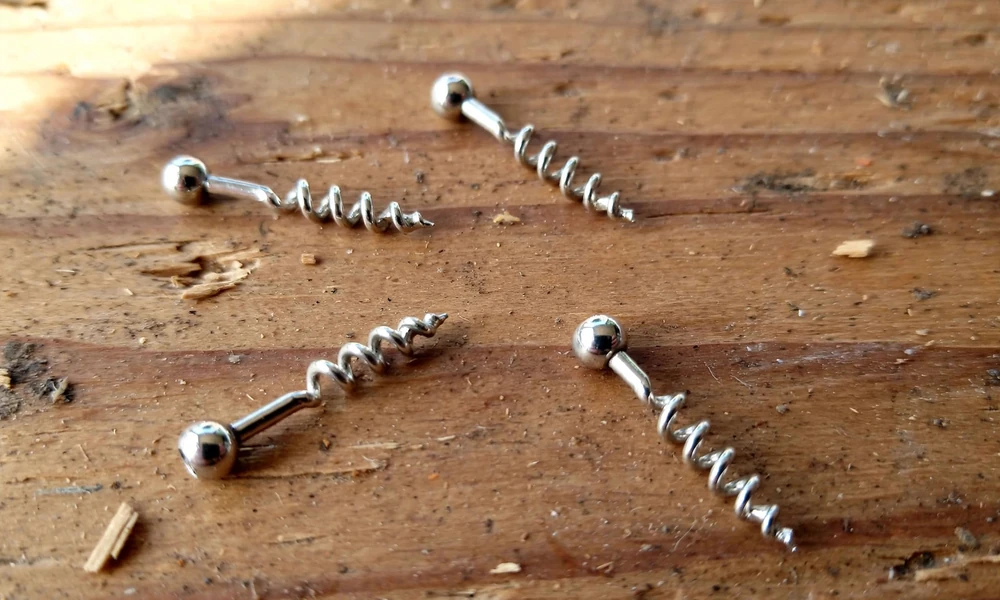
Look next at the finish and the curve. Platinum polishes to a bright, cool shine, and the tail should feel perfectly smooth, with no rough edge or sharp point, because a rough tail will irritate the inside of the nostril every time you move it. The curve should be gentle and even, not kinked, and the decorative end should sit flat against the outside of the nose without tilting. A well-finished screw goes in with a slow, steady twist and feels comfortable within minutes.
Finally, look at the gem setting if the screw has one. A diamond or sapphire should sit securely in its prongs or bezel, with no wobble when you touch it gently. A bezel setting is the most secure for daily wear, while a prong setting shows more of the stone. Prices vary with the weight of platinum and the size of the stone, and the metal alone puts most platinum screws well above silver equivalents. Our roundup of the best nose rings for women covers the same quality checks across other metals, because the questions to ask about any fine piece are the same.
The 9 best platinum nose screws of 2027
The Classic Polished Platinum Screw
What we like: A simple ball end in bright, mirror-polished platinum, smooth to insert and easy to wear every day. What to consider: Plain by design, so it will not suit anyone who wants sparkle or colour. Best for: First-time platinum buyers and everyday wear. Material: Platinum, Pt950. Price range: High. Standout feature: A flawless polished finish that never tarnishes.
This is the screw to start with if you are buying platinum for the first time. It is comfortable, it goes with everything, and it shows off the metal itself.
The Platinum Screw with a Tiny Diamond
What we like: A small, bright diamond in a secure bezel setting, giving a clean sparkle that suits the cool white metal perfectly. What to consider: The most expensive style here, and the stone should be checked by a jeweller once a year. Best for: Special occasions and anyone who wants the finest version of this style. Material: Platinum with a diamond. Price range: Premium. Standout feature: A genuine diamond set in metal that will never yellow or fade.
The white metal makes the stone look brighter, and the setting will hold it securely for years with almost no maintenance.
The Brushed Platinum Screw
What we like: A soft, matte brushed finish that looks modern and understated, with no glare in bright light. What to consider: The brushed texture will slowly polish itself shiny in the spots that rub against skin, so it changes subtly over time. Best for: Minimalist styling and anyone who finds polished metal too bright. Material: Platinum, brushed finish. Price range: High. Standout feature: A calm, matte surface that suits simple outfits.
It is a good choice if your other jewellery is matte, or if you prefer jewellery that does not announce itself.
The Platinum Screw with a Pearl Accent
What we like: A small freshwater pearl end with a soft, warm glow, elegant without being formal. What to consider: Pearls are softer than metal or stone, so avoid harsh cleaners and store the piece separately. Best for: Weddings, evenings, and soft, romantic styling. Material: Platinum with a freshwater pearl. Price range: High to premium. Standout feature: A genuine pearl end set against cool white metal.
A pearl end turns a simple screw into something special. The contrast between the warm pearl and the cool platinum is subtle but beautiful, and it is still small enough for daily wear.
The Thin Platinum Stacking Screw
What we like: A fine 20-gauge post with a small end, barely-there on the nose and very comfortable for long wear. What to consider: The finer post is more delicate, so handle it gently and do not force it through a tight piercing. Best for: Small piercings, delicate features, and discreet daily wear. Material: Platinum, 20 gauge. Price range: High. Standout feature: A feather-light feel despite the density of the metal.
If you find most nose jewellery feels heavy or obvious, this is the one to try. It is the lightest-feeling screw here, and it suits smaller noses and finer features particularly well.
The Platinum Screw with a Sapphire End
What we like: A small blue sapphire in a secure setting, adding a deep, calm colour that suits the white metal beautifully. What to consider: Sapphires are hard and durable, but the setting should still be checked now and then. Best for: Colour lovers and anyone who wants a birthstone piece. Material: Platinum with a sapphire. Price range: Premium. Standout feature: A natural blue sapphire with a rich, even colour.
Blue sapphire and platinum are a natural match. The stone is hard enough for daily wear, and the colour is deep without being loud, which makes it easy to wear with almost anything.
The Platinum and Diamond Pavé Screw
What we like: A small pavé cluster of tiny diamonds that sparkles from every angle, set by hand into the platinum end. What to consider: Pavé settings need gentle handling and an occasional professional check, because the small stones are held by tiny beads of metal. Best for: Evenings, celebrations, and anyone who loves sparkle. Material: Platinum with pavé diamonds. Price range: Premium. Standout feature: A hand-set pavé cluster with more sparkle than any single stone here.
It is still small, but it catches the light constantly, and it is the one to choose if you want your nose jewellery to be noticed.
The Platinum L-Shaped Screw
What we like: A simple L-shaped tail that is the easiest platinum screw to insert and remove, with a neat ball end. What to consider: The L-shape holds less securely than a full corkscrew, so it suits calm days better than very active ones. Best for: People who change their nose jewellery often. Material: Platinum, Pt950. Price range: High. Standout feature: The simplest, most practical shape in platinum.
If you swap your nose jewellery to match your outfit, this is the practical choice. It goes in and out in seconds, and the platinum means you never have to worry about tarnish between wears.
The Tiny Platinum Screw
What we like: A very small ball end, just a few millimetres across, that reads as a subtle glint rather than a piece of jewellery. What to consider: The small size makes it fiddly to insert, so take your time and use clean hands. Best for: Workplaces with strict dress codes and anyone who wants the most discreet option. Material: Platinum. Price range: High. Standout feature: The smallest, most discreet screw in this roundup.
It is still a real piece of fine jewellery, just a very quiet one, and it is the easiest to wear every single day.
Which platinum nose screw is right for you
Start with your piercing. If it is fully healed and comfortable, any of the nine screws here will work, and the choice comes down to style and budget. If your piercing is still settling, wait. Even hypoallergenic platinum is not the right metal for a fresh piercing, because any new jewellery can disturb healing skin. Once healed, a smooth polished screw is the gentlest way to start wearing platinum.
Next, think about your skin and your routine. If your skin reacts to other metals, platinum is one of the safest choices available, because its high purity leaves very little to react with. If you swim, exercise, or work with your hands, a corkscrew tail holds more securely than an L-shape. If you change jewellery often, the L-shaped screw is easier to live with. A guide to how to wear a nose screw walks through insertion and removal step by step, which is useful the first time you handle a screw of any metal.
Finally, think about value. Platinum costs far more than silver, and that is only worth it if you plan to wear the piece for years. If you like to change styles often, silver is the smarter spend. If you want one perfect screw that will look the same in five years, platinum is the right metal, and the classic polished screw or the tiny diamond version are the best places to start.
The caveats that matter
Platinum is an exceptional metal, but it is not without limits. It is expensive, it is heavier than silver, and it can develop a soft patina of tiny scratches over years of daily wear, which some people love and others do not. A jeweller can re-polish it, but that is an extra step and an extra cost. None of these are reasons to avoid platinum. They are reasons to buy it deliberately, for a piece you plan to keep.
| Detail | What is known |
|---|---|
| What platinum is | 95 percent pure platinum, marked Pt950, with other platinum-group metals |
| Best gauge for most people | 20 gauge for a discreet fit, 18 gauge for a slightly bolder look |
| Most secure shape | Corkscrew tail, which holds better than an L-shape during active days |
| Tarnish | Platinum does not tarnish; it may develop a soft patina over years |
| Sensitive skin | Naturally hypoallergenic thanks to its high purity |
| Fresh piercings | Not suitable; wait until the piercing is fully healed before wearing platinum |
| Cleaning | Warm water, mild soap, and a soft cloth; a jeweller can re-polish it |
| What it does not do | It does not come cheap, and it is heavier than silver for the same size |
If your piercing becomes red, sore, or swollen after wearing a platinum screw, remove it, clean the area gently, and let the piercing settle before trying another piece. A reaction to platinum is rare, but any new jewellery can irritate a piercing that is not fully healed, and it is always worth ruling out the piercing itself before blaming the metal.
Checklist: buying a platinum nose screw honestly
Use these checks before you buy, and again when the piece arrives.
- Check the hallmark: genuine platinum is marked Pt950 or 950 Plat, and the seller should name the purity.
- Check the gauge: confirm 20 or 18 gauge matches your piercing before ordering.
- Check the finish: the tail should feel smooth, with no rough edge or sharp point.
- Check the setting: a gem should sit securely, with no wobble when you touch it gently.
- Check the shape: choose a corkscrew tail for security or an L-shape for easy removal.
- Check the price: solid platinum is expensive, and a price that looks too low is a warning sign.
Frequently asked questions
Does platinum tarnish in a nose piercing?
No. Platinum does not tarnish like silver. It may develop a soft patina of tiny scratches over years of daily wear, which many people like, and a jeweller can polish it back to a bright shine if you prefer.
Is platinum safe for sensitive skin?
Usually yes. Platinum is naturally hypoallergenic because it is 95 percent pure, with very little in the alloy to react with. It is one of the kindest metals for a healed piercing that reacts to other jewellery.
How do I insert a nose screw?
With clean hands, guide the tail into the piercing and twist slowly so the curve follows the channel. Do not force it. If it resists, try a little water-based lubricant or a smaller gauge, and stop if it hurts.
How do I clean a platinum nose screw?
Warm water, mild soap, and a soft cloth are enough for regular cleaning. Dry it fully before storing. For a deep clean or a re-polish, a jeweller can do it quickly and safely.
Is platinum better than white gold for a nose screw?
For most people, yes in the long run. Platinum is naturally white and never needs re-plating, while white gold is coated with rhodium that wears thin over time. Platinum costs more upfront but needs less maintenance.
Are platinum nose screws worth the price?
They are worth it if you plan to wear the piece for years and value a metal that never tarnishes and rarely irritates skin. If you change styles often, silver is the smarter spend. A guide to platinum toe rings shows the same value question in another piece of jewellery, and the answer is the same: buy platinum for the pieces you will keep.
The bottom line
The best platinum nose screw in 2027 is not the most expensive or the most decorated. It is the one in genuine Pt950 platinum, with a smooth finish and a curve that suits your piercing, that you will wear happily for years. For most people, that is the classic polished screw or the tiny diamond version, both of which are comfortable, timeless, and almost effortless to look after.
Buy solid platinum, check the gauge and the hallmark, and wear it with confidence. It costs more than silver, but it asks for almost nothing in return, and a piece that looks the same in five years as it does today is worth paying for.