
A stainless steel nose screw is the workhorse of nose jewellery. It is affordable, widely available, strong, and easy to keep clean, which is why it suits a first screw, a spare, and an everyday piece all at once. The problem is not finding a stainless steel nose screw. It is finding one made from the right grade of steel, with a smooth finish and a shape that fits your piercing, rather than a cheap screw that tarnishes, catches, or irritates the skin it sits against.
That is why this guide is organised by steel grade and fit, not just by price. Surgical steel, usually 316L, is the standard to look for, because it is made for long contact with skin and resists corrosion far better than unnamed “stainless” alloys. The difference shows up over weeks of wear: a good screw stays bright and comfortable, while a poor one dulls, feels rough, and can leave a healed piercing sore.
Below are nine stainless steel nose screws worth considering in 2027, from a classic polished screw to a blackened one and a hypoallergenic surgical steel option for sensitive skin. Each one is described by what it is good at, what to watch for, and who it suits best, so you can choose with your piercing in mind, not just a bestseller list.
Key takeaways
- Stainless steel is strong, affordable, and easy to clean, which makes it a sensible everyday choice for nose screws.
- Surgical steel, usually 316L, is the grade to look for, and a smooth polished finish matters as much as the metal itself.
- Choose the gauge and the screw shape to match your piercing: L-shaped screws are simple to handle, corkscrew screws stay put, and a wrong gauge will irritate a healed piercing.
- A small decorative end is more comfortable for everyday wear than a large stone, and a flat disc is the least likely to catch on clothing.
- No nose screw suits every piercing, and a screw that hurts, turns constantly, or will not sit flat is a sign to check the size rather than keep wearing it.
What stainless steel nose screws actually are
A nose screw is a small piece of nose jewellery shaped to stay in place without a separate fastening. One end carries a small decoration, a ball, a disc, or a tiny stone, and the other end is bent into a short screw shape that sits inside the nostril. The screw shape is what holds it. It turns gently into the piercing and rests against the inside of the nostril, so the decoration stays visible on the outside without a back or a clasp to lose.
Stainless steel is the most common metal for nose screws, and its strengths are practical. It is hard and strong, so a thin post holds its shape. It resists rust and tarnish far better than silver, so it keeps its shine with little care. And it is inexpensive, so a good screw costs very little, which makes it easy to own two or three in different shapes. For a healed piercing, it is one of the most reliable everyday options there is.
The grade matters more than the name. Surgical steel, usually 316L, is the grade made for long contact with skin, and it contains very little nickel in a form that is unlikely to cause a reaction in most people. Cheaper steel, sold simply as “stainless” with no grade, may not meet the same standard. The two screw shapes you will meet most often are the L-shape, which is simple to put in and take out, and the corkscrew, which holds more firmly and is less likely to slip out while you sleep.
How we chose these stainless steel nose screws and what to look for
Look first at the grade of steel. Surgical steel, 316L, is the standard for body jewellery, and a reputable seller states it plainly. If the listing only says “stainless steel” with no grade, treat that as a reason to look more closely before buying. A good screw should also state its gauge, usually 18 gauge for a nostril piercing, and the length of the post, because a screw that is too short will press and a screw that is too long will turn.
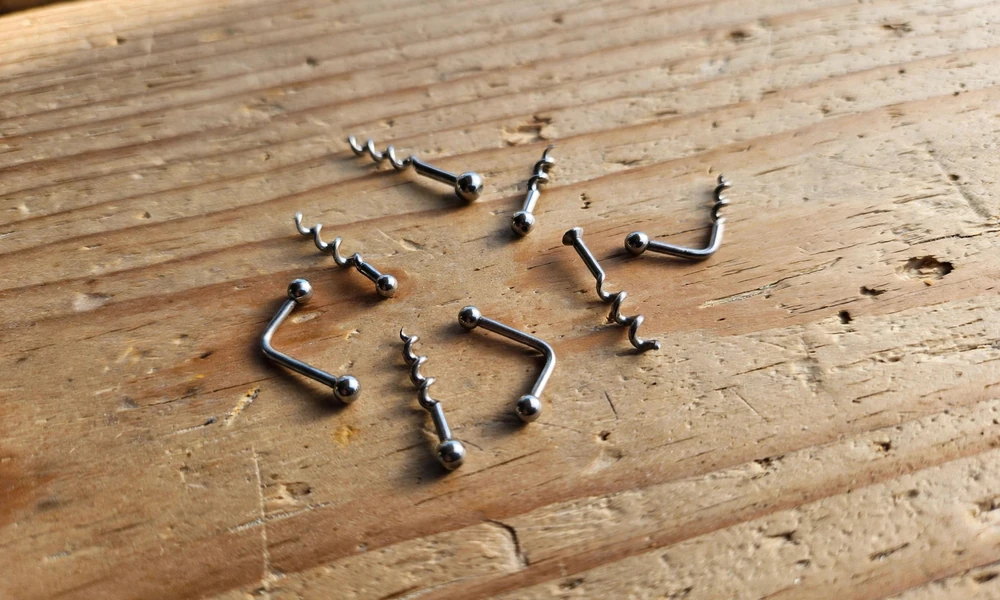
Look next at the finish and the decorative end. A mirror polish feels smoother against the piercing than a rough or matte finish, and a small end is more comfortable than a large one for daily wear. Check that the screw end is smooth and rounded, with no sharp edge, and that the decorative end is firmly set rather than glued on loosely. A well-made screw should turn in easily and sit flat, with the decoration facing outwards. Our guide to the best nose hoops for women makes the same point about fit: the right size and a smooth finish matter more than the prettiest design, because jewellery you cannot wear comfortably is jewellery you will not wear.
Finally, look at the shape. An L-shaped screw is the easiest to handle and the best place to start if you are new to nose screws. A corkscrew screw takes a little more practice to insert but stays put through sleep and exercise.
The 9 best stainless steel nose screws of 2027
The Classic Polished Steel Screw
What we like: A mirror-polished surgical steel screw with a small ball end, smooth to insert, comfortable all day, and the easiest shape to live with. What to consider: The plain ball end is quiet, so it suits everyday wear rather than a statement look. Best for: A first steel screw, and healed piercings of any age. Material: Surgical stainless steel, 316L. Price range: Low. Standout feature: The smoothest finish in this list.
This is the screw to buy if you want one reliable piece rather than a collection. It goes in easily, sits flat, and does not draw attention to itself, which is exactly what most people want from daily nose jewellery.
The Brushed Steel Screw
What we like: A soft brushed finish that hides small scratches, with a flat disc end that sits neatly against the nostril. What to consider: The brushed surface is slightly less smooth than a mirror polish, so it suits healed piercings best. Best for: Everyday wear with a matte, understated look. Material: Surgical stainless steel, 316L. Price range: Low. Standout feature: A finish that stays looking new.
The Steel Screw with a Crystal End
What we like: A tiny crystal-set end on a polished steel post, giving a dressier look without the weight or price of a solid gold piece. What to consider: The stone needs a secure setting, so check that it is prong-set rather than glued. Best for: Evenings, occasions, and anyone who wants a little sparkle. Material: Surgical stainless steel with a small crystal. Price range: Low to mid. Standout feature: The smallest stone that still catches the light.
A small crystal end is the most versatile dressy option in this list. It is noticeable without being large, and because the post is steel, it stays light enough to wear all day.
The Blackened Steel Screw
What we like: A dark blackened finish that looks sharp against any skin tone, with a small ball end and the same strong, comfortable post. What to consider: The dark coating can wear over time, so it suits healed piercings and gentle handling. Best for: A bold, modern look and darker styling. Material: Blackened surgical stainless steel. Price range: Low to mid. Standout feature: The darkest finish in this list.
The Surgical Steel Hypoallergenic Screw
What we like: A certified 316L surgical steel screw with a mirror polish and a tiny ball end, made for skin that reacts to cheaper jewellery. What to consider: It is a plain design, so it suits everyday wear rather than a statement look. Best for: Sensitive skin and anyone who has reacted to other metals. Material: Surgical stainless steel, 316L. Price range: Low to mid. Standout feature: The kindest steel in this list for sensitive skin.
The Steel L-Shaped Screw
What we like: A simple L-shaped bend that is the easiest screw to put in and take out, in polished surgical steel with a small disc end. What to consider: An L-shape can slip out more easily than a corkscrew, so it suits calmer days rather than sport. Best for: Beginners, and anyone who changes jewellery often. Material: Surgical stainless steel, 316L. Price range: Low. Standout feature: The simplest shape to handle.
If you are new to nose screws, start here. The L-shape is the most forgiving to insert, and once you are used to it, you will know whether you want the extra hold of a corkscrew.
The Steel Corkscrew Screw
What we like: A full spiral shape that holds firmly through sleep and exercise, with a polished finish and a small ball end. What to consider: The spiral takes a little practice to insert, so it is best for healed piercings. Best for: Active days and piercings that keep losing jewellery. Material: Surgical stainless steel, 316L. Price range: Low. Standout feature: The most secure fit in this list.
The Slim Steel Screw
What we like: A fine 20 gauge post with a tiny ball end, almost weightless, and the most discreet screw in this list. What to consider: The fine post is delicate, so handle it gently and avoid bending it. Best for: Smaller piercings and a barely-there look. Material: Surgical stainless steel, 316L. Price range: Low. Standout feature: The lightest screw in this list.
The Tiny Steel Screw
What we like: A very small screw with a 1.5 mm ball end, the most minimal option here, in polished surgical steel. What to consider: The tiny end is easy to lose when handling, so change it over a clean surface. Best for: Minimal styling and workplaces with a subtle dress code. Material: Surgical stainless steel, 316L. Price range: Low. Standout feature: The smallest decorative end in this list.
Which stainless steel nose screw is right for you
Start with your piercing, not the design. If your piercing is healed, choose a polished surgical steel screw in your gauge, usually 18 gauge, with a small, smooth end. A plain ball or flat disc is the safest choice for daily wear, because it does not catch and it does not add weight. Save the crystal ends and dark finishes for later, once you know the size and shape that suits you.
If your piercing is healed and you wear nose jewellery every day, think about how you live. An office day suits a small polished screw or a slim one. A gym session or a night’s sleep suits a corkscrew that will not slip out. A special occasion suits a crystal end or a blackened finish. Our roundup of the best diamond nose screws covers the dressier end of the range, if you want to compare a steel post with a stone end against a full precious-metal piece before you settle on one.
Finally, think about your skin. If you have reacted to cheaper jewellery before, insist on certified 316L surgical steel, and consider titanium if the reaction was strong. If you have never reacted to anything, steel still gives you the best value in nose jewellery: a strong, bright screw that costs very little and lasts for years with simple care.
The caveats that matter
Stainless steel is one of the most reliable metals for nose jewellery, but no screw is right for every piercing. A screw in the wrong gauge can irritate a healed piercing, and a screw with a rough finish can do the same. Steel sold without a grade may not meet the surgical standard, so a listing that only says “stainless” is a reason to ask questions before buying. Blackened finishes are surface treatments that can wear with time and rough handling, so they are best for healed piercings rather than fresh ones. And a decorative stone, however small, needs a secure setting, because a loose stone is a lost stone.
| Detail | What is known |
|---|---|
| Best grade to look for | Surgical stainless steel, 316L, with the grade stated by the seller |
| Most common gauge | 18 gauge for nostril piercings, with 20 gauge for finer piercings |
| Best shape for beginners | L-shaped screw, simple to insert and remove |
| Best shape for staying put | Corkscrew screw, holds firmly through sleep and exercise |
| Who should choose steel | Healed piercings, everyday wear, and anyone who wants value and durability |
| What to avoid | Unstated grades, rough finishes, and screws in the wrong gauge |
| Blackened finishes | Dark coatings are surface treatments that can wear, so handle them gently |
| What it does not do | It does not suit every piercing, and it does not replace a piercer’s advice on size |
If your piercing is red, swollen, or painful, take the screw out and speak to your piercer before trying a different piece. Do not force a screw that will not go in, and do not keep wearing one that turns constantly or sits at an angle. A well-fitting screw should sit flat, feel comfortable within a day, and stay in place without attention.
Checklist: buying a stainless steel nose screw honestly
Use these checks before you buy, and again after a day of wear.
- Check the grade: surgical stainless steel, 316L, stated plainly by the seller.
- Check the gauge: match it to your piercing, usually 18 gauge, and confirm it before ordering.
- Check the shape: L-shaped for easy handling, corkscrew for a secure fit.
- Check the finish: smooth and polished, with no sharp edge on the screw end.
- Check the decorative end: small, firmly set, and comfortable against your skin.
- Check the fit after a day: it should sit flat, feel comfortable, and stay in place.
Frequently asked questions
Is stainless steel safe for a nose piercing?
Yes, surgical steel, 316L, is a standard choice for healed piercings, and it is widely used in body jewellery. For a fresh piercing, your piercer may prefer titanium, so follow their advice and switch to steel once the piercing is fully healed.
What gauge should I choose for a stainless steel nose screw?
Most nostril piercings are 18 gauge, with 20 gauge for finer piercings and 16 gauge for a thicker look. If you are unsure, ask your piercer or measure the jewellery you already wear comfortably, because the wrong gauge can irritate a healed piercing.
How do I put in a corkscrew nose screw?
Guide the tip into the piercing, then turn it gently so the spiral follows the curve of the piercing. Do not push or force it. If it will not go in smoothly, stop and try an L-shaped screw instead, or ask your piercer to help. Our guide on how to wear a nose screw walks through the same steps with pictures.
Will a blackened steel nose screw stay black?
The black colour is a surface finish, so it can wear over time, especially with rough handling or harsh cleaning. It lasts longest on a healed piercing, cleaned gently with mild soap and water.
Can I wear a stainless steel nose screw every day?
Yes, steel is made for daily wear. It is strong, resists tarnish, and is easy to clean, so a well-fitting screw can stay in for weeks. Take it out now and then to clean both the screw and the piercing.
Does stainless steel tarnish?
Good surgical steel resists tarnish far better than silver, but it can dull over time with soap, sweat, and hard water. A gentle clean with mild soap and a soft cloth brings back the shine, and storing it dry helps it stay bright.
The bottom line
The best stainless steel nose screw in 2027 is not the most decorative or the most expensive. It is the one in the right grade, the right gauge, and the right shape for your piercing, with a smooth finish and a small end you can wear all day. For most people, that means a polished 316L surgical steel screw, L-shaped for easy handling or corkscrew for a secure fit, with a plain ball or a tiny crystal.
Choose one screw, wear it for a week, and judge it on comfort, not on how it looks in the box. If it sits flat, feels light, and stays in place, you have found the right one. If it does not, change the size or the shape before you blame the metal, because fit is what makes a nose screw work.