
Copper has a warmth that no other septum metal quite matches. It is softer than gold, redder than rose gold, and it catches light in a way that makes even a small ring feel deliberate. A copper septum ring is not the obvious choice, and that is part of its appeal. It suits people who want jewellery that looks warm against the skin, ages with character, and does not look like everyone else’s septum ring.
The trade-off is that copper needs more care than most metals used for piercings. It tarnishes faster, it can stain skin green if it is not sealed properly, and it is not a metal to wear in a fresh piercing. None of that makes it a bad choice. It makes it a choice that rewards knowing what you are buying, how it is finished, and how to look after it.
Below are nine copper septum rings worth considering in 2027, from a plain polished clicker to a hammered horseshoe and a two-tone design. Each one is described by what it does well, what to watch for, and who it suits best, so you can choose a ring you will actually enjoy wearing.
Key takeaways
- Copper septum rings bring a warm, reddish tone that flatters most skin tones and stands out from silver and gold.
- Copper tarnishes faster than other metals, so a clear protective coating and regular cleaning matter more than with gold or steel.
- Uncoated copper can leave a green tint on skin, so look for a sealed or lacquered finish if you wear it daily.
- Do not wear copper in a fresh or healing septum piercing; wait until the piercing is fully healed.
- Copper is soft and affordable, but it dents and scratches more easily than titanium or stainless steel, and it is not a lifetime metal for everyone.
What copper septum rings actually are
A copper septum ring is a ring worn through the septum piercing, made from copper or a copper alloy, usually in a clicker, horseshoe, or seamless style. Pure copper is very soft, so most rings use a copper alloy or a copper core with a protective coating. The colour is what people notice first: a warm, reddish-brown tone that sits between gold and rose gold, and that deepens slightly as it ages.
Copper is one of the oldest metals used for jewellery, and it has been worn in piercings for centuries. It is light, comfortable, and inexpensive compared with gold or platinum, which makes it easy to try different styles without a large outlay. It is also a metal that changes. A polished copper ring will darken over weeks of wear, developing a patina that some people love and others polish away. Neither reaction is wrong, but it helps to know which one you want before you buy.
The most important thing to understand about copper is the green tint. When copper reacts with moisture, sweat, and air, it can leave a green mark on the skin. This is not dangerous, and it washes off, but it is the reason most good copper septum rings are sealed with a clear coating. A sealed ring gives you the colour without the mark, and it also slows tarnish. If a listing does not mention a coating, ask before buying.
How we chose these copper septum rings and what to look for
Look first at the finish and the seal. A copper septum ring should say whether it is lacquered, coated, or sealed, and how the coating is meant to be cared for. A clear coat that flakes after a month is no help, so look for rings where the finish is described as durable, and where the seller explains how to clean it. A plain polished ring is easier to care for than an engraved one, because there are fewer places for tarnish to hide.
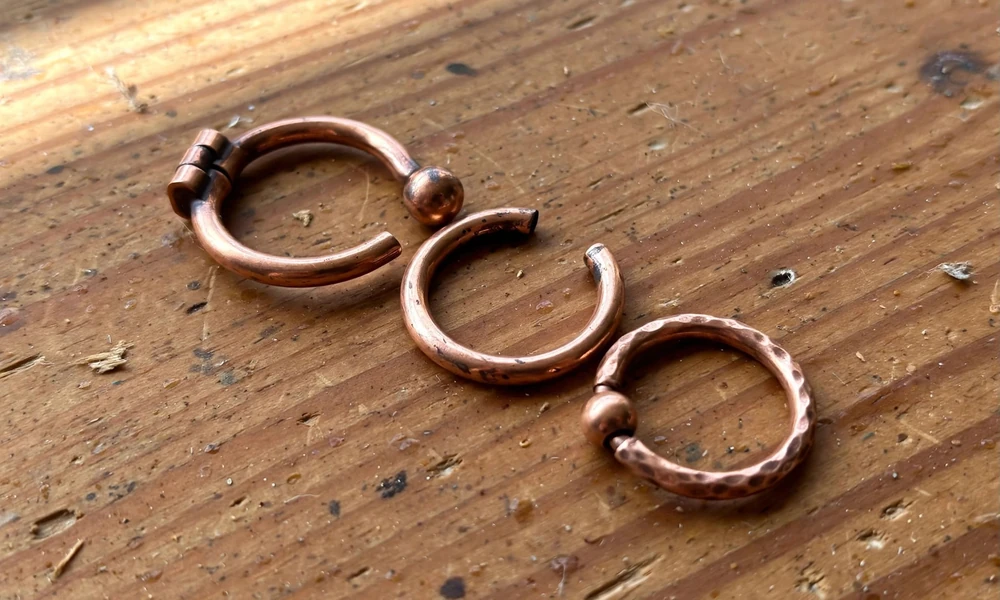
Look next at the gauge and diameter. Most septum piercings are 16 gauge, with 14 gauge common for a bolder look, and diameters usually run from 8 to 10 millimetres for a close fit. A ring that is too small will sit tight against the nose and feel uncomfortable, while one that is too large will hang low and catch on clothing. Measure a ring you already like, and buy the same size. Our guide to the best septum rings for women explains how fit changes the look, because the same ring can feel delicate or bold depending on how it sits.
Finally, look at the closure. A clicker closes with a satisfying snap and is easy to open and close without tools. A horseshoe with two balls is simple and secure, and it can be flipped up inside the nose when you need to hide it. A seamless ring looks cleanest, but it needs careful handling to open and close without bending the metal out of shape. Copper is soft, so a closure that is easy to use matters more here than with a harder metal.
The 9 best copper septum rings of 2027
The Classic Polished Copper Clicker
What we like: A smooth, high-polish copper clicker with a clean hinge, warm colour, and a secure snap closure. What to consider: Shows fingerprints and tarnishes fastest of any finish, so it needs regular polishing. Best for: Everyday wear and a first copper ring. Material: Sealed copper. Price range: Budget. Standout feature: A mirror polish that makes the copper glow.
This is the simplest way into copper. It is light, comfortable, and the colour does the talking. Keep a soft cloth nearby and it will stay bright.
The Hammered Copper Horseshoe
What we like: A hand-hammered texture that catches light from every angle, with two smooth copper balls. What to consider: The texture makes cleaning slightly slower, and the balls need checking so they do not loosen. Best for: A rustic, handmade look. Material: Hammered copper, lacquered. Price range: Budget to mid-range. Standout feature: A dimpled surface that hides small scratches.
The hammered finish is forgiving. It looks better with wear than a polished ring does, because new marks blend into the texture instead of standing out.
The Copper Clicker with a Tiny Turquoise Stone
What we like: A small turquoise cabochon set into a polished copper clicker, a classic pairing of warm metal and cool stone. What to consider: The stone setting needs gentle cleaning, and the stone can loosen if the ring is dropped. Best for: Colour contrast and a bohemian feel. Material: Copper with turquoise. Price range: Mid-range. Standout feature: A blue-green stone that makes the copper look richer.
Turquoise and copper have been paired for centuries, and it shows. The stone is small enough to wear daily and bright enough to be noticed.
The Brushed Copper Seamless Ring
What we like: A matte, brushed surface that mutes the shine and gives copper a quieter, more modern feel. What to consider: The brushed finish will wear smooth over time where it rubs, and the seamless closure needs care to open. Best for: A subtle, understated look. Material: Brushed copper, sealed. Price range: Budget. Standout feature: A soft matte finish that does not glare in bright light.
If polished copper feels too bright, this is the answer. The brushed surface is calm, it shows fewer marks, and it works well with a minimal wardrobe.
The Copper Septum Ring with a Crystal Accent
What we like: A small clear crystal set into a copper band, adding a point of sparkle without changing the warm tone. What to consider: The crystal is small and can be hard to clean around, and glue-set stones should not be soaked. Best for: Evenings and special occasions. Material: Copper with crystal. Price range: Mid-range. Standout feature: A single crystal that catches light when you move.
This is a good middle ground between a plain ring and a statement piece. The crystal adds interest, but the ring still reads as copper first.
The Thin Copper Pin-Style Ring
What we like: A fine, lightweight ring that feels barely there, ideal for smaller noses or for stacking with other jewellery. What to consider: Thin copper bends more easily than thicker gauges, so handle it gently when opening. Best for: A delicate, barely-there look. Material: Sealed copper, fine gauge. Price range: Budget. Standout feature: Feather-light comfort for all-day wear.
A thin ring is easy to forget you are wearing, which is the point. It suits people who want the copper colour without a heavy piece of jewellery.
The Copper and Silver Two-Tone Clicker
What we like: Copper paired with a silver-toned band in one clicker, giving a two-metal look without buying two rings. What to consider: Two metals tarnish at different rates, so the silver side may need more frequent cleaning. Best for: Mixing metals and matching other jewellery. Material: Copper and silver-toned alloy. Price range: Mid-range. Standout feature: A warm-cool contrast in a single ring.
Two-tone rings solve the problem of choosing between metals. This one works with gold jewellery on one side and silver on the other, which makes it unusually versatile.
The Oxidised Copper Horseshoe
What we like: A deliberately darkened, oxidised finish that gives copper an antique, aged look from day one. What to consider: The dark finish will lighten with wear and polishing, so it will change over time. Best for: A vintage or gothic style. Material: Oxidised copper, sealed. Price range: Budget to mid-range. Standout feature: A deep, dark patina that looks aged rather than new.
Oxidised copper is for people who like the aged look and do not want to wait for it. It is darker, moodier, and it pairs well with dark clothing and silver jewellery.
The Tiny Copper Clicker
What we like: A small-diameter clicker that sits close to the nose, neat, discreet, and easy to wear every day. What to consider: The small size makes the hinge fiddly to open, especially with long nails. Best for: A neat, close fit and first-time septum wearers. Material: Sealed copper. Price range: Budget. Standout feature: A compact fit that stays out of the way.
Small rings are often the most comfortable, because there is less metal to catch or move. This one is a good everyday choice if you prefer jewellery that stays quiet.
Which copper septum ring is right for you
Start with your skin and your habits. Copper suits warm and neutral skin tones particularly well, because its reddish tone echoes the warmth in the skin. It also works on cool skin tones, especially in a brushed or oxidised finish, where the colour is less bright. If you wear a lot of gold jewellery, copper will fit naturally. If you wear mostly silver, a two-tone ring or an oxidised finish will bridge the gap more easily.
Think next about how much care you are willing to give. A polished copper clicker needs a wipe every few days to stay bright. A hammered or oxidised ring needs almost nothing, because its finish hides tarnish and wear. If you are the kind of person who cleans jewellery regularly, buy polished. If you are not, buy textured or dark, and you will be happier with how it ages.
Finally, think about your piercing. Copper should only go into a fully healed septum piercing, never a fresh one. If your piercing is new, wait until it is settled, then switch to copper. The gold versus silver septum ring comparison is a useful read here too, because it covers how different metals behave in the same piercing, and the same logic applies to copper.
The caveats that matter
Copper is a lovely metal, but it is not for everyone, and it is not for every piercing. Some people react to copper with irritation or a green tint, even with a sealed finish, especially if they sweat a lot or live in a humid climate. If you have sensitive skin or a history of metal reactions, try a copper ring for a short period first, and remove it if your skin becomes sore or itchy. A coated ring reduces the risk, but it does not remove it entirely.
| Detail | What is known |
|---|---|
| Best finish for beginners | Sealed polished copper, easy to clean and to see when it needs a polish |
| Green tint on skin | Can happen with uncoated copper; a sealed or lacquered finish prevents it |
| Fresh piercings | Do not wear copper in a fresh or healing piercing; wait until fully healed |
| Tarnish speed | Faster than gold or steel; expect visible darkening within weeks without cleaning |
| Durability | Soft metal; dents and scratches more easily than titanium or stainless steel |
| Cleaning | Soft cloth and mild soap; avoid harsh polishes that strip the protective coating |
| Who should avoid it | People with copper sensitivity, or anyone with an unhealed piercing |
| What it does not do | It does not stay bright on its own, and it is not a hypoallergenic metal |
Copper is also soft, which means it will not last forever in daily wear. A ring that is opened and closed often will eventually weaken at the hinge or the seam. That is normal for a soft metal, and it is one reason copper rings are inexpensive. Treat them as jewellery with a lifespan, not as a permanent piece, and replace them when the closure stops feeling secure.
Checklist: buying a copper septum ring honestly
Use these checks before you buy, and again when the ring arrives.
- Check the finish: sealed, lacquered, or coated, with care instructions from the seller.
- Check the gauge and diameter against a ring you already wear comfortably.
- Check the closure: open and close it once before wearing, and make sure it snaps shut cleanly.
- Check your piercing: only wear copper once the piercing is fully healed, never while it is new.
- Check for skin reactions: wear it for a day first, and remove it if skin becomes sore or itchy.
- Check the cleaning routine: a soft cloth and mild soap, and no harsh polish that strips the coating.
Frequently asked questions
Does copper turn skin green?
It can, when uncoated copper reacts with moisture and air. A sealed or lacquered finish prevents this in most cases, and any green tint that does appear washes off with soap and water.
Can I wear a copper septum ring in a new piercing?
No. Copper should only go into a fully healed piercing. For a fresh piercing, use implant-grade titanium or steel, and switch to copper once healing is complete.
How do I clean a copper septum ring?
Use a soft cloth and mild soap, rinse well, and dry it fully. Avoid harsh chemical polishes, which can strip the protective coating and make tarnish worse.
How fast does copper tarnish?
Faster than gold or steel. A polished copper ring can start to darken within a few weeks of daily wear, especially in humid weather. Regular wiping slows it down.
Is copper safe for sensitive skin?
Often yes with a sealed finish, but some people react to copper. Wear it for a day first, and remove it if you notice soreness, itching, or a rash. If reactions keep happening, choose titanium instead.
Can I sleep in a copper septum ring?
Yes, if the fit is comfortable and the closure is secure. A small clicker or horseshoe is usually the most comfortable overnight choice, and it is less likely to catch on bedding than a larger ring.
The bottom line
The best copper septum ring in 2027 is the one that matches how much care you are willing to give it. A sealed polished clicker is the easiest starting point, a hammered or oxidised ring is the easiest to live with, and a two-tone design is the most versatile if you mix metals. All three give you the warm copper colour that makes this metal worth choosing in the first place.
Buy the right size, check the seal, wait until your piercing is healed, and keep a soft cloth nearby. Do that, and copper will reward you with a ring that looks warm, personal, and unlike anything else in the septum aisle. For more context on how copper sits alongside other warm metals, our guide to copper toe rings covers the same finish and care questions in a different piece of jewellery.