
A stainless steel nose pin is the dependable choice in nose jewellery. It is affordable, widely available, and strong enough to hold its shape through daily wear, and surgical steel is gentle enough for most healed piercings. The problem is not finding a stainless steel nose pin. It is finding one with the right gauge and post length, a head that sits neatly against the nostril, and a finish that still looks bright after months of wear rather than weeks.
That is why this guide is organised by fit and finish, not just by price. A polished steel pin with a tiny crystal end can be the right everyday choice for a healed piercing, while a blackened steel pin suits someone who wants a bolder look without a heavier metal. A slim pin in a fine gauge feels almost invisible, and an L-shaped pin stays put better than a straight one for people who change jewellery often.
Below are nine stainless steel nose pins worth considering in 2027, from a classic polished pin to a hypoallergenic surgical steel option for sensitive skin. Each one is described by what it is good at, what to watch for, and who it suits best, so you can choose with your piercing in mind, not just a bestseller list.
Key takeaways
- Surgical stainless steel, 316L, is the safest grade for nose pins, and it is the usual choice for healed piercings that want a strong, affordable metal.
- Pin length and gauge matter more than the head design: too long and it catches, too short and it presses, too thick and it irritates.
- Blackened and coloured steel finishes are surface treatments, so they can wear down over time, while plain polished steel keeps its look.
- Insert a nose pin with clean hands, a little saline, and patience, and never force a pin through a piercing that feels tight or sore.
- No nose pin suits every piercing, and a pin that spins, sinks, or hurts after a day is the wrong fit, not a problem to push through.
What stainless steel nose pins actually are
A nose pin is a straight piece of jewellery with a decorative head on one end and a slim post that sits inside the nostril piercing. The post is usually bent at the tip, in an L shape or a gentle curve, so it stays in place without a backing. A stainless steel nose pin is made from steel, a metal that is strong, resistant to rust, and widely used in body jewellery because it holds its shape and keeps a bright finish.
Surgical stainless steel, known as 316L, is the grade used in good body jewellery. It is low in nickel release, which is why most healed piercings tolerate it well, though people with a strong nickel allergy may still react to it. Cheaper steel, with no grade stated, is a gamble: it may contain more nickel, it may tarnish, and it may not hold its finish. What matters most is that the pin is made from a named grade of steel, not an unnamed alloy.
Stainless steel nose pins come in a small range of gauges, most often 20 gauge or 18 gauge, and in post lengths from around 6 mm to 8 mm. The head can be a plain ball, a tiny crystal, a pearl, a flat disc, or a blackened end. The right choice depends on your piercing: a healed nostril piercing in 20 gauge wants a different pin than a thicker 18 gauge piercing, and a pin that is perfect for everyday wear may not be the one you want for a special occasion.
How we chose these stainless steel nose pins and what to look for
Look first at the grade of steel and the gauge. Surgical steel, 316L, is the safest starting point, especially if your skin has reacted to cheap jewellery before. Check the gauge against your piercing: a 20 gauge pin will feel loose in an 18 gauge piercing, and an 18 gauge pin will not fit comfortably in a 20 gauge hole. If you are not sure of your gauge, a piercer can measure it in a minute, and it is worth asking before you buy.
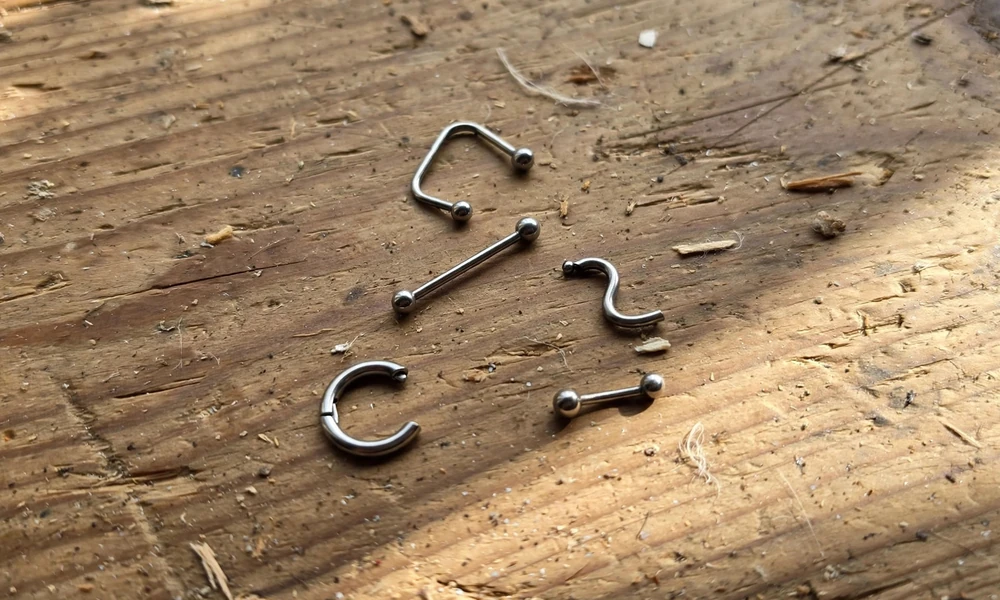
Look next at the post length and the shape of the bend. A post around 6 mm suits most nostrils, while a longer post suits a thicker nostril or a piercing that sits further from the edge. An L-shaped bend holds the pin in place and is easy to insert once you know the angle, while a straight pin with a small screw end suits people who want the simplest possible fit. Our guide to the best nose hoops for women explains how length and shape change the fit of nose jewellery in general, because a piece that fits well is one you forget you are wearing.
Finally, look at the head and the finish. A small head sits neatly and catches less on clothing and face masks. A crystal or pearl end adds sparkle but needs a secure setting, and a blackened finish will look best if you accept that the colour is a surface layer that can fade with heavy wear. A pin you enjoy wearing every day is worth more than a striking one you keep taking out.
The 9 best stainless steel nose pins of 2027
The Classic Polished Steel Pin
What we like: A plain polished steel pin with a small ball end, bright, smooth, and easy to wear every day, with a finish that stays shiny with minimal care.
What to consider: The plain design will not suit anyone who wants sparkle or colour, and the ball end can feel large on a very small nostril. Best For: Everyday wear and first steel pins. Material: Surgical stainless steel, 316L. Price Range: £6 to £14. Standout Feature: A mirror polish that stays bright with a quick wipe.
The Brushed Steel Pin
What we like: A soft brushed finish that looks understated and modern, with the same strong surgical steel underneath, and a matte surface that hides small scratches.
What to consider: The brushed finish is less bright than a polished pin, so it reads as subtle rather than eye-catching. Best For: Minimalist styling and workdays. Material: Surgical stainless steel, 316L. Price Range: £8 to £16. Standout Feature: A matte brushed texture that softens the shine.
The Steel Pin with a Crystal End
What we like: A small clear crystal set into a steel head, giving a touch of sparkle without weight, and a secure prong setting that holds the stone in place.
What to consider: The crystal can loosen over time if the pin is handled roughly, so check the setting now and then. Best For: Evenings and special occasions. Material: Surgical stainless steel, 316L, with a cubic zirconia end. Price Range: £10 to £22. Standout Feature: A tiny crystal that catches the light without looking heavy.
The Blackened Steel Pin
What we like: A blackened steel pin with a bold, modern look, strong on the nose, and a finish that pairs well with dark clothing and other black jewellery.
What to consider: The black colour is a surface treatment, so it can wear down at the edges with heavy use. Best For: Bold, modern styling. Material: Blackened surgical stainless steel, 316L. Price Range: £9 to £20. Standout Feature: A deep black finish that stands out against the skin.
The Surgical Steel Hypoallergenic Pin
What we like: A plain surgical steel pin made to the 316L standard, with a smooth, polished post and a small ball end, designed for skin that reacts to cheaper metals.
What to consider: It is a plain design with no decoration, so it will not suit anyone who wants sparkle. Best For: Sensitive skin and reactive piercings. Material: Surgical stainless steel, 316L. Price Range: £8 to £16. Standout Feature: A certified 316L grade with low nickel release.
If your skin has reacted to other metals before, this is the safest place to start with steel. The plain finish is honest, and the low nickel release is the point, not the look.
The Steel L-Shaped Pin
What we like: An L-shaped bend at the end of the post, which holds the pin securely in place and is simple to insert once you learn the angle.
What to consider: The bend needs a little practice to insert smoothly, and it can feel awkward the first few times. Best For: Active days and people who lose straight pins. Material: Surgical stainless steel, 316L. Price Range: £6 to £14. Standout Feature: An L-shaped bend that keeps the pin from slipping out.
The Steel Pin with a Pearl End
What we like: A small freshwater pearl set on a steel post, soft, classic, and sturdy, with a gentle lustre that suits both daytime and evening wear.
What to consider: Pearls are softer than metal or crystal, so they need gentle cleaning and should not be scrubbed. Best For: Classic styling and weddings. Material: Surgical stainless steel, 316L, with a freshwater pearl end. Price Range: £12 to £26. Standout Feature: A real pearl end on a strong steel post.
The Slim Steel Pin
What we like: A fine 20 gauge steel pin with a tiny head, almost invisible on the nose, and so light that most people forget they are wearing it.
What to consider: The fine gauge will feel loose in a thicker piercing, and the tiny head can be fiddly to handle. Best For: Delicate looks and first-time wearers. Material: Surgical stainless steel, 316L. Price Range: £6 to £12. Standout Feature: A fine gauge and tiny head for a barely-there look.
The Tiny Steel Pin
What we like: A very small steel pin with a 2 mm ball end, neat, discreet, and comfortable for long days, with a short post that suits smaller nostrils.
What to consider: The small size makes it easy to drop when changing jewellery, so change it over a clean surface. Best For: Small nostrils and understated everyday wear. Material: Surgical stainless steel, 316L. Price Range: £5 to £10. Standout Feature: A 2 mm ball end that sits almost flush with the skin.
Which stainless steel nose pin is right for you
Start with your gauge and your nostril thickness. A 20 gauge pin suits most healed nostril piercings, while an 18 gauge pin suits a thicker piercing or someone who prefers a sturdier feel. A post of around 6 mm fits most nostrils, but if your piercing sits further from the edge of your nose, or your nostril is thicker than average, a 7 mm or 8 mm post will sit more comfortably. If a pin presses or spins, the length is usually the problem, not the metal.
Think next about how you wear jewellery day to day. If you change pins often, an L-shaped bend is the most forgiving. If you want one pin for everything, a polished pin with a small ball or crystal end is the safest bet. If you wear other steel pieces, matching the finish keeps the look coherent. Our guide to the best diamond nose pins is a useful companion here, because the same gauge and length rules apply, and a crystal or diamond end is the easiest way to dress a steel pin up.
Sensitive skin should start with plain surgical steel and a simple head. Save blackened finishes and pearl ends for once you know your piercing is calm and settled. A pin that feels comfortable after a full day is the right pin, whatever it cost.
The caveats that matter
Stainless steel is well tolerated by most healed piercings, but it is not a cure for a piercing that is not healed. A new or irritated piercing should not be changed often, and a new pin should not be forced through a tight hole. If your piercing is sore, swollen, or discharging, leave the jewellery in place and speak to your piercer before swapping it. Changing jewellery too soon is the most common reason a settled piercing flares up again.
| Detail | What is known |
|---|---|
| Best grade for most skin | Surgical stainless steel, 316L, with low nickel release |
| Common gauges | 20 gauge for most nostrils, 18 gauge for thicker piercings |
| Usual post length | Around 6 mm for most nostrils, 7 to 8 mm for thicker nostrils |
| Who should start gently | Sensitive or reactive skin, and anyone with a strong nickel allergy |
| What to avoid at first | Blackened finishes and heavy heads until the piercing is calm and settled |
| Cleaning | Warm water and mild soap, or sterile saline, with clean hands |
| When to replace it | If the post bends, the head loosens, or the finish wears unevenly |
| What it does not do | It does not heal a piercing, and it cannot fix a pin that is the wrong gauge or length |
If you are pregnant, breastfeeding, or taking medication that affects healing, check with your clinician or piercer before changing nose jewellery. That is not a formality. Healing changes what your skin can tolerate, and a simple check avoids weeks of irritation.
Checklist: buying a stainless steel nose pin honestly
Use these checks before you buy, and again after a week of wear.
- Check the grade: surgical stainless steel, 316L, not an unnamed alloy.
- Check the gauge: 20 gauge for most nostrils, 18 gauge for thicker piercings, and confirm it matches your piercing.
- Check the post length: around 6 mm for most nostrils, longer for thicker nostrils, and no pressing or spinning.
- Check the head: small enough to sit neatly, with a secure setting if it holds a stone or pearl.
- Check the bend: an L shape or gentle curve that holds the pin in place without a backing.
- Check the comfort: it should feel easy after a full day, with no soreness, redness, or constant awareness of the pin.
Frequently asked questions
Is stainless steel good for nose pins?
Yes. Surgical stainless steel is strong, affordable, resistant to rust, and well tolerated by most healed piercings. It is one of the most common metals in body jewellery for good reason.
What gauge should a stainless steel nose pin be?
Most nostril piercings are 20 gauge or 18 gauge. A 20 gauge pin suits most healed nostrils, while an 18 gauge pin suits thicker piercings. If you are unsure, ask a piercer to measure your piercing before you buy.
How do I put in a stainless steel nose pin?
Wash your hands, clean the pin with saline, and guide it gently through the piercing at the angle of the hole. For an L-shaped pin, insert the post, then turn it so the bend sits inside the nostril. Never force it.
Does stainless steel tarnish?
Plain surgical steel resists tarnish well and keeps its shine with simple cleaning. Blackened finishes are surface treatments, so they can fade or wear at the edges over time, especially with rough handling.
Can I wear stainless steel if I have a nickel allergy?
Often yes, because surgical steel has low nickel release, but people with a strong nickel allergy can still react to it. If your allergy is severe, check with your piercer or clinician first, and consider titanium instead. Our comparison of gold vs silver nose pins explains how metal choice affects sensitive skin, because the same allergy questions come up with every metal.
How do I clean a stainless steel nose pin?
Warm water and mild soap, or sterile saline, with clean hands. Avoid harsh chemicals and abrasive cloths, and dry the pin before storing it. Pearls and crystal ends need a gentler touch than plain metal.
The bottom line
The best stainless steel nose pin in 2027 is not the most expensive or the most decorative. It is the one in the right gauge and length, made from surgical steel, with a head that suits your style and a fit you forget you are wearing. For most people, a classic polished pin or a slim pin in 20 gauge is the strongest starting point, and a blackened finish or a pearl end is the easy next step once the fit is right.
Choose one pin, wear it for a week, and judge it on comfort, not on how it looks in the packet. A pin that stays comfortable all day, keeps its finish, and never needs adjusting is the honest way to get the benefit steel is known for, without the irritation that makes people give up on nose jewellery.