

A copper nose pin is a small piece of jewellery with a warm, earthy glow that no other metal quite matches. Copper sits between gold and rose gold in tone, softer than brass and deeper than silver, and on the nose it reads as understated and natural rather than flashy. That is exactly why it has found a steady following among people who want a nose pin that feels personal, not polished for a display case.
The catch is that copper behaves differently from the metals most nose jewellery is made from. It is a soft metal, so it can bend and scratch more easily, and it can darken with wear or leave a faint green tint on skin when it reacts with moisture. None of that makes it a bad choice, but it does mean the pin you choose matters more than it would with steel or titanium.
Below are nine copper nose pins worth considering in 2027, from a simple polished pin to hammered, beaded and stone-accented styles. Each one is described by what it does well, what to watch for, and who it suits best, so you can choose a pin you will actually enjoy wearing.
Key takeaways
- Copper nose pins have a warm, earthy tone that suits most skin tones and looks softer and more natural than brighter metals.
- Copper is a soft metal, so look for a sturdy gauge, smooth ends, and a secure fit that will not bend out of shape.
- A clear protective coating or regular cleaning slows tarnish and reduces the chance of green marks on skin.
- Sensitive skin should choose copper pins with a coated or lined post, or wear copper for short periods at first.
- Copper is not a hypoallergenic metal, and a pin that turns skin green or causes itching should be swapped for another metal.
What copper nose pins actually are
A nose pin is a straight piece of jewellery with a decorative end, worn through a nostril piercing. The post sits inside the piercing and the decorative end stays visible on the outside of the nose. A copper nose pin is simply one made from copper, or from a copper-coloured alloy, with the warm reddish-brown tone that gives the metal its character.
Copper has been used for jewellery for thousands of years, and part of its appeal is that it ages visibly. A new copper pin is bright and pinkish; with wear it deepens to a richer brown and can develop a darker patina in the creases. Some wearers love that lived-in look, while others prefer to polish their pins back to a shine every week or two. Either way, the colour change is part of owning copper, not a fault.
Most copper nose pins are sold in a standard 20 gauge, which is slim enough to sit comfortably in a healed nostril piercing. Thinner pins feel lighter but bend more easily, so if you are choosing copper for daily wear, a standard gauge with a smooth, rounded end is the safer starting point.
How we chose these copper nose pins and what to look for
Look first at the finish and the ends. A good copper nose pin has a smooth, even surface with no rough edges, because a rough end can irritate a piercing every time the pin moves. The decorative end should be firmly attached, and the post should be straight, not wavy or kinked.
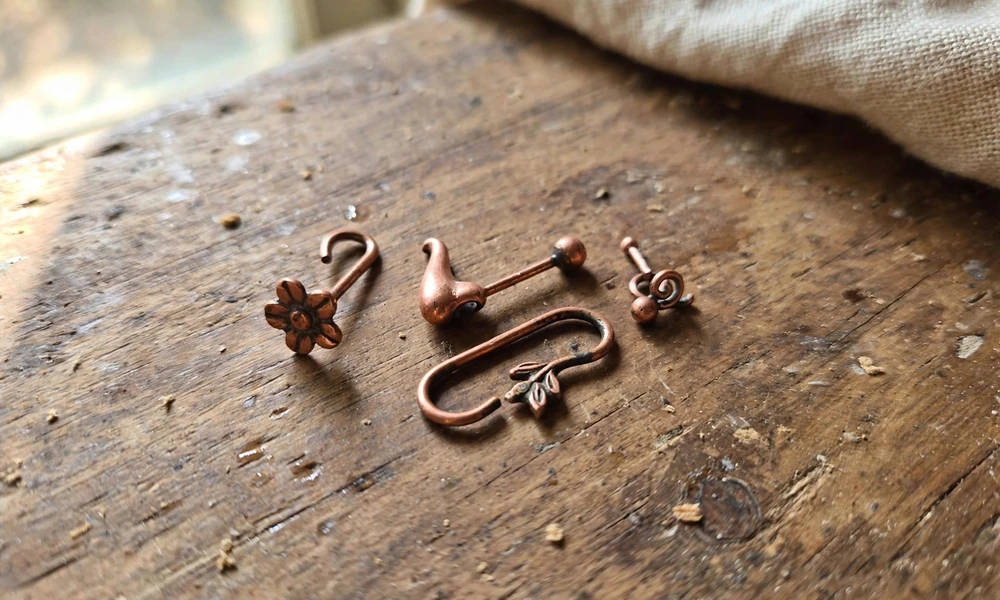
Look next at whether the copper is solid, coated, or plated. Solid copper will darken over time and can leave a green tint on skin, especially in humid weather. A clear lacquer coating slows both problems, though it can wear off and need reapplying. Copper-plated pins look the same at first but may show a different metal underneath as the plating wears, so solid or coated copper is usually the better long-term choice.
Finally, consider the size of the decorative end. A tiny ball or flat disc suits everyday wear and work, while a larger bead, spiral, or stone accent makes more of a statement. Our roundup of the best nose pins for women covers the same sizing questions across other metals, and the advice there applies just as well to copper.
The 9 best copper nose pins of 2027
The Classic Polished Copper Pin
What we like: A simple polished copper pin with a small round end, warm in tone, light to wear, and easy to pair with any outfit. What to consider: The bright polish will soften with wear, and the pin can darken if it is not cleaned regularly. Best For: Everyday wear and first-time copper buyers. Material: Solid copper. Price Range: Under $15. Standout Feature: The clean, unadorned shape lets the copper colour speak for itself.
This is the pin to start with if you have never worn copper before. It is the least fussy design, it suits most skin tones, and if you decide copper is not for you, you have spent very little to find out.
The Hammered Copper Nose Pin
What we like: A hand-hammered texture that catches the light and hides small scratches, giving the pin a crafted, artisan feel. What to consider: The textured surface can trap moisture, so it needs drying after washing your face. Best For: People who like a handmade look. Material: Hammered solid copper. Price Range: $15 to $30. Standout Feature: No two hammered pins have exactly the same pattern.
The hammered finish is practical as well as pretty. Because the surface is already uneven, the small marks that daily wear leaves behind blend in instead of standing out.
The Copper Pin with a Tiny Crystal End
What we like: A small clear crystal set into a copper end, adding a sparkle without overwhelming the warm metal. What to consider: The stone setting needs checking now and then, since a loose stone can fall out. Best For: Evenings and occasions when you want a little shine. Material: Copper with a crystal accent. Price Range: $15 to $30. Standout Feature: The crystal catches light while the copper keeps the look warm and grounded.
This pin works well when you want jewellery that reads as dressed up without being formal. The crystal is small enough for daily wear, but it still lifts a simple outfit.
The Copper Beaded Nose Pin
What we like: A row of small copper beads along the decorative end, giving the pin texture and a slightly bohemian feel. What to consider: The beads add a little weight, so it suits a healed piercing better than a fresh one. Best For: Casual, bohemian and festival styling. Material: Copper beads on a copper post. Price Range: $15 to $30. Standout Feature: The beaded detail reads clearly even at a small size.
Beaded pins suit people who like their jewellery to have a bit of movement and texture. The design is decorative without being large, so it stays comfortable through a long day.
The Copper and Turquoise Accent Pin
What we like: A small turquoise stone set in copper, a classic pairing where the cool blue-green stone makes the warm metal look richer. What to consider: Turquoise is a soft stone, so avoid harsh cleaners and store the pin separately. Best For: Summer outfits and earthy, natural styling. Material: Copper with a turquoise accent. Price Range: $25 to $45. Standout Feature: The colour contrast between stone and metal is striking at a glance.
Copper and turquoise have been paired in jewellery for centuries, and the combination still works. The stone gives the pin a focal point, while the copper keeps it feeling warm rather than cold.
The Adjustable Copper Open Pin
What we like: An open-ended design that can be gently adjusted for a snug fit, useful if standard pins tend to feel loose or tight. What to consider: Adjusting it too often can weaken the metal, so set the fit once and leave it. Best For: People between sizes or with a piercing that sits at an angle. Material: Solid copper, open-ended. Price Range: $10 to $25. Standout Feature: The fit can be fine-tuned at home without tools.
This is a practical choice rather than a decorative one. If you have struggled with pins that slip or press, the adjustable shape solves the problem without needing a custom order.
The Copper Spiral Nose Pin
What we like: A slim copper spiral that sits neatly against the nostril, with a coiled end that adds interest from every angle. What to consider: The spiral can catch on fabric, so take care when changing clothes or drying your face. Best For: Wearers who like sculptural, unusual jewellery. Material: Coiled solid copper. Price Range: $15 to $30. Standout Feature: The spiral shape is visible from the front and the side.
Spiral pins look more complex than they are. The coil holds the pin in place well, and the shape gives a simple metal a clear personality without adding weight.
The Copper Filigree Nose Pin
What we like: Fine copper wirework in a delicate filigree pattern, light and detailed, with a vintage feel. What to consider: The fine wires are delicate and can bend if the pin is handled roughly. Best For: Vintage-inspired outfits and special occasions. Material: Copper filigree wire. Price Range: $25 to $50. Standout Feature: The openwork pattern looks intricate despite the tiny size.
Filigree is the most delicate style in this roundup, and it is best kept for occasions rather than everyday wear. Treated gently, it is one of the prettiest ways to wear copper on the nose.
The Tiny Copper Nose Pin
What we like: A very small copper pin with a minimal flat end, barely-there in feel and easy to forget you are wearing. What to consider: The small size makes it easy to lose, so keep a spare and store it in a closed box. Best For: Minimal styling, work, and sensitive piercings. Material: Solid copper, small flat end. Price Range: Under $15. Standout Feature: The smallest pin here, and the most comfortable for long wear.
Not every nose pin needs to make a statement. This one is for days when you want the warmth of copper without any extra detail, and it layers well if you wear more than one piercing.
Which copper nose pin is right for you
If you are buying copper for the first time, start with the classic polished pin or the tiny copper pin. Both are inexpensive, comfortable, and honest about what copper looks like on skin. Wear one for a week or two before deciding whether you want a larger or more decorative style.
If you already know you like copper, the hammered pin and the beaded pin are the most forgiving for daily wear, because their texture hides the small marks that build up over time. The crystal, turquoise, and filigree pins are better saved for days when you want the pin to be noticed.
For fit, remember that copper is soft. A pin that feels tight on day one will not loosen the way a steel pin might, and a pin that is bent out of shape should be replaced rather than bent back repeatedly. If you are torn between copper and another metal, our gold versus silver nose pin comparison explains how metal choice changes comfort, care, and cost, and the same trade-offs apply when copper is in the mix.
The caveats that matter
Copper is a beautiful metal, but it is not the easiest to live with. It tarnishes, it can stain skin green, and it is softer than the metals most nose jewellery is made from. None of these are reasons to avoid it, but they are reasons to buy with your eyes open and to clean the pin regularly.
| Detail | What is known |
|---|---|
| Best for most people | A standard 20 gauge pin with a smooth, rounded end and a solid copper post |
| Main drawback | Copper tarnishes and can leave a green tint on skin when it reacts with moisture |
| How to slow tarnish | Keep the pin dry, store it in a closed box, and polish it with a soft cloth |
| Who should be cautious | People with metal sensitivities or a history of skin reactions to jewellery |
| Coated vs solid copper | A clear coating slows tarnish and staining, but it wears off and needs reapplying |
| Cleaning | Warm water and mild soap, then dry fully; avoid harsh chemical dips |
| When to replace it | If the post bends repeatedly, the end loosens, or the coating flakes away |
| What it does not do | It does not suit fresh piercings, and it is not a hypoallergenic metal |
If your skin turns green or itchy under a copper pin, remove it and let the skin settle before trying another metal. A green tint is usually harmless and washes off, but itching or redness that lasts more than a day or two is a sign to stop wearing copper against that piercing.
Checklist: buying a copper nose pin honestly
Use these checks before you buy, and again after a week of wear.
- Check the ends: smooth and rounded, with no sharp edges or rough spots.
- Check the metal: solid or coated copper, not thin plating over another metal.
- Check the gauge: standard 20 gauge for a healed nostril piercing, unless your piercer advises otherwise.
- Check the fit: snug enough not to slip, loose enough not to press on the piercing.
- Check your skin after a few days: no green tint that bothers you, no itching or redness.
- Check the care routine: dry the pin after washing, store it closed, and polish it when it dulls.
Frequently asked questions
Will a copper nose pin turn my skin green?
It can. Copper reacts with moisture and skin oils, and the reaction can leave a green tint on the skin around the piercing. Keeping the pin dry, choosing a coated pin, and cleaning it regularly all reduce the effect. The tint usually washes off with soap and water.
Is copper safe for a nose piercing?
Copper is safe for most people in a fully healed piercing, but it is not recommended for a fresh one. Fresh piercings need a stable, hypoallergenic metal while they heal. If you have a metal sensitivity, test copper for short periods first, or choose a coated pin.
How do I clean a copper nose pin?
Wash it with warm water and mild soap, then dry it fully with a soft cloth. A gentle polish with a jewellery cloth restores the shine. Avoid harsh chemical dips, which can strip coatings and damage stone settings.
How long does a copper nose pin last?
A solid copper pin can last for years with regular cleaning, though it will darken and develop a patina over time. Replace it if the post bends repeatedly, the decorative end loosens, or a coating flakes away and exposes rough metal underneath.
Can I wear a copper nose pin every day?
Yes, if your skin tolerates it. Many people wear copper daily without problems, but if you notice staining or irritation, try wearing it for shorter periods or switching to a coated pin. Copper pairs well with other warm-toned jewellery, and our guide to the best copper toe rings shows how the same metal works across a whole jewellery look.
Does copper tarnish faster than silver?
Often yes, especially in humid conditions or with frequent contact with water. Silver tarnishes too, but copper darkens more visibly and more quickly. Regular cleaning and dry storage keep both metals looking their best.
The bottom line
The best copper nose pin in 2027 is the one that suits how you actually wear jewellery. For most people that means a simple polished or tiny pin in solid copper, with smooth ends and a standard gauge, worn in a healed piercing and cleaned regularly.
Start small, wear it for a week, and watch how your skin responds. If copper suits you, the hammered, beaded, and stone-accented pins in this roundup give you plenty of room to grow into the metal. If it does not, you will know quickly, and you will have spent very little finding out.