A platinum septum ring is the quiet luxury option in nose jewellery. It looks a lot like white gold at first glance, but it is heavier, denser, and naturally white, which means it never needs re-plating to stay bright. It is also one of the most skin-friendly metals you can wear, which makes it a good choice for people who have reacted to other metals. The trade-off is price. Platinum costs far more than silver or steel, so the ring you choose needs to be worth that investment.
Platinum has been used in fine jewellery for over a century, mostly in engagement rings and wedding bands, where its strength and resistance to tarnish matter most. Those same qualities make it excellent for a septum ring: it does not tarnish, it does not fade, and it is naturally hypoallergenic, unlike white gold, which sometimes contains nickel.
Below are nine platinum septum rings worth considering in 2027, from a classic polished ring to a pavé clicker with a row of tiny diamonds. Each one is described by what it does well, what to watch for, and who it suits best, so you can decide whether platinum is worth it for you, and which design earns the price.
Key takeaways
- Platinum is naturally white, dense, and resistant to tarnish, so it stays bright without re-plating.
- It is one of the most skin-friendly jewellery metals, and a good choice for sensitive skin.
- Platinum is heavy for its size, so a thicker ring feels noticeably more substantial than a silver or steel one.
- Look for a Pt950 hallmark, meaning 95 percent platinum, and buy from a seller who states the alloy clearly.
- Platinum is a poor choice for a fresh piercing and a poor value if you change rings often, because the price rewards keeping one ring for years.
What platinum septum rings actually are
Platinum is a dense, naturally white precious metal. Jewellery-grade platinum is usually marked Pt950, which means it is 95 percent platinum, with the remaining 5 percent made up of other metals from the platinum group, such as ruthenium or iridium, which add a little hardness. That high purity is one reason platinum is so well tolerated by sensitive skin. There is very little in the alloy to react with.
For a septum ring, platinum brings three practical advantages. First, it does not tarnish. Unlike silver, which darkens with air and moisture, platinum keeps its colour indefinitely, and any dullness is just surface wear that polishes away. Second, it is strong. A platinum ring holds its shape better than silver and is less likely to bend out of round. Third, it is naturally white, so there is no plating to wear off and no yellowing over time, which is a common complaint with white gold.
Platinum is also heavier than other septum metals. A platinum ring weighs roughly twice as much as a silver one of the same size, and that weight is part of what makes it feel like fine jewellery. Some find a thick platinum ring too heavy for all-day wear, so a slim 16 gauge ring, the standard size for a healed septum, is usually the better choice, with diameters from 8 mm to 12 mm.
How we chose these platinum septum rings and what to look for
Look first at the hallmark. A genuine platinum ring should be stamped Pt950, or sometimes Pt900, and the seller should state the purity in the product description. If a ring is described only as platinum-coloured or platinum-plated, it is not solid platinum, and it should not carry a platinum price. Solid platinum is expensive, and a price that looks too good to be true usually means the ring is plated steel or silver.
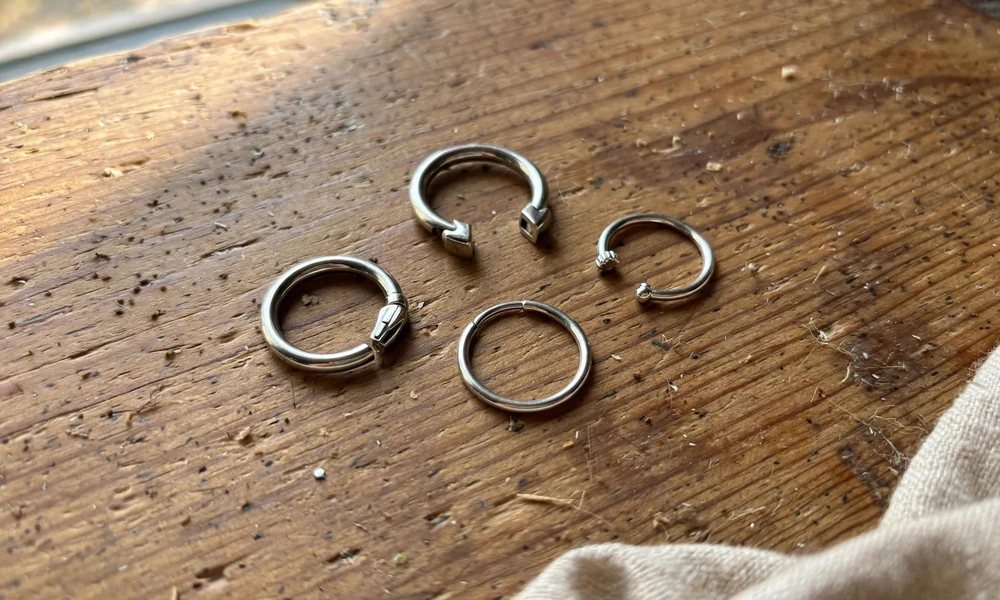
Look next at the weight and the gauge. Because platinum is dense, a thick ring feels heavy in a way that surprises people who are used to silver or titanium. A slim 16 gauge ring is comfortable for most people, while a thicker 14 gauge ring makes a bolder statement but is better suited to occasional wear. Check the diameter too. An 8 mm ring sits close and neat, while a 10 mm or 12 mm ring hangs lower and suits a clicker with a decorative front. Our guide to the best septum rings for women explains sizing in more detail, and the same measurements apply here.
Finally, look at the closure and the setting. A clicker with a secure hinge is the most practical closure for a valuable ring, because it opens and closes without bending the metal. If the ring has stones, check that they are set in proper prongs or a bezel, not glued in, because glue fails and a lost stone in a platinum ring is an expensive loss. A good setting is part of what you are paying for.
The 9 best platinum septum rings of 2027
The Classic Polished Platinum Ring
What we like: A plain, high-polish seamless ring in Pt950 platinum, with a clean join and a bright, cool-white finish that never needs re-plating. What to consider: The highest price in this list for the simplest design, and it will show scratches over time. Best for: Everyday wear for people who want one ring for years. Material: Pt950 platinum, polished. Price range: £180 to £350. Standout feature: Solid platinum that stays white forever.
The Platinum Ring with a Tiny Diamond
What we like: A hinged clicker with a single small diamond set into the front, so the ring catches the light without looking flashy. What to consider: The diamond adds to the price, and the hinge needs checking to make sure it clicks shut firmly. Best for: Everyday wear with a little sparkle. Material: Pt950 platinum, single diamond. Price range: £250 to £450. Standout feature: A single diamond set in solid platinum.
A single diamond in platinum is a classic combination, and it works as well in a septum ring as it does in an engagement ring. The stone is small enough for daytime and work, and the platinum setting holds it securely. Wipe the stone with a soft, dry cloth to keep it bright, and have the setting checked once a year.
The Brushed Platinum Ring
What we like: A matte, brushed finish that hides small scratches and gives the ring a quiet, modern look. What to consider: The brushed texture will slowly polish itself shiny where it rubs against skin. Best for: Minimal looks and people who dislike high shine. Material: Pt950 platinum, brushed finish. Price range: £180 to £320. Standout feature: A soft, matte surface that suits understated styling.
The Platinum Ring with a Pearl Accent
What we like: A horseshoe with a small freshwater pearl on one end and a plain platinum ball on the other, soft and classic without being fussy. What to consider: Pearls are delicate, so keep the ring away from perfume, hairspray, and harsh cleaners. Best for: Weddings, evenings, and soft, romantic looks. Material: Pt950 platinum, freshwater pearl. Price range: £220 to £400. Standout feature: A real pearl end set in solid platinum.
The Thin Platinum Stacking Ring
What we like: A fine, slim ring that looks delicate and light, ideal for layering with other nose jewellery. What to consider: A thin ring in a heavy metal still feels solid, so try the weight before committing if you can. Best for: Delicate, layered looks. Material: Pt950 platinum, thin gauge. Price range: £150 to £280. Standout feature: A slim, lightweight profile that layers well.
Thin rings have a quiet elegance that thicker rings cannot match, and platinum makes even a slim ring feel like fine jewellery. This one is made for people who wear more than one piece of nose jewellery and want each piece to sit lightly. Open it by twisting the ends apart, never by pulling them straight out, which is what bends a ring out of shape.
The Platinum Ring with a Sapphire End
What we like: A horseshoe with a small blue sapphire on one end, adding a deep colour accent that suits platinum perfectly. What to consider: Sapphires are hard and durable, but check the setting is secure before wearing. Best for: Evening looks and people who love colour. Material: Pt950 platinum, sapphire. Price range: £260 to £480. Standout feature: A natural blue sapphire in a cool platinum setting.
The Platinum and Diamond Pavé Ring
What we like: A clicker with a row of tiny pavé diamonds set along the front, for maximum sparkle in a small piece of jewellery. What to consider: The most expensive ring in this list, and pavé stones need occasional checking to make sure none are loose. Best for: Special occasions and people who love sparkle. Material: Pt950 platinum, pavé diamonds. Price range: £400 to £800. Standout feature: A full row of tiny diamonds set in solid platinum.
Pavé is the most glamorous way to wear diamonds in a septum ring, and platinum is the metal that holds them best. The row of small stones catches the light from every angle, and the clicker closure makes the ring easy to put in and take out. This is a ring for occasions, not for the gym, and it deserves a soft pouch and a jeweller’s check once a year.
The Platinum L-Shaped Ring
What we like: An L-shaped ring with a straight bar and a small decorative end, designed to sit securely and comfortably in the septum. What to consider: The L-shape suits some piercings better than others, so check the fit before you commit. Best for: People who want a secure, comfortable fit. Material: Pt950 platinum, polished. Price range: £170 to £300. Standout feature: An L-shaped design that stays put.
The Tiny Platinum Ring
What we like: A small-diameter ring that hugs the septum closely, barely visible at a glance, for people who want the piercing without the jewellery taking over. What to consider: A very small diameter can feel snug, so measure your piercing before ordering. Best for: Minimal, barely-there looks and professional settings. Material: Pt950 platinum, polished. Price range: £150 to £260. Standout feature: A close, discreet fit that stays out of the way.
Sometimes the best jewellery is the jewellery you barely notice, and this ring is made for that. It sits tight against the septum, does not swing or catch, and reads as a small bright detail rather than a statement. It is also the easiest platinum ring to wear every day, because its small size keeps the weight comfortable.
Which platinum septum ring is right for you
Start with how often you will wear it. Platinum rewards commitment. If you plan to wear one ring every day for years, a plain polished ring or a single-diamond clicker is the best value, because the metal will look the same in a decade as it does today. If you change rings often, platinum is a poor value, and a silver or steel ring for everyday changes, with one platinum ring for occasions, is a smarter split.
Think about your skin and your habits too. If you have sensitive skin or have reacted to jewellery before, platinum is one of the safest choices available, because its high purity leaves very little to react with. If you swim, shower, or exercise in your ring, platinum will cope better than silver, which tarnishes, or plated metals, which wear. A comparison of gold versus silver septum rings is useful here, because it shows how much of the difference between septum metals comes down to tarnish and skin reactions, the two areas where platinum is strongest.
Finally, match the ring to the rest of your jewellery. Platinum suits cool tones and pairs naturally with other platinum, white gold, and silver pieces. If you usually wear yellow gold, a platinum ring can still work as a deliberate contrast, but choose a simpler design.
The caveats that matter
Platinum is an excellent septum metal for healed piercings, but not for a fresh one. It is far too expensive for a new piercing, where the ring may need changing as it settles. Surgical steel and titanium are the usual choices, and platinum should wait until the piercing is fully healed, which typically takes several months.
| Detail | What is known |
|---|---|
| Composition | Usually Pt950, meaning 95 percent platinum, with platinum-group metals |
| Best for | Healed septum piercings, long-term everyday wear, sensitive skin |
| Not for | Fresh or healing piercings, or people who change rings often |
| Tarnish | Does not tarnish; any dullness is surface wear that polishes away |
| Weight | Heavy for its size, roughly twice the weight of a silver ring |
| Usual gauge | 16 gauge, with diameters from 8 mm to 12 mm |
| Care | Soft cloth and lukewarm water; have stone settings checked yearly |
| What it does not do | It does not come cheap, and it does not suit every budget |
Price is the other point to take seriously. A solid platinum septum ring costs many times more than a silver or steel one, and that price only makes sense if you will wear the ring for years. Before you buy, check the hallmark, check the return policy, and make sure you are buying solid platinum, not a plated ring at a platinum price. A reputable seller will state the purity clearly and will offer a certificate for higher-value pieces.
Checklist: buying a platinum septum ring honestly
Use these checks before you buy, and again when the ring arrives.
- Check the hallmark: look for a Pt950 stamp on the ring or in the product description.
- Check the gauge and diameter: confirm 16 gauge and a diameter that fits your piercing, usually 8 mm to 10 mm.
- Check the price: compare with other solid platinum rings, and be wary of a price that looks too good to be true.
- Check the closure: make sure a clicker clicks shut firmly and a horseshoe’s balls screw on securely.
- Check the stones: if the ring has stones, make sure they are set in prongs or a bezel, not glued in.
- Plan the care: keep a soft cloth and a dry pouch ready, and have stone settings checked by a jeweller once a year.
Frequently asked questions
Can I wear a platinum septum ring in a fresh piercing?
No. Platinum is not recommended for a fresh or healing piercing, even though it is skin-friendly. Use surgical steel or titanium until the piercing is fully healed, which usually takes several months, then switch to platinum.
Why is platinum more expensive than white gold?
Platinum is rarer, denser, and used in higher purity than white gold, so more of the precious metal goes into each ring. It also stays white without re-plating, which white gold needs over time. Our guide to platinum nose screws explains the same trade-off in a smaller piece of jewellery.
Does platinum tarnish?
No. Platinum does not tarnish the way silver does. It can develop a soft patina, a slightly matte surface, with years of wear, but that polishes away easily and many people like the look.
How do I clean a platinum septum ring?
Remove the ring, wash it in lukewarm water with a drop of mild soap, dry it thoroughly with a soft cloth, and polish gently. Avoid harsh chemicals and ultrasonic cleaners on rings with pavé stones unless a jeweller advises it.
Is platinum good for sensitive skin?
Yes. Platinum is one of the most skin-friendly jewellery metals, because it is used in very high purity and its alloys rarely cause reactions. It is a good choice if you have reacted to nickel in white gold or copper in silver.
How long will a platinum septum ring last?
With basic care, a solid platinum ring lasts for decades. It does not tarnish, it holds its shape well, and the only maintenance is occasional polishing and a yearly check of any stone settings.
The bottom line
The best platinum septum ring in 2027 is the one you will wear for years. For most people, that is a plain polished ring or a single-diamond clicker in 16 gauge, with a Pt950 hallmark and a secure closure. The decorated options, a sapphire end, a pearl accent, or a pavé clicker, are worth having for occasions, and they look their best when they are kept for those moments.
Buy solid platinum from a seller who states the purity clearly, check the size before you order, and keep the ring clean with a soft cloth. Do that, and platinum will give you a bright, white, skin-friendly ring that never needs re-plating.