Sterling silver nose pins are the quiet workhorse of nose jewellery. They are bright without being flashy, cool-toned without looking cold, and far more affordable than gold or platinum, which makes them the easiest place to start if you are new to nose pins. A well-made one can look every bit as polished as a precious-metal piece, and for everyday wear it is often the most practical choice.
The problem is not finding a sterling silver nose pin. It is finding one that is actually sterling silver, not silver-plated brass that will tarnish in a week, and one whose post is the right gauge and length for your piercing. A pin that is too thick will hurt going in. A pin that is too short will press against the skin. A pin with a rough join will catch on clothing and irritate a healed piercing.
Below are nine sterling silver nose pins worth considering in 2027, from a classic polished pin to oxidised and rhodium-plated styles, plus pins set with cubic zirconia, pearl, and turquoise. Each one is described by what it does well, what to watch for, and who it suits best.
Key takeaways
- Sterling silver is 92.5 percent silver and 7.5 percent other metals, usually copper, which gives it strength while keeping its bright white shine.
- Look for a 925 stamp and a smooth, polished post, because a rough or plated pin is the most common cause of irritation in a healed piercing.
- Most nose pins are 20 or 18 gauge, and the right length depends on your nostril thickness, so measure before you buy.
- Sterling silver tarnishes with air and moisture, but a soft cloth and a dry storage box keep it bright for years.
- No nose pin suits every piercing, and sterling silver is not the best choice for a fresh or unhealed piercing, when implant-grade titanium is the safer option.
What sterling silver nose pins actually are
A nose pin is a straight post with a decorative end on one side and a small bend, disc, or ball on the other that keeps it in place. Sterling silver nose pins use 925 silver, an alloy that is 92.5 percent pure silver and 7.5 percent other metals, most often copper. Pure silver is too soft for jewellery that is worn daily, so the alloy gives the pin its strength and its spring. The result is a metal that is bright, cool-toned, and light on the skin.
Sterling silver sits in a useful middle ground. It is a precious metal, so it holds its value better than fashion jewellery, but it costs a fraction of gold or platinum. It suits cool skin tones especially well, and it pairs easily with other silver jewellery, from earrings to bracelets, without clashing. It is also widely available, which means you can find a good pin at almost any price point, from a simple stud to a hand-finished piece with a stone.
The main thing to know about sterling silver is that it tarnishes. Tarnish is a dark film that forms when silver reacts with sulphur in the air, and it is normal, not a sign of poor quality. It wipes away with a silver cloth, and regular wear slows it down, because friction keeps the surface polished. A rhodium-plated pin resists tarnish longer, while an oxidised pin is deliberately darkened in its crevices for contrast.
How we chose these sterling silver nose pins and what to look for
Look first at the metal. A genuine sterling silver pin should be stamped 925, and the seller should say so plainly. If a listing says only “silver colour” or “silver-plated”, it is not sterling silver, and the plating will wear away to reveal brass underneath. A solid pin feels cool and slightly weighty, with a clean, bright white colour.
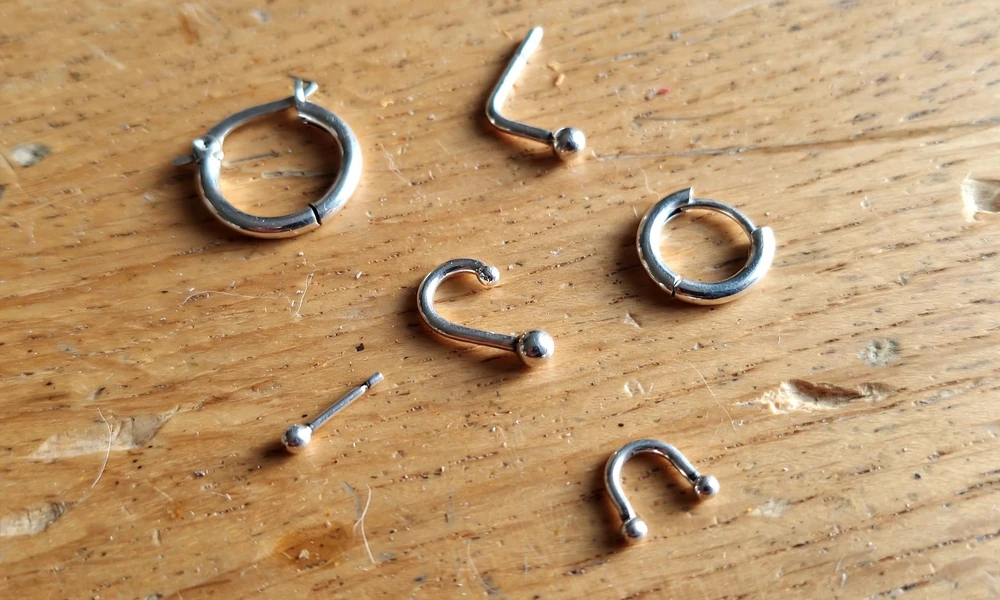
Look next at the post. Most nose pins are 20 gauge, which is the standard for a nostril piercing, or 18 gauge, which is slightly thicker. If you are not sure of your gauge, a 20 gauge pin is the safer guess, and your piercer can confirm it in seconds. The post should be smooth along its whole length, with no burrs or sharp edges, and the bend or backing should sit flat against the inside of the nostril without digging in. Our guide to the best nose pins for women explains how gauge and fit work across styles, which is useful if you are choosing between a pin, a stud, and a screw.
Finally, look at the end. A plain ball or dome is the most comfortable for daily wear and the least likely to snag. A stone-set end adds sparkle but needs a secure setting, so check that the stone sits level and does not wobble. A turquoise or coloured stone should be set in a bezel rather than glued, because glue fails with water and wear.
The 9 best sterling silver nose pins of 2027
The Classic Polished Sterling Silver Pin
What we like: A simple polished ball end on a smooth 20 gauge post, bright and mirror-finished, with a 925 stamp and a comfortable L-shaped bend. What to consider: Plain by design, so it adds no sparkle, and it will need a wipe with a silver cloth every few weeks. Best For: Everyday wear and first-time pin buyers. Material: 925 sterling silver. Price Range: £10–£20. Standout Feature: A flawless mirror polish that stays bright with regular wear.
This is the pin to buy if you want one piece that goes with everything. It is small and neat, and it suits a first piercing as well as a well-healed one.
The Sterling Silver Pin with a Tiny Cubic Zirconia
What we like: A 2 mm cubic zirconia in a four-prong setting, bright and clear, with a polished post and a secure prong fit. What to consider: The stone is small, so it reads as a sparkle rather than a statement, and prongs can catch on fine fabrics. Best For: Evenings and special occasions. Material: 925 sterling silver, cubic zirconia. Price Range: £15–£30. Standout Feature: A clear, well-cut stone that catches the light without looking oversized.
A cubic zirconia pin is the easiest way to add sparkle without the price of a diamond. The stone should sit level, and the prongs should be smooth to the touch.
The Brushed Sterling Silver Pin
What we like: A soft matte finish that hides fingerprints and small scratches, with a slim ball end and a smooth post. What to consider: The matte surface will slowly polish itself shiny with wear, and it shows less sparkle than a polished pin. Best For: Minimalist styling and workdays. Material: 925 sterling silver, brushed finish. Price Range: £12–£25. Standout Feature: A quiet matte texture that looks modern rather than plain.
Brushed silver suits people who find polished silver too bright. It reads as understated and contemporary, and it pairs well with simple outfits.
The Oxidised Sterling Silver Pin
What we like: A deliberately darkened finish in the crevices, with a polished high point, giving the pin depth and a handmade feel. What to consider: The darkening will fade with heavy polishing, so clean it gently, and it suits a boho or vintage look more than a formal one. Best For: Vintage and bohemian styling. Material: 925 sterling silver, oxidised finish. Price Range: £15–£30. Standout Feature: Contrast between dark recesses and bright raised surfaces.
Oxidised silver suits jewellery with texture and shadow. It looks best with warm, earthy outfits and layered silver pieces. Avoid silver dip cleaners, which strip the darkening away.
The Sterling Silver Pin with a Pearl End
What we like: A small freshwater pearl, softly lustrous, set on a polished post, with a smooth finish and a secure setting. What to consider: Pearls are soft and can scratch, so handle the pin gently and keep it away from perfume and hairspray. Best For: Weddings, soft glamour, and romantic looks. Material: 925 sterling silver, freshwater pearl. Price Range: £20–£40. Standout Feature: A pearl with a warm, even lustre that flatters most skin tones.
A pearl pin is the most romantic option in this list. It softens the whole face and works beautifully for weddings and evening events. Store it away from harder jewellery so the pearl does not get scratched.
The Rhodium-Plated Sterling Silver Pin
What we like: A thin rhodium coating over sterling silver, giving a brighter white shine and much slower tarnish, with a polished ball end. What to consider: The plating will wear thin after a year or two of daily wear and may need re-plating. Best For: People who want a low-maintenance shine. Material: 925 sterling silver, rhodium plating. Price Range: £15–£35. Standout Feature: A bright, white finish that stays tarnish-free far longer than plain silver.
Rhodium plating is the practical answer to tarnish. It keeps the pin looking new with almost no effort. When the plating eventually wears, a jeweller can re-plate it cheaply.
The Thin Sterling Silver Pin
What we like: A fine 22 gauge post with a tiny dome end, barely-there on the nose, light and comfortable for all-day wear. What to consider: The thin post can bend if handled roughly, and it is not suitable for a piercing that has stretched to a thicker gauge. Best For: Delicate styling and stacking with other piercings. Material: 925 sterling silver. Price Range: £10–£20. Standout Feature: A feather-light feel that you forget you are wearing.
A thin pin is ideal if you like your jewellery subtle, and it is a good second pin if you have more than one nostril piercing. Handle it gently, and never force it through a tight piercing.
The Sterling Silver Pin with a Turquoise End
What we like: A small turquoise cabochon in a smooth bezel setting, with a warm blue-green colour that stands out against silver. What to consider: Turquoise is porous and soft, so keep it dry and avoid chemicals, and the colour varies from stone to stone. Best For: Summer looks and boho styling. Material: 925 sterling silver, turquoise. Price Range: £20–£45. Standout Feature: A vivid turquoise stone in a clean bezel that shows off the colour.
Turquoise brings colour to a silver pin without the cost of a gemstone, and each stone is slightly different. Keep the pin dry and wipe it with a soft cloth after wearing.
The Tiny Sterling Silver Pin
What we like: A 1.5 mm ball end on a short 20 gauge post, the smallest pin in this list, neat and discreet. What to consider: Very small, so it can be hard to handle, and it offers no sparkle or colour. Best For: Work, school, and anyone who wants a barely-there pin. Material: 925 sterling silver. Price Range: £8–£15. Standout Feature: The smallest, most discreet pin here, ideal for conservative settings.
A tiny pin is the right choice when you want jewellery that whispers rather than shouts. It is comfortable and easy to wear every day. Buy two, because a pin this small is easy to lose.
Which sterling silver nose pin is right for you
Start with your piercing. If it is fully healed and you want a daily pin, the classic polished pin or the rhodium-plated pin are the easiest choices. They need the least care and go with everything. If your piercing is still settling, wait until it is fully healed before switching to silver, and ask your piercer before you change jewellery.
Then think about your style. A polished or rhodium-plated pin suits a clean, modern look, while an oxidised or brushed pin suits a vintage or minimalist wardrobe. A stone-set pin is the right pick when you want the pin to be a feature rather than a detail. The best sterling silver nose screws are worth a look too if you prefer a screw-style fit.
Finally, think about your skin. Sterling silver suits cool and neutral skin tones best, and it can make warm skin look slightly pale, so try a pin on before you commit to a set. If you have a known sensitivity to copper, the alloy metal in sterling silver, test the pin for a few hours first.
The caveats that matter
Sterling silver is a good everyday metal, but it is not perfect for everyone. It tarnishes, it contains copper, and it is softer than platinum or titanium, so it can bend or scratch with rough handling. It is also not right for a fresh piercing, when healing tissue needs a metal that does not react with it.
| Detail | What is known |
|---|---|
| What sterling silver is | 92.5 percent silver and 7.5 percent other metals, usually copper, stamped 925 |
| Common gauges | 20 gauge is standard for nostrils, 18 gauge is slightly thicker, 22 gauge is very fine |
| When to wear it | Only in a fully healed piercing, not a fresh or irritated one |
| Tarnish | Normal and reversible with a silver cloth, slowed by regular wear and dry storage |
| Who should be careful | People with a copper sensitivity, and anyone with a nickel allergy if the alloy is unclear |
| Cleaning | Soft cloth and mild soap, never silver dip on oxidised or stone-set pins |
| Storage | Dry box or pouch, away from humidity, ideally with an anti-tarnish strip |
| What it does not do | It does not stay bright without care, and it is not as hard or as hypoallergenic as platinum |
If your piercing becomes red, swollen, or sore after switching to a silver pin, take the pin out and return to the jewellery your piercer gave you. A reaction is usually to the alloy or to a rough finish, not to silver itself, but a piercer can tell you which in a single visit.
Checklist: buying a sterling silver nose pin honestly
Use these checks before you buy, and again when the pin arrives.
- Check the stamp: it should read 925, and the seller should state sterling silver plainly.
- Check the gauge: 20 gauge suits most nostrils, and your piercer can confirm yours.
- Check the post: smooth along its length, with no burrs, and a bend that sits flat inside the nostril.
- Check the setting: stones should sit level and not wobble, and bezels should be smooth.
- Check the finish: polished, brushed, oxidised, or rhodium-plated, and choose the one that fits your routine.
- Check the care: keep it dry, store it in a box, and polish it with a soft cloth when it dulls.
Frequently asked questions
Does sterling silver tarnish in a nose piercing?
Yes, slowly, because silver reacts with sulphur in the air. Regular wear slows tarnish down, and a soft silver cloth removes it in seconds. Rhodium-plated pins tarnish much more slowly.
Can I wear a sterling silver nose pin in a new piercing?
No, not until the piercing is fully healed, which usually takes several months. Fresh piercings need implant-grade titanium. Ask your piercer before you switch to silver.
How do I clean a sterling silver nose pin?
Wipe it with a soft silver cloth, or wash it in warm water with a drop of mild soap and dry it fully. Avoid silver dip on oxidised or stone-set pins, because it strips the finish and can loosen glue.
Is sterling silver safe for sensitive skin?
Usually yes, but sterling silver contains copper, and a small number of people react to it. If your piercing itches or reddens with silver, try implant-grade titanium instead and ask your piercer for advice.
What gauge should I choose?
Most nostril piercings are 20 gauge, and most pins are sold in 20 gauge. If your piercing feels loose or tight with a 20 gauge pin, your piercer can measure it and tell you whether you need 18 or 22 gauge.
Where can I see more nose pin styles?
Our guide to the best diamond nose pins covers stone-set pins in detail, including how settings are made and which stones suit daily wear, which is a useful next step if you want sparkle.
The bottom line
The best sterling silver nose pin in 2027 is not the most expensive one. It is the one that is genuinely 925 silver, that fits your gauge and your nostril, and that you will actually wear. For most people, that is a classic polished pin or a rhodium-plated one.
Buy one pin first, wear it for a week, and see how it feels and how it holds its shine. If it stays comfortable and bright, you have found your metal. If it tarnishes fast or irritates your skin, a jeweller or piercer can help you find the right alternative.