

White gold nose pins are the quiet luxury of nose jewellery. They have the bright, silvery look of platinum at a lower price, and sit neatly between the warmth of yellow gold and the cool shine of steel. On the nose, a white gold pin reads clean and modern, and works with almost any other jewellery you already own. For anyone who wants a precious-metal pin without a warm tone, white gold is the natural choice.
The catch is that white gold is not a metal on its own. It is yellow gold mixed with white metals such as palladium or nickel, and most white gold jewellery is finished with a thin coating of rhodium, which gives it that bright white shine. That coating wears over time, and the metal underneath is a softer, slightly warmer grey. Knowing how rhodium plating works is the difference between a pin that stays bright for years and one that slowly turns dull.
Below are nine white gold nose pins worth considering in 2027, from a classic polished pin to diamond, pearl, and two-tone styles. Each one is described by what it does well, what to watch for, and who it suits best, so you can choose with your skin tone and your piercing in mind, not just a pretty photograph.
Key takeaways
- White gold is yellow gold alloyed with white metals and usually finished with a rhodium coating that gives it a bright white shine.
- The rhodium coating wears thin with daily use and typically needs re-plating every one to two years to stay bright.
- Nickel-white gold can irritate sensitive skin, so palladium-white gold is the safer choice for anyone with a nickel allergy.
- Cool and neutral skin tones usually suit white gold best, and it pairs easily with silver, platinum, and diamond jewellery.
- No white gold pin stays bright forever without care, and a pin that looks grey or yellowed usually just needs a fresh rhodium dip.
What white gold nose pins actually are
A nose pin is a small straight post with a decorative end that sits on the outside of the nostril, held in place by a slight bend or a small flat disc on the inside. White gold versions use an alloy of gold with white metals, most often palladium or nickel, which lightens the yellow colour. The result is then usually plated with rhodium, a hard white metal from the platinum family, which gives the bright, mirror-like finish most people picture when they think of white gold.
The karat matters here in a different way than it does for yellow gold. A 14k white gold pin is harder and more durable for daily wear, while an 18k white gold pin has more gold and a slightly warmer undertone, which shows more as the rhodium wears. Neither is better in absolute terms; the choice depends on whether you value hardness or colour depth, and on how often you are willing to have the pin re-plated.
There are two things to check before buying. The first is the alloy: palladium-white gold costs more but is hypoallergenic and keeps a whiter colour on its own, while nickel-white gold is cheaper and harder but can irritate sensitive skin. The second is the rhodium: a thick coating lasts longer, and a jeweller can re-apply it when it wears thin, usually for a modest fee. With occasional re-plating, a white gold pin can look new for many years.
How we chose these white gold nose pins and what to look for
Look first at the alloy and the karat. Palladium-white gold in 14k is the best all-round choice for a nose pin: it is hard enough for daily wear, it does not contain nickel, and its natural colour is whiter than nickel-white gold, so it looks better even as the rhodium wears. If the listing does not name the alloy, ask, because the difference matters more for a piercing than it does for a ring.
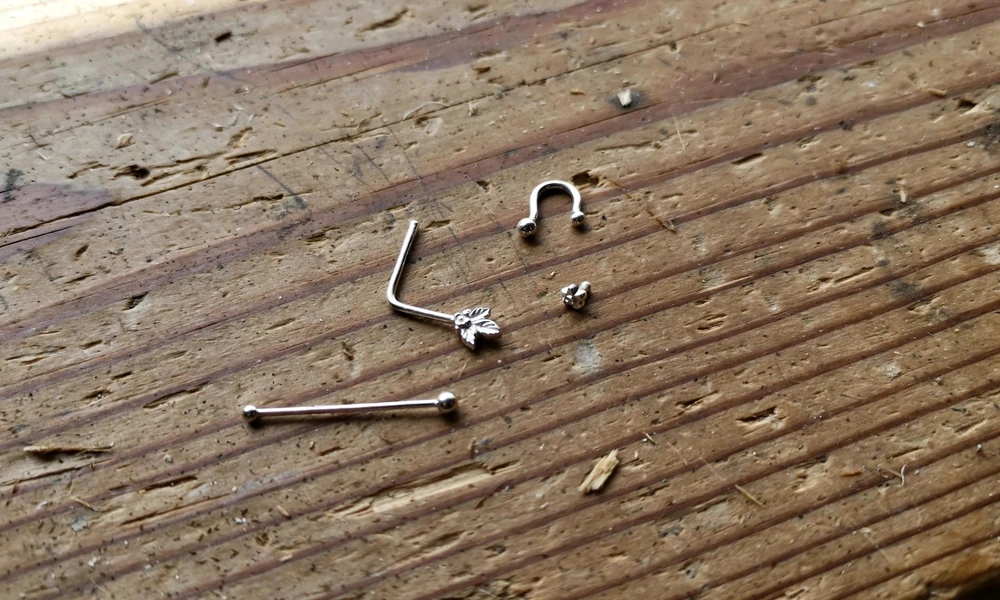
Look next at the gauge and the length. Most nostril piercings are 20 gauge or 18 gauge, and a pin in the wrong gauge will either slide around or feel tight. Too long and the pin wobbles and catches on clothing, too short and the end presses against the skin. A piercer can measure your piercing in a minute, and that one check prevents most returns. Everyday gold jewellery, such as the pieces in our guide to the best gold jewellery for everyday wear, follows the same fitting logic, because comfort depends on size long before style.
Finally, look at the end and the finish. A tiny ball, a flat disc, a small diamond, or a pearl all sit differently on the nostril, and the best choice depends on how visible you want the pin to be. A high-polish rhodium finish reflects the most light and reads brightest, while a brushed finish looks softer and shows fewer scratches. Check the inside end too: a well-made pin has a smooth, rounded end inside the nostril, not a sharp cut that can scratch.
The 9 best white gold nose pins of 2027
The Classic Polished White Gold Pin
What we like: A simple straight post with a tiny polished ball end, in solid 14k palladium-white gold with a rhodium finish, bright and clean on the nose. What to consider: The plain design will not suit anyone who wants a visible statement piece. Best For: Everyday wear and first white gold pins. Material: Solid 14k palladium-white gold, rhodium plated. Price Range: Mid-range. Standout Feature: A mirror-bright rhodium finish that reads clearly white.
The White Gold Pin with a Tiny Diamond End
What we like: A small genuine diamond set into a solid 14k white gold end, where the white metal makes the stone look larger and brighter than it would in yellow gold. What to consider: The stone needs regular gentle cleaning to stay bright, and the price rises with the diamond size. Best For: Special occasions and evening wear. Material: Solid 14k white gold with a diamond. Price Range: Premium. Standout Feature: A prong-set diamond that looks whiter against white gold.
The Brushed White Gold Pin
What we like: A satin-brushed finish that softens the shine and gives the white gold a gentle, matte quality, in solid 14k palladium-white gold. What to consider: Brushed finishes show fewer scratches but can look grey under dim light. Best For: Workwear and understated everyday styling. Material: Solid 14k white gold, brushed finish. Price Range: Mid-range. Standout Feature: A soft matte surface that hides fine scratches well.
The White Gold Pin with a Pearl End
What we like: A small freshwater pearl set on a solid 14k white gold post, pairing cool white metal with a soft white lustre for a clean, classic look. What to consider: Pearls are softer than metal and need gentle handling, and they should not be soaked in cleaning solutions. Best For: Bridal looks and classic styling. Material: Solid 14k white gold with a freshwater pearl. Price Range: Premium. Standout Feature: A lustrous pearl that glows against the bright metal.
Pearl and white gold is one of the cleanest pairings in jewellery: both are cool and pale, and neither one overpowers the other. Keep it for days when you want something soft and a little special.
The White Gold Beaded Nose Pin
What we like: Three tiny white gold beads clustered at the end, giving texture and detail without adding weight, in solid 14k white gold. What to consider: The beaded end is slightly larger than a plain ball, so it suits a nostril with room to show it. Best For: Anyone who likes delicate detail. Material: Solid 14k white gold. Price Range: Mid-range. Standout Feature: A hand-finished bead cluster with a soft, rounded profile.
The Slim White Gold Pin
What we like: A fine 20 gauge post with a very small flat disc end, barely visible from a distance, in solid 14k white gold. What to consider: The fine gauge needs careful handling, and it is not the best choice for a piercing that is still settling. Best For: Minimal styling and small nostrils. Material: Solid 14k white gold, 20 gauge. Price Range: Mid-range. Standout Feature: An almost invisible profile that still shows a cool white glint.
The White Gold Filigree Nose Pin
What we like: A delicate openwork filigree end, hand-finished in solid 14k white gold, with a vintage feel that suits romantic and classic styling. What to consider: The fine wirework needs gentle cleaning, and it is more delicate than a solid ball end. Best For: Vintage-inspired and classic looks. Material: Solid 14k white gold, filigree. Price Range: Premium. Standout Feature: Intricate openwork that looks light and airy on the nose.
Filigree is the most decorative end in this roundup, and it rewards a closer look. From a distance it reads as a bright white detail, and up close the fine pattern gives it a handmade, heirloom quality.
The White Gold and Rose Gold Two-Tone Pin
What we like: A two-tone end that pairs white gold with rose gold, so the pin works with both warm and cool jewellery, in solid 14k gold. What to consider: Two-tone pieces cost more than single-metal pins, and the contrast is subtle at very small sizes. Best For: Mixed-metal jewellery wearers. Material: Solid 14k white gold and rose gold. Price Range: Premium. Standout Feature: A two-tone ball that bridges warm and cool metals.
The Tiny White Gold Pin
What we like: The smallest pin in this roundup, with a 1.5 mm ball end in solid 14k white gold, ideal for a subtle first pin or a second piercing. What to consider: The tiny end can be fiddly to handle, and it may be too small to show the white gold colour clearly in dim light. Best For: Second piercings and very subtle styling. Material: Solid 14k white gold. Price Range: Affordable to mid-range. Standout Feature: A 1.5 mm ball that reads as a bright white dot.
Which white gold nose pin is right for you
Start with your skin tone. Cool and neutral skin tones usually suit white gold most easily, because the bright metal echoes the cool undertones in the skin. Warm skin tones can still wear white gold well, especially in a polished finish, which reads brighter, or in a two-tone design that adds a warmer metal to balance it. If you are unsure, try holding a white gold ring against your face in daylight and see whether your skin looks brighter or slightly washed out.
Think next about the alloy. If you have sensitive skin or any history of reacting to nickel, choose palladium-white gold, which is hypoallergenic and keeps a whiter colour on its own. Nickel-white gold is cheaper and harder, but it can irritate a sensitive piercing, and it is not worth the saving if your skin reacts. Ask the seller which alloy is used before you buy, because the listing does not always say.
Finally, match the end to your piercing and your style. A small ball or flat disc suits a fresh or small piercing and a minimal wardrobe, while a diamond, pearl, or filigree end suits a healed piercing and a more decorative style. If you already wear white gold or platinum elsewhere, a matching pin ties the look together; if you do not, a plain polished pin is the easiest way to start. White gold also appears in our roundup of the best white gold nose bars, useful if you are deciding between a pin and a bar, and our guide to the best nose rings for women covers pins, rings, and studs.
The caveats that matter
White gold is a practical metal, but it is not right for everyone, and the rhodium coating is the main reason. The coating is thin, and daily wear and cleaning wear it down over one to two years, after which the metal underneath looks warmer and greyer. That is normal, not a fault, and a jeweller can re-plate the pin for a modest fee. If you dislike occasional maintenance, platinum or plain steel may suit you better.
| Detail | What is known |
|---|---|
| What it is | Yellow gold alloyed with white metals, usually finished with rhodium |
| Best alloy for sensitive skin | Palladium-white gold, which contains no nickel |
| Best karat for daily wear | Solid 14k, hard enough for everyday use and bright with rhodium |
| Rhodium coating | Wears thin in one to two years of daily wear; re-plating restores the shine |
| Common gauges | 20 gauge and 18 gauge fit most nostril piercings |
| Skin tone match | Cool and neutral tones suit it best; warm tones suit polished or two-tone finishes |
| Cleaning | Warm water and mild soap; avoid harsh dips that strip rhodium faster |
| What it does not do | It does not stay bright forever without re-plating, and it will not suit nickel-sensitive skin if alloyed with nickel |
Care is simple but worth doing properly. Warm water and a drop of mild soap, with a soft cloth to dry, is enough for a plain metal pin. Avoid harsh jewellery dips and abrasive cleaners, which strip rhodium faster than normal wear, and avoid ultrasonic cleaners on stone ends, which can loosen a setting. Store the pin in a small pouch or a lined box rather than loose in a drawer, where it can scratch against other jewellery.
Checklist: buying a white gold nose pin honestly
Use these checks before you buy, and again when the pin arrives.
- Check the alloy: palladium-white gold if you have sensitive skin or a nickel allergy, not nickel-white gold.
- Check the karat and the coating: solid 14k with a rhodium finish, and ask how thick the coating is.
- Check the gauge and length: match your piercing, 20 or 18 gauge, with a post that sits flat without pressing.
- Check the colour in daylight: white gold should read bright white, not yellow or grey.
- Check the inside end: it should be smooth and rounded, with no sharp edge or rough cut.
- Check the setting: stones and pearls should sit firmly, with no wobble when you touch them gently.
Frequently asked questions
Does white gold suit every skin tone?
Mostly, yes, but cool and neutral skin tones suit it best. Warm skin tones can still wear it, especially in a polished finish or a two-tone design, but check the colour against your face in daylight before buying a solid gold piece.
Will a white gold nose pin turn yellow?
It can look warmer over time as the rhodium coating wears thin, which usually takes one to two years of daily wear. The metal underneath is a pale grey-gold, not bright yellow, and a jeweller can re-plate the pin to restore the bright white finish.
Is white gold safe for sensitive skin?
Palladium-white gold usually is, because it contains no nickel. Nickel-white gold can irritate sensitive skin, so check the alloy before buying, and choose palladium-white gold if you have ever reacted to nickel jewellery.
How often does white gold need re-plating?
For a nose pin worn daily, roughly every one to two years. Pins worn occasionally last longer between re-platings. A jeweller can do it quickly, and the cost is modest compared with the price of the pin.
Can I wear a white gold nose pin with yellow gold jewellery?
Yes, and mixed metals are widely worn now. A two-tone pin is the easiest bridge, but a plain white gold pin also works alongside yellow gold earrings, because the small scale of a nose pin means the metals do not clash the way larger pieces can.
How long will a solid white gold nose pin last?
With normal care and occasional re-plating, years. Solid 14k white gold is hard enough for daily wear, and it can be polished and re-plated by a jeweller whenever the finish dulls.
The bottom line
The best white gold nose pin in 2027 is a solid 14k palladium-white gold piece in a size and end that fit your piercing and your style. For most people that means a classic polished pin or a small diamond-set one, in the right gauge, with a smooth inside end and a colour that reads bright white in daylight. The rhodium will need refreshing eventually, but that is a small routine job, not a reason to avoid the metal.
Choose one pin and wear it for a week. A pin that sits flat, does not catch, and still looks bright after a week of wear is the right one, and white gold, at its best, is bright enough to flatter and quiet enough to wear anywhere.