
Best Titanium Nostril Rings 2027
Titanium nostril rings are the quiet workhorse of nose jewellery. They are light, strong, and kind to sensitive skin, which is why piercers recommend them so often for fresh piercings and for people who have reacted to cheaper metals. A titanium nostril ring looks simple at first glance, but the finish, the gauge, and the shape of the end all change how it sits, how it catches the light, and how comfortable it feels day to day.
The problem is that not every ring labelled titanium is the same. Implant-grade titanium is the standard worth looking for, while lower grades and coated mystery metals can still irritate a healing piercing. The shape matters too. A seamless ring, an L-shaped stud, and a small hoop with a ball end each behave differently when you sleep, wash your face, or change your clothes.
Below are nine titanium nostril rings worth considering in 2027, from a classic polished ring to anodised colour options and a slim seamless style. Each one is described by what it is good at, what to watch for, and who it suits best, so you can choose with your piercing in mind, not just a pretty photo.
Key takeaways
- Implant-grade titanium is one of the safest metals for nostril piercings, and it is light enough to forget you are wearing it.
- Gauge and diameter matter more than decoration: a ring that is too tight pinches, and one that is too loose catches on everything.
- Polished and brushed finishes suit everyday wear, while anodised colours add personality without adding weight.
- Wait until a piercing is fully healed before switching styles, and clean new jewellery before the first wear.
- Titanium does not suit everyone, and a ring that causes persistent redness, swelling, or discharge should come out and be checked by a piercer.
What titanium nostril rings actually are
A titanium nostril ring is a small piece of jewellery worn through a nostril piercing, made from titanium rather than gold, silver, or steel. Most good ones use implant-grade titanium, the same material used in medical implants, because it is highly resistant to corrosion and rarely causes allergic reactions. It is also much lighter than steel, which makes a noticeable difference in a small piercing that you feel every time you move your face.
Nostril rings come in several shapes. A seamless ring is a plain circle that closes with no visible join. An L-shaped stud bends at a right angle inside the nostril to stay put. A hoop with a small ball or gem end adds a little sparkle. A tiny screw-style end twists gently into place. Each shape suits a different piercing and a different level of experience, and a piercer can help you match the shape to the angle of your piercing.
Titanium can also be anodised, which means an electric current changes the colour of the surface without paint or coating. The result is a range of colours, from deep blue to violet to black, that will not flake off the way a coating can. That makes titanium one of the few metals where colour does not mean compromise.
Comfort is the other reason titanium is so popular. Because the metal is light, a titanium ring pulls less on the piercing than a heavier steel or gold ring of the same size. That matters most in the first months after healing, when the piercing is still settling, and for people who wear their ring every day without a break. A ring you forget is there is usually a ring that fits well.
How we chose these titanium nostril rings and what to look for
Look first at the grade. Implant-grade titanium, often marked as ASTM F136, is the standard to ask for. If a seller does not state the grade, treat that as a warning sign. Look next at the gauge and the diameter. Most nostril piercings use 20 or 18 gauge, and the diameter should match your piercing so the ring sits close without pulling. If you are unsure, your piercer can measure it in a minute.
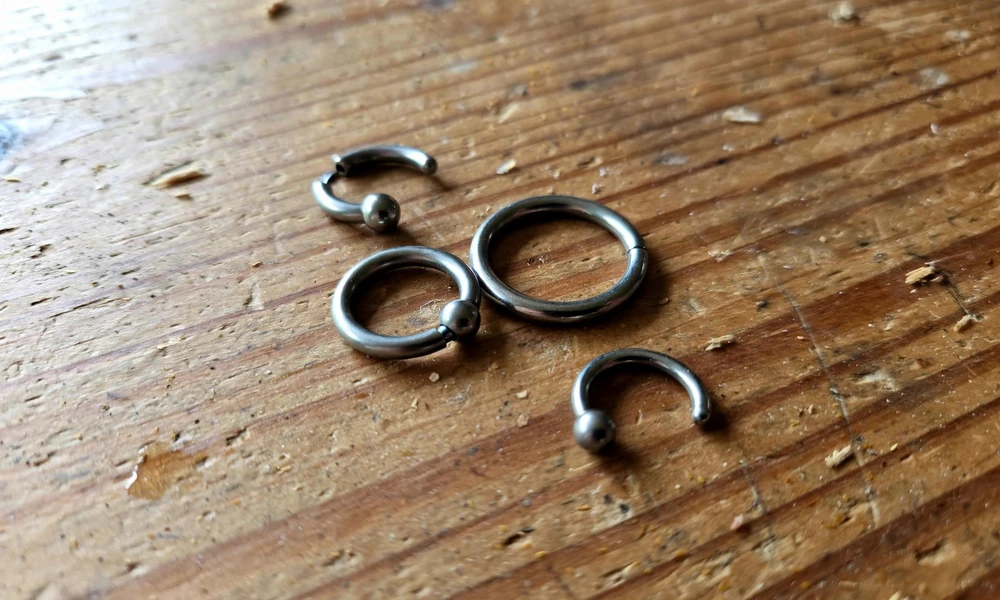
Look then at the finish and the closure. A smooth, well-polished surface is gentler on a piercing than a rough or sharp edge, and a secure closure means the ring will not open in your sleep. A plain polished ring is the easiest daily choice, while a gem or pearl end needs a secure setting so the stone does not loosen. Our guide to the best nostril rings for women covers the wider range of styles, so you can compare titanium against gold and silver before you decide.
Finally, think about your routine. If you swim, work out, or sleep on your side, a slim, snug ring is more practical than a large hoop. If you change jewellery often, a seamless ring is easier to swap than a screw end. The best titanium nostril ring is the one that fits your piercing, your skin, and your day, not the one with the most decoration.
The 9 best titanium nostril rings of 2027
The Classic Polished Titanium Ring
What we like: A smooth, mirror-polished seamless ring that suits every face and never looks dated. What to consider: Very plain, so it adds no colour or sparkle. Best for: Everyday wear and first jewellery after healing. Material: Implant-grade titanium. Price range: Low to mid. Standout feature: A flawless polish that stays bright with almost no care.
This is the ring to buy first. It is light, comfortable, and goes with everything, and it is the easiest way to find out whether titanium suits your skin.
The Brushed Titanium Ring
What we like: A soft, satin finish that hides small scratches and looks quietly expensive. What to consider: Less shine than a polished ring, so it reads as subtle rather than striking. Best for: Workdays and minimal styling. Material: Implant-grade titanium. Price range: Low to mid. Standout feature: A brushed texture that stays looking new for longer.
If polished metal feels too bright for you, the brushed finish is a calmer alternative that still reads as deliberate and well made.
The Titanium Ring with a Tiny Crystal
What we like: A small clear crystal set into a slim titanium ring, adding sparkle without weight. What to consider: The setting needs checking now and then so the stone stays secure. Best for: Evenings and special occasions. Material: Implant-grade titanium with a cubic zirconia. Price range: Mid. Standout feature: A single stone that catches light from across a room.
This is the most versatile dressed-up option in the list, small enough for daily wear but bright enough for an evening out.
The Black Titanium Ring
What we like: A deep black finish that looks bold and modern against any skin tone. What to consider: The dark colour shows dust and fingerprints more than silver tones. Best for: Statement styling and darker wardrobes. Material: Anodised implant-grade titanium. Price range: Mid. Standout feature: A rich black colour with no coating to flake.
Black titanium is a good choice if you want your nostril ring to be noticed, and the anodised finish means the colour is part of the metal itself.
The Anodised Blue Titanium Ring
What we like: A vivid blue finish that adds colour without paint, coating, or extra weight. What to consider: The colour is bold, so it does not suit every outfit. Best for: Colour lovers and festival styling. Material: Anodised implant-grade titanium. Price range: Mid. Standout feature: A bright, even blue that will not chip or peel.
This is the fun option in the list. The colour is permanent, the ring stays light, and it is an easy way to try a bolder look.
The Titanium L-Shaped Stud
What we like: A neat L-shaped bend that stays securely in place and is easy to fit. What to consider: The bend can feel fiddly to insert until you get used to it. Best for: New piercings and anyone who loses rings in their sleep. Material: Implant-grade titanium. Price range: Low. Standout feature: A secure fit that rarely slips out on its own.
The L-shaped stud is the practical choice. It is not the flashiest style, but it is the one most likely to still be in place in the morning.
The Titanium Ring with a Pearl End
What we like: A small white pearl on a slim titanium ring, soft and classic rather than flashy. What to consider: Pearls need gentle cleaning and should not be soaked in harsh solutions. Best for: Weddings, formal days, and soft styling. Material: Implant-grade titanium with a freshwater pearl. Price range: Mid to high. Standout feature: A pearl end that looks elegant without trying hard.
This is the gentlest-looking ring here, and it works well when you want your jewellery to feel refined rather than edgy.
The Slim Titanium Seamless Ring
What we like: An extra-fine seamless ring that is barely there, with no join to catch or irritate. What to consider: Very slim rings can bend if handled roughly. Best for: Minimal looks and sensitive piercings. Material: Implant-grade titanium. Price range: Low to mid. Standout feature: A feather-light feel that you forget within an hour.
If you want a nostril ring that whispers rather than shouts, this slim seamless style is the one to try.
The Tiny Titanium Ring
What we like: A miniature ring that sits close to the nostril and suits smaller piercings. What to consider: Small rings are harder to open and close, so ask a piercer to fit the first one. Best for: Petite features and understated styling. Material: Implant-grade titanium. Price range: Low. Standout feature: A tiny diameter that looks delicate and neat.
This is the smallest ring in the list, and it proves that a nostril ring does not need size to make an impression.
Which titanium nostril ring is right for you
Start with your piercing. A fresh or recently healed piercing does best with a simple polished ring or an L-shaped stud, because both are smooth, secure, and easy to clean. A long-healed piercing gives you more freedom, so a gem end, a pearl, or an anodised colour becomes a safe choice. If your piercing is at an angle, a ring may sit better than a stud, and a piercer can confirm which shape suits you.
Think next about your skin. Titanium is a good choice if you have reacted to nickel or to cheap jewellery in the past, because implant-grade titanium contains no nickel. If you have very sensitive skin, a polished finish is gentler than a textured one, and a seamless closure avoids any rough edge against the piercing.
Finally, think about how you live. If you sleep on your side, swim, or work with your hands near your face, a snug, slim ring will cause fewer problems than a large hoop. If you like to change jewellery often, choose a seamless ring that opens easily. Titanium nose cuffs are a useful comparison if you want the look without a piercing, and our guide to the best titanium nose cuffs shows how the same metal works in a clip-on style.
Budget is the last thing to weigh. Titanium sits between steel and gold on price: more than a basic steel ring, much less than solid gold, and close in cost to a good silver piece. That makes it a sensible middle ground if you want a metal you can wear for years without paying a precious-metal price. A single well-made titanium ring often outlasts three cheap ones, so the saving is real even before you count the comfort.
The caveats that matter
Titanium is one of the safest metals for piercings, but it is not a guarantee. A small number of people still react to it, and a piercing can also react to a ring that is the wrong gauge, the wrong diameter, or fitted while the piercing is still healing. If a ring causes ongoing redness, swelling, heat, or discharge, take it out and speak to your piercer before trying another style.
| Detail | What is known |
|---|---|
| Best grade to buy | Implant-grade titanium, often marked ASTM F136 |
| Common gauges | 20 or 18 gauge for most nostril piercings |
| Weight | Very light, noticeably lighter than steel |
| Nickel content | Implant-grade titanium contains no nickel |
| Colour options | Anodised colours, including black, blue, and violet, with no coating |
| When to change jewellery | Only after the piercing is fully healed, usually several months |
| Cleaning | Warm water and mild soap, or a saline solution, before the first wear |
| What it does not do | It does not suit everyone, and it does not heal a piercing on its own |
Cheap titanium is a real problem. Unmarked or very cheap rings may be a lower grade, or a different metal entirely, and they can irritate a piercing that implant-grade titanium would not. Buy from a seller who states the grade clearly, and check the ring under good light before you wear it. A rough edge, a sharp join, or a loose stone is a reason to send it back. A ring that fits well should feel like nothing at all after the first day. If you are aware of it constantly, or if it snags every time you change a shirt, the size or the shape is wrong, and a piercer can usually fix that in one visit. Our guide on how to wear a nostril ring covers fitting and daily care in more detail.
Checklist: buying a titanium nostril ring honestly
Use these checks before you buy, and again when the ring arrives.
- Check the grade: implant-grade titanium, ideally marked ASTM F136, from a seller who states it clearly.
- Check the gauge and diameter: 20 or 18 gauge for most piercings, sized to sit close without pulling.
- Check the finish: smooth and well polished, with no sharp edges, rough joins, or loose stones.
- Check the closure: it should open and close cleanly and stay shut through the night.
- Clean it first: wash with warm water and mild soap, or a saline solution, before the first wear.
- Wait for healing: do not change jewellery until the piercing is fully healed, and ask a piercer if you are unsure.
Frequently asked questions
Is titanium good for a nostril piercing?
Yes, implant-grade titanium is one of the best choices. It is light, corrosion-resistant, and rarely causes reactions, which is why piercers often use it for fresh piercings.
What gauge should I choose?
Most nostril piercings use 20 or 18 gauge. If you are unsure, ask your piercer to measure your piercing, because the wrong gauge can irritate even a healed piercing.
Can I wear titanium if I am allergic to nickel?
Usually yes, because implant-grade titanium contains no nickel. If you have had severe metal reactions before, check with your piercer or clinician first.
How do I clean a titanium nostril ring?
Wash it with warm water and mild soap, or use a saline solution, and dry it before wearing. Avoid harsh chemicals and abrasive cloths, which can dull the finish.
Will anodised titanium colours fade?
Anodised colour is part of the metal surface, not a coating, so it does not flake or peel. It can dull slightly over years of wear, but it does not chip the way paint does.
When can I change my nostril ring?
Only after the piercing is fully healed, which usually takes several months. Changing jewellery too early is the most common cause of irritation, so wait until there is no tenderness, redness, or discharge.
The bottom line
The best titanium nostril ring in 2027 is not the most decorated or the most expensive. It is the one in implant-grade titanium, in the right gauge and diameter, with a smooth finish and a secure closure. For most people that means a classic polished ring or a slim seamless style, with a crystal, pearl, or anodised colour when you want something more personal.
Choose one ring, check the grade before you buy, clean it before the first wear, and give your piercing time to settle. That is the honest way to enjoy titanium: light, comfortable, and kind to your skin, without the irritation that makes people give up on a piercing they love.