

A rose gold nose screw is the quiet romantic of the nose jewellery world. Its warm, blush-toned metal flatters most skin tones, and the gentle curve of the screw keeps it sitting neatly against the nostril without the visible bar of a stud or the bold circle of a hoop. It is the kind of piece people notice only when they are close enough to admire it, which is exactly why so many wearers love it.
The screw shape is practical as well as pretty. The L-shaped or corkscrew tail sits inside the nostril and stops the piece from slipping out during the day, while the small decorative end stays visible. Rose gold adds warmth that yellow gold can sometimes lack and that silver cannot offer at all. It suits warm and neutral skin tones, pairs well with both gold and silver earrings, and looks as good with a white shirt as it does with an evening dress.
Below are nine rose gold nose screws worth considering in 2027, from a classic polished screw to two-tone designs and tiny everyday options. Each one is described by what it does well, what to watch for, and who it suits best, so you can choose with your piercing in mind, not just a colour you like.
Key takeaways
- Rose gold nose screws suit warm and neutral skin tones and sit discreetly against the nostril.
- L-shaped screws are easiest to insert, while corkscrew tails hold most securely once in place.
- Look for solid 14k or 18k rose gold, or a thick gold fill, rather than thin plating that wears away.
- Match the gauge and length to your piercing, usually 20 or 18 gauge, and check the fit before buying a set.
- Rose gold can darken slightly with wear and is not ideal for a fresh, unhealed piercing, so wait until healing is complete.
What rose gold nose screws actually are
A nose screw is a small piece of nose jewellery with a straight or gently curved post and a decorative end. The tail is shaped like an L or a loose corkscrew, and it rests inside the nostril, anchoring the piece in place. Unlike a flat-back stud, which uses a separate backing, a nose screw relies on its curved tail for security, which makes it light and comfortable once you are used to putting it in.
Rose gold is gold alloyed with copper, which gives it its pink blush. The higher the copper content, the deeper the pink. Most rose gold nose screws are made in 14k, which balances colour, strength and price well. Eighteen-karat rose gold is softer and pinker, and it costs more, while 10k is harder and paler. Solid gold is the safest choice for sensitive skin, because the colour runs through the metal rather than sitting on the surface.
The decorative end is where the designs differ. A plain polished ball is the most discreet option and the easiest to clean. A tiny diamond, crystal or pearl adds sparkle without adding size, while a beaded or textured end gives the piece character. The screw itself is usually 20 gauge, which is the standard for nostril piercings, or 18 gauge for a slightly thicker, sturdier feel.
How we chose these rose gold nose screws and what to look for
Look first at the metal. Solid 14k rose gold is the best balance of durability, colour and price for most wearers, and it is hypoallergenic enough for healed piercings. Gold-filled pieces, where a thick layer of gold is bonded to a base metal, are a good middle ground. Avoid thinly plated screws, because the plating wears off at the bend of the tail first, and the exposed base metal underneath can irritate the piercing.
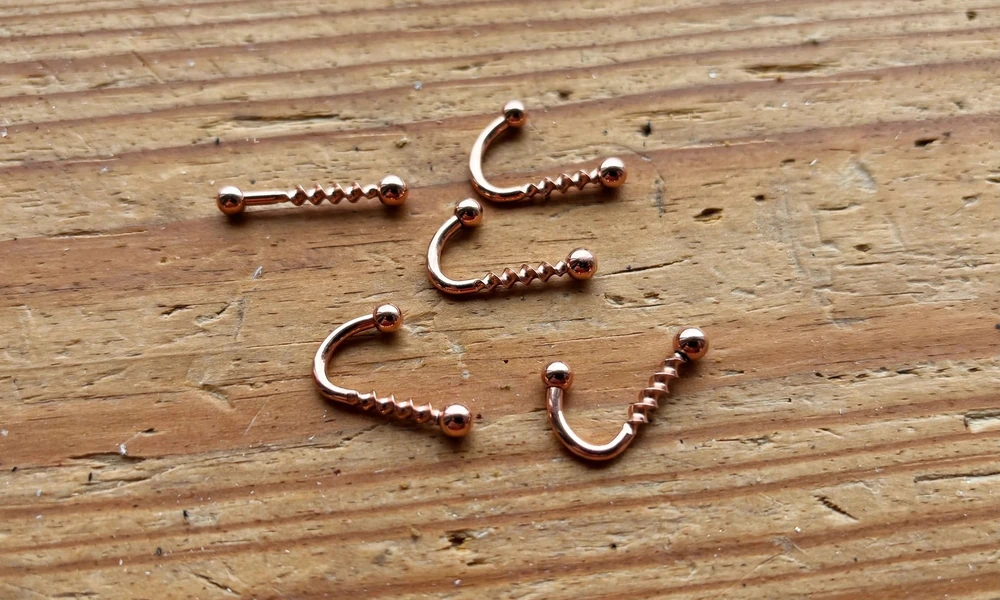
Look next at the shape of the tail. L-shaped screws slide in easily and suit beginners, while corkscrew tails take a little practice but hold more securely, especially overnight. If you have never worn a screw before, start with an L-shape. If you lose jewellery often, or you sleep on your side, a corkscrew is the safer bet. Either way, the tail should be smooth, with no sharp point or rough edge that could scratch the inside of the nostril.
Finally, check the gauge and the length of the post. Most nostril piercings take 20 gauge, and a post of around 6 to 7 millimetres suits most noses. A post that is too short pulls the decorative end tight against the skin, while one that is too long wobbles and catches on clothing. Our guide to gold jewellery for everyday wear explains how to judge gold quality in small pieces, which matters here, because a nose screw is one of the smallest gold items you will ever buy, and the metal is doing all the work.
The 9 best rose gold nose screws of 2027
The Classic Polished Rose Gold Screw
What we like: A smooth, mirror-polished ball end in solid 14k rose gold, with a gentle L-shaped tail that slides in easily and sits flat against the nostril.
What to consider: The plain design shows every fingerprint, and the ball end can look small on a larger nose. Best For: Everyday wear and first-time screw wearers. Material: Solid 14k rose gold. Price Range: Mid-range. Standout Feature: A flawless polished finish that catches the light.
This is the screw to buy first. It is simple, comfortable, and goes with everything, and it teaches you how a screw should feel before you try fancier designs.
The Rose Gold L-Shaped Screw
What we like: A neat L-shaped tail that is the easiest shape to insert and remove, with a small domed end that sits close to the skin.
What to consider: L-shaped tails can work loose during sleep, so check it each morning. Best For: Beginners and anyone who changes jewellery often. Material: 14k rose gold. Price Range: Affordable to mid-range. Standout Feature: The easiest screw shape to handle.
If you are new to nose screws, this shape removes most of the learning curve. It goes in straight, turns once, and stays put through a normal day.
The Rose Gold Corkscrew with a Tiny Diamond
What we like: A corkscrew tail that holds securely, topped with a tiny prong-set diamond that sparkles without looking flashy.
What to consider: The corkscrew takes practice to insert, and the diamond setting needs an occasional check. Best For: Evenings out and wearers who want a little sparkle. Material: 14k rose gold, small diamond. Price Range: Mid-range to premium. Standout Feature: A secure fit with a single, bright stone.
This is the best of both worlds: the security of a corkscrew and the sparkle of a diamond, in a size that still looks understated.
The Rose Gold Screw with a Pearl End
What we like: A small freshwater pearl on a rose gold screw, soft and luminous, with a warmth that suits the pink metal beautifully.
What to consider: Pearls are softer than metal or stone, so avoid harsh cleaners and handle gently. Best For: Weddings, soft daytime looks, and romantic styling. Material: 14k rose gold, freshwater pearl. Price Range: Mid-range. Standout Feature: A pearl end that glows rather than glitters.
Pearl and rose gold are a natural pair. The pearl softens the look of the piercing and makes it feel more like jewellery than hardware.
The Brushed Rose Gold Screw
What we like: A soft, matte-brushed finish that hides fingerprints and scratches, with a low-key, modern feel.
What to consider: The brushed finish can polish shiny over time where it rubs against skin. Best For: Minimal looks and wearers who dislike high shine. Material: 14k rose gold, brushed finish. Price Range: Mid-range. Standout Feature: A matte texture that stays looking clean.
Not every nose screw needs to shine. This one is for people who like their jewellery quiet, with the colour doing the talking instead of the polish.
The Rose Gold Screw with a Crystal Accent
What we like: A small clear crystal in a bezel setting, bright and affordable, on a comfortable L-shaped tail.
What to consider: Crystal is softer than diamond and can dull if it is knocked often. Best For: Daily sparkle on a budget. Material: 14k rose gold, crystal. Price Range: Affordable. Standout Feature: Diamond-like sparkle at a fraction of the price.
This is the everyday sparkle option. It looks bright in daylight, costs far less than a diamond version, and is easy to replace if it is lost.
The Tiny Rose Gold Screw
What we like: A very small ball end, barely 1.5 millimetres across, that reads as a delicate dot of rose gold on the nostril.
What to consider: The tiny size makes it fiddly to insert, and it can be hard to find if it drops. Best For: Workplaces, subtle styling, and second nostril piercings. Material: 14k rose gold. Price Range: Affordable. Standout Feature: The most discreet screw in this list.
Some piercings are meant to whisper. This tiny screw is for days when you want the piercing there, but you do not want it to be the first thing anyone sees.
The Rose Gold and White Gold Two-Tone Screw
What we like: A rose gold tail with a white gold ball end, or the reverse, giving you two metals in one small piece.
What to consider: Two-tone pieces cost more to make, and the contrast is subtle at this size. Best For: Wearers who mix gold and silver jewellery. Material: 14k rose gold and 14k white gold. Price Range: Mid-range to premium. Standout Feature: Two metals that bridge a mixed jewellery collection.
If your earrings are silver and your rings are gold, this screw solves the mismatch. It sits happily with either metal and ties a mixed collection together.
The Rose Gold Beaded Screw
What we like: A small cluster of tiny rose gold beads forming the decorative end, with a handmade, slightly bohemian feel.
What to consider: The beaded texture can trap makeup and needs a gentle clean now and then. Best For: Bohemian styling and festival looks. Material: 14k rose gold. Price Range: Mid-range. Standout Feature: A textured, beaded end with real character.
The beaded end gives this screw a crafted look that a plain ball cannot match. It is a small detail, but it changes the whole feeling of the piece.
Which rose gold nose screw is right for you
Start with your piercing. A healed nostril piercing in standard 20 gauge suits almost every screw here, while a thicker 18 gauge piercing needs a screw made to match. If your piercing is less than six months old, wait. A screw should only go into a fully healed piercing, because the curved tail moves more than a straight stud while it is being inserted, and a fresh piercing does not need that extra movement.
Then think about how you wear jewellery. If you change pieces often, choose an L-shaped screw, which is quick to swap. If you put a piece in and forget it for weeks, choose a corkscrew, which holds better over time. If you sleep on the side of your piercing, the corkscrew is again the safer choice, because it is much less likely to work its way out overnight.
Finally, match the end to your style. A plain polished ball suits a minimal wardrobe, a diamond or crystal suits evenings, and a pearl suits soft, romantic looks. Our roundup of the best nose screws for women covers the full range of styles if you want to compare rose gold with other metals before you decide.
The caveats that matter
Rose gold is a lovely metal, but it is not the hardest-wearing choice for a nose screw. The copper that gives it its colour also makes it slightly softer than yellow gold, and the thin tail of a screw takes more bending than most jewellery. That means you should insert and remove it gently, and avoid bending the tail back and forth, which weakens the metal over time.
| Detail | What is known |
|---|---|
| Best metal | Solid 14k rose gold, or thick gold fill; avoid thin plating |
| Standard gauge | 20 gauge for most nostrils; 18 gauge for thicker piercings |
| Tail shapes | L-shaped is easiest to insert; corkscrew holds most securely |
| When to wear it | Only in a fully healed piercing, usually six months or older |
| Who should avoid it | People with a copper sensitivity, or an unhealed piercing |
| Cleaning | Warm water and mild soap; dry fully before storing |
| What wears first | Thin plating at the bend of the tail, and brushed finishes |
| What it does not do | It does not suit fresh piercings, and it will not stay bright without cleaning |
People with a known copper sensitivity should be careful with rose gold. Most wearers have no trouble at all, but if your piercing becomes itchy or red after switching to rose gold, try solid yellow gold or implant-grade titanium instead, and speak to your piercer if the irritation does not settle quickly.
Checklist: buying a rose gold nose screw honestly
Use these checks before you buy, and again after a week of wear.
- Check the metal: solid 14k rose gold, or a thick gold fill, never thin plating.
- Check the gauge: 20 gauge for most piercings, 18 gauge if yours is thicker.
- Check the tail: smooth, with no sharp point or rough edge at the bend.
- Check the length: the post should sit comfortably, not tight and not wobbling.
- Check the setting: any stone or pearl should be firmly set, with no movement.
- Check the fit after a week: no redness, no itching, and the screw stays in overnight.
Frequently asked questions
Can I wear a rose gold nose screw in a new piercing?
No. Wait until the piercing is fully healed, usually at least six months, before switching to a screw. The curved tail moves more during insertion than a straight stud, and a fresh piercing needs stillness to heal well.
Does rose gold fade or change colour?
Solid rose gold does not fade, but it can darken slightly as it picks up a patina, and it needs an occasional clean to stay bright. Plated rose gold does wear away, which is why solid gold or a thick gold fill is worth the extra cost.
Is rose gold safe for sensitive skin?
For most people, yes, especially in solid 14k. A small number of people react to the copper in rose gold. If your piercing itches or turns red after switching, change back to yellow gold or titanium and speak to your piercer.
What gauge should I choose?
Most nostril piercings are 20 gauge, and that is the safest default. If your piercer used 18 gauge, buy 18 gauge screws. A screw that is too thin will wobble, and one that is too thick will not fit.
How do I insert a corkscrew nose screw?
Push the tail gently into the piercing, then turn it slowly, following the curve of the screw, until the decorative end sits against the nostril. Go slowly and never force it. If it hurts, stop and try again later, or ask your piercer to show you.
Can I wear rose gold with silver earrings?
Yes. Rose gold is one of the easiest golds to mix with silver, because its pink tone sits between yellow gold and silver. A two-tone screw, such as the ones in our guide to the best rose gold nose cuffs, makes mixing metals look deliberate rather than accidental.
The bottom line
The best rose gold nose screw in 2027 is the one that matches your piercing, your skin, and the way you actually wear jewellery. For most people, that means a solid 14k rose gold screw, in 20 gauge, with an L-shaped tail if you change jewellery often or a corkscrew tail if you want it to stay put. A plain polished ball is the most versatile starting point, and a diamond or pearl end is the easiest way to dress it up.
Buy solid metal, check the gauge, and give a new screw a week of wear before you judge it. Rose gold rewards that small amount of care with a warm, flattering colour that silver and yellow gold cannot quite match, and a screw that feels like it was made for your nose.