


What makes a sci-fi show worth twelve hours of your life? That question gets harder every year, because there has never been more genre television, and never more of it fighting for the same evening. The tempting move is to grab whatever ranking list floats to the top of a search. The smarter move is to understand what those lists are actually measuring, which shows have survived decades of rewatch, and where the blind spots hide.
This guide takes a different route. It looks at the shows with verifiable awards, cultural staying power, and structural influence, then explains how to judge a recommendation for yourself. No single list settles the question, and any article claiming otherwise is selling something.
Why “Best” Is a Moving Target

Start with an honest admission: there is no official standard for the best science fiction television series. Rankings from major outlets disagree sharply, and they shift every time a new show airs. A list published in 2010 looks strange today. A list published last month may look strange in three years.
That instability is not a flaw in the lists. It reflects something real about the genre. Science fiction television responds to the technology and politics of its moment, so a show that felt urgent in 1995 can read as a period piece now, while a show that seemed minor can grow into a landmark.
Awards offer one partial anchor. The Hugo Award for Best Dramatic Presentation has been handed out since 1958 and is voted on by fans, which makes it a useful counterweight to critic-driven rankings. It is an imperfect measure, yet it rewards shows audiences cared about rather than only shows that reviewed well.
The Twilight Zone: The Template Everything Else Borrowed

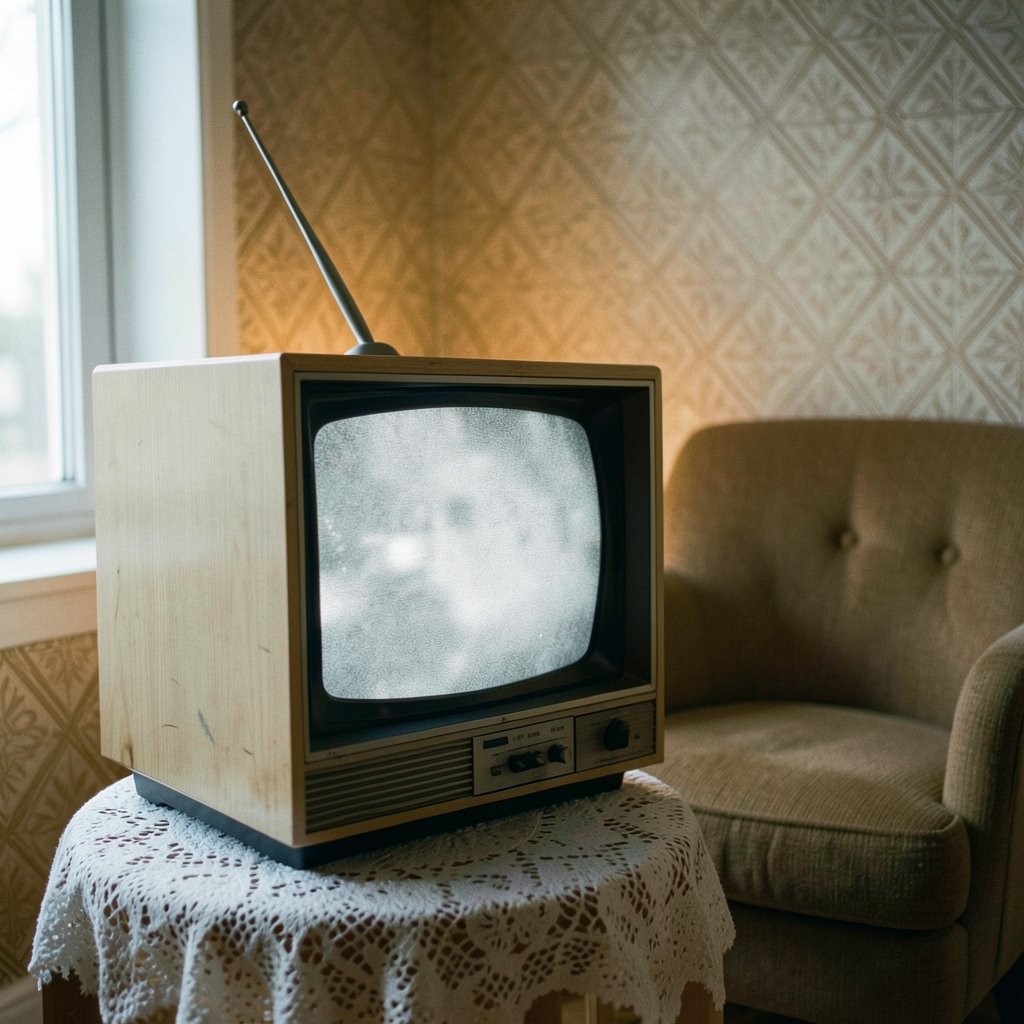
Rod Serling’s anthology ran on CBS from 1959 to 1964, and it remains the show most often named as the genre’s foundation. Its format, a self-contained story with a twist, let Serling smuggle social criticism past network censors under the cover of aliens and robots.
The show won back-to-back Hugo Awards for Best Dramatic Presentation in 1960 and 1961. For decades it was commonly described as the only television series to win the award twice in a row, a claim that gets repeated constantly and is worth checking against the official Hugo history before you cite it in a conversation. Either way, the influence is not in dispute. Nearly every anthology series that followed, from The Outer Limits to Black Mirror, works from a playbook Serling wrote.
Practical tip: If you bounce off the black-and-white photography, start with the fourth season episodes, which ran an hour instead of thirty minutes. They feel closer to modern television pacing.
Star Trek and the Franchise That Refused to Die
Star Trek: The Original Series premiered on NBC on September 8, 1966, and was cancelled in 1969 after three seasons. By conventional television logic, that should have been the end of it. It was not, because syndication turned a cancelled show into a cultural institution.
Its first-season episode “The City on the Edge of Forever,” written by Harlan Ellison, won the Hugo for Best Dramatic Presentation in 1967. That episode is still the standard against which time-travel stories get measured, and it is the single best entry point for someone who has never watched the original series.
The franchise question matters for anyone building a watchlist. The original series is historically essential but uneven. The Next Generation is more consistent but starts slowly. Deep Space Nine is the one that aged best, largely because it embraced serialized storytelling and moral ambiguity before that was fashionable. Choosing among them is really a question of how much patience you have for 1990s television.
The X-Files and the Mainstreaming of Genre TV
When The X-Files debuted on Fox in 1993, genre shows were still treated as niche programming. By the time it wrapped its original run in 2002, it had won the 1994 Golden Globe for Best Drama Series and a 1997 Peabody Award, and it had pulled science fiction into the prestige conversation.
The show’s structure is worth studying. Its “monster of the week” episodes gave casual viewers something to enjoy without homework, while its conspiracy arc rewarded dedicated fans. That two-track design is now standard practice across streaming television, and it is the reason a show like Fringe could exist a decade later.
Common mistake: New viewers often try to watch every episode in order and burn out during the uneven second season. A curated list of the mythology episodes plus the strongest standalones is a much better first pass.
Battlestar Galactica: Genre TV With Something to Say
The 2004 Battlestar Galactica series ran until 2009 and won a Peabody Award in 2005. It also landed on Time’s list of the best television shows of the year, a rare crossover for a show about spaceships and cylons.
What separates it from its peers is subject matter. The series used a refugee fleet fleeing annihilation to examine torture, religious extremism, suicide bombing, and the ethics of occupation. Those themes made it controversial during its run and are the reason it keeps appearing near the top of serious rankings.
The catch is tonal. Battlestar Galactica is bleak in a way that some viewers find exhausting, and the final season divided its own fanbase sharply. Going in expecting a satisfying answer to every mystery is a recipe for disappointment. Going in for the character work and the political argument is not.
Doctor Who and the Longevity Record
Doctor Who first aired on the BBC on November 23, 1963, and is listed by Guinness World Records as the longest-running science fiction television series. The show’s central trick, a protagonist who regenerates into a new actor, has kept it running across more than six decades and a dozen lead performances.
That structure creates an unusual entry problem. There is no single correct starting point, and fans argue about it endlessly. The practical answer is to pick a modern era and start at the beginning of a Doctor’s run, which gives you a complete arc without requiring sixty years of backstory.
The show’s quality varies wildly by era, more than any other title on this list. That variance is part of its charm for devoted viewers and a real obstacle for newcomers. Nobody pretends otherwise.
Black Mirror and the Anthology Revival
Black Mirror began on Channel 4 in 2011 and moved to Netflix in 2016. Its episode “San Junipero” won the 2017 Emmy for Outstanding Television Movie, a rare genre win in a mainstream category.
Because it is an anthology, rankings handle it inconsistently. Some lists treat it as a series, others as a collection of films. That inconsistency is a useful reminder that “best show” categories are administrative conveniences, not natural kinds. If you only watch three episodes, make “San Junipero” one of them. It is the show at its most humane and least cynical.
The Expanse and the Power of a Fan Campaign
The Expanse ran on Syfy from 2015 to 2018 before the network cancelled it. Amazon picked it up and produced three more seasons through 2022, a sequence that has become the standard example of organized fan campaigns extending a show’s life.
The series is also the strongest argument for hard science fiction on television. Its treatment of orbital mechanics, resource scarcity, and factional politics is unusually rigorous for the medium. For viewers who find softer space opera implausible, this is the corrective.
A Comparison Table for Quick Decisions
| Show | First aired | Best for | Main caveat |
|---|---|---|---|
| The Twilight Zone | 1959 | Short, idea-driven stories | Black-and-white, dated effects |
| Star Trek: TOS | 1966 | Genre history and influence | Uneven across three seasons |
| The X-Files | 1993 | Mystery plus conspiracy arc | Long, with filler episodes |
| Battlestar Galactica | 2004 | Political and moral weight | Consistently bleak tone |
| Doctor Who | 1963 | Variety and reinvention | Quality swings by era |
| Black Mirror | 2011 | Standalone modern parables | Inconsistent episode quality |
| The Expanse | 2015 | Hard science fiction | Slow first half-season |
How to Judge a Recommendation for Yourself
Rankings are a starting point, not an answer. Three practical filters do more work than any list.
First, match the show’s structure to your viewing habits. Anthologies like The Twilight Zone and Black Mirror suit people who watch in fragments. Serialized shows like Battlestar Galactica demand commitment and reward it. A great show in the wrong format still fails.
Second, check the era against your tolerance for effects. A 1960s set looks like a 1960s set. That is not a defect, but pretending otherwise sets viewers up for disappointment. If practical effects bother you, start with the 2000s onward and work backward.
Third, ignore the pilot problem. Many of the best genre shows have weak first episodes, because pilots exist to sell a concept to executives rather than to entertain an audience. The common mistake is quitting after one episode. Give any recommendation three episodes before deciding.
For readers who enjoy tracing how claims about shows and public figures get tested against evidence, the same discipline applies here: check the award record, check the dates, and be suspicious of any superlative that nobody sources. The same habit of verifying a claim rather than repeating it shows up in reporting on everything from the Anna Lake invasive species evidence to the question of who owns the Eadem record. It is a good habit to carry into television criticism too.
The Recency Problem Nobody Warns You About
Here is the honest limitation of any static list: shows released in the last two years may belong on it, and no article written today can responsibly rank them. Acclaim takes time to settle. A series that dominates conversation in its debut season may be forgotten in five years, and a slow-burn show may take a decade to find its audience.
The practical response is to treat any list as a snapshot. Use it to find shows with proven track records, then let your own curiosity handle the new releases. The genre’s history is deep enough that you will not run out of material while you wait for the current decade to sort itself out.
Conclusion
The best sci-fi television shows are not a fixed set. They are a conversation between what a show tried to say, when it said it, and what audiences were ready to hear. The Twilight Zone built the template. Star Trek proved a cancelled show could become permanent. The X-Files dragged genre television into the mainstream, Battlestar Galactica gave it political weight, and The Expanse showed that rigorous science and good drama are not opposites.
Use the awards as a filter, the comparison table as a shortcut, and your own patience as the final judge. Start with three episodes, expect the first one to be shaky, and do not let a ranking decide for you. The show that changes how you see the genre is rarely the one at the top of the list.
Frequently Asked Questions
What is the most awarded sci-fi TV show?
It depends on which awards you count. The Twilight Zone won back-to-back Hugo Awards for Best Dramatic Presentation in 1960 and 1961, a feat rarely matched. The X-Files won a Golden Globe for Best Drama Series and a Peabody Award. Battlestar Galactica also holds a Peabody. No single show dominates every category, which is why award totals alone make a poor ranking method.
Which sci-fi show should a beginner watch first?
For most newcomers, The X-Files or Black Mirror is the easiest entry, because both work as standalone episodes without prior knowledge. The Expanse is the best choice for viewers who want modern production values and hard science. The Twilight Zone remains the best introduction to the genre’s ideas, provided black-and-white photography is not a barrier.
Is Doctor Who really the longest-running sci-fi series?
Guinness World Records lists Doctor Who as the longest-running science fiction television series, and it first aired on November 23, 1963. The show did take a long hiatus between 1989 and 2005, so “longest-running” refers to the span of the franchise rather than continuous broadcast. It is still the most defensible longevity claim in the genre.
Why do best-of lists disagree so much?
Because they measure different things. Some weight critical acclaim, others weigh audience popularity, influence, or pure entertainment. Lists also change as new shows air and as older shows are reassessed. There is no official standard, so disagreement is expected rather than a sign that one list is wrong.
Did fan campaigns really save The Expanse?
Yes. Syfy cancelled The Expanse in 2018, and Amazon picked it up, producing additional seasons through 2022. It has become the standard modern example of organized viewer campaigns extending a show’s life. Similar efforts have succeeded elsewhere, but rarely with such a clean outcome.
Are anthology shows like Black Mirror eligible for “best series” rankings?
They are, but rankings handle them inconsistently. Some treat anthologies as series, others as collections of films. That inconsistency is a reminder that “best show” categories are conveniences rather than fixed definitions. Judge an anthology by its strongest episodes, not by an average across all of them.














