


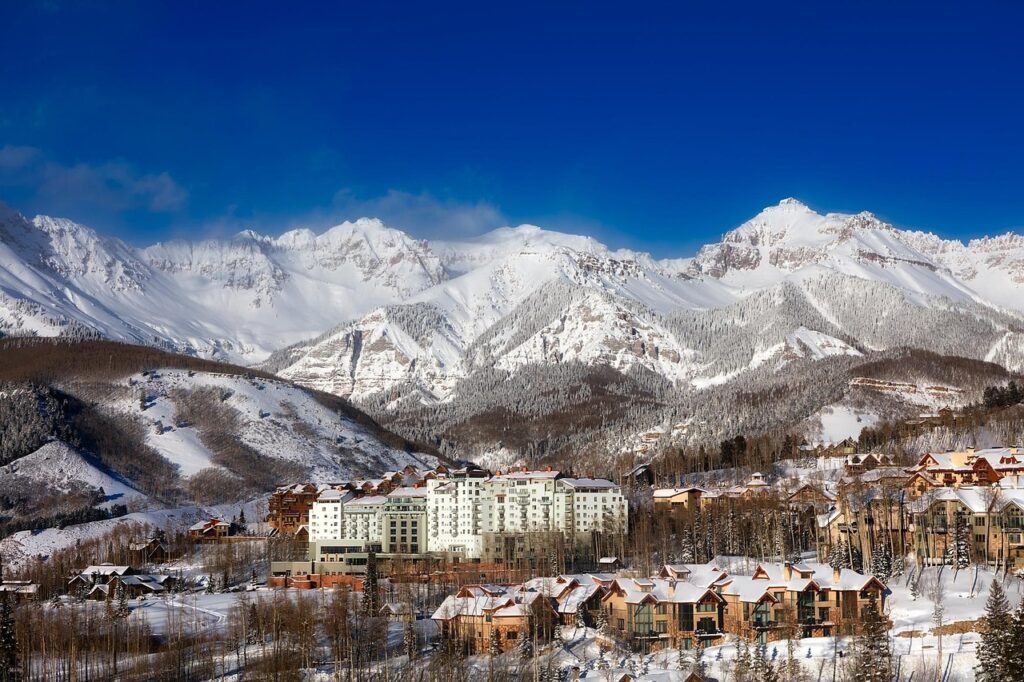
Which Colorado ski resort actually deserves your lift-ticket money? Ask ten skiers and you’ll get ten answers, usually shaped by whether they ski groomers, bumps, or cliffs. Colorado is home to dozens of areas, and several rank among the most visited in North America. But “best” is not a single mountain. It depends on your ability, your tolerance for crowds, and how far you’ll drive from Denver.
This guide breaks the state’s leading resorts down by what they do well, with practical notes on terrain, timing, and the mistakes visitors make. It also flags what to verify before booking, since pass affiliations and terrain figures shift from season to season. (25 Best Beach Resorts for a Dream Vacation: Luxury Stays)
How to Judge a Colorado Ski Resort
Colorado’s resorts sit high. Breckenridge’s town base is roughly 9,600 feet, and its summit reaches about 12,998 feet. That altitude is a real advantage for snow quality and a real risk for visitors arriving straight from sea level.
Three factors separate the good from the great:
- Terrain fit. A mountain that suits an expert can be miserable for a nervous beginner. Check how the terrain is divided by ability level; total acreage alone does not show that.
- Crowd patterns. Destination resorts get busy on weekends and holidays. Locals know which lifts to avoid and when.
- Snow reliability. Summit elevation and north-facing slopes hold snow longer. Lower-elevation areas get slushy in March.
Most Colorado resorts operate on National Forest land under special-use permits, which is why base areas feel compact and development is limited. Note that acreage and trail counts are self-reported by resorts and inconsistent across sources, so treat rankings as a starting point, not gospel. (Private island resorts)
Vail: The Big, Glamorous Benchmark

Vail is one of the largest single-mountain resorts in North America by skiable acreage and consistently among the most visited in the United States. Its back bowls are the headline act: vast, open, and unlike anything else in the state.
What it does well: variety at scale. Beginners have dedicated learning terrain, intermediates get miles of groomed cruising, and experts get the bowls and Blue Sky Basin.
The catch: Vail is expensive, and its front-side runs get tracked out fast on powder days. Parking fills early. The village is polished but pricey, and it feels more like a resort complex than a mountain town.
Practical tip: On a storm day, skip the front side and head straight for the back. You’ll trade a longer lift ride for fresher snow. The same logic that applies to any marquee destination holds here: the biggest name isn’t automatically the right fit for every traveler.
Aspen Snowmass: Four Mountains, One Pass
Aspen Snowmass covers four distinct mountains: Aspen Mountain, Aspen Highlands, Buttermilk, and Snowmass. Snowmass is the largest by terrain, and Buttermilk hosts the Winter X Games, which tells you something about its terrain parks.
| Mountain | Best for | Character |
|---|---|---|
| Aspen Mountain | Strong intermediates and experts | Steep, compact, right above town |
| Aspen Highlands | Serious experts | Hike-to terrain and steep chutes |
| Buttermilk | Beginners and park riders | Gentle slopes, world-class parks |
| Snowmass | Families and mixed groups | Biggest acreage, widest range |
The mistake people make: buying a pass and assuming one mountain covers everything. The four areas are separate and not always connected by lift. Decide which mountain suits your group before you book lodging.
Aspen itself is a genuine town with a working history, not a purpose-built village. That’s a plus for atmosphere and a minus for budget. It’s also the kind of place that attracts travelers who value exclusivity and are willing to pay for it.
Breckenridge: High Base, Big Crowds
Breckenridge combines a historic mining town with a large, high-elevation mountain. The town sits around 9,600 feet, which means you’re already high before you clip in.
What it does well: a real town with restaurants, shops, and character, plus terrain that ranges from gentle lower slopes to serious high-alpine bowls.
The catch: crowds. Breckenridge is one of the state’s most popular resorts, and the base area gets congested. The high elevation also catches visitors off guard. Altitude sickness is a genuine concern for anyone flying in from low ground.
Practical tip: arrive a day early, drink more water than feels necessary, and take the first day easy. Skiing hard on day one at 9,600 feet is the most common self-inflicted mistake in Colorado.
Beaver Creek: Grooming, Comfort, and Consistency
Beaver Creek built its reputation on grooming and service. It hosted the 2015 FIS Alpine World Ski Championships, and the race courses remain among the state’s best steep groomers.
What it does well: intermediate terrain, immaculate grooming, and a quieter feel than Vail next door. The resort is known for beginner and intermediate facilities, including dedicated learning areas.
The catch: it’s not the place for cliff-hounds, and the village is deliberately upscale. Expect resort pricing throughout.
Practical tip: Beaver Creek’s signature touch is the warm cookies handed out at the base in the afternoon. It’s a small thing, but it sums up the resort’s approach: comfort over adrenaline.
Steamboat: Champagne Powder and a Real Western Town
Steamboat markets its snow as “Champagne Powder,” and the nickname has stuck for good reason. The resort’s tree skiing is exceptional, and the town has a working ranch heritage that predates skiing.
What it does well: tree skiing, family terrain, and a genuine small-city feel. Steamboat has produced a remarkable number of Winter Olympians, which says something about the local ski culture.
The catch: it’s a longer drive from Denver than the I-70 resorts, and its lower elevation means snow can be less reliable in a poor season.
Practical tip: Steamboat rewards skiers who like glades. If you’ve never skied trees, take a lesson. The resort’s tree runs are well spaced and a good place to learn.
Telluride: The Most Dramatic Setting in Colorado
Telluride sits in a box canyon, surrounded by peaks on three sides. The setting is arguably the most striking in the state, and the expert terrain matches it.
What it does well: steep, sustained pitches, hike-to access, and a historic town with real character. The gondola connects town to the mountain for free.
The catch: remoteness. Telluride is a long drive from major airports, and the town is small. Book lodging early.
Practical tip: the hike-to terrain is worth the effort, but go with someone who knows the exits. Getting caught above a cliff band is a real hazard for visitors who wander past the boundary signs.
Copper Mountain: Terrain That Sorts Itself
Copper Mountain is arranged so that terrain is naturally divided by ability level. Beginners ski the west side, intermediates the center, and experts the east.
What it does well: logical layout, strong intermediate terrain, and a reputation as a U.S. Ski Team speed training venue. It’s also less expensive than the destination giants.
The catch: the base village is functional rather than charming, and the resort lacks the town atmosphere of Breckenridge or Steamboat.
Practical tip: use the layout. Families with mixed abilities can split up and meet at the base without crossing the whole mountain.
Arapahoe Basin: High, Steep, and Long-Season
Arapahoe Basin sits high on the Continental Divide and often stays open into June or July. Its terrain is steep and its vibe is old-school.
What it does well: expert terrain, a long season, and a no-frills atmosphere that appeals to purists. Note that A-Basin is now affiliated with the Ikon pass rather than Epic, a change that caught some skiers off guard.
The catch: limited beginner terrain and basic facilities. This is not a resort for first-timers.
Practical tip: check the pass affiliation before you buy. Pass partnerships change year to year, and assuming last season’s arrangement still holds is an expensive error.
Winter Park, Crested Butte, and the Rest
Winter Park is the closest major resort to Denver, which makes it the go-to for day trips. Its Mary Jane territory is famous for moguls. The trade-off is weekend traffic on I-70.
Crested Butte offers some of the state’s most extreme in-bounds terrain alongside a beautifully preserved historic town. It’s a serious mountain for serious skiers.
For travelers who plan resort trips around amenities rather than terrain, the same planning questions apply anywhere: what do you actually want to do off the slopes, and how much walking is involved?
Comparing the Leading Resorts at a Glance
| Resort | Best for | Standout feature | Main drawback |
|---|---|---|---|
| Vail | Variety at scale | Back bowls | Cost and crowds |
| Aspen Snowmass | Mixed groups | Four mountains, one pass | Price |
| Breckenridge | Town plus terrain | Historic town, high alpine | Crowds, altitude |
| Beaver Creek | Intermediates | Grooming and service | Limited expert terrain |
| Steamboat | Tree skiing, families | Champagne Powder | Distance from Denver |
| Telluride | Experts, scenery | Box-canyon setting | Remoteness |
| Copper Mountain | Intermediate progression | Terrain sorted by ability | Modest village |
| Arapahoe Basin | Experts, spring skiing | Long season | Few beginner options |
What Actually Works in Practice
A few habits separate a good Colorado ski trip from a frustrating one.
- Buy passes before the season. Multi-resort passes go on sale in spring and rise in price through autumn.
- Book lodging near a lift rather than only near town. A ten-minute walk in ski boots is longer than it sounds.
- Ski midweek. Weekend crowds at the I-70 resorts are substantial.
- Rent gear at the base, not in Denver. Fitting boots takes time, and you want it done where you’re skiing.
- Check snow reports the morning of. Wind holds and closures change plans fast.
If you’re mapping out a longer trip and weighing mountain resorts against other luxury options, browsing roundups of top-tier resorts can help you calibrate what you’re paying for. (10 best new marina resorts opening 2027)
Conclusion
There is no single best ski resort in Colorado, and anyone who tells you otherwise is selling something. Vail wins on scale. Aspen Snowmass wins on variety. Beaver Creek wins on grooming. Telluride and Arapahoe Basin win on terrain for experts. Breckenridge and Steamboat win on town atmosphere.
The right choice comes down to three questions: what terrain do you actually ski, how much crowd are you willing to tolerate, and how far will you drive? Answer those honestly and the shortlist writes itself. Verify terrain figures and pass affiliations before booking, arrive a day early to adjust to altitude, and ski midweek when you can. Do that, and Colorado will deliver whatever kind of mountain day you came for.
Frequently Asked Questions
Which Colorado ski resort is best for beginners?
Beaver Creek and Buttermilk (part of Aspen Snowmass) are the strongest choices. Both have dedicated learning terrain and gentle progression slopes. Breckenridge and Copper Mountain also work well, but their high elevation makes the first day harder on newcomers.
What is the best Colorado resort for expert skiers?
Telluride, Arapahoe Basin, and Aspen Highlands offer the most demanding in-bounds terrain. Vail’s back bowls and Crested Butte’s extreme terrain are also serious. Experts should prioritize snow reliability and steepness over village amenities.
When is the best time to ski in Colorado?
January through March offers the most consistent snow coverage. Late February and early March typically combine deep bases with longer days. Early season can be thin, and spring skiing softens in the afternoon but often comes with a long season at high-elevation areas.
Do I need a multi-resort pass?
Not necessarily. If you’re skiing one mountain for several days, a resort-specific ticket or a local pass often costs less. Multi-resort passes pay off when you plan to visit several mountains in one season.
How do I handle altitude sickness at Colorado resorts?
Arrive a day early, drink plenty of water, limit alcohol on the first night, and take the first ski day easy. Resorts above 9,000 feet affect visitors quickly. If symptoms like headache or nausea persist, descend to a lower elevation.
Is it worth driving from Denver to the more distant resorts?
Yes, if you want smaller crowds and a real mountain town. Steamboat and Telluride reward the longer drive with better atmosphere and lighter traffic on the slopes. For short trips, the closer I-70 resorts make more sense.














